












Factories of the Future: a mindset that anchors our industry
Text Björn CrulImage Dries Decorte
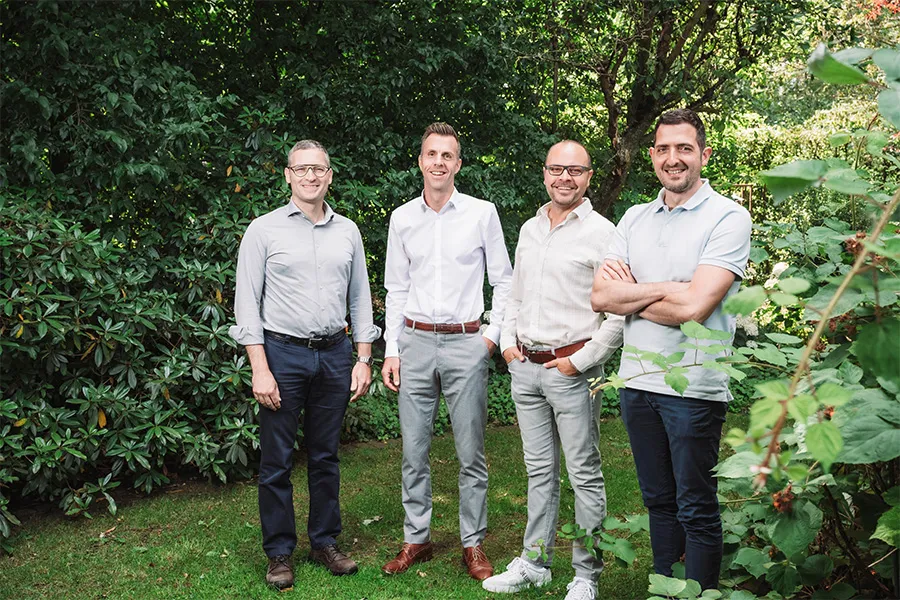
Our manufacturing industry faces many challenges: the battle for talent continues to rage, while competitiveness must be maintained in times of inflation and global competition. Companies that take a forward-looking approach and continue to invest in digitalisation, automation and sustainability are seen as role models across a range of sectors: they are ‘Factories of the Future’. We brought together a number of experts from these factories of the future: Hendrik Baeke of TE Connectivity, Bart Verlinden of innovation centre Sirris, Wouter Van haute of Altachem, and Pieter-Jan De Man of STAS.
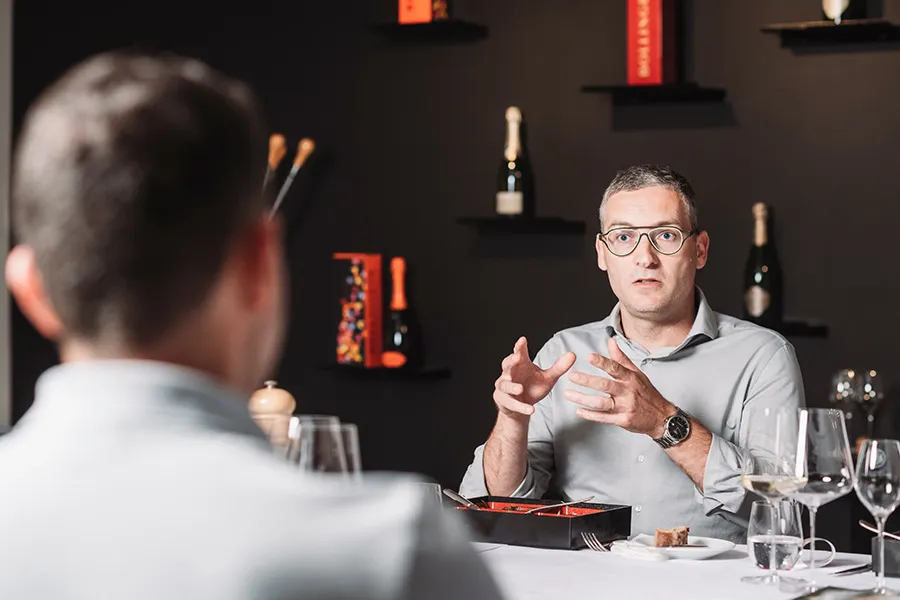
Since 2015, technology federation Agoria and innovation centre Sirris have awarded the title of “Factories of the Future” to a number of companies each year. They have developed a methodology in which an external jury conducts an audit to assess maturity across seven transformations. Companies that pass the audit successfully may carry the title for three years.
Bart Verlinden of Sirris: “There are now 55 factories of the future in Belgium. They are a very diverse group of companies, ranging from smaller SMEs to sites belonging to multinationals, active in metalworking, electronics, food, chemicals or pharmaceuticals. This diversity allows us to show that Industry 4.0 is not limited to examples such as Amazon or Airbus, but is also being applied successfully at the company just around the corner, so to speak.”
One of the original Factories of the Future is TE Connectivity. The site in Oostkamp, which employs more than 700 people, develops and manufactures electromechanical components for the automotive sector, such as connectors and sensors. “We received our first award in 2016 and renewed the title for three years in 2019 and 2022,” says manager Hendrik Baeke, who is the Factory of the Future project leader. “At first, our main aim was to demonstrate what we were good at. In the meantime, it has become a mindset. All our employees are committed to continually doing better. It is a project that is well known and supported at our Oostkamp site.”
A differentiator against the competition
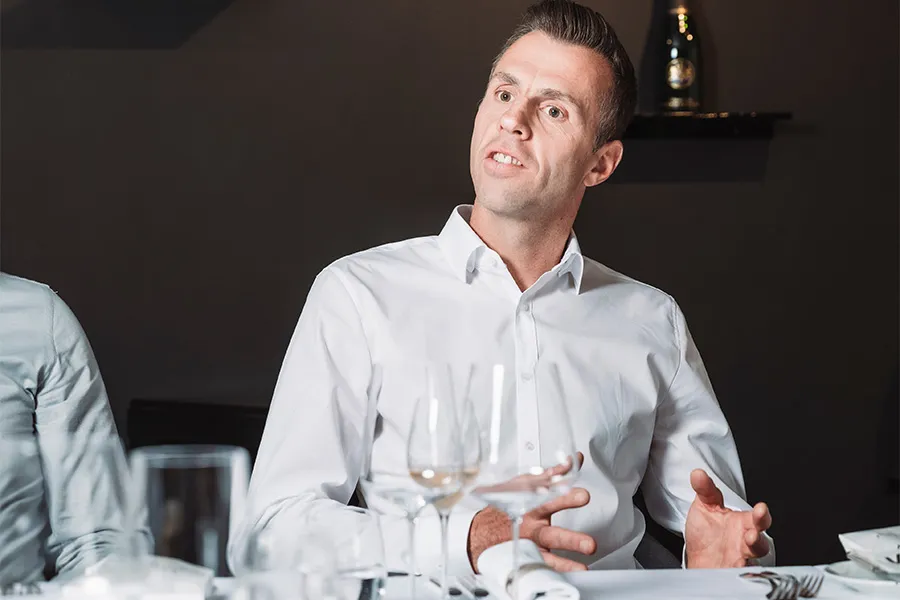
Altachem, an SME from Harelbeke that produces valves for filling PU foam cans and complements its range with PU foam guns and silicone guns, received the award for the first time this year. Wouter Van haute: “We have to differentiate ourselves from competitors in China. They not only have a cost advantage, we also see the quality of Chinese competitors continuing to improve. Our challenge is therefore to deliver ever higher quality, remain flexible and work lean. That means achieving as much efficiency as possible and continually improving our processes and products. The Factory of the Future label recognises these efforts. We are pleased that our 30-strong team has achieved it.”
STAS, a manufacturer of trailers, self-unloading trailers and tippers in Waregem and Doornik, has found that its ambition to become a Factory of the Future has paid off since 2019. “We wanted to increase our agility by implementing Industry 4.0 and putting employees more at the heart of our production. Winning the award was the icing on the cake,” says director Pieter-Jan De Man. As STAS’s products are capital goods, the number of orders fell in recent years as a result of successive crises. “But we have fared better than our competitors. We responded more quickly to raw material prices, were better able to adapt internally and ultimately saw a smaller decline in profitability. Without this programme, things would probably have turned out very differently.”
New challenges in sight
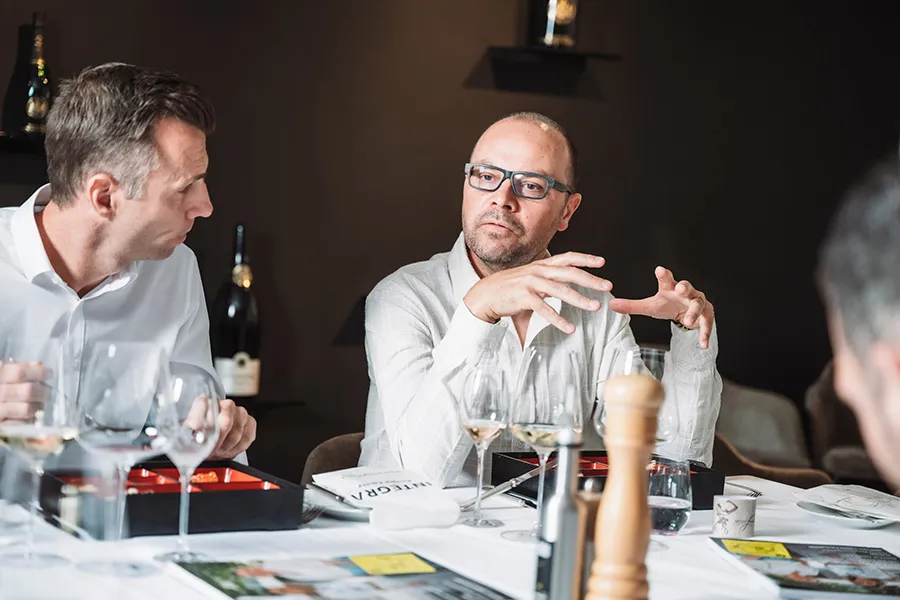
A well-oiled, flexible organisation with a clear vision is more likely to succeed. TE Connectivity has found this to be true. Hendrik Baeke: “Back in 2014, under the guidance of our then plant manager Eric Verhelst, we developed a strategy to create more added value and become a stronger organisation. It turned out to align perfectly with the objectives of the Factory of the Future methodology. For a multinational’s manufacturing site in Flanders, continually adapting and improving is very important: we also have to keep proving ourselves to our colleagues in low-wage countries within our own group. The efforts made as part of the Factory of the Future project have certainly helped anchor our activities here.”
Agoria and Sirris are aware of this. A recent survey of 40 manufacturing companies shows that the effects of Brexit, Covid-19 and the war in Ukraine are still being felt. “Companies say these crises have had a major impact. Many are finding that investment has yet to return to its previous levels. The supply chain remains vulnerable, while China is becoming increasingly flexible and its quality is improving,” says Bart Verlinden. “That is why we are reviewing our methodology to see how we can continue to provide the right impetus in response to current challenges, such as environmentally friendly production, a more integrated approach to the transformations covered by the programme, and strengthening the chain between suppliers and manufacturers.”
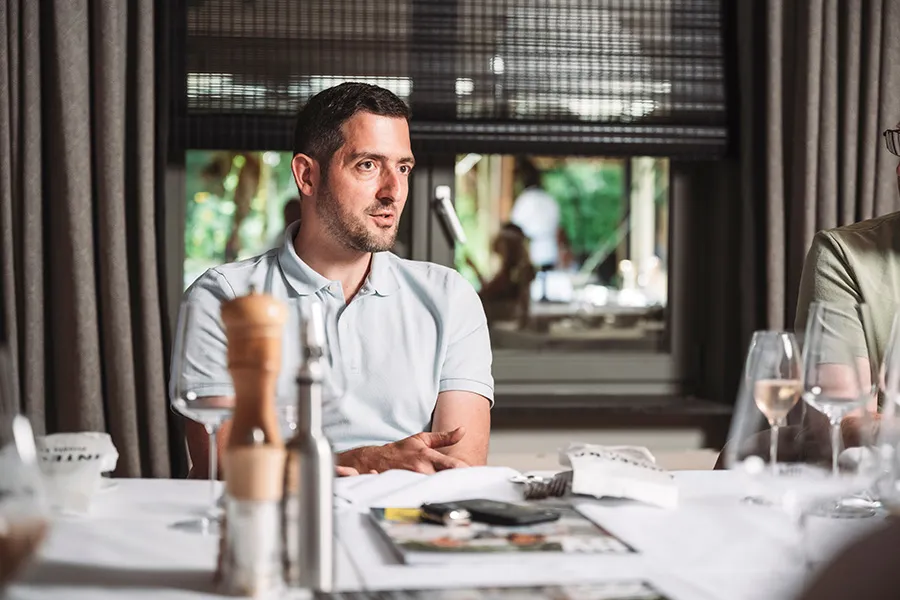
A network of like-minded companies
Over the years, the Factories of the Future have also become a close-knit network. Pieter-Jan De Man: “STAS used to be a very closed company. Now we share much more information, both in larger webinars and through direct, one-to-one contact with other factories of the future. Everyone influences and inspires one another with best practices. For me, that is one of the programme’s greatest strengths.”
“As a smaller organisation, with a production team of 8 employees, applying Industry 4.0 and lean manufacturing is not easy for us,” adds Wouter Van haute of Altachem. “Thanks to this network, we can pick and choose what works for us. A tip from STAS helped us increase the efficiency of our production by 2%. In turn, a delegation from TE Connectivity came to look at our WMS for internal logistics. The German group LINDAL, of which we are part, is also interested in our progress. Some agile and lean projects we have developed are now being tested at
other sites too.”
Hendrik Baeke agrees: “We are already well advanced on our Factory of the Future journey, but we believe it is important to continue benchmarking ourselves against our peers. Procedures and structures within a multinational have many advantages, but also one drawback: sometimes we are not as flexible as SMEs. It is refreshing to be able to speak openly about how to tackle challenges: what works and what does not? We draw a lot of inspiration from that. For me, the most important lesson is that we must remain entrepreneurial in everything we do.”
The future will continue to bring challenges, not least because technology keeps evolving at breakneck speed. “We sometimes notice a degree of Industry 4.0 fatigue setting in at some companies,” says Bart Verlinden. “But there is no going back. Artificial intelligence may still seem a long way off, but many of the problems we face will be solvable with this technology in the not-too-distant future. Data and machine learning also offer considerable potential. These technologies are already established in office processes, but the right applications for manufacturing still need to be developed. Above all, the key will be to use technology in the right way to give production operators the best possible support. In doing so, we can also help address the structural shortage of workers.” ■
Question about this story? Ask your question
Companies in this story
Keep following this
Get an email when a new story is published. No account needed.
- ThemeData from shop floor to decision
- SubjectNews
- CompanySirris







