












Ewellix launches new series of IoT-ready electromechanical actuators
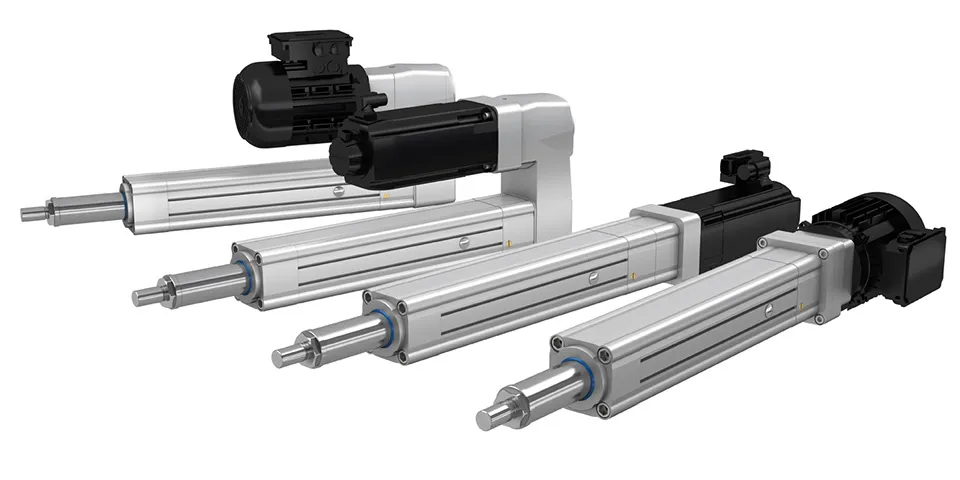
Ewellix has redesigned its high-performance CASM-100 and LEMC actuators, adding new built-in wireless sensors that measure force and temperature.
Ewellix (formerly SKF Motion Technologies) has developed the new actuators, which deliver forces of up to 82 kN and speeds of 1 metre per second, specifically to provide accurate, real-time information that improves machine productivity.
The new Ewellix actuators make it possible to upgrade a production line without major changes to existing machine layouts. The new CASM-100 and LEMC actuators feature sensors integrated into the housing. These provide an accurate measurement of the torque delivered by the motor via the internal recirculating ball or roller screw, even when the actuator is stationary. The sensor also acts as a temperature monitoring system, issuing a signal if the drive is at risk of overheating.
This configuration provides real-time operational information that can be communicated to higher-level control systems. This makes it possible to improve overall performance and productivity while increasing safety.
Damien Ehry, Business Support Manager at Ewellix, says: “This is a great development for the CASM-100 and LEMC actuators. Both actuator types are available in multiple combinations and have a very wide range of applications, making them very popular with manufacturers and designers. Compared with traditional hydraulic systems, the greater accuracy, flexibility, performance and reliability of these actuators give our customers higher productivity and lower maintenance costs.
“The integrated sensors are a further improvement. Accurate measurements show how space and energy savings can be achieved by reducing the size of the attachments. This cuts the overall cost of the production line while making production processes safer, demonstrating that Ewellix always keeps the customer in mind when developing IoT-ready technology.”
Another benefit of Ewellix IoT-ready actuators with integrated sensors is that they make it easier to specify the right actuator size when switching from hydraulic and pneumatic systems to an electromechanical system. By first using a prototype to replace one of the actuators before converting the entire production line, manufacturers looking to switch to an electromechanical process could potentially benefit from even greater cost, space and weight savings.
Question about this story? Ask your question
Keep following this
Get an email when a new story is published. No account needed.
- ThemeProcess measurement and control
- SubjectNews







