The robots of today and tomorrow
Text Valérie CouplezImage Stäubli Robotics
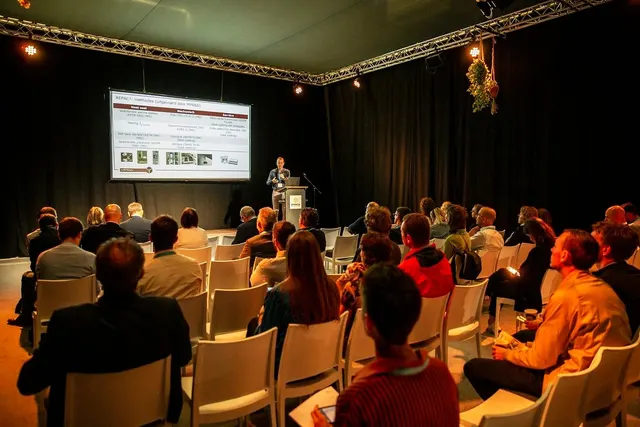
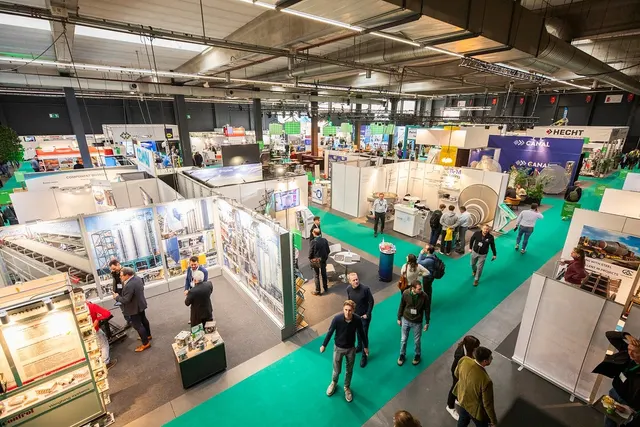
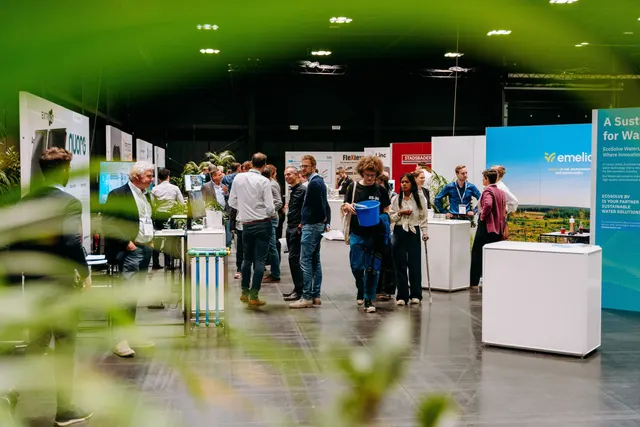
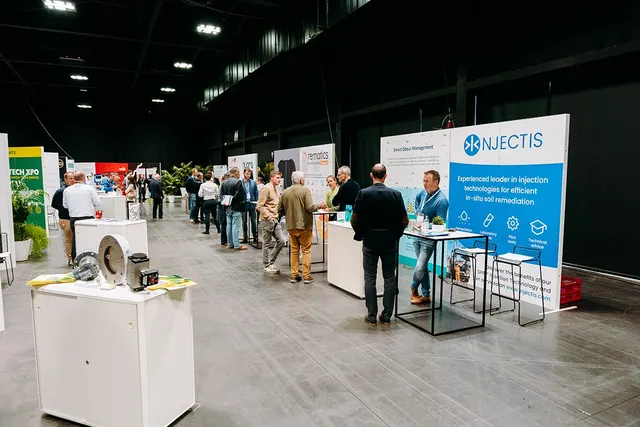
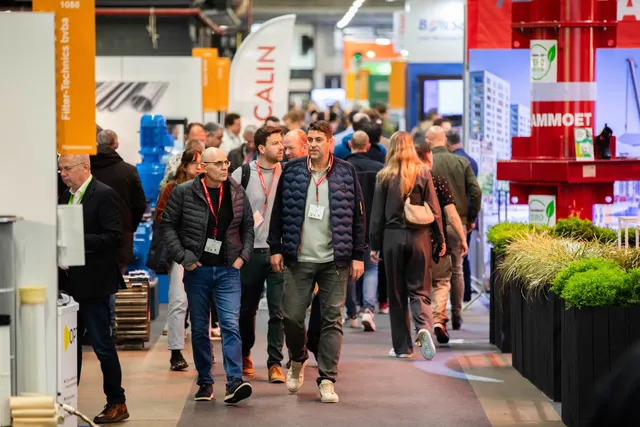
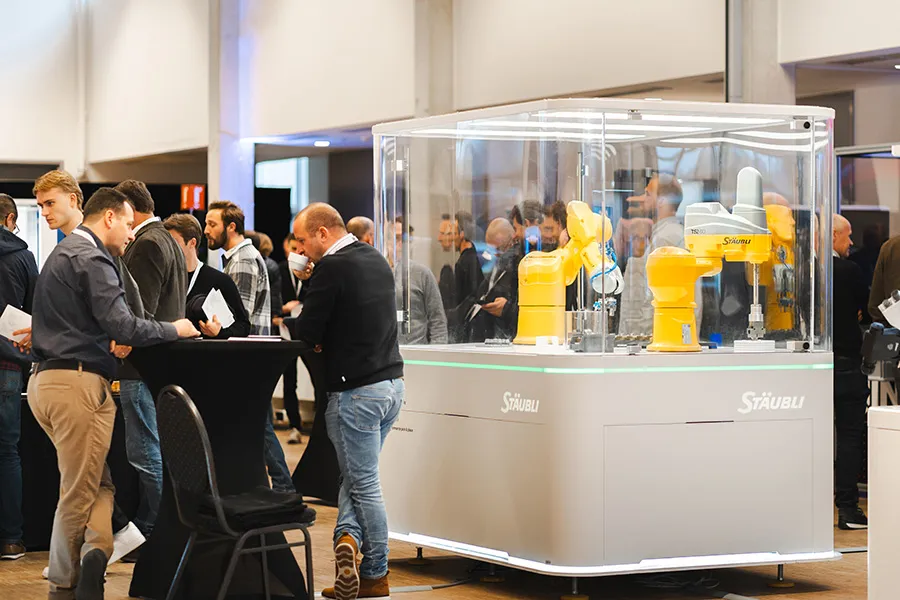
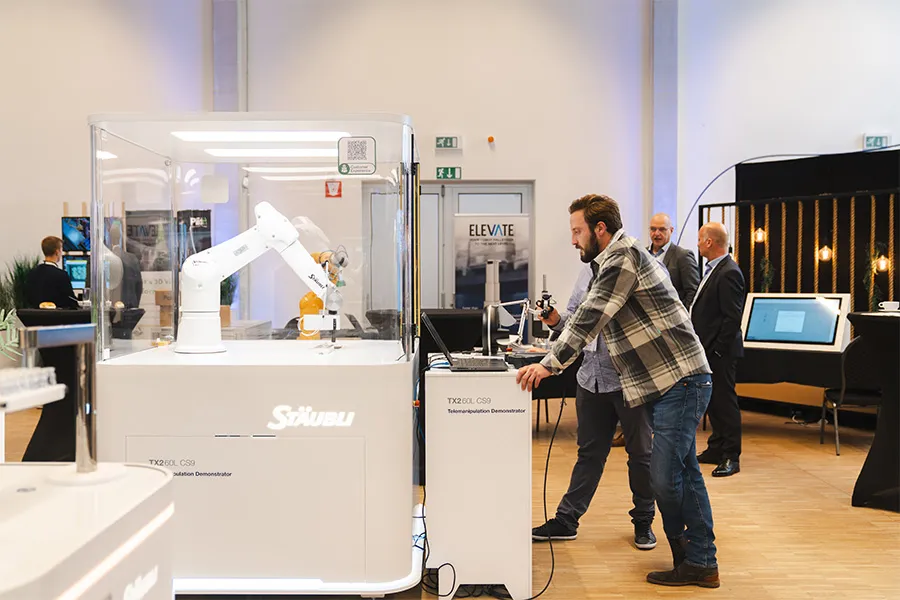
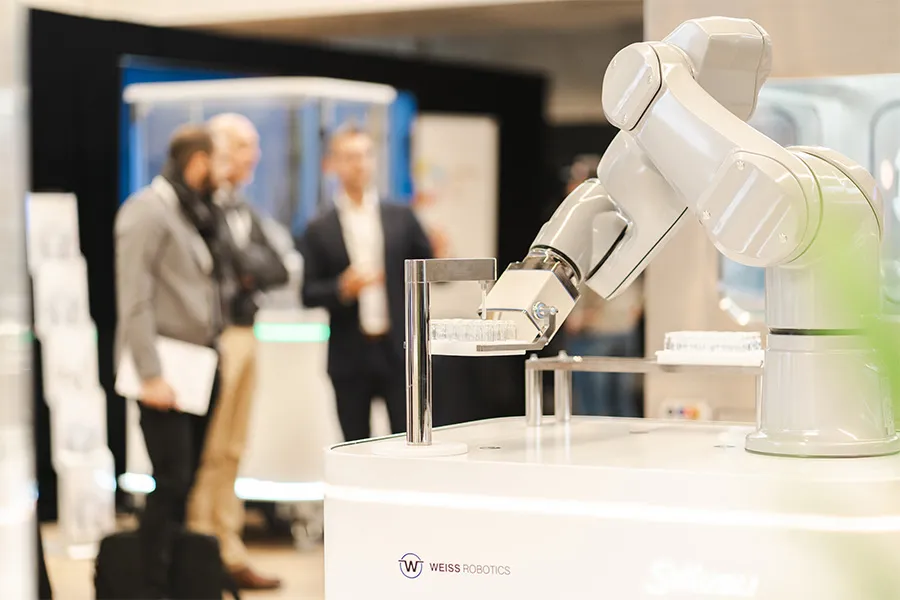
On 22 and 23 November, around 250 people made their way to Technopolis in Mechelen for the Stäubli Robotics Days. Held every two years, the event brings visitors up to speed on the latest developments in robots and the entire ecosystem in which they operate. Stäubli does not do this alone. No fewer than 21 partners were there to show how robots can be turned into complete solutions. Stäubli technology stands for openness and innovation.
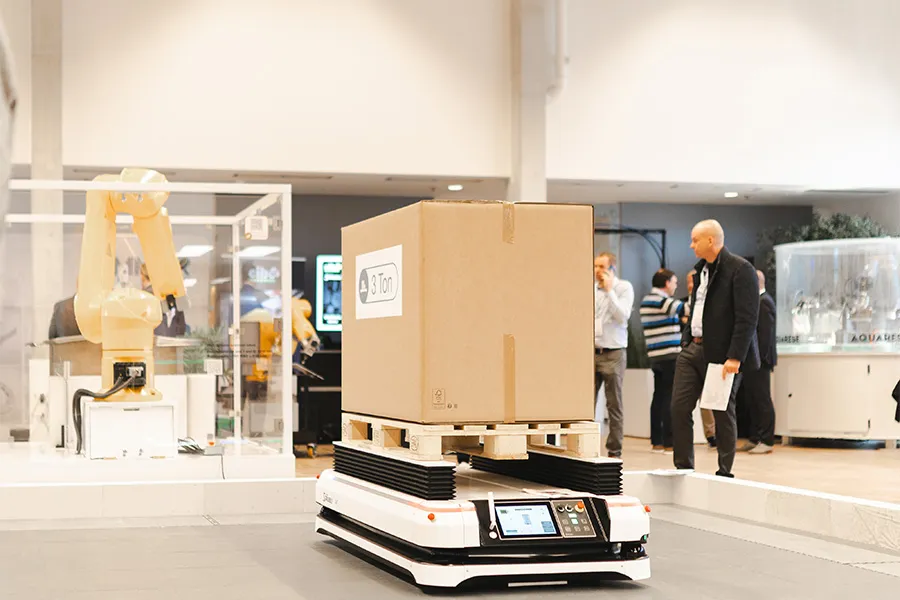
Visitors were immediately greeted by the biggest new arrival, quite literally too, if you take into account the size of the box it was carrying: the new AGV PF3. It made its first appearance in the Benelux. Stäubli Director Robotics Benelux Laurent Mattheys explains what makes it so special. “Five years ago, Stäubli acquired a company that delivered custom-built AGVs. We combined that expertise with our own and turned it into a standard product. The PF3 is the first result. The plan is to expand the range over the coming years, with each model having its own characteristics but all using the same platform, as we already do with our industrial robots.” Its compact size may not give it away, but this powerhouse can move loads of up to 3 tonnes, with high positioning accuracy of +/- 5 mm. “That makes it ideal for moving heavy parts in a highly flexible way.” And in any environment, too. Its enclosed design, a Stäubli hallmark, also opens the door to applications in food and pharma.
Future developments spark curiosity
So there are new possibilities. But Stäubli also had plenty to spark the curiosity of those looking further ahead. “Telemanipulation is one such development,” says Mattheys. It allows the robot’s actions to be controlled remotely by tracking the operator’s movements. “We can’t supply it as a ready-to-use solution yet, but here we’re showing how close this technology is to applications for users. It’s coming.” A second example in this category is the hollow wrist. “Although our robots already have an enclosed structure, there was still always an external cable. Adding a hollow wrist joint does away with that. This isn’t the first time we’ve shown this application. The technology is now almost ready. It’s interesting to hear visitors’ feedback and incorporate it into the final development.”
Belgian proof of concept highlights ease of programming
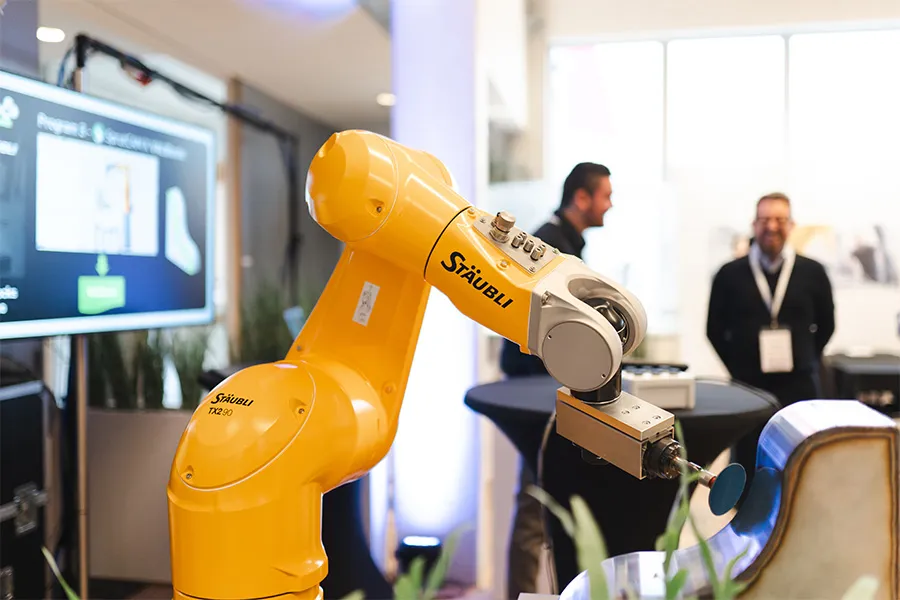
This also led to a great collaboration with CIBO, one of the partners at the event. At the Automatica trade fair, CIBO immediately saw the potential of the latest software, VALblocks, a user-friendly teach pendant. It brings the ease of programming associated with cobots to industrial robots. Together with CIBO, Stäubli Benelux developed a proof of concept showing how easy it can be to robotically deburr parts. “We and our partner put a lot of time into taking things one step further. They brought their deburring expertise to the table, and we brought our knowledge of robots. The result is that you can teach the robot to deburr parts in a highly intuitive way, even when the paths are more complex.” This demonstrates the added value of the openness of the Stäubli platform in creating complete solutions. “For this application, we integrated VALblocks with CAD/CAM software.”
Robots as data miners
The step from software to digitalisation is a short one. Mattheys has developments to report in this area too. “We’re getting a lot of requests from customers to share data from our robots, mainly for preventive and predictive maintenance,” he explains. For Stäubli, this is not about ‘big data’. “We don’t want to overwhelm customers with data. We only want to extract the data that can help them make progress. A simple current measurement or temperature monitoring, for example, can already support a lot of analysis.” Stäubli’s work in this area is partly brought together in SCOPE, an open system that uses captured data to create a dashboard. “The hardware is ready to carry out these analyses. We can also build cybersecure solutions. But genuine business cases also require customers to be open to linking data from the robot to the right systems. Those developments are still to come.”
Better sense of direction for AMRs
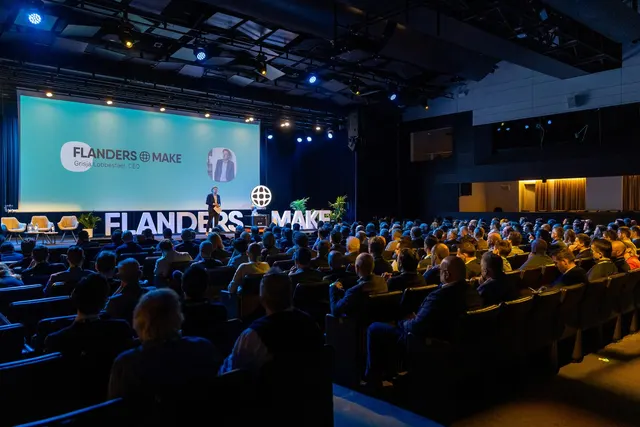
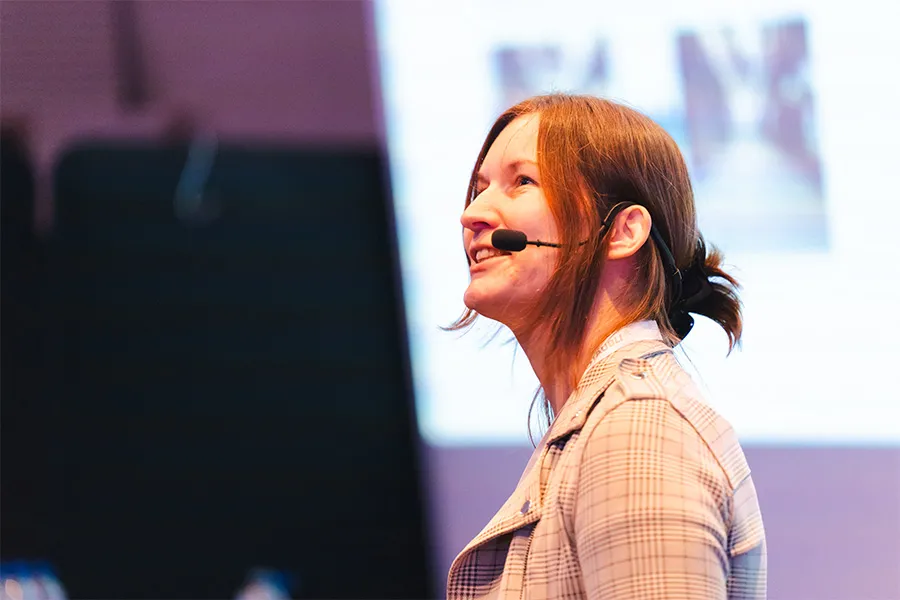
Robots have even made their way into our living rooms, at least for those with a robot vacuum cleaner. The most common reason for failure, for vacuum cleaners and mobile robots more generally? They lose track of where they are. Ellen van Nunen of Flanders Make came to give an update on the latest developments in SLAM (simultaneous localisation and mapping). This is a smart algorithm that uses on-board sensors to build a map and determine the vehicle’s position within it. The technique already works well in static environments, but needs to be more robust in dynamic ones. Flanders Make is building in that robustness in three ways. The first approach combines SLAM with other localisation techniques, such as visual markers or Wi-Fi. The second priority is to improve understanding of the environment by integrating artificial intelligence. Each pixel is assigned a category, static, movable or dynamic, so that the right elements, the static ones, can be used for localisation. Third, a recovery plan is needed. The AMR must be able to return to its last recognised position or follow a predefined route to regain its bearings. Thanks to this three-pronged approach, Flanders Make was crowned champion in every trial at this year’s ICRA BARN challenge.
Een zakelijke vraag aan Stäubli Benelux N.V.? Get in touch
Companies in this story

Keep following this
Get an email when a new story is published. No account needed.
- ThemeRobots on the shop floor
- SubjectEvents
- CompanyStäubli Benelux N.V.