AM for Precision showcase demonstrates 3D metal printing as part of precision technology
For several years, Tier 1 suppliers to the semiconductor industry have been building up production capacity for additive manufacturing. Has additive manufacturing now firmly established itself in high-tech manufacturing? The AM for Precision showcase at the 22nd edition of the Precisiebeurs shows where suppliers stand and what is technically possible.
John Hagelaars of De Valk Additive (the name Machinefabriek De Valk adopted after its acquisition by Anvil Group) is one of the pioneers of the Dutch AM industry. He got involved ten years ago with high expectations. Now he is working on the first concrete orders for serial production of metal components using 3D printing. “It is starting to trickle through to high-tech companies,” he says. “But their driving force for additive manufacturing has changed.”
Lack of capacity
In recent years, precision machining companies working with 3D metal printing have mainly tried to make the business case by highlighting the typical advantages of additive manufacturing. For example, better positioning of cooling channels, or weight reduction through topology optimisation. Components with complex, often organic shapes have been on display at the Precisiebeurs every year (15 and 16 November, Den Bosch). In 2023, the main driver appears to be a lack of capacity in the supply chain. “Ten years ago, the term used for 3D metal printing was freedom of design. The more difficult the part, the easier it was to print,” says Henk Jansen, director of FMI Additive.
Ten years ago, the term used for 3D metal printing was freedom of design. The more difficult the part, the easier it was to print, says Henk Jansen, director of FMI Additive
He says the world has come to its senses. “The added value people now see in 3D metal printing is that it makes assemblies easier to produce, with fewer process steps. And as long as we are talking about critical parts, we are competitive on price.” FMI Additive aims to develop a second market for critical titanium parts for the semiconductor industry, alongside its market for medical implants, for which serial production is under way.
“We have already started production for some system suppliers, often of thin-walled, manifold-like products. For ASML, we are working to complete qualification and validation.” These parts were originally, for example, machined components with internal cooling channels that were then welded together using laser welding. Laser welding is a specialist process. Not every supplier has this technology in-house, so parts have to be transported elsewhere, tested for leaks after laser welding, then returned to the supplier for mechanical finishing. When you add up all those steps, 3D printing the part in one go and carrying out the mechanical finishing at the same company saves a lot of lead time.
This has opened the eyes of high-tech OEMs to additive manufacturing. John Hagelaars: “Direct costs are not the top priority. It is about making the process more cost-effective. That is not just about making chips, but also about logistics, footprint, the circular economy and so on. We can supply parts now that there are capacity shortages in the supply chain.”
Sometimes up to 80% precision technology required
AM is not a matter of printing a part, tying a ribbon around it and sending it to the customer. The suppliers currently succeeding with additive manufacturing offer a complete solution, including the mechanical finishing needed to achieve dimensional tolerances of a few microns and surface roughness values well below 1 micron.
Sometimes you need up to 80% precision technology: you need to know conventional turning and milling, says John Hagelaars
“After printing, you run into the problems that come up with every order,” says John Hagelaars bluntly. Additive manufacturing is just one step in the whole process. Both FMI Additive and De Valk Additive are suppliers that deliver the entire process, carrying out most steps in-house or at one of their sister companies. “Printing alone is worth nothing. You need to have spoken to a milling specialist to come up with something,” says John Hagelaars.
“Sometimes you need up to 80% precision technology; you need to know conventional turning and milling.” Cleaning is one example: De Valk Additive meets ASML’s Grade 2 requirements, something OEMs thought impossible years ago. That is why he thinks the AM for Precision showcase is a good fit for the Precisiebeurs. “It is much better than a standalone AM event.”
Quality assurance in the process
Quality control is an important step in this process. It is also a cost factor that cannot be overlooked. FMI Additive has built up extensive experience in this area over the past ten years, 3D printing titanium implants for major medical companies. Henk Jansen believes that the quality procedures in the medical industry and the semiconductor industry are not that different. In the medtech industry, FMI Additive has to demonstrate that both the first and the five-thousandth implant are sound, strong and clean.
You also have to demonstrate that powder handling, machine cleaning, powder sieving and so on are carried out according to a single, fixed procedure, says Henk Jansen
Process validation means you do not have to inspect every component individually. The same applies to printing tensile bars and test coupons to demonstrate that if product 1 is good, they are all good, without having to put every product through a CT scan. Henk Jansen: “There are differences in emphasis compared with the semiconductor industry, but in principle you approach processes for critical high-tech parts in the same way. This validation goes beyond the printing itself. You also have to demonstrate that powder handling, machine cleaning, powder sieving and so on are carried out according to a single, fixed procedure.”
The supplier’s added value
As one of the AM technology suppliers at the AM for Precision showcase at the Precisiebeurs, Renishaw offers software specifically designed to ensure that build jobs developed by an OEM’s engineers are printed exactly the same way by a supplier. An end-to-end solution for critical parts. Philippe Reinders Folmer, managing director of Renishaw Benelux: “All the parameters are in the file. The operator cannot change anything. The only factors that have an influence are things such as gas flow, cleaning and powder handling.”
It is about replicating parts, even far from home, with quality adequately assured, says Philippe Reinders Folmer, managing director of Renishaw Benelux
Renishaw aims to minimise the operator’s influence on the final quality and ensure consistent quality as a result. Does that make the proposition less attractive to suppliers? What value can a supplier still add? Philippe Reinders Folmer: “The supplier adds value by finishing the parts, inspecting them and delivering them ultra-clean. Not through the printing process itself. There should be as few variables as possible in that.”
Rein van der Mast points out that the same ideas are being considered by the Ministry of Defence, which is looking at the potential of additive manufacturing. “It is about replicating parts, even far from home, with quality adequately assured.”
Support from IAMM
Both suppliers have a long track record in additive manufacturing. “We knew there would be a trough of disillusionment, but we did not expect it to be so long and so deep. Now things are starting to fall into place,” says John Hagelaars. It has been a valuable learning process, though. The entire AM process, including everything involved, is difficult, adds Henk Jansen.
Ultimately, the market needs to drive additive manufacturing, rather than a handful of Willie Wortels continuing to push it. To achieve that, the focus must be not just on technology, but on the entire chain, says Rein van der Mast (Fontys Hogescholen), initiator of IAMM
To support the Dutch metal industry in implementing additive manufacturing, several universities of applied sciences (Fontys, Windesheim and Saxion) have pooled their expertise in a long-term collaboration: Industrieel AM in Metalen (IAMM). Universities (Delft, Enschede), technology companies and other organisations are also involved. At the Precisiebeurs in Den Bosch (15 and 16 November), the project team will have a helpdesk where visitors can ask questions.
Together with their partners, the universities of applied sciences aim to help industry recognise and seize the opportunities. Rein van der Mast (Fontys Hogescholen), initiator of IAMM: “Ultimately, the market needs to drive additive manufacturing, rather than a handful of Willie Wortels continuing to push it. To achieve that, the focus must be not just on technology, but on the entire chain.
After all, supply chains are connected to the market, not to the engineers.” The IAMM helpdesk offers easy access to expertise, training, test facilities and more. For metal printing, the partners have several technologies in addition to the familiar laser powder bed process. These include Meltio’s DED technology and cold spray, relatively little-known techniques that are nevertheless a very good fit for machining companies.
What is needed?
Are these and other new technologies needed to help AM gain wider adoption? John Hagelaars believes there needs to be a better link between additive and machining processes, for example through zero-point clamping systems, so that parts can be transferred directly from the metal printer to a 5-axis machining centre.
Henk Jansen expects other printing technologies to gain wider acceptance. One example is Electron Beam Melting, the Arcam technology FMI Additive uses in Tilburg to print large batches of implants.
Some manufacturers are working on this. “But they are still very much two separate worlds, and there is a lot to be gained.” Henk Jansen expects other printing technologies to gain wider acceptance as the market matures. One example is Electron Beam Melting, the Arcam technology FMI Additive uses in Tilburg to print large batches of implants. In the precision industry, Laser Powderbed Fusion is the dominant technology. “Yet electron beam has the advantage that we print in a vacuum at high temperatures, which means we build up almost no stresses. And we can print without support structures.”
However, what is unfamiliar is not readily embraced. Rein van der Mast sees potential in the digital twin, which can help predict the outcome of the printing process more accurately in advance and allow timely responses to deviations. One of the graduate students involved in the project investigated the reliability of Siemens NX’s predictions for powder bed printing. “The predictions made by the software are fairly accurate. This matters because more iterations can then be carried out in the virtual, digital domain, saving time and money.”
Will the AM market grow now?
Will the Dutch AM market finally start to grow? John Hagelaars expects AM to remain a niche technology for another five years or so. He sees little movement in other high-tech sectors beyond the semiconductor industry. The IAMM desk could help with this. A real breakthrough will come from engineers, when they truly start engineering around the possibilities offered by 3D printing. That is still in its infancy. Henk Jansen expects acceptance to continue gradually, as is the case with every new technology. “When wire EDM came onto the market, engineers had to learn that they could cut shapes out of metal using a jigsaw. That was the start of the wire EDM revolution. We are now seeing the same thing beginning to happen with AM.”
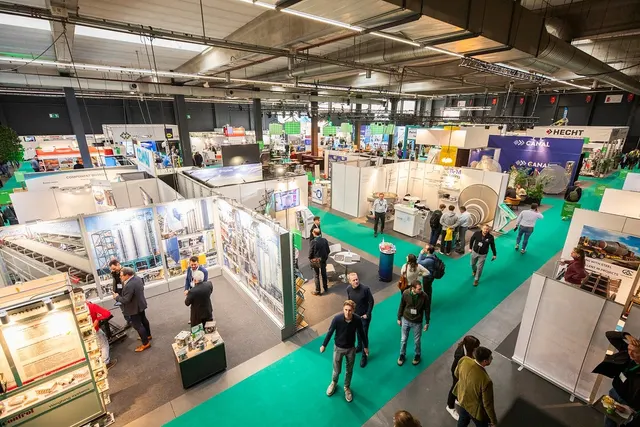
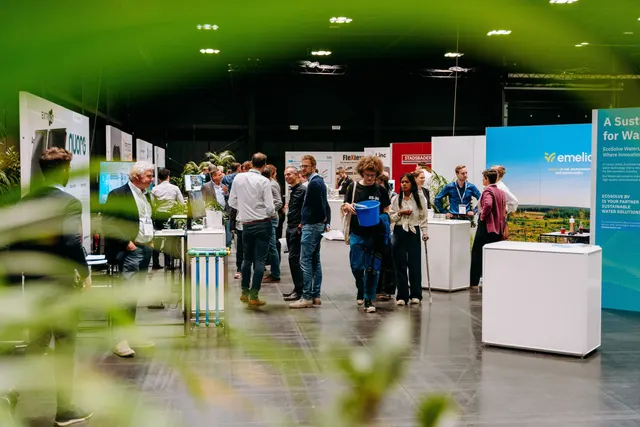
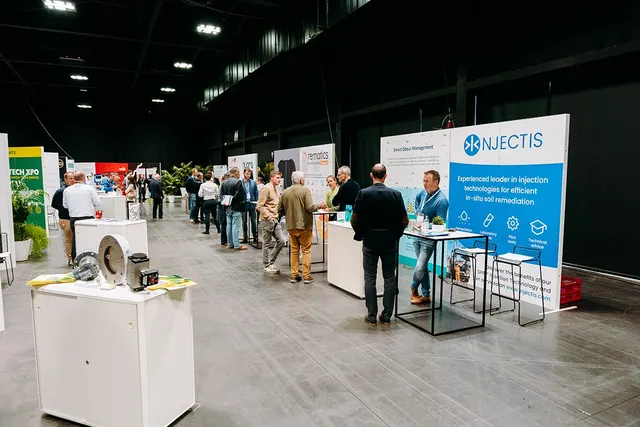
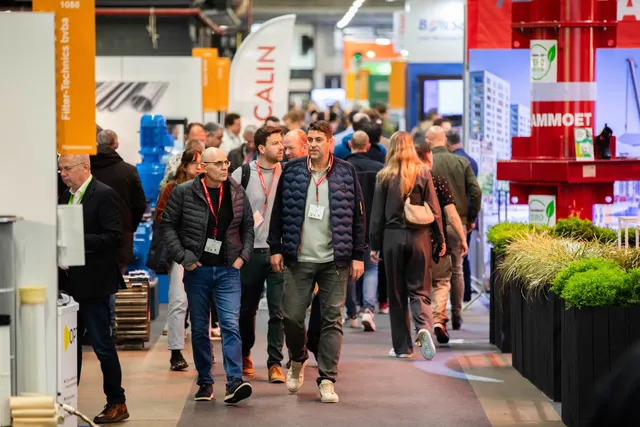
The AM for Precision area at the Precisiebeurs features 14 exhibitors, as well as a meeting area where visitors can discuss business with these participants in peace and quiet. The Precisiebeurs takes place on 15 and 16 November at the Brabanthallen in ’s Hertogenbosch. The trade fair is free to visit on both days. Register here.
Question about this story? Ask your question
Keep following this
Get an email when a new story is published. No account needed.
- SubjectEvents