












End-to-end tools and services for digital engineering
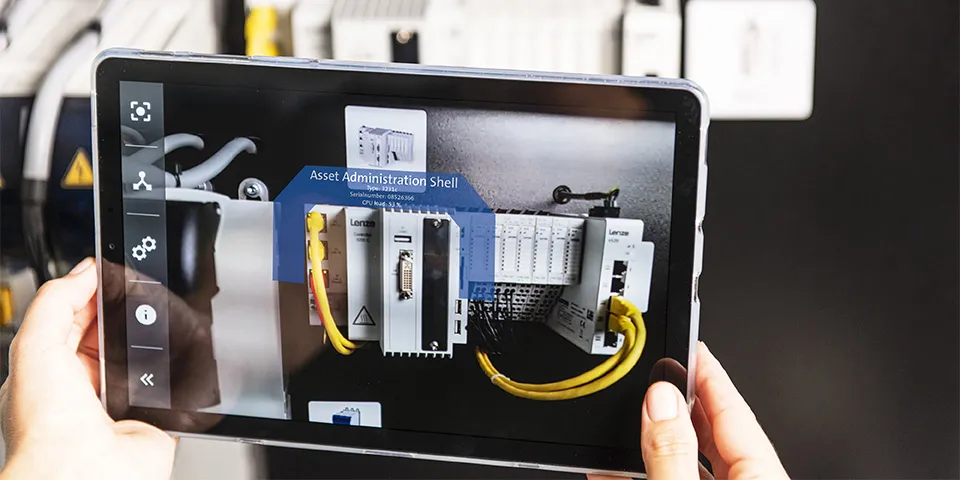
Digital transformation is creating new opportunities in industry, particularly in machine building. Data can be linked with ever greater precision, not only during production but also during machine and system development. At SPS, Lenze showed which data it makes available to its partners and how that data can be integrated and used to the greatest possible extent. This is essential for mechanical engineers looking to move into digital engineering. They can only benefit from it with the right tools, resources and methods.
Moving from paper-based designs to electronic design methods was a major milestone in digitalisation. Digital transformation now represents the next evolutionary step: sensors and hard drives record data that is used to develop a module and then to design machines and systems. Later, it can also be used for operation and maintenance, services and reconfiguration. The Asset Administration Shell (AAS) is a promising concept for managing endless streams of data. AAS is already an important part of the Industrie 4.0 Reference Architecture Model (RAMI 4.0).
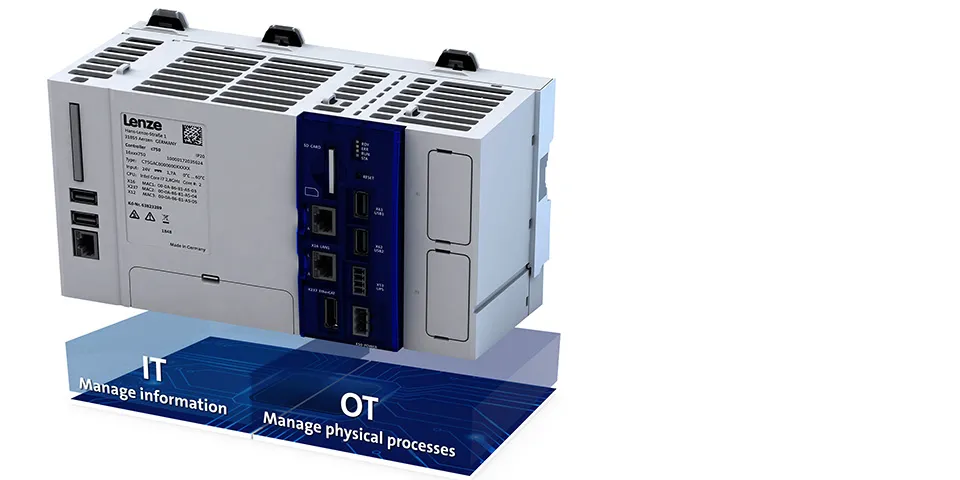
As an Industrie 4.0 player and provider of IIoT solutions, Lenze is a leading force in industrial digitalisation.
No Industrie 4.0 without AAS
AAS can also be seen as a repository for all relevant data from each source: descriptions of mechanical and electrical properties, documentation and certifications, software, behavioural descriptions and much more. This information bundle is at the heart of Industrie 4.0 applications, so it must meet certain general requirements. Although the concept was introduced for Industrie 4.0 more than three years ago, some issues with AAS remained unresolved. The shortcomings holding back end-to-end data use are gradually being overcome. Lenze is helping to drive this forward: the company is involved in standardisation bodies, has published white papers and has experts who support customers with their digital engineering. It also already offers customers tools and applications that allow companies to put the AAS concept into practice straight away.
Designing system solutions
One of Lenze’s most important digital engineering tools is EASY System Designer. This innovative, web-based tool will soon help users design complete machine solutions incorporating automation and drive components as well as software.
Drawing on extensive, integrated automation expertise, the programme assesses the feasibility of a system solution and documents everything for those involved in the engineering process. This saves valuable planning time, shortens the decision-making process and reduces project risks. Consistency creates added value: the designed solution can also be used for other engineering tasks. The complete solution can be added directly to the EASY Product Finder shopping basket, speeding up quotation preparation.
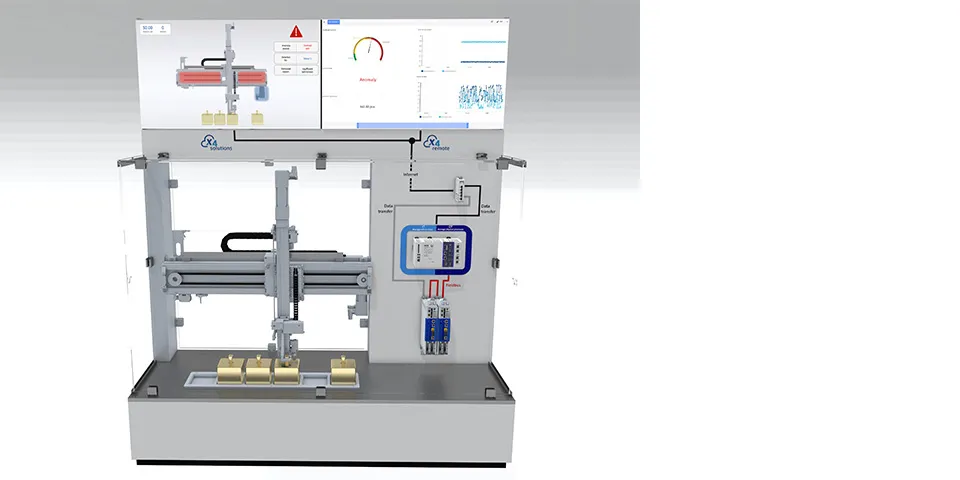
A Lenze showcase demonstrated how effective condition monitoring can be achieved using component data, application knowledge and suitable analysis tools.
Laying the foundations for a PLC programme
The next step is to use the system solution design as the basis for developing a suitable PLC programme. In their own working environment, programmers can access the information they need to create the PLC programme. This includes data on the machine configuration, selected hardware components, software modules, application parameters and other relevant project information. This enables programmers to complete a PLC programme and get the machine ready in less time. During this process, the Asset Administration Shell is enriched with data: the information is processed using tools that understand the AAS structure.
The virtual and real worlds come together
At its stand, Lenze showed that AAS is not just a theoretical concept, but can make a real contribution to industrial automation. The pick-and-place robot at the stand demonstrated this. Like RAMI 4.0, AAS provides not only information about the type of asset but also current data such as serial numbers, manufacturing time and live data. AAS offers benefits for both OEMs and plant operators by standardising and structuring data and connecting it to a single central source. With this system, data does not need to be moved. This is useful because moving data can lead to errors, the information may not be up to date or may simply not exist. At the same time, comprehensive data availability can provide detailed information without the need for additional measurement points. A Lenze showcase demonstrated how effective condition monitoring can be achieved using component data, application knowledge and suitable analysis tools.
Conclusion: Lenze is in step with the market
At SPS, Lenze presented its tools, prototypes and concept studies for digital engineering to show partners what R&D departments could focus on in the future. It was also the perfect opportunity for customers to discuss their feedback and requirements. This led to the development of new tools fully tailored to market needs. As an Industrie 4.0 player and provider of IIoT solutions, Lenze is a leading force in industrial digitalisation.
Question about this story? Ask your question
Companies in this story

Keep following this
Get an email when a new story is published. No account needed.
- ThemeFrom design to flexible machine
- SubjectNews
- CompanyLenze BV







