












Efficient and reliable machine guarding solution
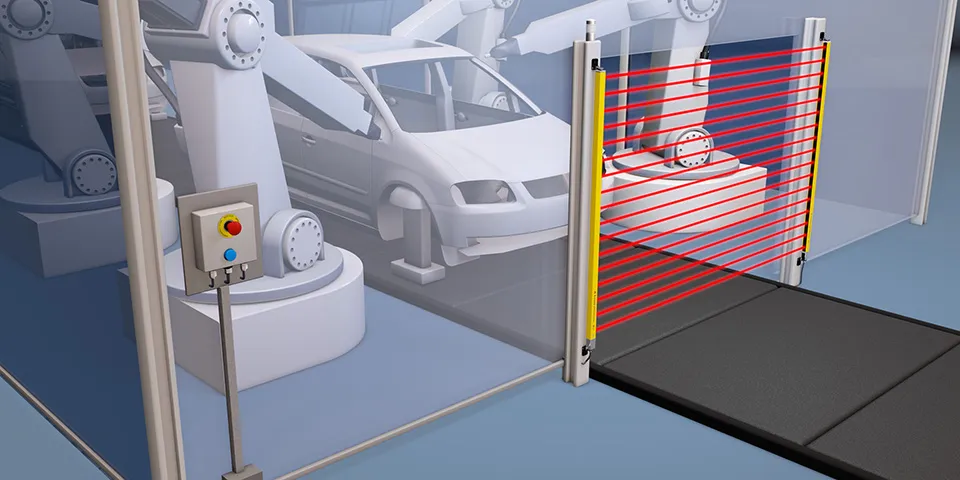
In handling and assembly systems, hazardous areas sometimes need to be protected against unauthorised access. At the same time, materials must still be transported into and out of the hazardous area. With Smart Process Gating, Leuze electronic offers an efficient way to bypass a safeguarded zone without additional muting sensors.
Safety is crucial in every production environment. That is why dangerous machines are often enclosed by safety fencing. However, this is not an option for systems that need to move materials in and out. Sensors are generally used in these cases. They automatically identify the material and confirm that it is safe, allowing it to be fed into the system without any problems. However, if the sensors detect a person, the machine will enter a safety state and, in most cases, shut down automatically.
Smart Process Gating (SPG)
These systems use optoelectronic safety devices installed at the infeed and outfeed stations. This allows the material to pass through without interruption while preventing people from entering. Previously, additional muting sensors were required to detect the material and distinguish it from people. Leuze Electronic has now introduced an efficient solution that does not require additional sensors: Smart Process Gating (SPG).
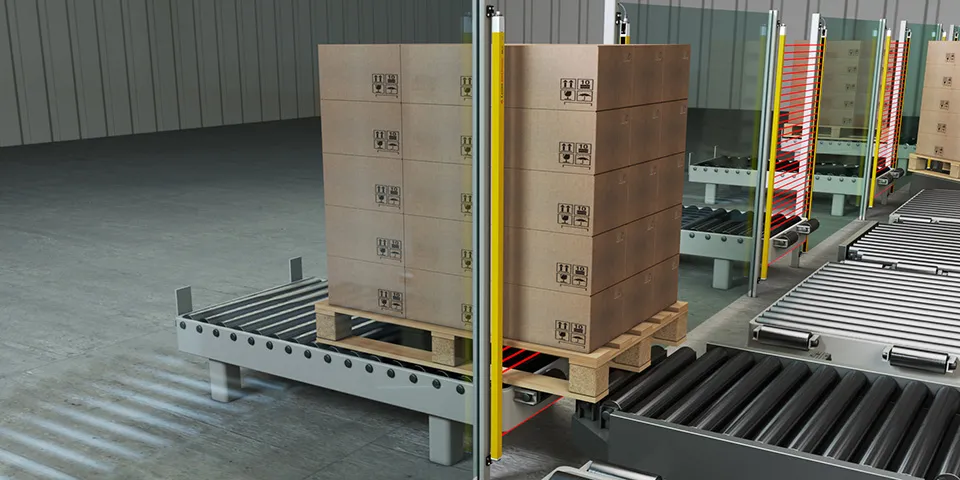
The sensors automatically identify the material and confirm that it is safe, allowing it to be fed into the system without any problems.
How does SPG work?
The system is based on type 4 safety light curtains from the MLC 500 series. The SPG process uses two control signals as its basic principle. The first control signal (CS) is supplied by the system controller (PLC). The second signal, Protective Field Interruption (PFI), is generated by the safety light curtain itself when the safeguarded zone is interrupted. To bypass the light curtain’s safeguarded zone when feeding in material, the PLC sends the control signal to the light curtain shortly before the material enters the zone. To prevent people from entering, the system must be configured so that the control signal is only sent when the material to be fed in is less than 200 mm from the safeguarded zone. The SPG process must therefore know the position of the material, so that the PLC control signals are sent to the light curtain within the correct time window. When the material enters the safeguarded zone, the light curtain generates the PFI signal, allowing the material to pass through the zone.
The bypass ends after a set time, once the material has left the safeguarded zone. The same process is followed when material is moved out of the zone.

As no muting sensors need to be installed, an SPG system has a very compact, space-saving design.
The benefits of Smart Process Gating
Smart Process Gating offers many benefits for companies in intralogistics, the automotive and packaging industries, and more. Since no space is needed for muting sensors in front of or behind the light curtain, an SPG system has a very compact, space-saving design. Installation and configuration are also relatively straightforward, as there is no need to mount, align or realign muting sensors. The high reliability and availability of the safety device ensure that production, packaging and logistics processes can be carried out with maximum efficiency and safety. The risk of tampering or bypassing the system by employees is virtually non-existent.
Question about this story? Ask your question
Keep following this
Get an email when a new story is published. No account needed.
- ThemeProcess measurement and control
- SubjectNews







