












Digitalisation enables smarter service delivery
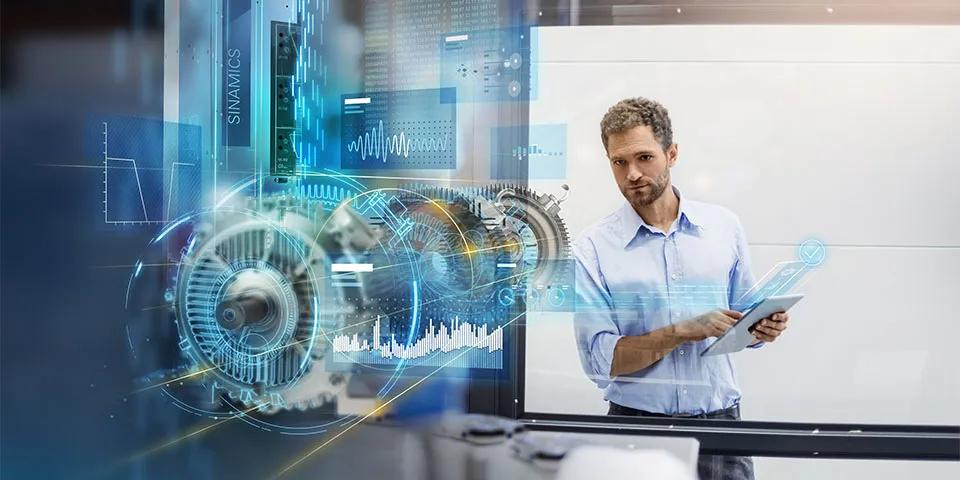
In a knowledge-intensive industry like ours, it is not easy for companies to have all the technical expertise they need in-house. Particularly now that we are moving towards predictive and prescriptive maintenance. That is why there has long been a trend towards outsourcing technical expertise. The arrival of Industry 4.0 has only made these technical challenges more complex, and the need for expertise greater. The experts at Siemens Digital Industries Services guide you through the entire value chain and strengthen your production operations.
Since joining Siemens in 91, Kris Kenis has seen maintenance evolve considerably. “Service is about maximising production output at the lowest possible cost. The playing field is still the same as it was back in the early days when I started, but thanks to Industry 4.0 we can approach it differently and more intelligently,” Kenis says with a wink. Today, he is responsible for Digital Industries Services. “And that is necessary, because the market demands more flexibility, quality and efficiency than ever before. Digitalisation can deliver on that promise, but you need people with knowledge of IT structures and OT applications. That is no easy task for our customers. Hence the growing trend towards outsourcing high-level maintenance activities and co-creation as part of ‘Proof of Value’ digitalisation projects.”

Kris Kenis: “Service is about maximising production output at the lowest possible cost. Digitalisation allows us to do that more intelligently.”
Ensuring machine performance and quality
This applies to both end users and machine builders. They too cannot afford to miss the digitalisation train if they want to continue designing and manufacturing competitive machines and installations. What is more, the bar is being raised for machine builders. “End customers do not just want a machine, they also want its performance and quality to be guaranteed. We can help deliver this digitally, right from the concept and design phase. Alongside traditional support, we can virtually commission automation products on a digital twin. This significantly reduces time to market. Once the machine is operational, we help the machine builder optimise production performance and its ‘health’ in real time using data analytics services (DAS).”
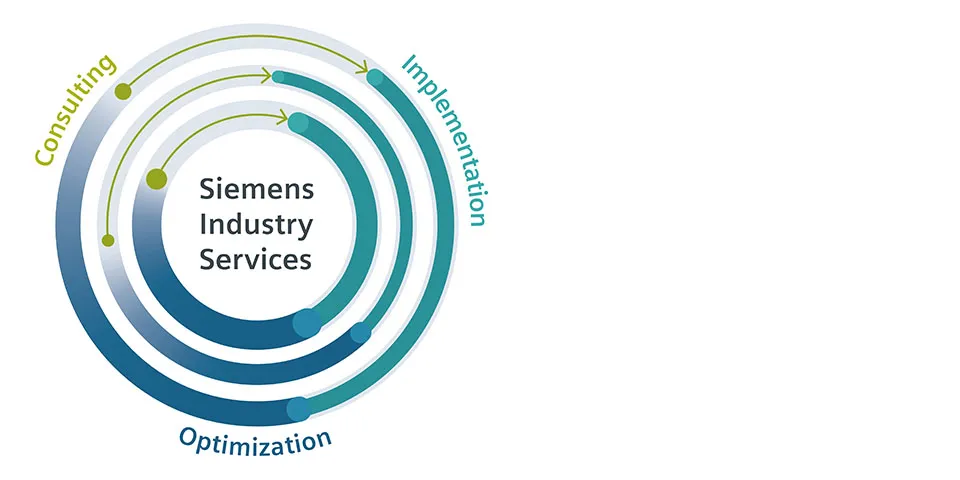
Siemens’ service portfolio covers the entire lifecycle of an industrial automation product, system and installation.
Towards prescriptive maintenance
Services today clearly cover much more. Kenis: “In the past, the traditional approach was corrective maintenance. The customer had a breakdown and we rushed out to fix the problem. The new digital capabilities enable us to take things further. We can now predict fairly accurately when a machine is going to stop. By applying techniques such as artificial intelligence and machine learning, we can determine not only what will happen and when, but also why. This is the ultimate advice a customer needs: prescriptive maintenance. That is what Industry 4.0 can mean for services.”
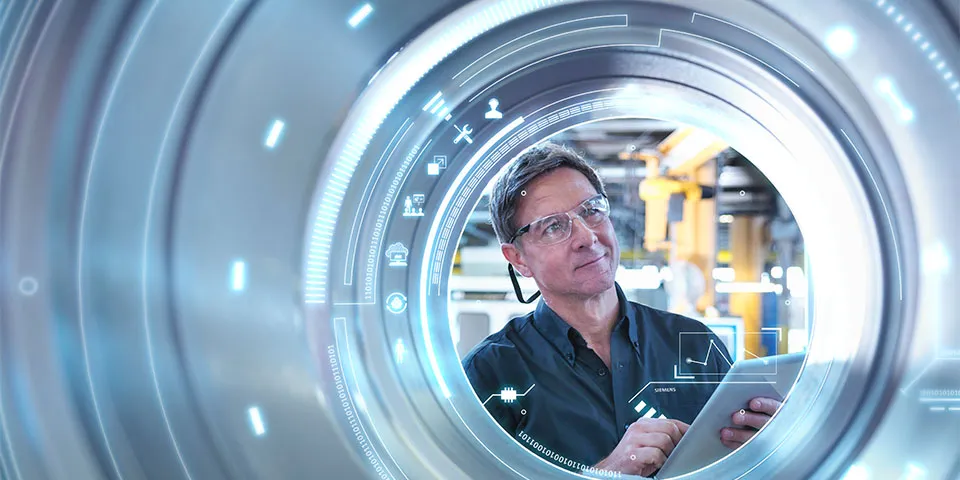
The market demands more flexibility, quality and efficiency than ever before. Digitalisation can deliver on that promise, but you need people with knowledge of IT structures and OT applications.
Tailored training
Siemens divides its industrial services into retrofit & modernization, field & maintenance, repair services, spare parts services, support & consulting, and training & digital services. Together, these cover the entire lifecycle of an industrial automation product, system and installation. Kenis: “The training segment has been changing rapidly of late. On the one hand, large companies approach us for training tailored to their own installations. A good example is the collaboration with Volvo and Hogeschool Odisee. Volvo operators learn to master the processes in every detail on a realistic digital twin of Volvo’s production environment, which increases efficiency. Hogeschool Odisee provides the venue, and in return students can also learn about the technology.” On the other hand, Siemens is focusing on remote training and remote access, particularly during the coronavirus pandemic. This allows customers to stay on site while still receiving instructions on how to do things. Siemens also provides remote platforms such as cRSP (common Remote Service Platform) and Sinema Remote. For example, at BASF in Antwerp, all 350 devices controlled by Simatic PLCs are monitored remotely around the clock via TIA Portal, including cybersecurity and diagnostics.
Building skills in modules
As an extension of these remote solutions, Sitrain Acces was recently launched as an online training platform. “Through this platform, we make knowledge available in modules, combining video tutorials, presentations, webinars and more. You can explore the modules relevant to your role, wherever and whenever you want. This meets the expectations of young people now entering the industry. They want immediate support and to build their knowledge in a flexible, modular way. They can also put what they have learned straight into practice virtually using digital twins,” says Kenis. “It is important for companies to keep investing in digital transformation. Yet, because of the economic downturn caused by Covid-19, many budgets are being put on hold. But now is the time to accelerate and get ahead of the competition,” Kenis concludes.
Question about this story? Ask your question
Keep following this
Get an email when a new story is published. No account needed.
- ThemeData from shop floor to decision
- SubjectNews







