












Determine the best machine concept virtually
Text Valérie CouplezImage Howest
Think back. In 2021, we reported in these pages how researchers from Universiteit Antwerpen, UGent and Flanders Make succeeded in making the drive train of ventilators more efficient. They did so not by building prototype after prototype or investing in expensive simulation software, but by working from a CAD design. Today, the same researchers are taking a step back in the story. They have used that same technological foundation to help machine builders determine, at the design stage, which drive concept best suits their application.
“In the previous project, we demonstrated that significant savings are possible, even when the machine concept has already been fixed. For example, the ventilator case delivered energy savings of 44%. But the chosen concept itself was never questioned. Yet for machine builders, it can account for as much as 60 to 70% of costs. So, by daring to question your machine concept too, you can save a great deal more. That is not straightforward. Change is never easy; we prefer to carry on doing things as we have for years. That is why we want to use concrete cases to show how much energy you can save by choosing a new machine concept and daring to think outside the box,” says Professor Stijn Derammelaere of UAntwerpen, getting straight to the point.
Selecting the best possible machine concept
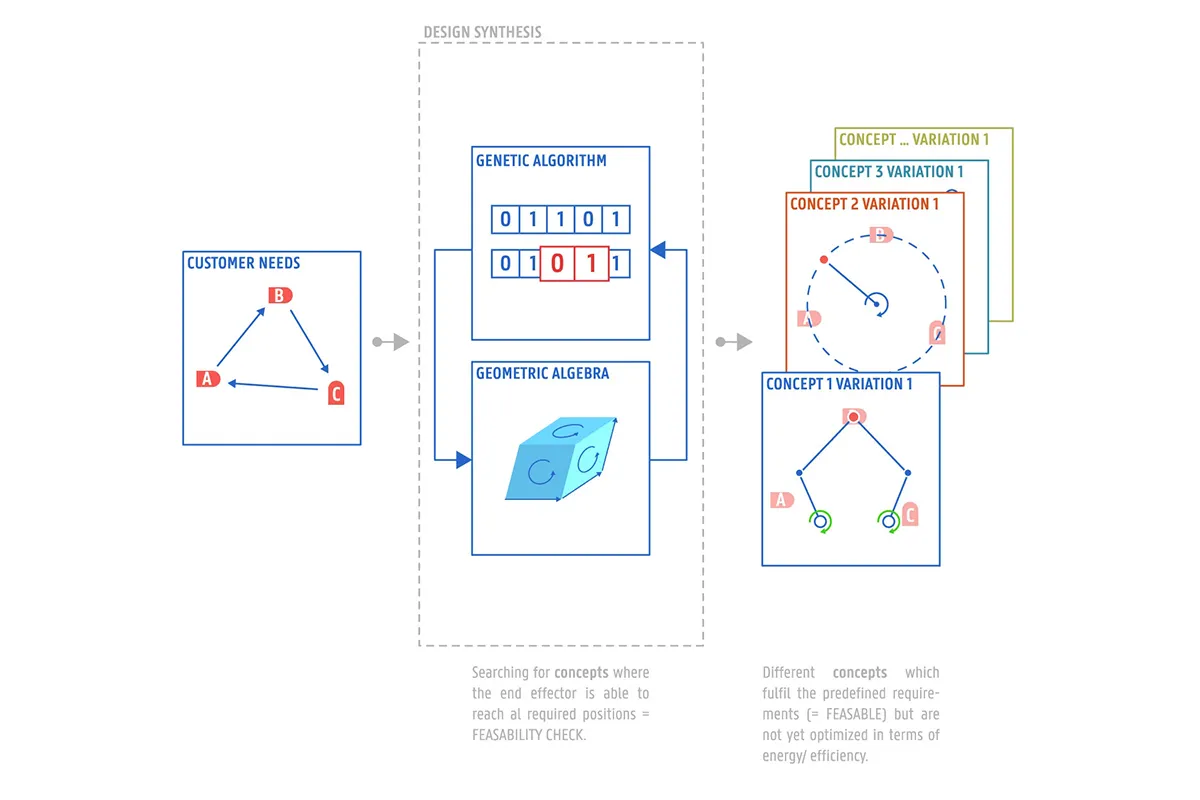
The new concepts are devised entirely virtually. Simon Houwen, project engineer at UGent: “All they have to tell us is what movement they want to achieve, for example moving a block from A to B and then to C, and how quickly. We enter the data, let the calculations run overnight and, in the morning, our tool tells you which machine concept is best suited to what you want to achieve. An engineer will typically fall back on concepts they have used before. With this solution, we can show in black and white which concept will deliver the most for the machine builder.” The first run is rarely perfect. The more data you add, the more you can fine-tune the results. The team again cites the coronavirus ventilator as an example. “Back then, we used three rods to compress the bellows and determined the optimum lengths. With the new tool, we have now arrived at a different concept that cut component costs by 43%, while reducing drive torque by up to 59%. And energy consumption by 65%,” Houwen calculates.
Mathematical models for fast results
A striking example of AI? Not really. The process starts with a library of standard components: a lead screw, a shaft, a motor … The researchers then apply mathematical models, which require less computing power than AI and therefore produce results faster. Michiel Haemers, research engineer at Flanders Make, explains how it works. “We virtually test what combinations of components can deliver and which work best in light of the customer’s requirements. We explore different concepts, and also test within each concept which positions and lengths work best to optimise the geometry and the path.” Energy efficiency need not be the only criterion. “We can also evaluate based on TCO, component costs or speed. In future, we also want to factor component wear into the equation.”
Validation using physical prototypes
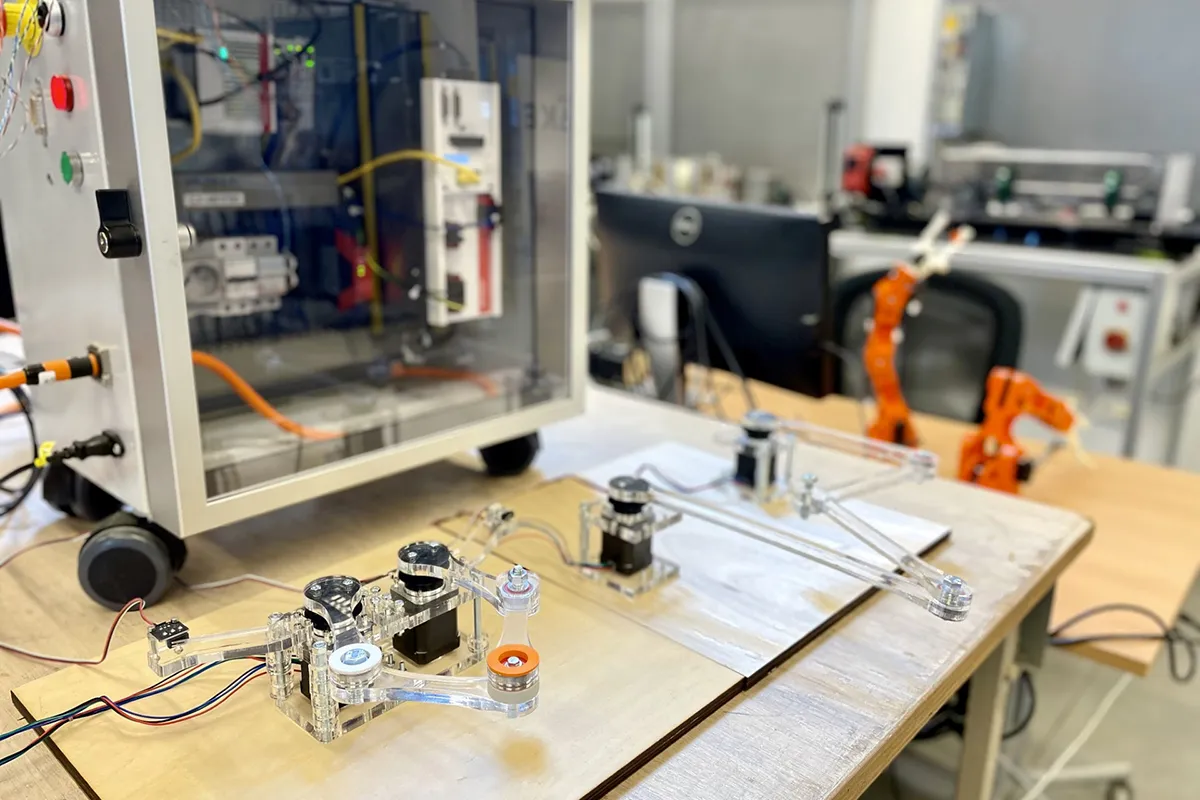
This methodology allows machine builders to quickly validate what their new machine should ideally look like. “You can calculate the ideal dimensions virtually, without building a single prototype and without needing any specialist simulation knowledge. That saves money and time, and makes the approach accessible. For SMEs, testing different machine concepts would not be viable without an automated virtual approach. And because it is based on CAD software, it takes place in an environment machine builders already know. These mathematical models run under the bonnet,” adds Bart Vanwalleghem, senior lecturer in the MPA department at UGent. To show that this optimisation works not only in theory but also delivers the same results in practice, the results are validated using physical prototypes. Around five cases in total were presented to the public at the final study day on 11 September.
Question about this story? Ask your question
Keep following this
Get an email when a new story is published. No account needed.
- SubjectNews







