












Captain’s debate: ‘The brave new world of manufacturing’
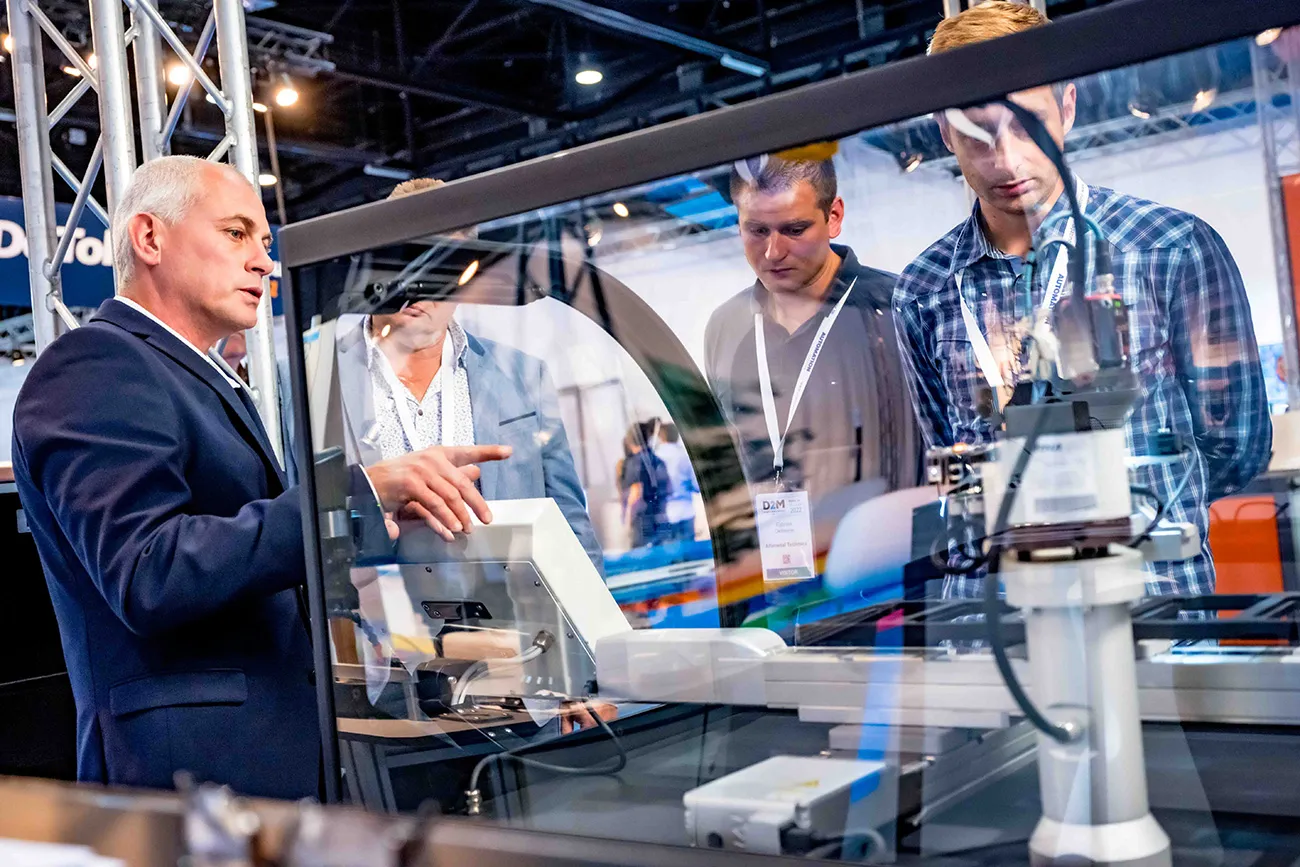
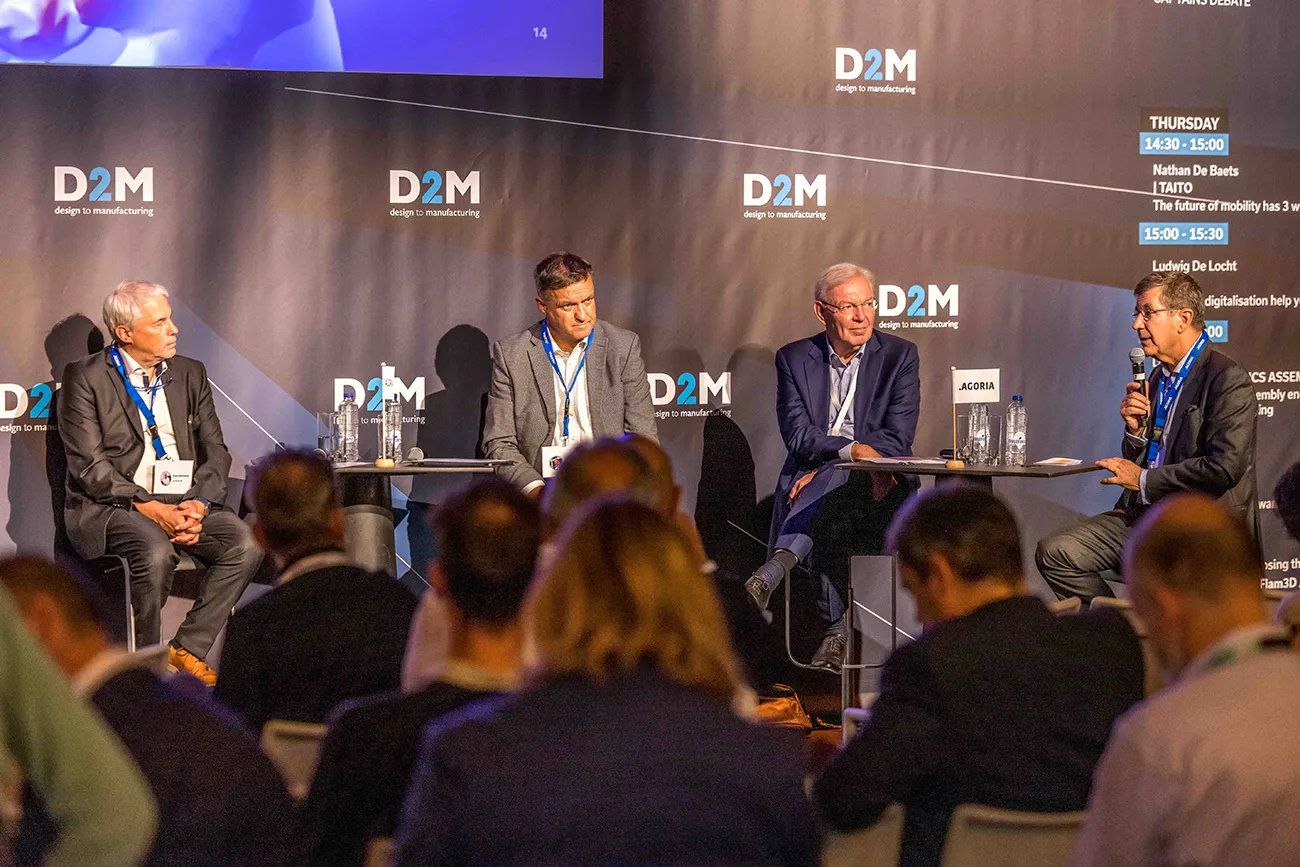
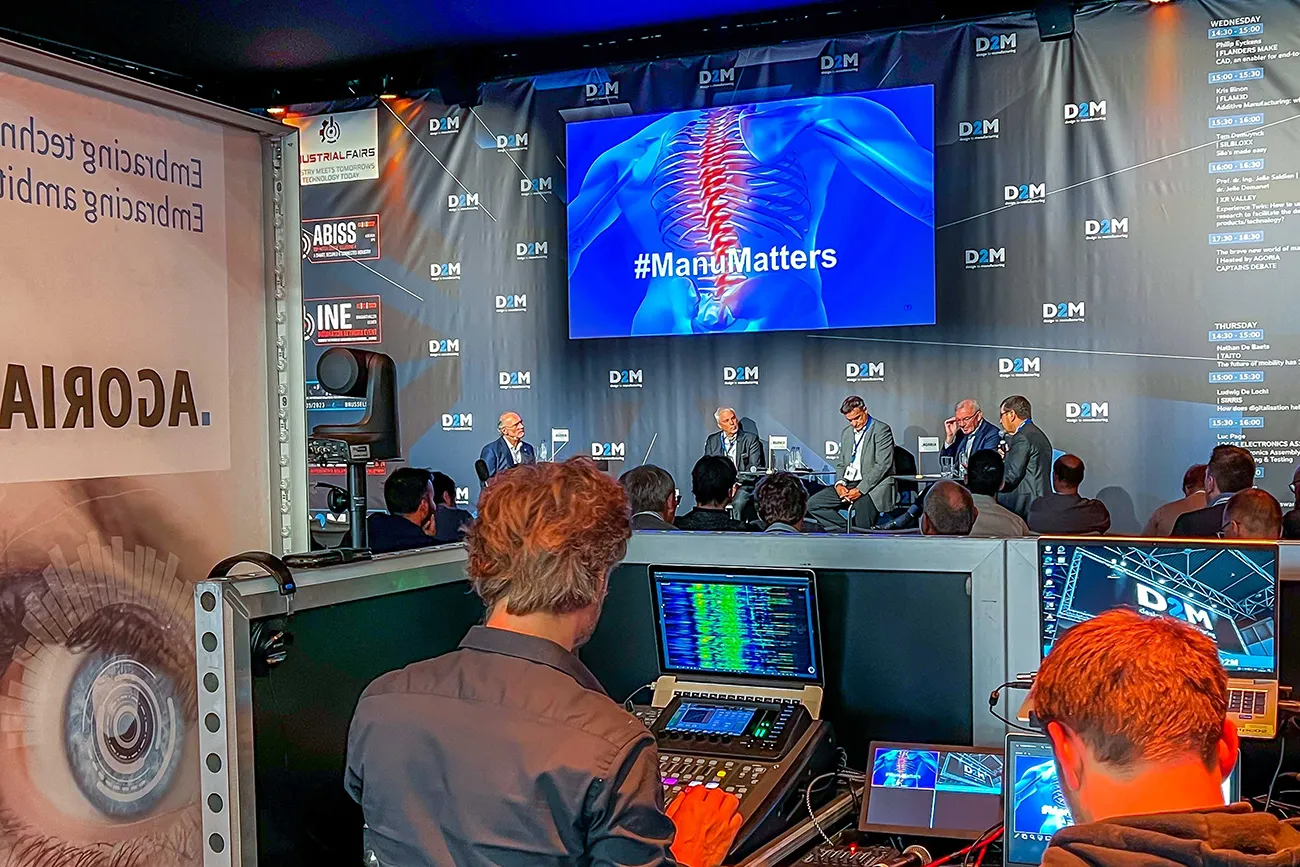
Manufacturing is and remains the backbone of our economy. The figures prove it. A quarter of all employees work in the sector, which also accounts for 70% of total R&D spending in Belgium. But if the sector is to continue playing this pivotal role, it must become more attractive, both to secure the talent of the future and to maintain its competitive position on the world stage. How the sector should navigate this new world of manufacturing was the subject of a debate at the latest edition of D2M. Chaired by Agoria, the panel comprised Volker Germann (CEO Audi Brussels), Marc Meurisse (director Engicon), Trudo Motmans (director Asco) and Bruno Radermacher (managing director Jumo). We share the key insights with you.
It is an understatement to say that manufacturers face some formidable challenges. The consequences of the Covid-19 pandemic and the war in Ukraine are the two main causes. But even before that, we had to contend with Brexit, and now an energy crisis is looming.
“When I think back to how things were two years ago, before Covid, I have to admit that we have ended up in a completely different world,” says Marc Meurisse. “The way we work and collaborate has changed dramatically. Remote is the new mantra. And although a trade fair like this proves that nothing beats face-to-face contact, it has still added a lot of value.”
Engicon also has a production site in Poland, so it can speak first-hand about the differences. “Poland has the best motorways in Europe, the result of the many European subsidies that have flowed there over recent decades. Living standards are rising rapidly, which means people are less keen to work abroad. But they take with them the knowledge they have gained there. So we are getting new competitors.”

Developing a clear strategy
We will therefore have to keep a close eye on production costs if we are to remain competitive on the world stage. Labour costs play a crucial role in this.
Radermacher agrees. With Jumo based in the German-speaking part of Belgium, he feels the pressure of competition particularly keenly. “People here earn up to 30% less. As a result, 25% of the working population choose to look for work in Germany or Luxembourg, which are only a stone’s throw away. If we want to become more attractive, we will first need to invest more in dual learning, so that we can show young people the valuable companies we have here in our region. As a region, we also need to develop an overarching strategy. Aachen has been doing this for ten years, setting targets for industry to stimulate R&D. They have already hired 10,000 people, with a range of profiles and different areas of expertise. These are talents we are missing out on, even though Eupen is only 20 kilometres away. That is why politicians, education and industry need to come together and develop a vision for 2040. The more we intensify these contacts, the more will grow out of them.”
Working together to move forward
Germann also believes Europe has been lulled into a false sense of security and allowed its competitors to grow stronger. “We must make sure we don’t become a Disneyland. If we stop developing and moving forward, we will lose out. It is becoming increasingly difficult to find people with specific skill sets, in Europe generally and here in particular. If inflation continues at this rate, labour costs will rise by 10%, too much to pass on to customers. To turn this around, we will all have to learn to work together. Compared with China, America and Russia, Europe is a small region. If all the member states pull together, good things can come of it. One Europe, one voice. For example, in our efforts to halt global warming. China is watching what we do, learning from us and copying what works. But sustainability is also advancing rapidly in the Middle East. So we certainly don’t have a monopoly.”
Sustainability first
A sector that is also focused on this is aviation. Asco can confirm this from its position as a supplier.
“Aviation has been hit hard by the Covid crisis. It is expected that the industry will not return to 2019 levels until 2023 to 2025. That is two years lost, which you can never get back. But the challenges ahead are also considerable. The latest generation of aircraft uses 25% less fuel. In 2021, it still accounted for just 20% of the fleet. By 2041, only 5% of the 47,000 aircraft flying worldwide are expected to be from the older generation. The aviation industry therefore aims to replace its entire fleet and is also asking its suppliers to make a major contribution. It will focus 47% of its efforts on making fuel more sustainable, but new cutting-edge technology will also be needed. Given that it takes six to eight years for a new aircraft to reach the production line, there is very little time and the challenge is huge. The technology roadmap has been drawn up, but it can only be delivered through close, integrated collaboration,” says Motmans.
Question about this story? Ask your question
Keep following this
Get an email when a new story is published. No account needed.
- SubjectNews







