












Caged ladders: key information and advice
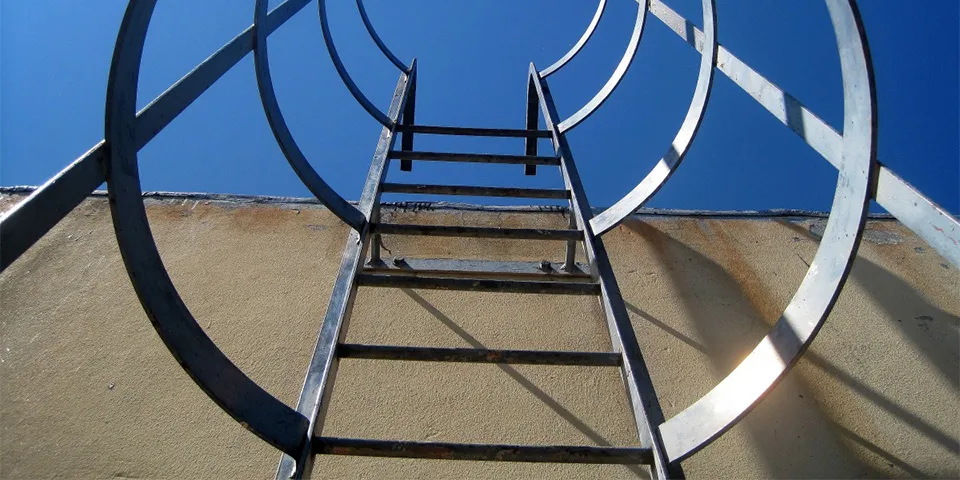
The caged ladder: a safety feature and a back way in
Caged ladders are commonly found today on the façades of warehouses, tall buildings, office blocks and factory halls. This is hardly surprising, as a caged ladder is primarily intended to make businesses and factories safer and provide people inside with a safe escape route. But a caged ladder can also provide access to buildings, for example as a ‘back way in’ for employees or as access for façade workers. What are the regulations governing caged ladders? This article tells you everything you need to know about them. We have gathered the key information about these safety ladders below, along with important details about their purpose and benefits.
The legislation
The law requires buildings such as cinemas, government buildings, schools and factories to have easily accessible escape routes. For heights of three metres or more, a caged ladder is mandatory. It must be made of aluminium and minimise the risk of users falling. A caged ladder must be closed off at the bottom so that passers-by cannot simply climb it. Landings must also be installed every 6 metres as rest areas if the building in question is higher than 10 metres. The law also requires the caged ladder to be inspected at least once a year to check its condition and maintenance.
Caged ladders have other uses too
As well as improving safety by providing an additional escape route, a caged ladder has other uses. It offers a practical alternative way to access the roof of a warehouse, factory or office building. These ladders are widely used by façade workers, chimney sweeps and roofers, as well as by staff who need to reach a hard-to-access location in the building quickly. Caged ladders are therefore ideal for a range of users, even when they are not being used as an escape route in an emergency.
Peace of mind
One advantage of a caged ladder is that it gives your staff, as well as people outside the business, such as customers and passers-by, a greater sense of safety. People who see your business or work there know that you take safety seriously. And that is, of course, good for your company’s image!
Question about this story? Ask your question
Keep following this
Get an email when a new story is published. No account needed.
- SubjectNews







