












Automation and logistics: a match made in heaven in the making
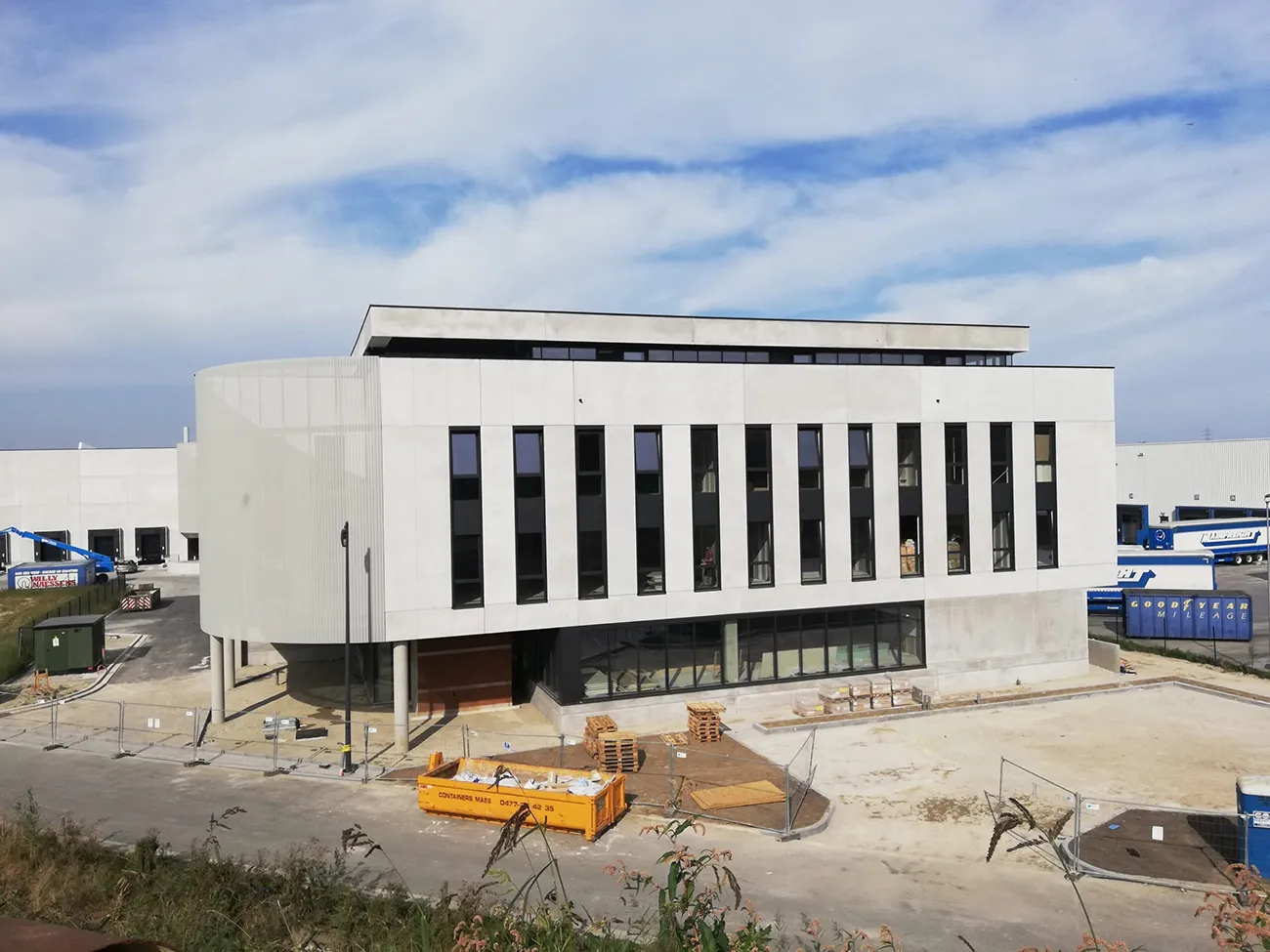
Two new demonstrators in Zeebrugge and Ghent
Managing and controlling the logistics supply chain is increasingly a matter of automation. While embracing technologies for connectivity, data processing and AI opens up a vast range of new possibilities, Flanders is still lagging behind somewhat. Several forward-looking initiatives are hoping to kick-start a catch-up effort.
Few sectors are more directly affected by technology than logistics. Changing needs and expectations are driving strong demand for innovation in the sector. The climate challenge should be seen as a powerful accelerator in this respect. Making transport and logistics more sustainable almost inevitably means adopting new technologies and data processing systems.
The transition often referred to as “Logistics 4.0” creates huge opportunities for businesses, but it also comes at a considerable cost. As a result, automation in practice is mainly the preserve of large players. This is also one reason why Belgium, a country dominated by SMEs, is clearly lagging behind its neighbours. To address this gap and accelerate the transition to a more automated logistics sector, the government has recently launched several initiatives. In doing so, it hopes to strengthen the competitiveness of our companies in the age of e-commerce.
Demonstration space
One of these initiatives is Future Logistics Hub in Zeebrugge, a project by POM West-Vlaanderen. This digital demonstration space enables students, businesses and public authorities to learn about and find inspiration in Logistics 4.0. “We focus mainly on demonstrating the possibilities offered by the so-called physical internet. This consists of fully connected, open networks of logistics services in which physical objects are moved, stored, delivered and used,” explains Barbara Peene, Program Manager Physical Internet at POM West-Vlaanderen.
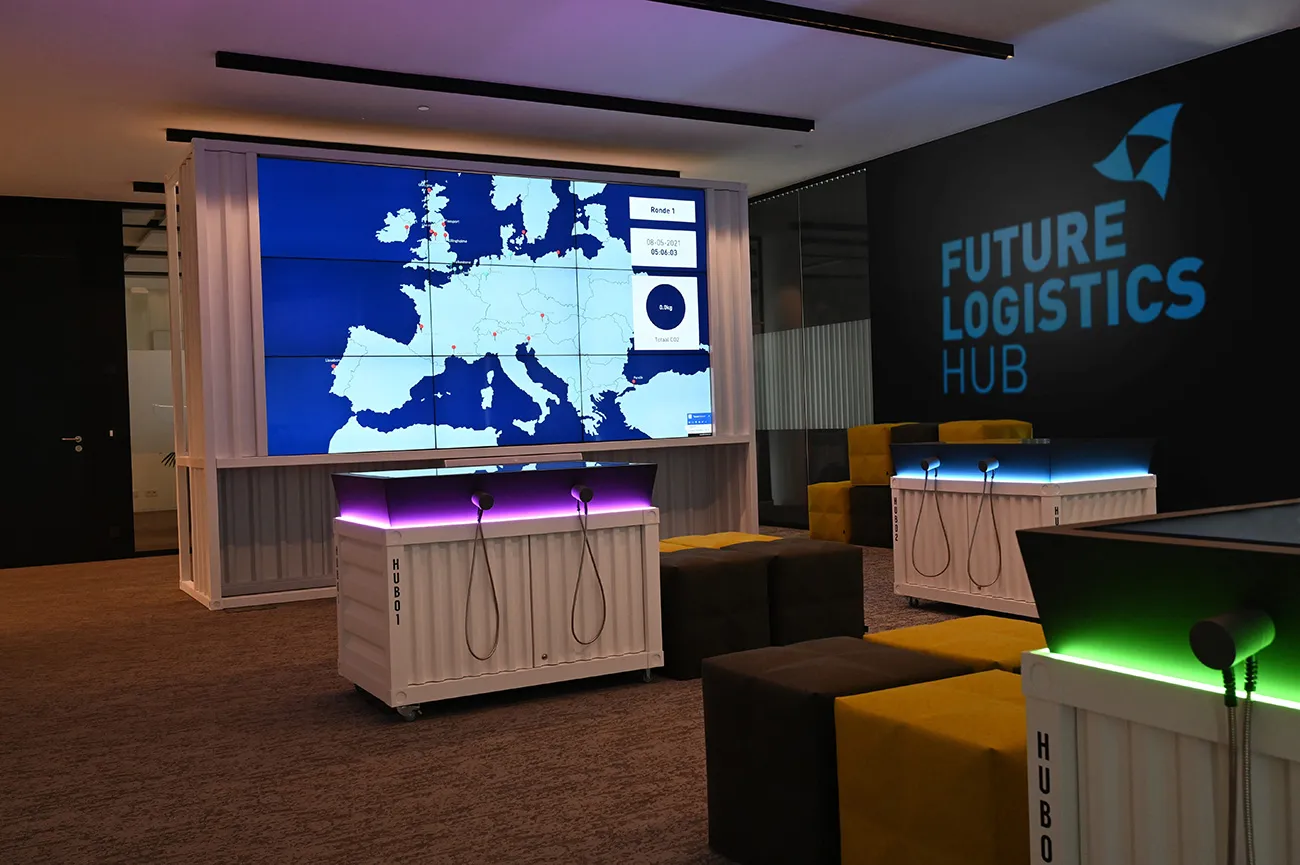
Visitors to the hub, which opened in September 2021, can attend presentations on five core themes of the physical internet: automation, digitalisation, collaborative shipping, value added logistics/value added services and last mile logistics. “We also offer an extensive game that gives participants an interactive introduction to synchromodal transport. In addition, video material showcases a number of best practices from companies that have already implemented these principles. For them, our hub is a great showcase,” adds Peene.
An accessible test centre
Another notable initiative in this area is Fabriek Logistiek in Ghent, which recently opened its doors. “We are an accessible test and training centre for companies looking to review the processes and systems in their warehouses. Companies can hire the site and bring their own people to test innovative technologies,” says Danny Vanrijkel, project coordinator at POM Oost-Vlaanderen, which launched the test centre a stone’s throw from the Ghelamco Arena.
The centre’s technology is made available on loan by 29 partners, all active in logistics, automation and innovation. “Drawing on their market knowledge, they are the ones who try to identify what is needed today. This creates a natural impetus to keep showcasing the latest technologies. For our partners, this is a very interesting platform for attracting potential new customers,” says Vanrijkel. “Fabriek Logistiek is therefore purely a facilitator and has no commercial motive of its own, which is unique both in Belgium and abroad.”
These two recent initiatives show that both the government and technology suppliers are working to bring logistics automation in our country up to speed. “Our aim is to put Flanders on the map as a leading logistics region in the current era of Logistics 4.0,” concludes an ambitious Vanrijkel.
Question about this story? Ask your question
Keep following this
Get an email when a new story is published. No account needed.
- SubjectNews







