












Artificial intelligence is transforming the world of grippers
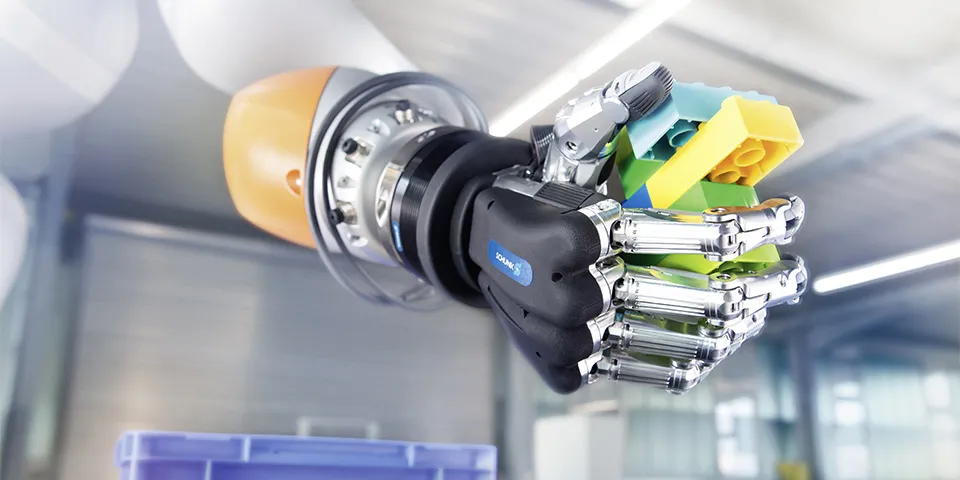
Grippers play a crucial role in moving products efficiently. After all, they ensure that enough force is applied to move the item securely, but not so much that it is damaged. In an era of high-mix, low-volume production, the challenge is to design grippers that can handle a wide range of different products. Artificial intelligence offers a solution, enabling grippers to adapt autonomously to the items that pass through. This is no longer just a theory: the first smart grippers are already at work in industry.
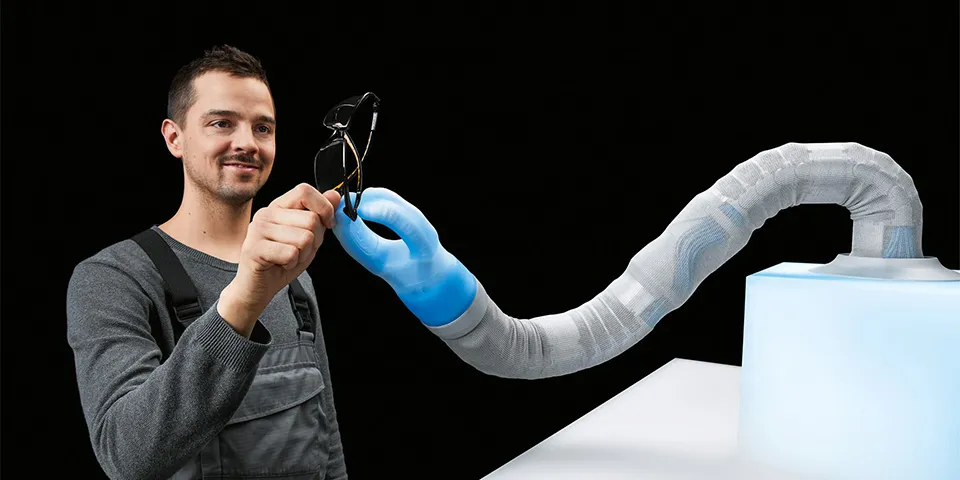
Grippers used to have it easier. Their job was to operate as quickly and reliably as possible, and that was that. They knew the geometry of the items, and where they had to pick them up and put them down. In practice, this was a very rigid way of working. Reliable handling depended on items being fed in exactly the same way, following predefined paths and specific destination coordinates. In modern production processes, however, the focus has shifted to flexibility. Digitalisation has paved the way for fully connected, autonomous production systems, and this is having an impact on grippers too.
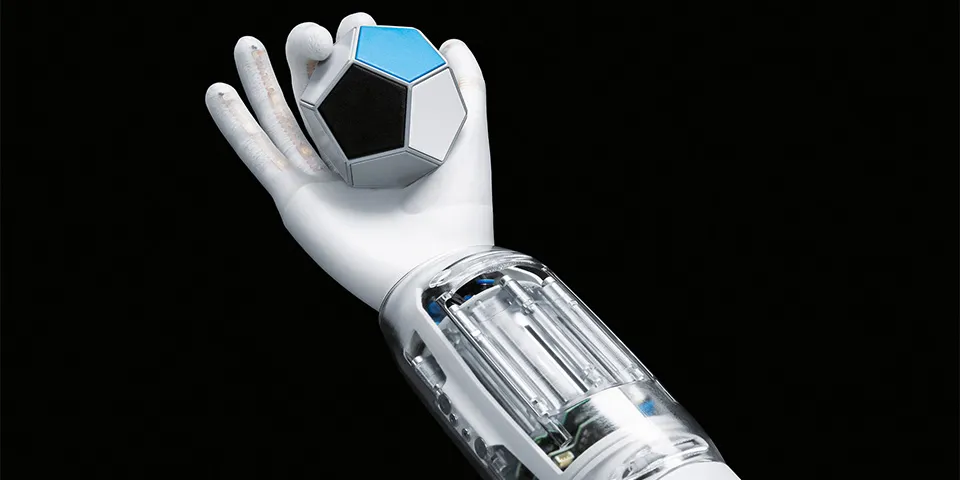
What makes these technologies particularly attractive is the ability to share what has been learnt with, for example, other gripper systems handling similar applications across a production network or at different sites. (Image: Ruediger J. Vogel)
Adapting to different products every time
Grippers will need to learn to adapt to each product that comes their way, just as human hands do. This is beginning to happen with the introduction of applications featuring cognitive intelligence. Using a camera, robots learn from operators how to carry out specific gripping tasks independently. Training essentially involves learning to classify items, so the robot knows how best to handle them. Artificial intelligence will play an important role in this evolution in the smart factories of tomorrow. Gripper manufacturers are developing algorithms to classify different geometries and configurations, as well as algorithms that use this classification to devise an optimal gripping strategy. It is complex work, but the real trick is to keep that complexity under the bonnet and give operators an easy-to-use interface. Plug and play.
Just a few learning cycles are needed
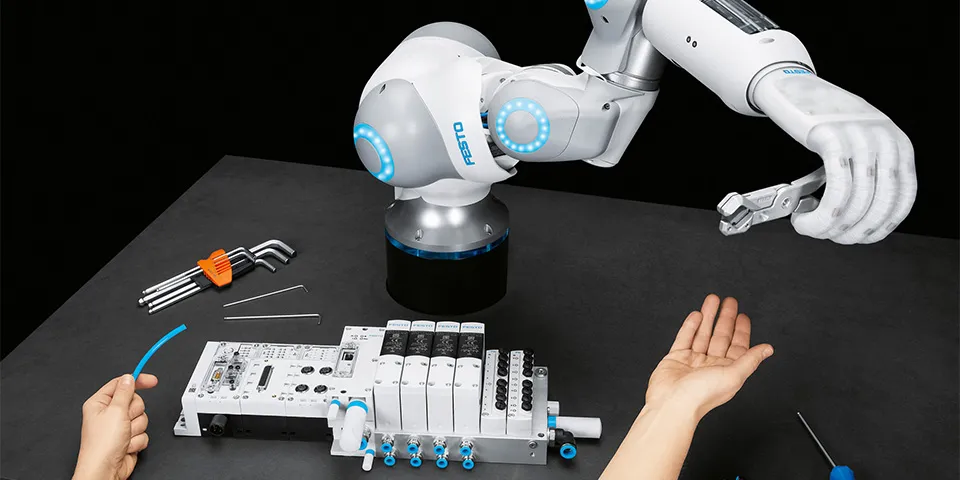
These developments are no longer the stuff of science fiction. Specialists are already making it possible to put grippers to work intelligently, with just a few learning cycles enough to deliver good results. Thanks to the empirical values they have learnt, grippers can quickly determine the best way to pick up and transport the workpiece. This learning can also take place in different ways, using a camera system to identify where items are and where they need to be placed. But grippers can just as easily take on this task themselves, in which case they effectively scan their surroundings.
Communication is crucial
Another important aspect is that grippers learn to communicate. If they can pass on the information they have gathered about an object or workpiece to the next station, the necessary adjustments can already be made there, for example, to set the stroke or gripping force. Grippers will therefore be able to handle not only a wider range of workpieces, but also a broader range of tasks. This could even extend to planning, with grippers handling all gripping tasks and communicating with components upstream and downstream in the production line or machine.
Sharing what has been learnt
What makes these technologies particularly attractive is the ability to share what has been learnt with, for example, other gripper systems handling similar applications across a production network or at different sites, perhaps using cloud solutions. If the object is already known, the optimal gripping movement is initiated automatically. If it is not, the camera system registers it and determines the best way to grip it without interrupting the process. What has been learnt is then added directly to the system, further expanding the corresponding library of gripping strategies.
Question about this story? Ask your question
Keep following this
Get an email when a new story is published. No account needed.
- ThemeRobots on the shop floor
- SubjectNews







