












ABISS 2019 | Smart data is the foundation of Industry 4.0
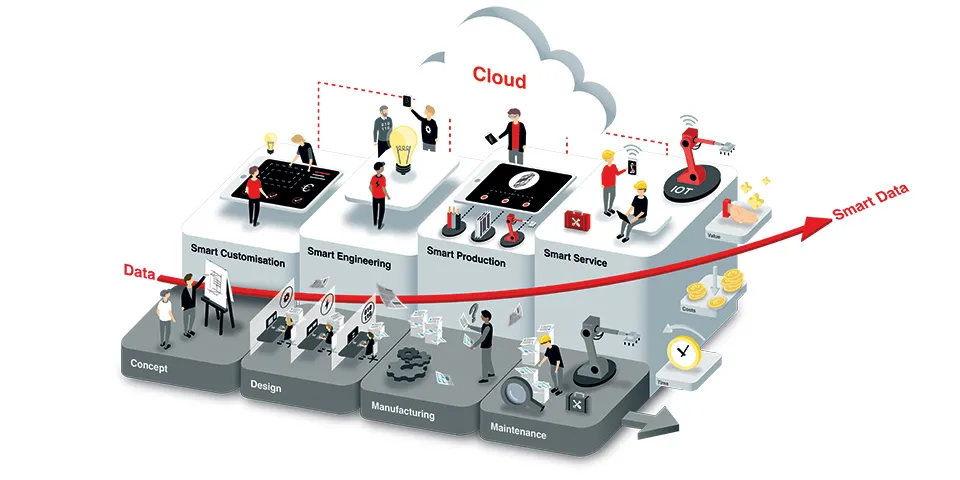
To take the step towards Industry 4.0, the first priority is to create a paperless environment where data is shared across departmental boundaries. The fast, digital flow of data via the cloud enables smoother communication between departments and significantly reduced lead times. Above all, it lays the foundation for smart customisation, smart engineering, smart production and smart service.

EPLAN offers solutions that also enable engineering data to be used intelligently in production.
Even companies striving for paperless offices are far from always being ready to take the step towards Industry 4.0. “Digital does not always mean ‘smart’,” says Marijn Roels, consultant at EPLAN. “Many businesses use a wide range of ‘formats’: documents in CAD, Word, Excel, PDF … The result is that many different versions are in circulation, being kept up to date on different fronts. This is a consequence of the silo-based working that still prevails. This gets to the heart of why Industry 4.0 is still not a reality in many businesses. To succeed, an integrated approach across departments is needed, where data can be reused by everyone and is continuously enriched. Make digital work the Industry 4.0 way: smart and integrated!”

When a service engineer scans a machine’s QR code, they can access diagrams, manuals or even guidance from external experts to carry out repairs.
Collaboration pays off
The process starts in the sales department, which often works out the project on paper together with the customer. “Engineering then has to turn these ideas into drawings and work out how to build them, which is sometimes not easy and takes a great deal of time,” says Roels. “Our solutions enable companies to optimise this flow considerably, for example by building configurators that allow customers to put together their own products. Engineers can then use and develop this data straight away, without the risk of misinterpretation. This not only saves a huge amount of time, but also makes it easier to estimate the quotation and delivery time. We also offer IT solutions for exchanging this information between departments. This turns out to be the biggest bottleneck of all, particularly for proponents of sequential engineering. Take, for example, a project that starts in the mechanical department. The bill of materials is sent to E&I, but the mechanical department subsequently makes changes and forgets to communicate them to E&I. As a result, it often turns out at delivery that something does not fit, leading to extra costs and delays to the entire production process. Delivery times also suffer. It is much better when specialists from the electrical, mechanical or software departments work together on the same virtual prototype of a machine or installation. This smart approach adds further value when the link to production is made. EPLAN offers solutions that also enable data to be used intelligently at this stage, including to control machines and minimise manual intervention. Faster lead times and fewer errors are once again the clear benefits.”
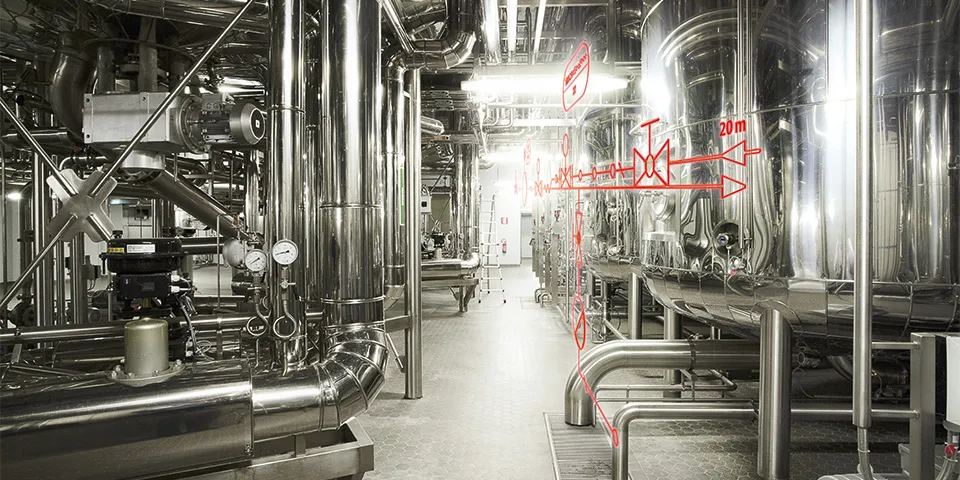
Configurators allow customers and the sales department to put together the solution, after which engineers can use and develop this data without the risk of misinterpretation. (Image: Stefano Gilera)
Smart, even beyond the factory walls
Project data can continue to be used even after the machine or installation leaves the factory. “Because all the information is in the cloud, its potential applications are no longer physically limited,” explains Roels. “This opens up a wealth of possibilities for customer service and smart service. Machines can, for example, be equipped with a QR code. When a service engineer scans it, they can access diagrams, manuals or even guidance from external experts to carry out repairs. The data can also be linked to information or solutions from other suppliers, such as remote and online analysis of the machine. This means that faults can be resolved more quickly at this stage. Of course, there is no standard IT solution that can optimise all data flows for every manufacturer. But the Smart EPLAN Platform will already put you well on the way with your engineering-related processes. We do not simply supply one or more software packages. Instead, we analyse your specific situation, advise you on how to optimise your work and data processes, and provide the software solutions to make it happen. The result is clear: faster delivery, lower costs and greater added value for the product.”
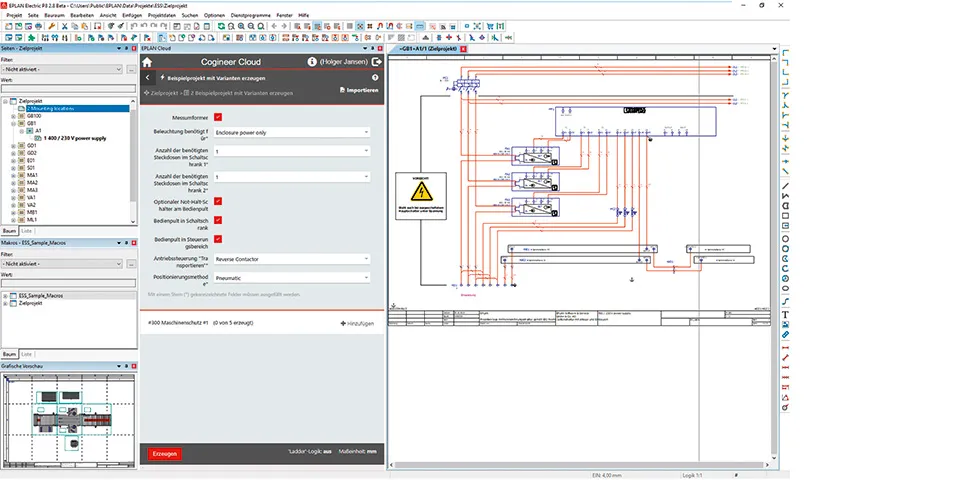
It is much better when specialists from the electrical, mechanical or software departments work together on the same virtual prototype of a machine or installation.
Question about this story? Ask your question
Companies in this story

Keep following this
Get an email when a new story is published. No account needed.
- ThemeFrom design to flexible machine
- SubjectNews
- CompanyEPLAN nv







