












ABISS 2019 | Ridder iQ gives insight into production
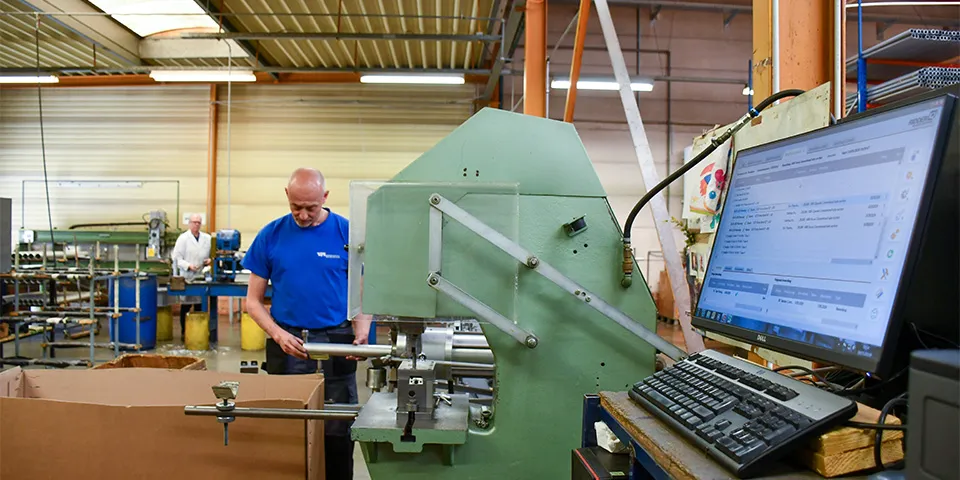
Belgian industry has some well-kept secrets. Did you know that Teksam Company in Genk is a global player in rapidly deployable telescopic masts? It stands out by focusing on quality and short lead times. Insight into production is essential to this. TeksamCo recently started using Ridder iQ, the ERP package for the manufacturing industry from Trivest Software Group. “We’ve gone from an old-fashioned way of working to supersonic. It’s incredible how much insight we’ve gained”, says Serge Do Ceu, Director Finance & Administration.
TeksamCo specialises in mobile, rapidly deployable telescopic masts, which are divided into three brands. Teklite is used for lighting and surveillance, and can be found, for example, on fire service response vehicles. Its range extends from simple manual systems to advanced electric mast systems with remote control. Secondly, there is Clark Masts, a pioneer in rapidly deployable mast systems used for telecommunications, measurement and surveillance. TekMast, meanwhile, specialises in sectional masts that are highly resistant to harsh conditions and have military approval. “Only 2% of what we produce is destined for the Belgian market. The remaining 98% finds a market all over the world.” This also means, however, that TeksamCo faces global competition. “So you have to be able to deliver quickly. Lead times of four to six weeks have become the norm. We also stand out by adapting standard products fully to customers’ needs. If a customer asks, we’ll work with them to think things through and develop a solution.”
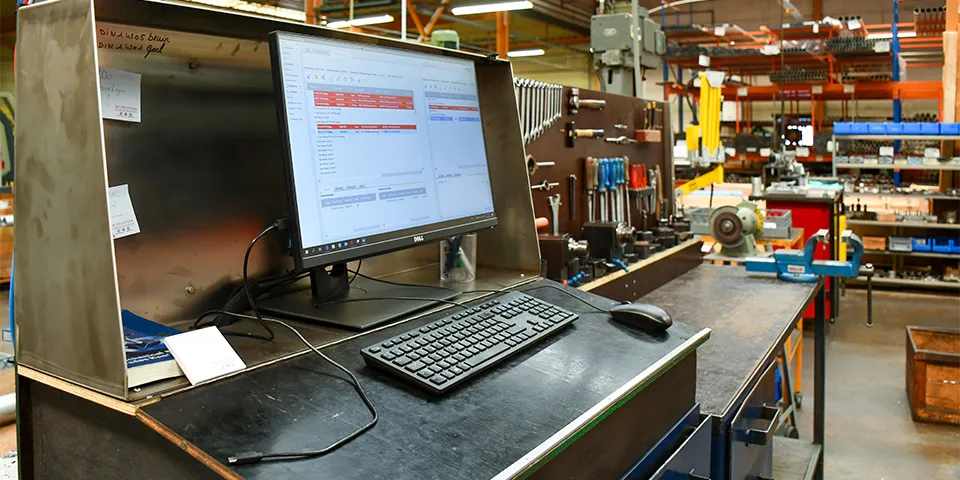
No more paperwork! TeksamCo’s production floor now has touchscreens running Ridder IQ Shopfloor.
Flexible and user-friendly
To maintain its excellent performance, Do Ceu wanted greater insight into production. “The production floor was essentially a blind spot. Orders went in, but we only had an overview again once the product was finished. It also generated a huge amount of paperwork. We were too dependent on documents. If we wanted to keep growing, we had to address this and move towards modern business operations.” An ERP package was needed to solve the problem. After comparing demos from various providers, TeksamCo opted decisively for Ridder iQ from Trivest Software Group. “It wasn’t just written in the latest programming language, it also felt very flexible and user-friendly. I knew straight away that the consultant would be able to work with me to deliver the solution we really needed. I didn’t have to adapt my production process to the ERP system, it was the other way round. You could create something formidable with it.”
Insight into production
TeksamCo set the bar high from the outset. Implementation began last year, with several modules being introduced at the same time. “Not the easiest route”, Do Ceu admits. “But it was necessary to gain insight quickly. More than a hundred different processes take place in-house to finish the masts, from turning and milling to welding, bending and cutting, assembly, and even vulcanising plastic and rubber for our own seals. One of the most important improvements was integrating the ‘vault’. This is where drawings, including all their details, are stored and linked to our engineering department. All the information is therefore available digitally. No more paperwork! Our production floor now has touchscreens. With just a few clicks, operators know what to do, while our sales staff can see how far an order has progressed through production. The amount of information you can get out of it is unbelievable. That’s an incredible gain.”
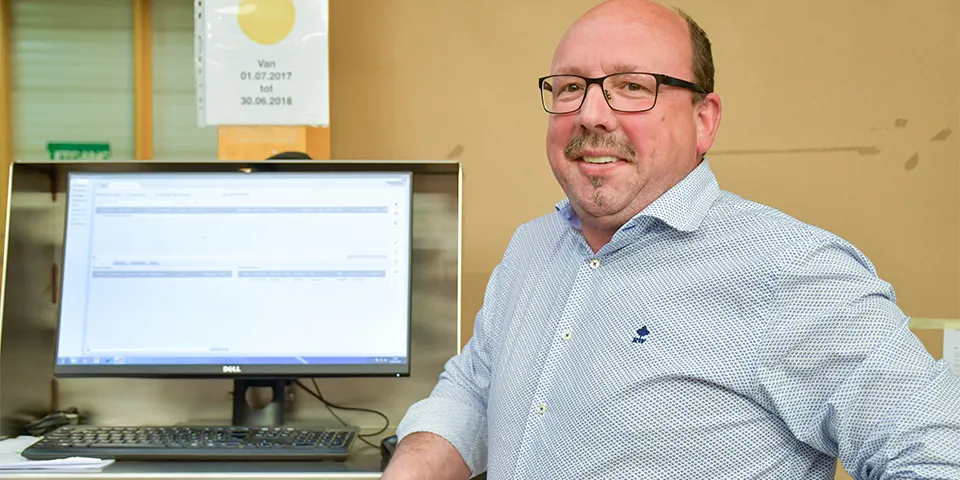
Serge Do Ceu: “Resistance to the change has now faded, because everyone is discovering the benefits it brings them. We can now continue to grow step by step.”
Towards hypermodern business operations
According to Do Ceu, the time savings already being achieved will increase further once the costing and planning modules are introduced. “You can then experiment with parameters to see the best way to complete orders within the required timeframe. Do we need an extra shift? Do we need to add someone to a machine? Should we ask our employees to work overtime? The possibilities are endless. In just one year, we’ve gone from old-fashioned business operations to hypermodern ones. That has required a lot of patience from our fifty employees. Resistance to the change has now faded, because everyone is discovering the benefits it brings them. We can now continue to grow step by step.”
Question about this story? Ask your question
Keep following this
Get an email when a new story is published. No account needed.
- SubjectNews







