












A visit to KION Automation Center Antwerp
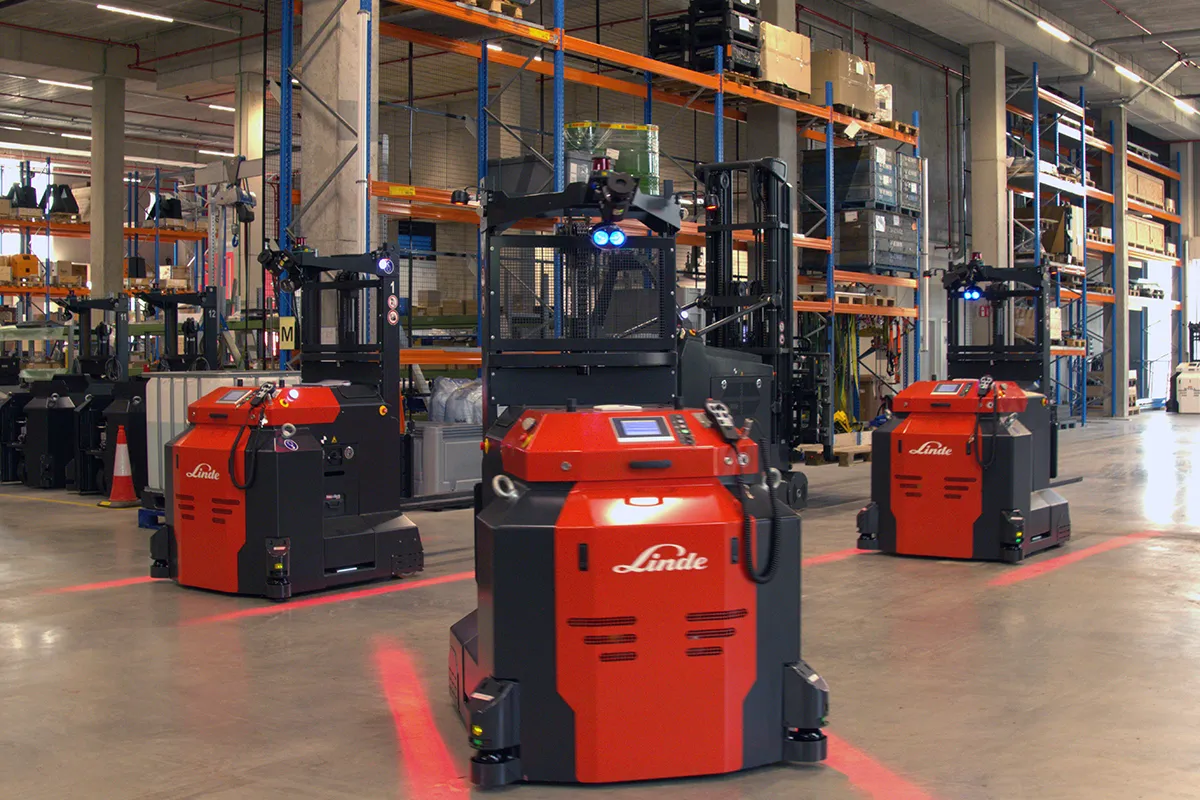
Where automation is no longer a ‘distant’ promise but part of everyday operations
At the invitation of Motrac, Linde’s importer and distributor of forklift and warehouse trucks in the Benelux, with more than fifty years’ experience in intralogistics, we were given an exclusive behind-the-scenes look at KION Automation Center in Antwerp. What stands out is that automation here is not presented as a vision of the future, but built, tested and, above all, challenged until it works.
Anyone talking about intralogistics automation today cannot ignore Antwerp. Since October 2024, KION Automation Center Antwerp has housed both KION Automated Solutions EMEA and Dematic under one roof. More than 400 employees from over 40 nationalities work across the 11,800 m² site, developing, assembling and validating automated solutions for deployment around the world.
Its scale and concentration make one thing clear: this is not a showroom, but an operational site where engineering, software, testing, training and assembly come together.
Three strands under one roof
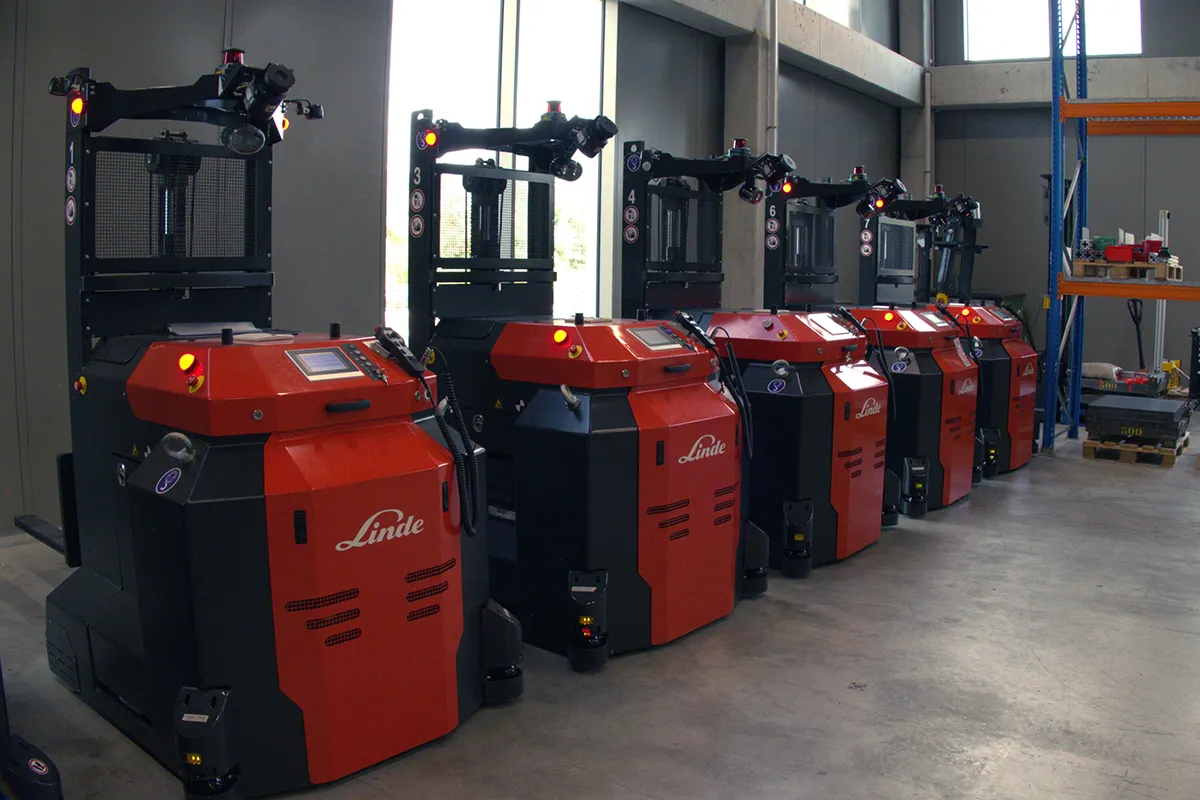
The breadth of the offering becomes clear during the shop-floor tour. Broadly speaking, the Automation Center focuses on three pillars:
- Hybrid automation: manual trucks fitted with an automation pack.
- Pure AGVs: fully in-house-developed vehicles that are no longer used manually.
- Integration & site equipment: everything needed for vehicles to work safely and efficiently with other systems and people.
Notably, assembly is only one part of the story. The test environment is at least as important, where full customer layouts are simulated and vehicles are tested with real loads. This is not based on assumptions, but on how pallets, rolls or containers behave in practice.
Not a ‘showcase’, but a ‘useful case’
The Automation Center’s internal warehouse deliberately uses a simple, realistic workflow. Pallets are labelled, collected, checked and put away. And vice versa: picked again and taken away.
The message is clear: automation does not have to start on a grand or complex scale. Even with around 200 pallet locations, automation can already deliver a payback period of 1.5 to 2 years, through time savings, fewer walking movements and better use of staff.
Acceptance on the shop floor
A recurring theme during the visit is acceptance among people. Automation only really works when employees are willing to work with it. That is why warehouse staff and technicians are involved in projects from an early stage.
Sometimes even something simple helps: giving vehicles names. In Antwerp, for example, they are called ‘Betty’ and ‘Marcel’. It may sound light-hearted, but it makes them easier to talk about and trust. Automation rarely takes jobs away, but it does change them. Failing to explain this creates resistance.
Narrow aisles, high racking and new generations
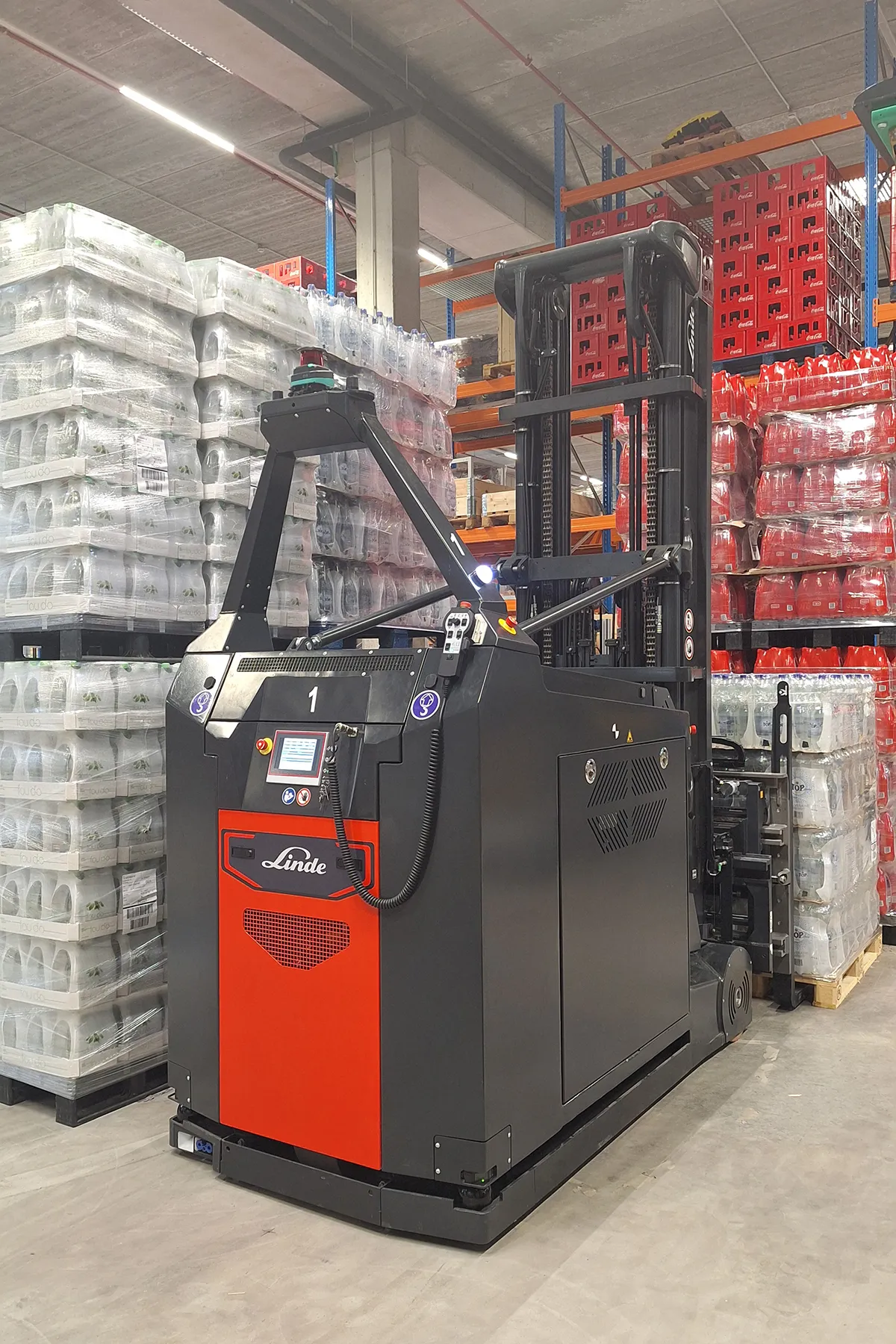
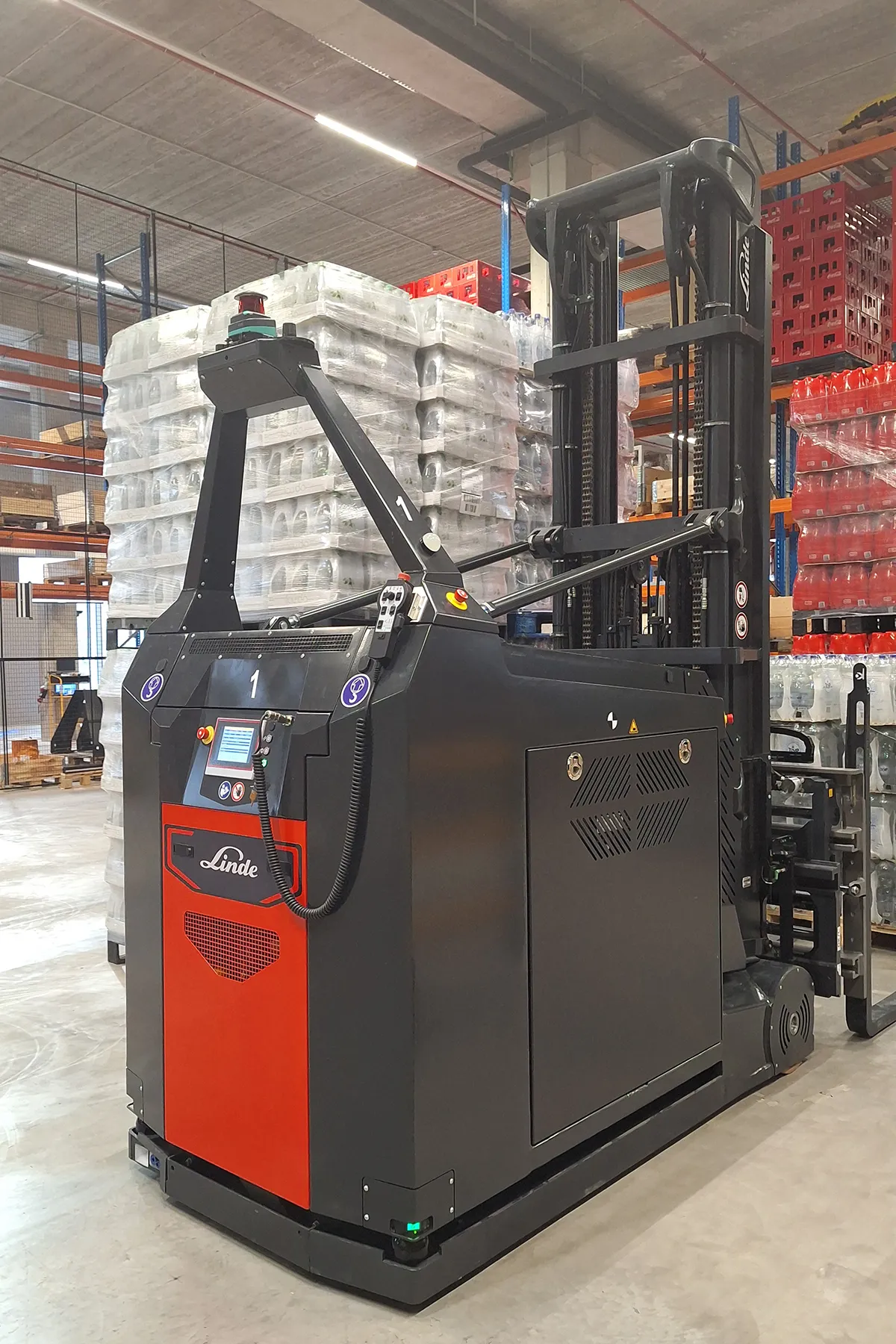
Automation is also making steady inroads into very narrow aisle warehouses. Several generations of VNA vehicles are being tested in Antwerp, including models that will soon be more widely available across the network.
On the technical side, there is no single standard solution. The choice between 3D cameras and 2D scanners depends on pallet types, wrapping, load configuration and the operating environment. The latter are more robust in complex situations, while 3D cameras offer speed and precision with standard loads.
An often ‘overlooked’ success factor: the floor!
Perhaps the most underestimated lesson from the visit is the floor. When automating at heights of ten, fourteen or even sixteen metres, every millimetre of deviation is magnified.
That is why KION strongly emphasises that automation must be factored in during the building’s design phase. A floor that is ‘good enough’ for manual operations can be disastrous for AGVs. Those who discover this too late may face significant additional costs.
More than just technology
Above all, KION Automation Center Antwerp shows that automation is not a product, but a process. It requires technical expertise, software integration, realistic testing and, above all, attention to people and context.
Whether it is a large multinational or an SME cautiously starting out with a single vehicle, the common thread is the same. Automation only really works when it is tailored to the realities of the warehouse. And that is precisely what lies at the heart of the work in Antwerp.
Question about this story? Ask your question
Keep following this
Get an email when a new story is published. No account needed.
- ThemeSmart manufacturing and logistics
- SubjectNews







