












A reliable eye in the electromagnetic storm
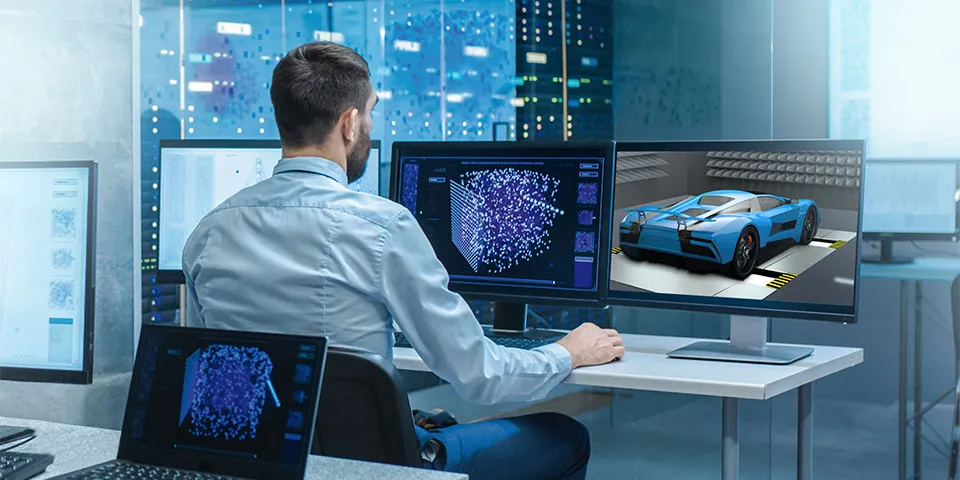
Wherever there is electric current, there are electromagnetic pulses. These can have an extremely disruptive effect on the electronic equipment that surrounds us everywhere today. That is why one of the many things car manufacturers have to check is the electromagnetic compatibility (EMC) of their products. What’s more, cars themselves are packed with sensitive electronics and are tested in specialised EMC laboratories. These are not pleasant places for people to work. Camera systems are used to keep an eye on everything during the tests. mk-messtechnik specialises in such systems. The motors used in the pan-and-tilt heads are supplied by FAULHABER and ensure precise positioning of the remotely operated modules.
“It all started when the car radio was no longer the only piece of electronics in a car,” recalls Dr. Martin Kull, founder and managing director of mk-messtechnik. “From then on, the amount of electronic equipment steadily increased, from ABS and airbags to mobile phones and navigation.” The individual systems must not interfere with one another, nor may they interfere with systems outside the vehicle. They must also be as immune as possible to external pulses. While studying at the University of Stuttgart, the electrical engineer began taking measurements in Daimler’s test laboratory. Some of the electromagnetic waves generated in laboratories like these are extremely strong and far exceed the permitted limits. That is why the laboratory rooms are hermetically sealed during testing. What happens inside can only be observed using cameras. “That was when the first requests came in for special monitoring equipment. However, the market amounted to fewer than 100 cameras a year, making it a niche market that held little interest for larger companies.”
Dr. Kull spotted an opportunity and founded his own company with his wife in 2006. Initially, the couple did everything themselves, even when an American car manufacturer ordered a 20-camera system in 2008. “We still soldered and assembled all the components ourselves, and were very proud to be supplying an international company,” recalls the founder. Demand continued to grow, and so did the company. The first additional employee was hired in 2010; today there are more than 60, as mk-messtechnik’s camera systems, made in Notzingen near Stuttgart, are used by almost all car manufacturers for EMC testing.
Seatbox or wall-mounted
The cameras can be permanently mounted on a wall or secured to various tripods. mk-messtechnik also offers a ‘seatbox’, which is placed on the driver’s seat and can hold up to six cameras. This allows the entire dashboard, all displays and all vehicle controls to be monitored from inside the room. The shift towards electric vehicles is good news for mk-messtechnik, as electromagnetic compatibility plays an even more important role in electric cars than in vehicles with combustion engines. In addition, the electronics used in trains, aircraft and ships must also undergo EMC testing.
Dr. Kull comes from a family of inventors. “My hobby is model making, and for as long as I can remember I’ve been fascinated by everything that moves on land, at sea or through the air. My field is electrical engineering, but I’ve always had a keen interest in the mechanical aspects too.” mk-messtechnik also benefits from this combination of skills in product development: “From 2008 onwards, we received an increasing number of enquiries about remotely operated wall-mounted cameras. This prompted us to find the optimum solution in terms of size, weight and operation.”
Dr. Kull aims to achieve maximum functionality with a minimum of hardware and software, as well as development costs. That is why he relies on readily available standard components, such as anodised aluminium tubes for the housings. It may seem simple, but it is a custom solution, the result of a finely balanced interaction between different components: “When designing the circuit board, for example, it is also important to take the housing into account to avoid having to make changes at a later stage.”
Software, remote control and infrared
The company in Notzingen is not afraid of complex assembly work and fits the required components to the circuit boards in-house. “We sometimes assemble more than a hundred different circuit boards a week,” explains Dr. Kull. “That makes lead time and retooling time crucial factors. We couldn’t achieve an acceptable speed with off-the-shelf software, so we wrote our own data processing programme for the automatic placement machines. This reduced the lead time per circuit board from several minutes to around five seconds.”
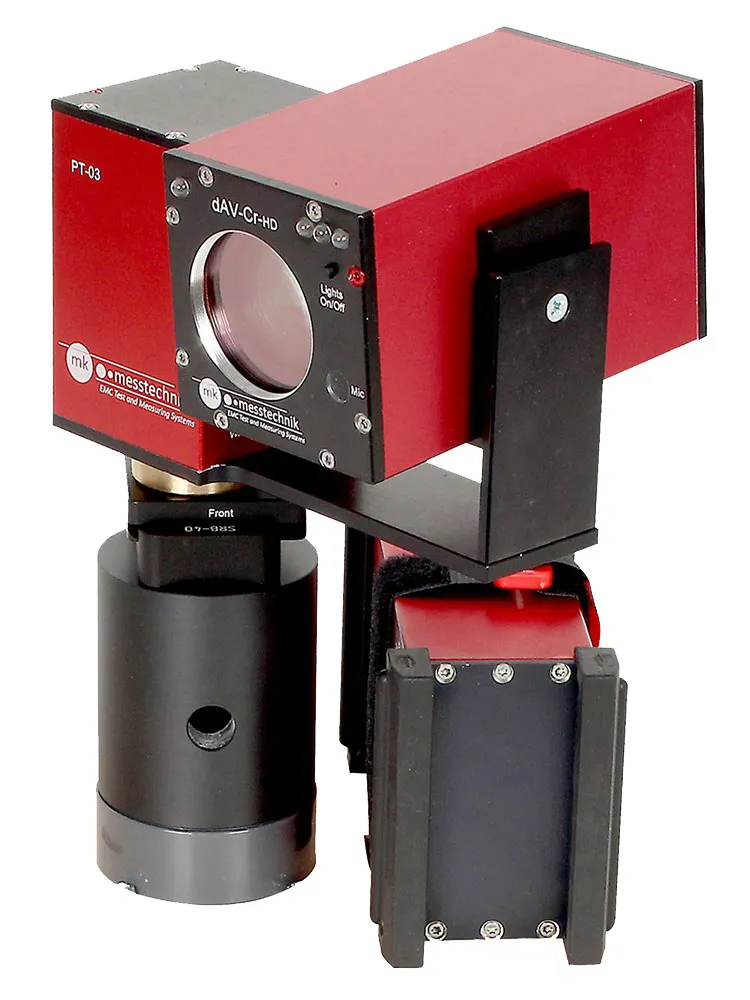
To simplify processes during EMC testing, remotely operated, swivelling cameras were added to the product range. Initially, they were designed exclusively for wall mounting. But demand for the adjustable version soon grew for mobile systems too. “We therefore had to approach the requirement for mechanical stability from a completely different perspective. Our systems are extremely robust, but if a tripod with an 800-gram camera adapter tips over, or if the adapter is rotated too roughly, the material underneath can be damaged. We solved this problem with a kind of friction coupling.”
mk-messtechnik cameras monitor not only vehicle electronics, but also thermal properties. The opto-LWIR infrared camera was developed specifically for this purpose. The electromagnetic fields generated during testing pose a certain fire risk. Extremely strong fields can overheat the test objects or parts of the system. Another source of heat arises when testing electric cars. Dr. Kull explains: “In the test rig, electric vehicles charge their batteries through regenerative braking. Once the batteries are fully charged, the car’s brakes are activated. The brakes can then overheat and, in the worst case, even catch fire. These test rigs can cost more than 10 million euros. The prototypes being tested are also worth a fortune. Monitoring them with infrared cameras allows us to protect these investments by taking action in good time.” mk-messtechnik was nominated for the 2019 Esslingen Innovation Award for developing the camera.
Micromotors for precise alignment
To ensure precise positioning of the cameras, mk-messtechnik uses drives from FAULHABER. “We experimented with servos and motors used in model making, but they weren’t accurate or robust enough. We found the right motors at FAULHABER.”
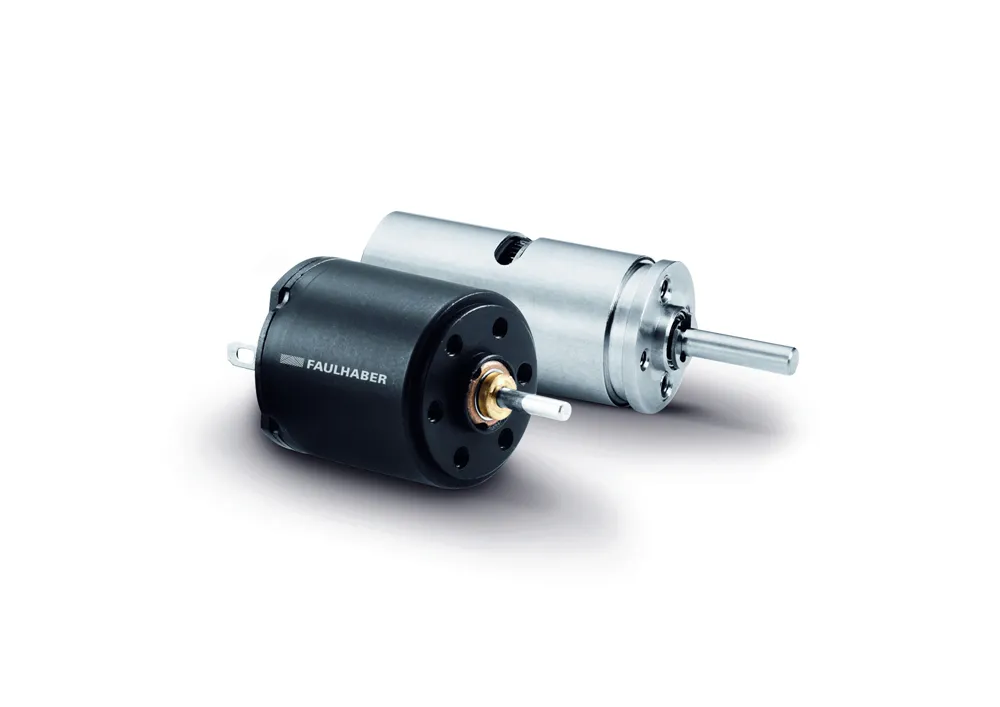
The pan-and-tilt head that positions the camera uses two DC micromotors from the 1516 … SR series with precious-metal commutation, combined with a gearbox from the 15/8 series and a 900:1 ratio. “We first tried a 500:1 ratio, but it was too fast. Although the head turns more slowly with the 900:1 ratio, it can move heavier loads and also offers optimum electrical shielding.” Another reason for choosing the drive was its high efficiency: the power required for panning is supplied by the camera batteries. With the exception of the actual camera module and the drives, which are outsourced, mk-messtechnik develops and manufactures the entire system itself for its customers, as Dr. Kull emphasises: “When tasks become complex or individual modifications are needed, we can respond with great flexibility in product development and manufacturing. For us, nothing is impossible, as long as it is within the bounds of physics, of course.”
Question about this story? Ask your question
Keep following this
Get an email when a new story is published. No account needed.
- SubjectNews







