












A new production machine: standard or custom-built?
Text Piet DebisschopImage Vintiv NV
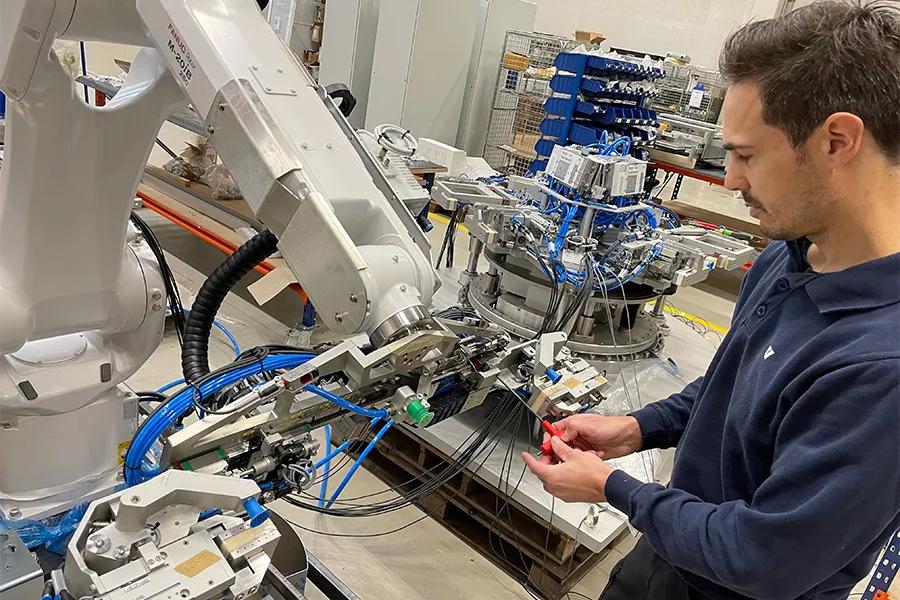
Investing in new production equipment is a dynamic, recurring feature of every manufacturing industry. Depending on the application, a company is often faced with a whole range of considerations, which go far beyond cost, efficiency or payback alone. But these considerations will ultimately determine whether to choose a standard, off-the-shelf machine or a custom machine tailored to the application.
Two extremes
The specialists at machine builder Vintiv guided us through this maze of choices and decisions, where the final ‘go’ should be based on a sound long-term vision. The criteria that tip the balance towards either a standard or a custom machine are not absolute, and must be considered on a case-by-case basis.
Standard machines
Vintiv knows all about this, as Joris Ceyssens explains: “Every year, Vintiv receives a large number of enquiries about building a specific machine. Based on the customer's requirements, the same adventure begins for us each time: finding out whether the process in question could simply be handled by a standard machine.” If so, the custom-built option is certainly not always the best one.
Cost
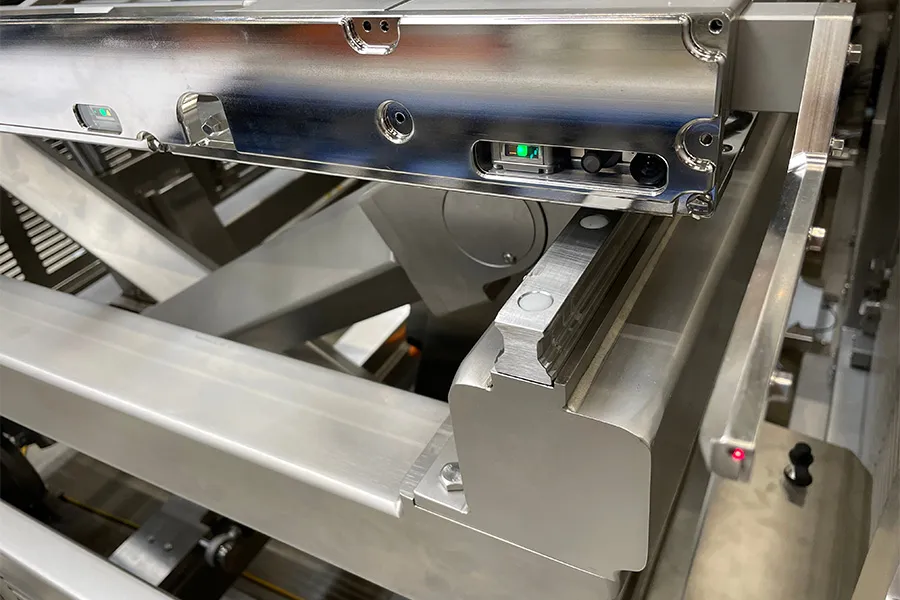
In these cases, the cost-benefit analysis is very quick to carry out, since the development cost of a custom machine is always absorbed in full, 100%, by this one, unique machine. The cost is then almost incomparable with that of standard machines, where the R&D and engineering costs are spread evenly across a large production run.
Risk
Every off-the-shelf solution benefits from an established runtime, experience and feedback between users and manufacturer, as well as the improvements and upgrades that have resulted over the years. The machine is reliable and validated. The risk of disappointing performance is therefore minimal, because the outcome of the investment is known well in advance. Another advantage is that standard machines can be resold, with a very active second-hand market for them.
Requirements for manufacture, engineering and design
The design of a standard machine is fully developed, proven and, in principle, quickly available. There is therefore no further need for engineering or design work. Costs, materials and lead times are all well known, because all the parameters are known and the machine is already part of a production line. But there are drawbacks too: in terms of concept and configuration, this type of standard production equipment is generally inflexible. Off-the-shelf solutions usually leave no room for minor adjustments or improvements at the customer's request. This means that any such disadvantages must be accepted and weighed against the major benefit of predictable cost and time efficiency.
Competitive advantage
The market for standard machines is open. Competitors also have access to the same technology, so the new production machine does not in itself provide an immediate competitive edge. To secure a unique position in the market, the customer will instead need to improve internal efficiency or leverage the advantages of its location. Compared with the competitor's machinery, this investment in a new machine has no unique features of its own.
Custom-built machines
A specific product design can sometimes call for more customised machines. Typical examples include emerging technologies and unique, advanced products with high added value. There is generally no existing machine for these types of production process, making a completely new, custom-built solution necessary.
Cost
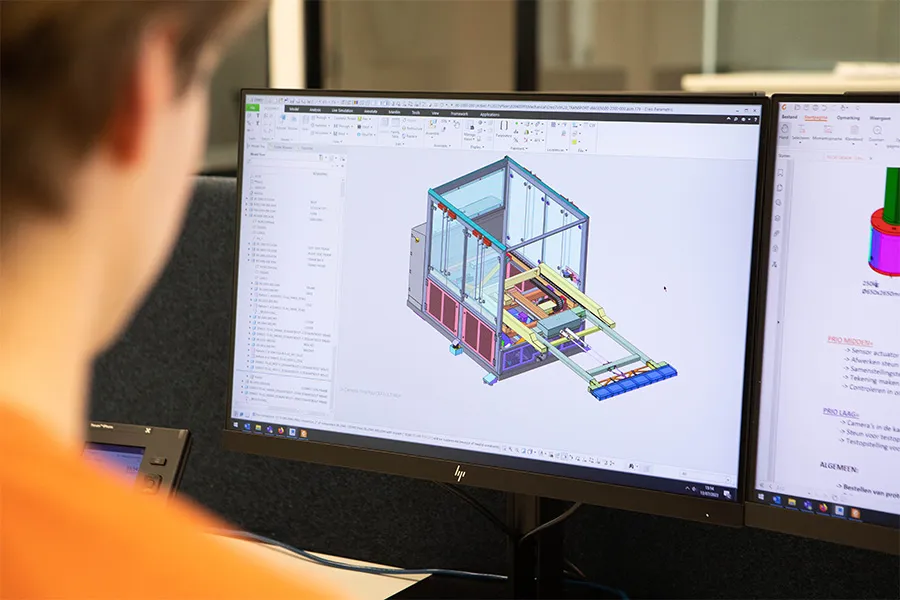
The large number of design hours in particular means that a custom machine will almost by definition be considerably more expensive than a standard solution. Another factor is the use of unique, custom-made components in the new machine. This affects both cost and lead times. In the longer term, however, this higher initial investment more than pays for itself. There are several reasons for this: alongside guaranteed high output quality, the machine itself has a unique concept and mode of operation. The machine builder developed it solely for this specific product, so it is likely to require far fewer overhauls and updates. With its unique design, the machine builder anticipated a cascade of potential problems. A sound assessment should therefore always include a calculation of the total cost of ownership.
Risk
The risk of poor machine performance is always higher with custom-designed solutions, because the machine does not yet exist and there is therefore no valid basis for comparison. However, some initial validation can be carried out by testing particular uncertainties in advance through a so-called ‘proof of concept’. Timen Flore: “Choosing a reliable machine builder with a proven track record, such as Vintiv, reduces the risk further. It is also best to safeguard the entire project by agreeing clear specifications with the machine builder when signing the contract, and linking them to commercial objectives.” Whereas a second-hand market is a given for standard machines, it is much less relevant for a custom-built machine. Partly because reselling it would also expose unique technology to the open market.
Requirements for manufacture, engineering and design
A custom machine is designed from scratch. Each process requires highly specific expertise from the machine builder, while also continually testing its inventiveness and experience. Since everything is built and manufactured from the ground up, a well-equipped workshop with solid in-house capabilities, such as welding, panel building, and turning and milling facilities, is essential. The vital human resources and skills on the shop floor must not be overlooked either.
Competitive advantage
The benefits of a well-designed custom machine are numerous. All the experience, process knowledge and know-how accumulated by the customer have been brought together and put to use. The resulting manufacturing technology is unique, guarantees top product output and has been designed for maximum process efficiency. Joris Ceyssens: “Vintiv therefore strongly recommends that customers claim ownership of the installation's intellectual property, since they are also financing its development. This prevents the competitive advantage they helped create from later falling into the hands of a competitor.” ■
Een zakelijke vraag aan VINTIV? Get in touch
Companies in this story
Keep following this
Get an email when a new story is published. No account needed.
- SubjectNews
- CompanyVINTIV







