












3D printing for maintenance: say goodbye to spare-parts stock
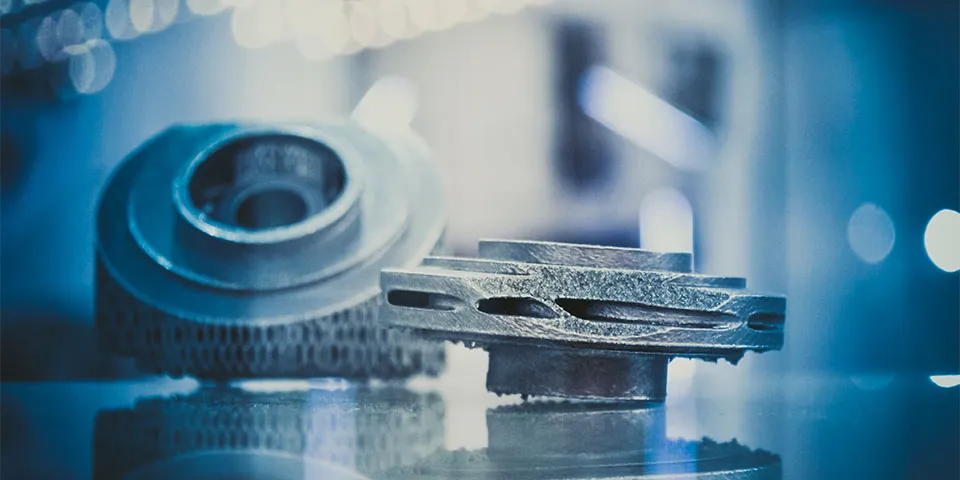
Last year, Agoria and PwC conducted a study into 3D printing in Belgium. Companies active in the additive manufacturing value chain expect strong growth over the next three years. This is in line with the global trend: according to SmarTech, the market will be worth around 20 billion in 2022. Maintenance teams are already seeing many benefits from the technology. When a machine breaks down, all it takes is to send a digital drawing to the printer to have the right spare part in no time.
The benefits of 3D printers are already well known. They help bring products to market faster, which is why they are often used to produce prototypes. The technology also makes it easier to customise products and design components more intelligently. Instead of being assembled by welding, bolting or gluing, components can be produced as a single piece using 3D printers. But this technology can be useful at more than just the beginning of a product’s life cycle. 3D printing can also benefit maintenance departments.
Less stock
Keeping stock can cost companies hundreds of thousands of euros. What is more, it is impossible to predict with certainty when a particular part will be needed to repair machinery. This can tie up a great deal of capital in inventory. One of the most obvious benefits of 3D printers is therefore the ability to produce spare parts quickly, without having to store them. Thanks to the advances the technology has made in recent years, spare parts can be 3D printed in a fraction of the time that traditional machining methods and the associated logistics would take to deliver the part to the site. The benefits of additive manufacturing are even greater when the part is more expensive or more critical to keeping production running, and when fewer parts are needed.
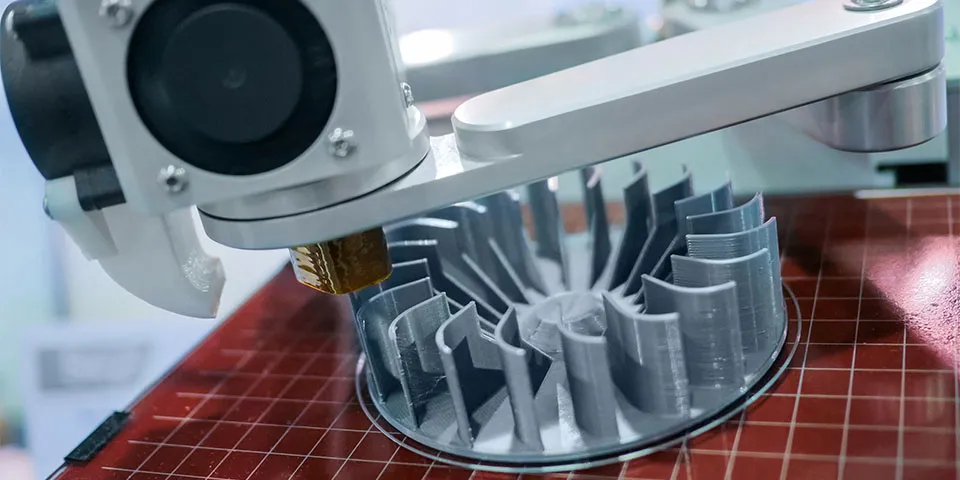
These machines can produce a perfect replica of critical components, or even design them in a stronger material.
A solution for obsolete technology
Maintenance teams also often have to deal with obsolete technology. Machines may still have years or decades of useful life left, but problems arise when the original manufacturer no longer guarantees the production of certain spare parts. The assets are still perfectly usable, but with no spare parts available, they are replaced with newer machines. 3D printers could change this. They can produce a perfect replica of critical components, or even design them in a stronger material. The potential savings from keeping installations in service for longer are enormous. According to a study by PwC’s US arm, as many as 64% of the business leaders surveyed plan to use 3D printers in the coming years to consistently produce obsolete parts.
Lower mean time to repair (MTTR)
Parts do not have to be obsolete to be difficult to obtain quickly. It can sometimes take weeks for a required spare part to arrive on site and production to resume, if the part is not held in stock. Most companies cannot afford that kind of downtime today. 3D printers can solve this problem by providing a permanent or temporary replacement for spare parts that are still being manufactured or transported. This makes them a valuable part of a preventive maintenance strategy.
What options are available?
There are several options for anyone looking to use 3D printing on a small scale in their maintenance department. Printers range from models for small objects to machines that fill an entire room. Materials include plastics, metals and glass. But look before you leap. It is important to understand what 3D printers can do and how they can help your maintenance department.
Question about this story? Ask your question
Keep following this
Get an email when a new story is published. No account needed.
- ThemeLess downtime through maintenance
- SubjectNews







