












15,000 tonnes less single-use packaging
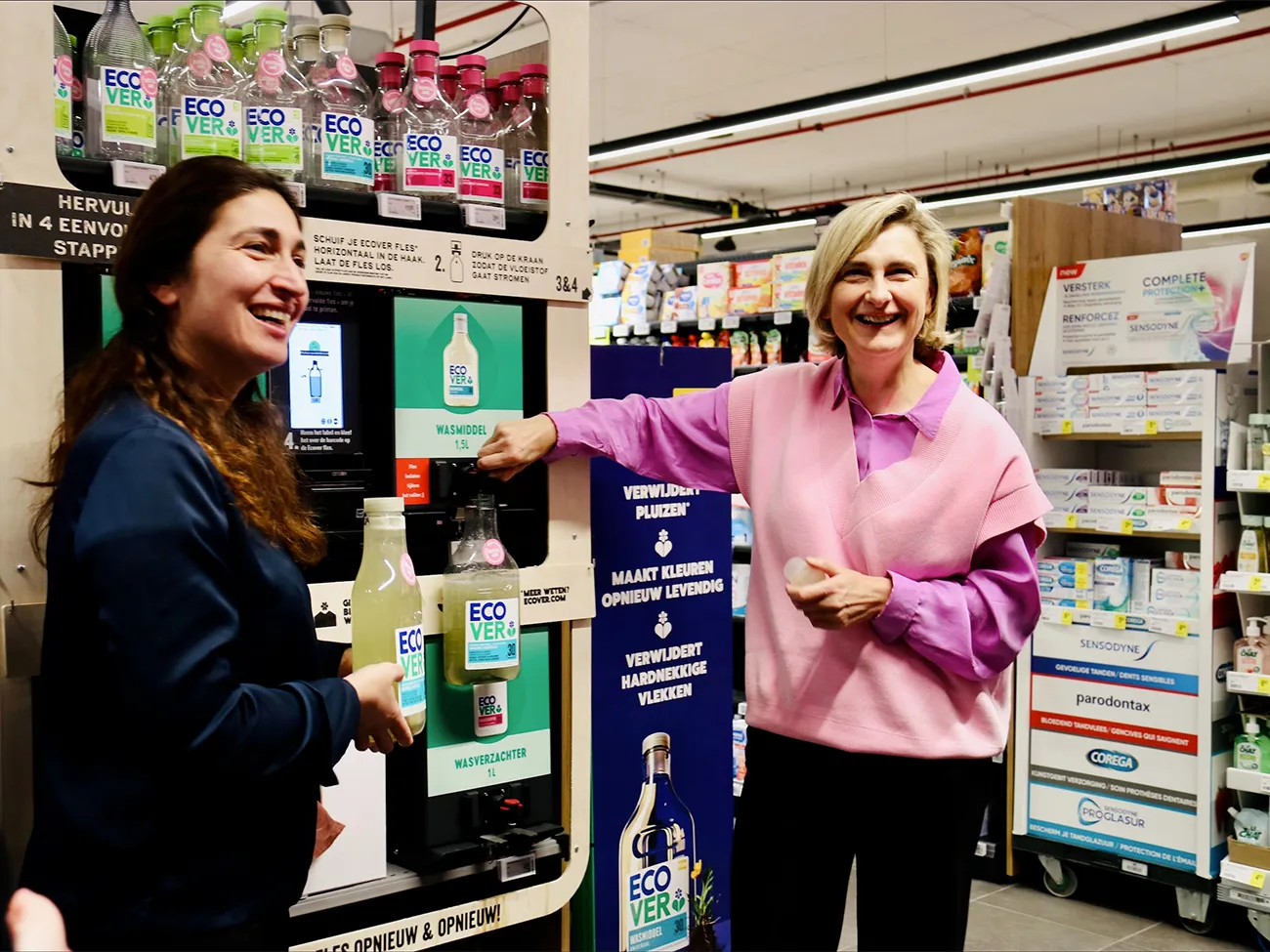
Flemish ministers Hilde Crevits and Zuhal Demir have signed the Green Deal Anders Verpakt in Hasselt, together with more than 80 leading companies and organisations. The Green Deal is an initiative by OVAM, spearhead cluster VIL, COMEOS, Detic and Fevia Vlaanderen. Over the next three years, they will work with all the participants to find solutions that encourage packaging prevention and reuse in the distribution sector.
The aim is to reduce the number of single-use packages in the distribution sector by 15,000 tonnes (the equivalent of 300 million units) through more than 80 projects. These include alternatives to bottles for personal care products, as well as the plastic and cardboard boxes used to package food or furniture, which are used just once before being discarded. The projects under the Green Deal will give consumers more choice in shops, helping them avoid buying products in single-use packaging and choose products that are ‘packaged differently’.
Over the past ten years, the volume of single-use household packaging has increased by 10%. In Belgium, the total weight of packaging used once for consumer goods was estimated at more than 900,000 tonnes a year in 2019. Today, we are joining forces to reduce this mountain of waste. The transition to a circular economy is one of the Flemish government’s top priorities. The entire chain is involved, from suppliers and shops to experts in circular products. The social aspect of this Green Deal is also important: the projects will create additional jobs in the social economy.
In a circular economy, material loops are closed as far as possible to avoid using primary raw materials and to reuse materials and products for as long as possible. Recycling is good, but reuse is better, and best of all is to do away with packaging altogether. We are already a European leader in recycling. With this Green Deal, we want to reinforce our ambition to set an example in reuse too. Together with various leading companies, we want to persuade consumers to leave single-use packaging behind and switch to reusable alternatives. This will help us significantly reduce our mountain of waste. It benefits not only the environment, but also our wallets.
Since single-use packaging is often designed for a specific product, it is not always easy to change it to a reusable alternative or eliminate the packaging altogether. This often also requires rethinking the entire business model. There are uncertainties about the actual reduction in environmental impact, customer acceptance, the financial implications for the company, the additional workload, and the impact on product protection and quality…
There are, however, examples that show it can be done, and ambition to make packaging more sustainable is growing throughout the distribution chain. By working with knowledge institutes and pioneering companies, this Green Deal aims to help participating companies answer their pressing questions about packaging prevention and reuse. Together, we are looking for solutions that reduce the environmental impact of packaged goods. The practical projects turn theory into practice.
A good example is the Delhaize AD Quartier Bleu store in Hasselt. In early February, as part of this Green Deal, Delhaize and Ecover installed refill stations for a range of Ecover products there. They help customers reduce their plastic consumption and reuse packaging. It is very simple: customers bring their empty bottle to the shop, refill it, take a ticket or scan a code, and pay for the full bottle at the till. The bottle also costs them about 10% less.
Question about this story? Ask your question
Keep following this
Get an email when a new story is published. No account needed.
- SubjectNews







