












What is the right motor for your application?
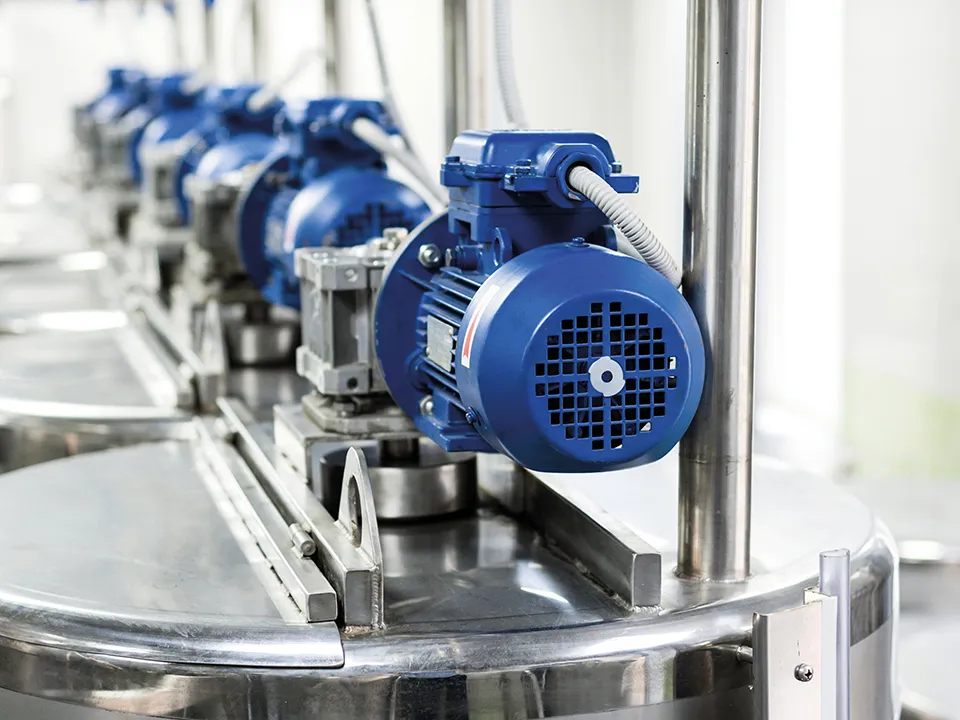
Did you know that the investment cost of a new motor accounts for just 1% of its Total Cost of Ownership (TCO)? Energy costs account for as much as 97%.
It therefore makes sense to choose a high-efficiency motor that is perfectly suited to your application. That is why ERIKS, as a specialist industrial service provider, is launching a new tool: the TCO motor calculator. By asking a few brief questions about your required specifications and intended application, the tool guides you to the best motor for your process. You can immediately see the cost and the savings the motor can deliver.
Electric motors consume 46% of the electricity generated worldwide. This is why Europe has introduced efficiency-class requirements to make high-efficiency motors the standard. But as users, we are still not sufficiently aware of the impact this energy consumption has on a motor’s total cost. “When we need a new motor, whether for a repair, replacement or upgrade, the main consideration is how much it will cost. That is logical, because the maintenance manager making these decisions has to justify every expense within their annual budget. The cost of running the motor over the years of service that follow is not taken into account. Yet this is precisely where the greatest savings can be made. Cheap is rarely cheerful,” warns Kathy Theys, European Business Development Manager Power Transmission at ERIKS.
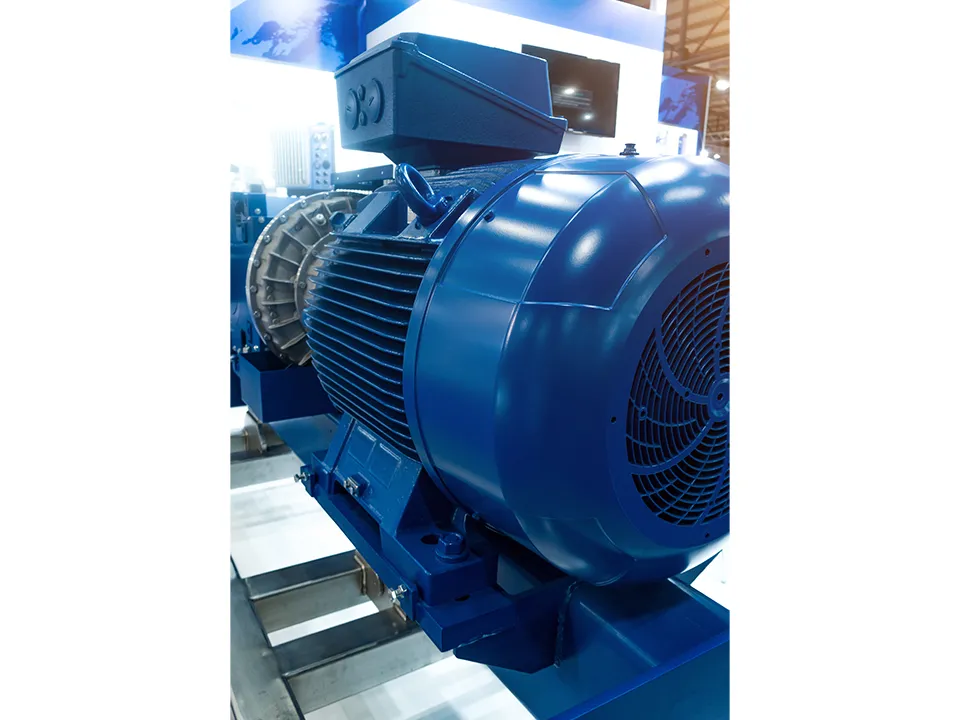
Energy consumption is a major motor cost
Anyone looking at the cost over the motor’s entire life cycle will see that as much as 97% of the costs go towards the energy bill. But how can you estimate in advance how well or poorly your motor will perform? “That was the idea behind the TCO motor calculator tool recently developed by ERIKS. Our colleagues in the United Kingdom used an Excel-based document internally to get a quick overview. ERIKS Digital then turned it into a web-based platform, which we are now offering to all users. What makes it unique is that the tool does not provide a theoretical estimate of TCO, but applies all the parameters to your own specific application. This gives you a clear picture of the best options for you, the associated savings potential and the payback period.”
The right motor in three steps
Above all, it had to be a user-friendly tool. In the first step, you can enter what the motor needs to do using typical parameters such as power, speed, mounting options … The second step immediately establishes the link with your application.
You are asked about the current IE class, the number of operating hours per day, the load, the expected service life, the energy cost … Users with a login can also see the relevant purchase prices straight away. Theys: “In short, the tool aims to build a picture of exactly how the motor will need to perform in your application. This allows us to calculate precisely what a repair might cost, how much a new motor for your application would cost, and exactly how much you could save in energy and CO2 over the motor’s entire service life. For example, the tool also makes it easy for sustainability managers to get an idea of the potential impact of such replacement projects on a company’s green ambitions.” Calculate your savings at https://select.eriks.be/nl/motor-calculator.

Looking further ahead
The timing of the tool could not be better. Next year, Europe will take a major step towards tightening the requirements for electric motors, introducing a requirement for at least IE3 efficiency-class motors to be placed on the market (0.75 to 1,000 kW, two, four, six and eight poles). “We are going a step further. We already have IE4 motors in stock, even though this requirement will not come into force until 2023 (75 to 200 kW, two, four and six poles). Why? We want to convince customers that it can pay to look further ahead and invest a little more today. It really does pay off. That is exactly what the tool shows in black and white. ERIKS aims to inform and advise customers so they can find the best solution. Motors really are our core business. We also have our own workshop for repairs and rewinding, so we are also supporting circular maintenance,” concludes Theys.
Question about this story? Ask your question
Keep following this
Get an email when a new story is published. No account needed.
- SubjectMotion, gears & drives







