












The three-way combination of torque, speed and precision. Step into the ring with your application

Many applications need a drive with a central opening, for routing light, cables or components through it, for example.
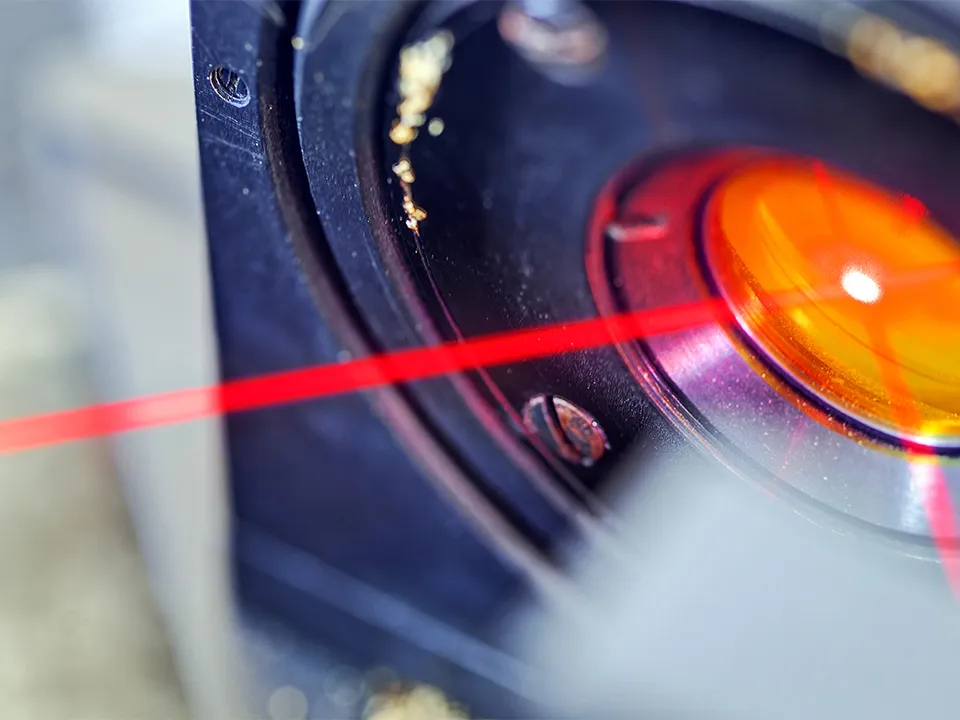
Good examples include applications in optics and photonics for laser beam guidance systems, as well as automation and robotics for semiconductor handling (Figure 1). Until recently, conventional drive systems always involved compromises. Hollow shafts were often relatively small, drives were slow or heavy, or mechanical integration was labour-intensive. A new type of drive, known as a ring motor, now offers a promising alternative. With a large 40 mm bore and modern stepper motor technology, it combines speed and torque in a balanced package, while keeping weight and dimensions to a minimum.
Many drive technologies and solutions are generally suitable for applications requiring a central opening. In practice, however, each option has its drawbacks. With hybrid stepper motors, for example, the hollow-shaft diameter is usually limited to around 10 to 12 millimetres by the required copper fill factor or the magnet claw pole design. Torque motors can accommodate larger openings thanks to their multi-pole design, but their high moving mass makes higher speeds unattainable. They are also relatively expensive and often difficult to integrate. As a result, many applications use rotary tables with a central opening, driven by a “standard” motor. However, such designs require gearboxes and complex mechanics. The backlash that inevitably results must be compensated for with extensive measures before this type of motor can be used in highly precise applications. This makes system integration significantly more complicated. These drive solutions also contain many wear-prone parts, so they require a great deal of maintenance. Rotary tables driven by a hybrid stepper motor are also a common choice. But these are larger, and become heavy when high performance is required. Until now, then, finding a practical solution for applications requiring an opening has been far from easy.
A new approach, new possibilities
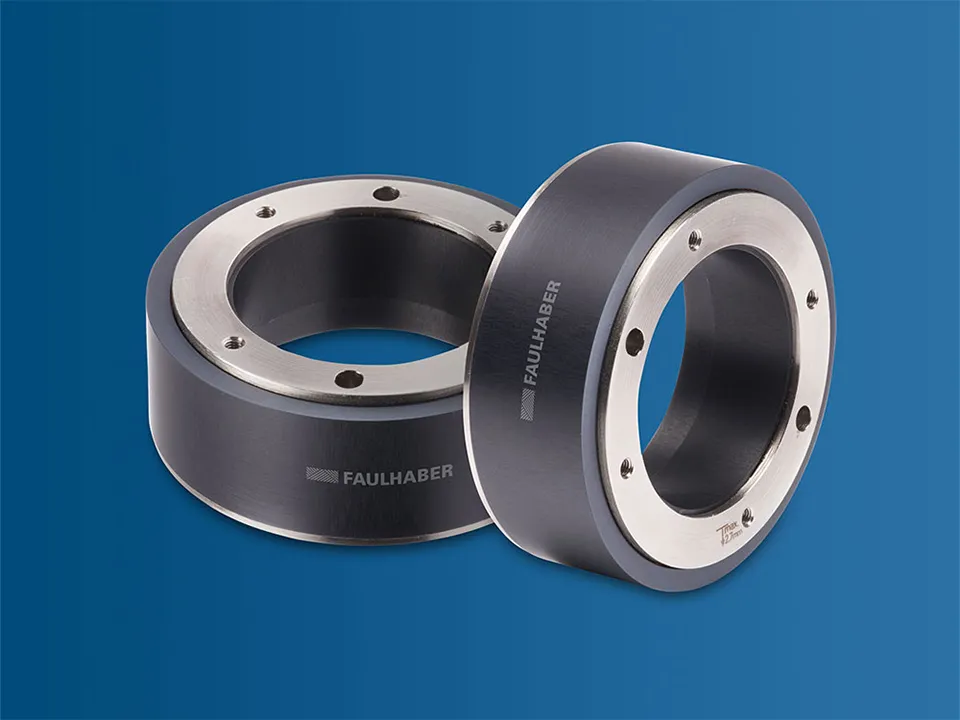
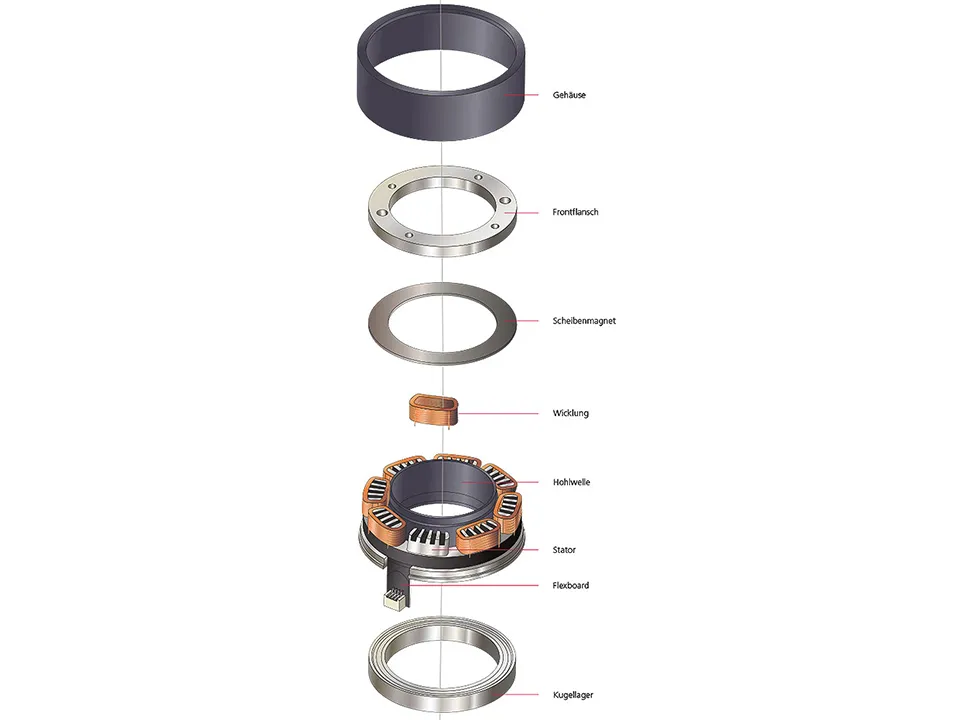
Drive specialist FAULHABER (see company profile) has taken on this challenge and designed an entirely new solution specifically for applications requiring large openings: the DM66200H ring motor. This stepper motor (Figure 2) has an overall diameter of 66 mm and a generous hollow shaft with an internal diameter of 40 mm. The ring motor is 24 mm thick and weighs just 218 grams. This compact drive needs very little installation space and is easy to fit. The rotor, with its opening, directly drives the mechanism around it, without a transmission (Figure 3). This prevents mechanical backlash that would otherwise need to be compensated for.
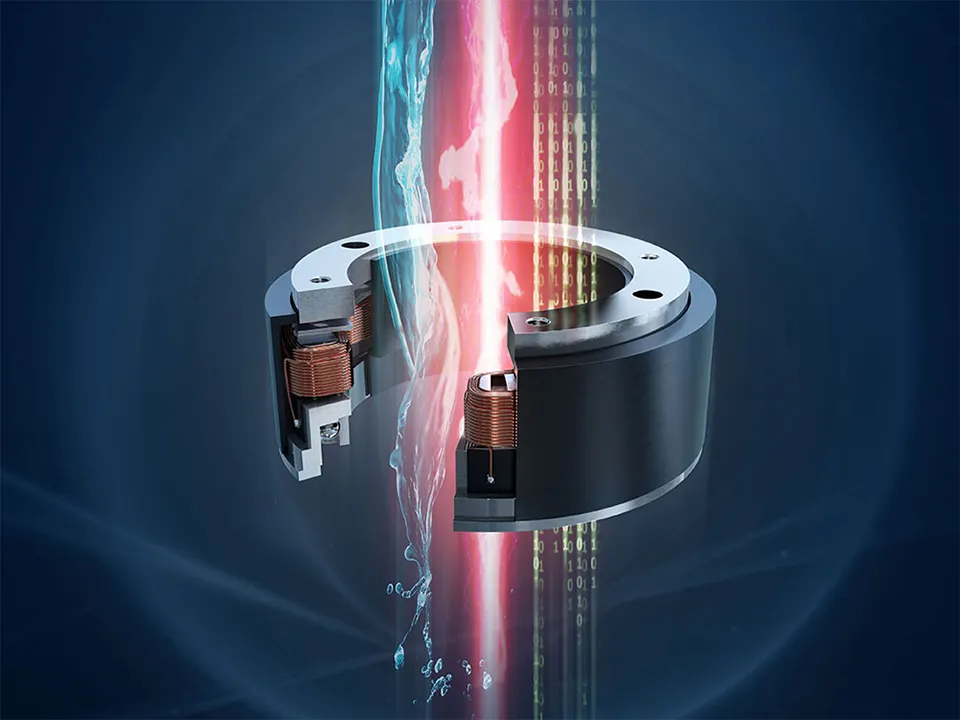
This new hollow-shaft drive was originally designed for applications in optics and photonics, but it also opens up possibilities in many other fields, such as wheel drives where the drive shaft passes through the motor to save space, or prostheses with artificial joints. In principle, the drive can be used wherever cables, gases, liquids or light signals need to pass through the opening (Figure 4). It is therefore ideal for optics applications, for example adjusting microscopes, diaphragms and zoom lenses, directing laser beams and more, but it can also be used for a range of control and positioning tasks. Typical applications include rotary tables, antenna mounts, and air and gas valves.
The ideal combination of high performance
The ring motor is based on FAULHABER’s proven stepper motor technology. The multi-pole, two-phase permanent-magnet motor delivers 200 steps per revolution. With a high resolution of 1.8° in full-step mode, it can perform highly precise positioning in an open-loop configuration. The motor delivers dynamic torque of up to 200 mNm and can move correspondingly heavy loads. Maximum static torque is 307 mNm, rising to 581 mNm with boost. This means no brake is needed. The motor can reach speeds of 2,000 revolutions per minute. For many applications, this compact direct drive provides the perfect balance between speed and torque. The only wear part is the ball bearing, enabling maintenance-free continuous operation. On request, the drive can be adapted to specific applications, for example with special lubricants, customer-specific windings, special cables and connectors, or custom mounting flanges.
Direct drive with an exceptionally large opening and high performance (faulhaber.com)
Question about this story? Ask your question
Keep following this
Get an email when a new story is published. No account needed.
- ThemeMotion with less energy
- SubjectMotion, gears & drives







