












The technology behind RIF010: No wave too high
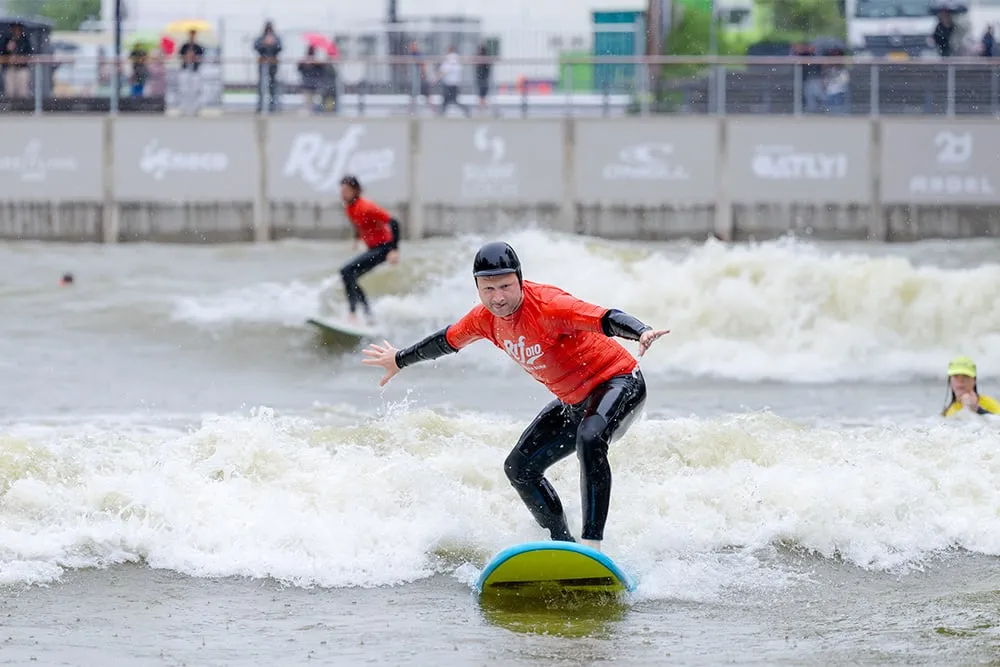
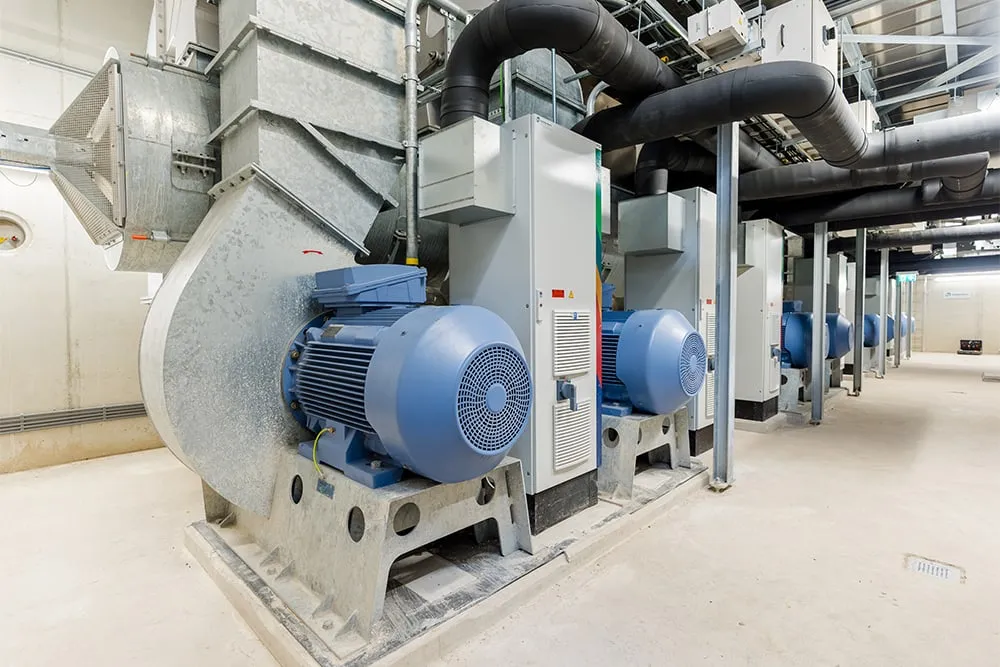
Rif010 was built in the heart of Rotterdam over the course of ten years. It is the world’s first urban surf pool, where beginners and experienced surfers alike can show off their skills on artificially generated waves to passers-by. The technical heart of the wave system is housed in a separate room beneath a terrace and comprises eight wave chambers that can generate different waves. This is achieved using eight large blowers with a motor output of 132 kW, which generate up to 350,000 cubic metres of air per hour. The valves that redirect the airflow are actuated by Festo servomotors and controllers.
Plans for RiF010 were first put forward in 2013 by Edwin van Viegen. He developed them as part of a competition in which Rotterdam invited people to submit ideas for bringing this particular part of the city to life. The keen surfer had his sights set on building a serious surf pool in one of the canals through which the River Rotte flows. The technology for generating artificial waves was already familiar from wave pools and was being further developed at the time by one of his contacts.

Surfing, SUP and a beach
Winning the competition also secured funding. The challenging project was eventually completed in 2024, with the opening of Rif010. It has become a real attraction, where people can surf and, outside the surf pool, also go stand-up paddleboarding, bodyboarding, canoeing and even diving. Surfers ride from the point where the waves are generated towards a concrete beach. Beside the beach, on the quay, is the beach house. This is where watersports enthusiasts can change and shower, and where food and drink are served. It also welcomes visitors who are simply interested.
The technical room where the waves are generated is located beneath a terrace. It houses an impressive technical installation developed entirely by Hellebrekers. Erik Keyl, project delivery manager, explains: “It has been a special project, with a focus not only on generating waves from 1 metre up to a maximum of 1.6 metres, but also on energy consumption and limiting any potential disturbance to the surrounding area.

Wave generation
The technical room is equipped to generate different waves in eight wave chambers. The 1-metre waves are intended for beginners, the 1.5-metre waves for more experienced surfers, and the waves up to the maximum height of 1.6 metres for ‘experts’. In the latter case, the wave also breaks hollow and is steeper.
The waves are created using air generated by a blower installation designed and built in-house by Hellebrekers. The eight large, variable-speed blowers, each with a 132 kW electric motor, deliver air to the wave chambers. Each motor has its own variable frequency drive, which is needed to create waves of different heights. When the surf pool is ‘at rest’, the frequency is around 30 Hz. It rises to 36 Hz for a 1-metre wave and to 50 Hz for the maximum wave height. Three large silencers prevent noise from the installation from disturbing local residents.
The wave itself is formed in the wave chambers in a cycle of around 7 seconds, a timespan typical of wave movement in the North Sea. In each chamber, air is first drawn out for 5 seconds, creating negative pressure. Electrically actuated valves then reverse the direction of the airflow, and the air drawn in is pushed out in around two to three seconds. Combined with the structure of the surf pool floor, the reef, this creates the desired wave. The process takes place across a width of around 23 metres. After generating a number of waves, the wave generator stops to let the surf pool settle. This also creates an undertow, with water flowing back towards the wave chambers and carrying surfers to their starting point.
Switching the valves
The valves that reverse the direction of the airflow are driven by Festo EMMT servomotors and controlled via a CMMT controller. The choice of these servomotors was driven by the torque available. This particular combination of servomotor and controller is also ideal for achieving the precise timing required to switch the valves.
The software uses what is known as an electronic cam. This is comparable to a mechanical camshaft, which controls a valve’s position over time and, in turn, the speed at which that position changes. The major advantage of an electronic cam is that the cam profiles do not need to be mechanically adjusted each time they prove less than optimal. Instead, they can simply be changed in the software settings.
The collaboration between Festo and Hellebrekers went very smoothly. The two companies regularly work together on a range of challenging projects. Erik Keyl says: “I don’t need to explain much to Festo. The knowledge and insight are there, so people quickly understand exactly what we at Hellebrekers need. That meant this drive and control combination could be integrated seamlessly into our own system, which is controlled by a Siemens controller. The support with the final commissioning was also welcome and much appreciated. Another great project completed.”
Beneath the beach house terrace is the water treatment plant, also developed and built by Hellebrekers. It continuously filters solid particles from the surf pool water using the drum filter’s 60 µm filter (blue). Fresh water drawn from the Rotte is also pumped to the drum filter first by two circulation pumps, each rated at 7.5 kW. At the request of the Hoogheemraadschap, the surf pool is made available to temporarily store water during high water levels. A separate filling pump and a separate setting on the control cabinet are provided for this purpose. When this is required, excess water is admitted until the pool level has risen by a maximum of 60 cm.
A business enquiry for Festo? Get in touch
Companies in this story

Keep following this
Get an email when a new story is published. No account needed.
- SubjectMotion, gears & drives
- CompanyFesto







