












Simplicity as the starting point for electrification
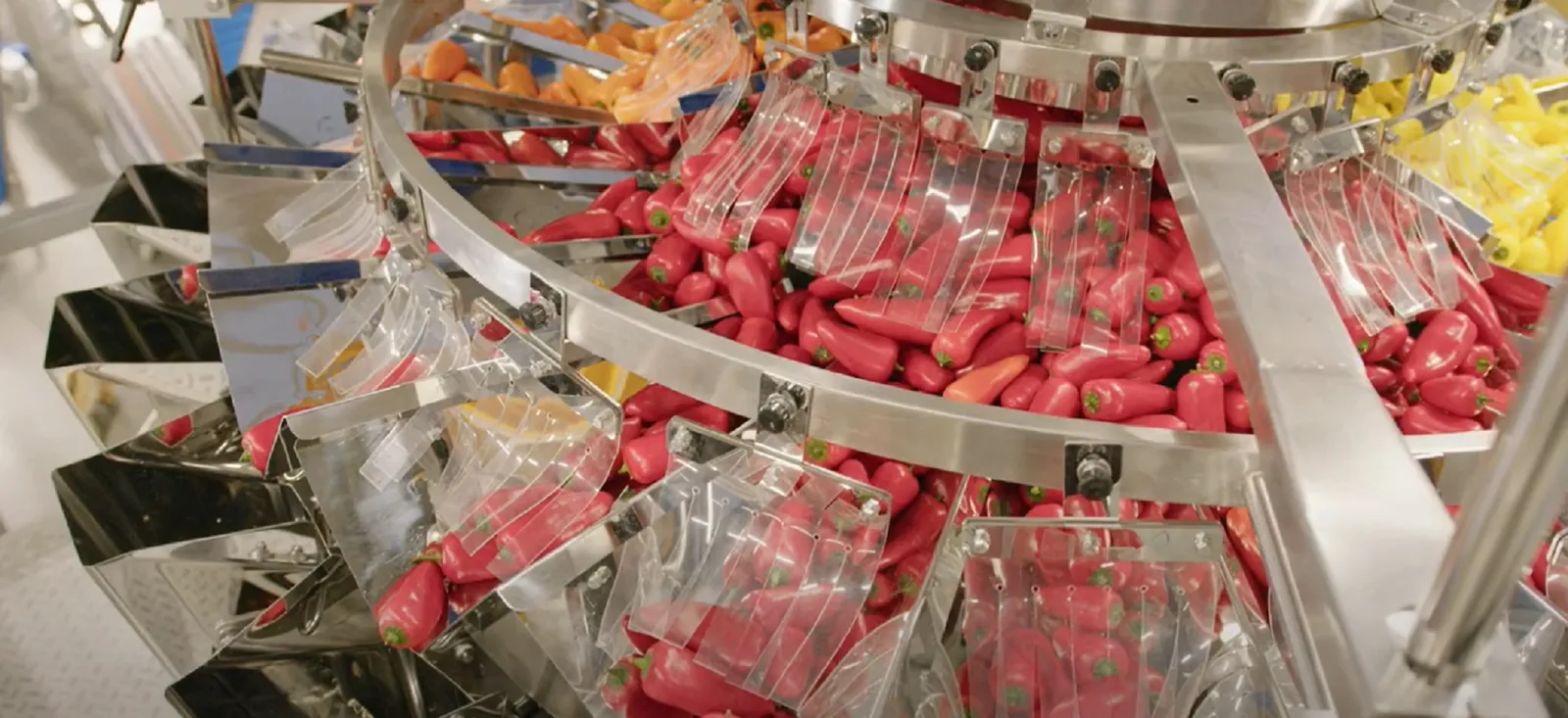
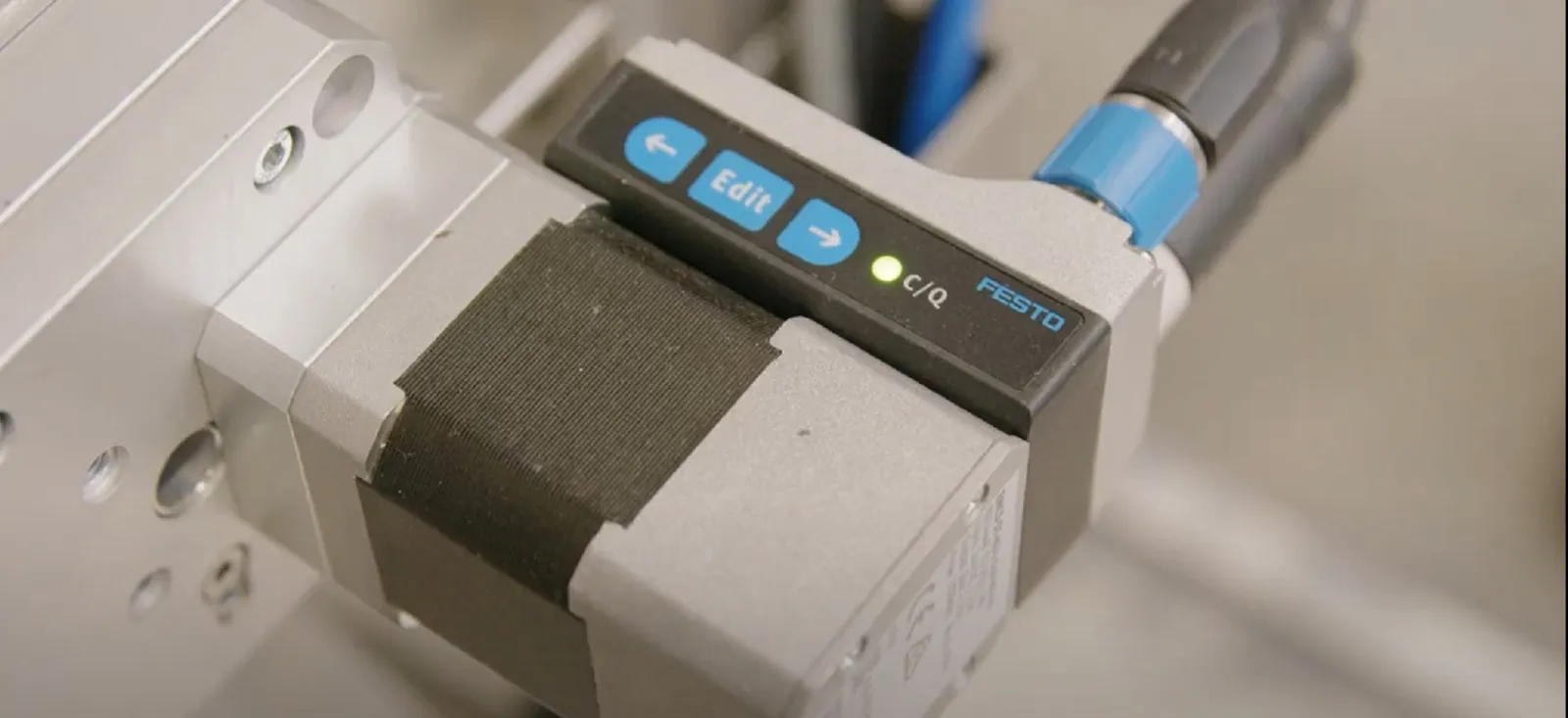
The rotary function in Koppert’s so-called cup filler is no longer driven entirely pneumatically, but instead uses the ERMS rotary drive from Festo’s Simplified Motion Series. This gives Koppert’s customers the simplicity of pneumatics combined with the speed and accuracy of servo technology. The complete solution also provides all the options needed to collect data for purposes such as optimisation and maintenance.
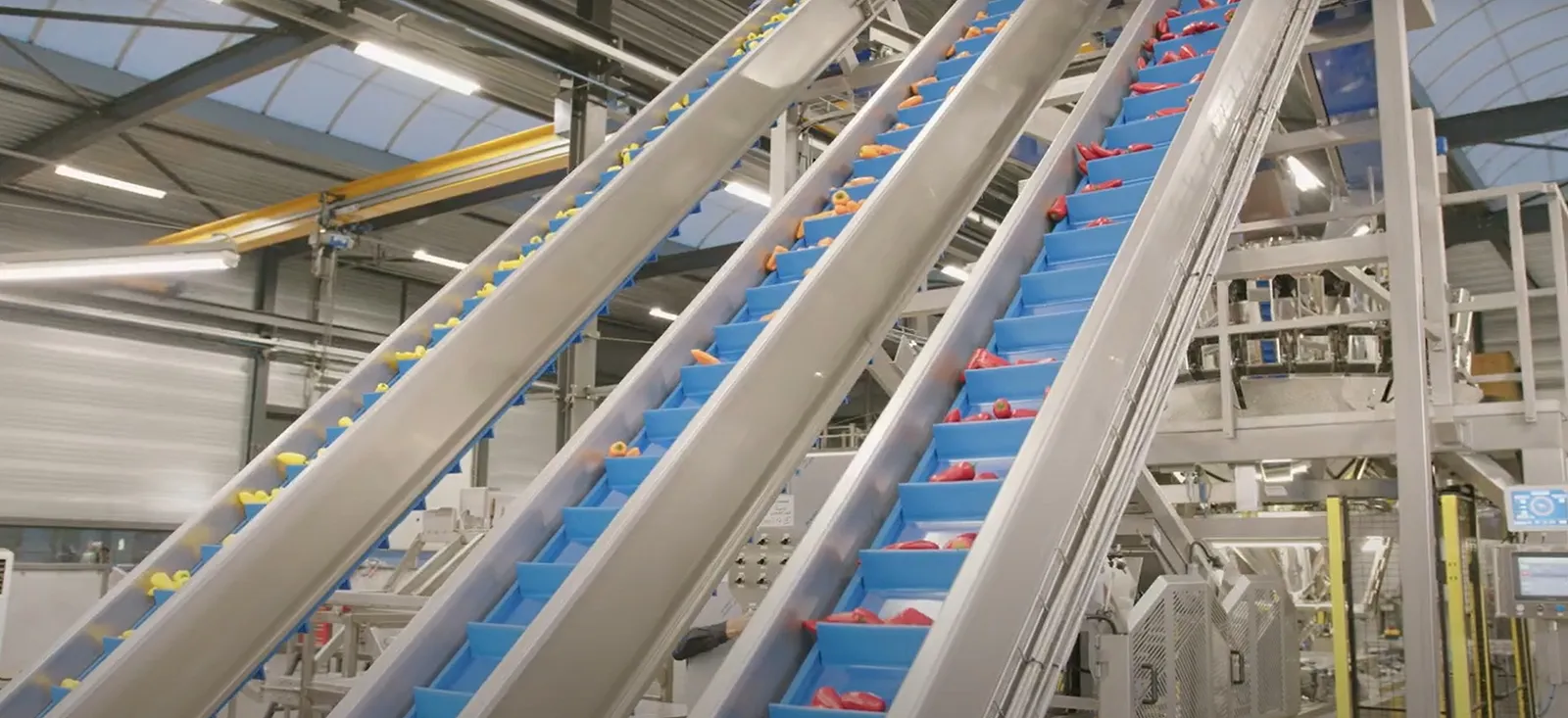
Koppert machines & zonen is a Westland-based machine builder specialising in machinery for agriculture and horticulture. The company started out in 1983 with seed drills, but now designs solutions for the complete processing of a wide range of products. Its machines range from harvesting and forestry equipment to systems for weighing and packing products in containers such as buckets and cups. The entire process, from design and manufacture to installation and service, is handled in-house.
From pneumatic to electric
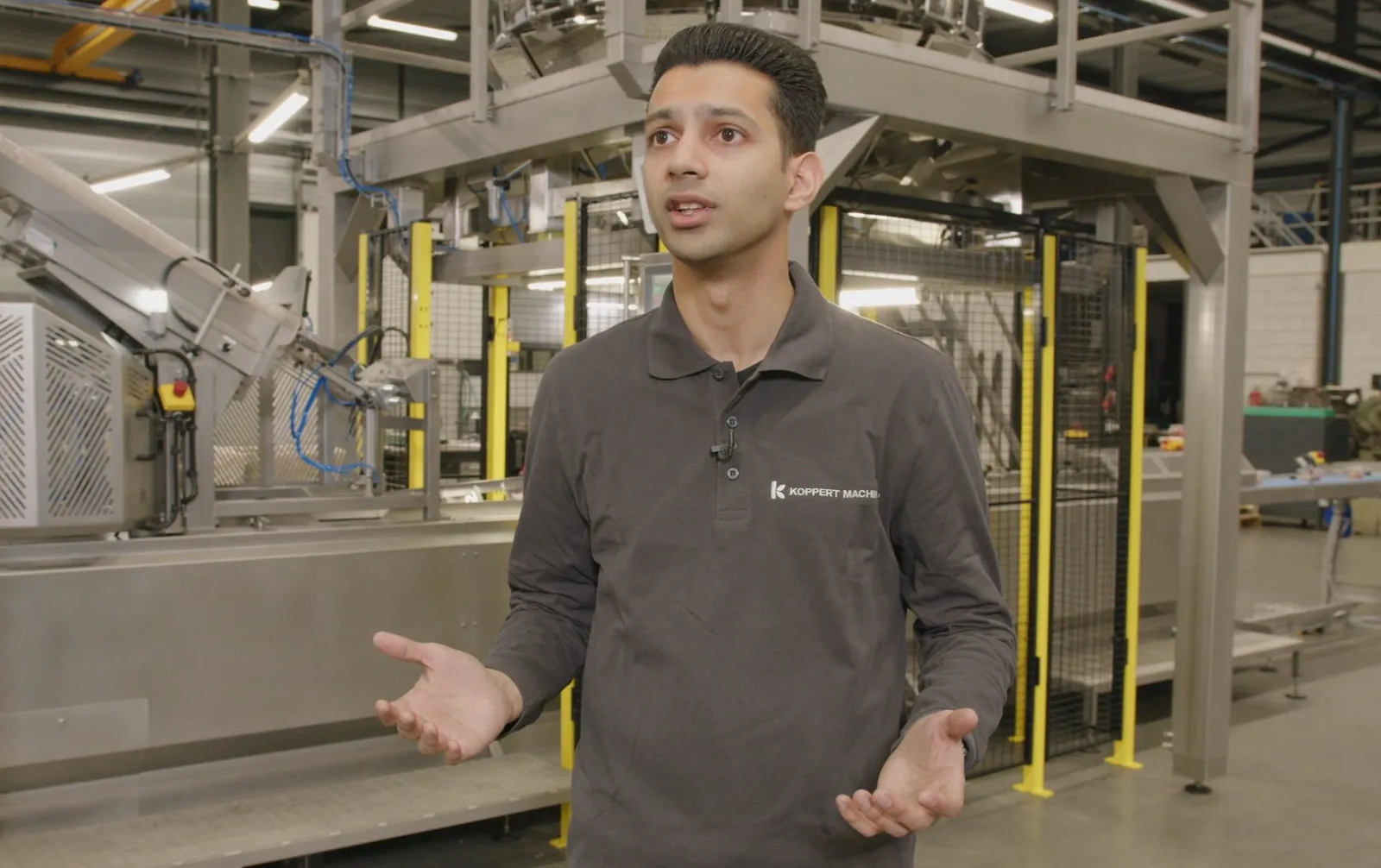
To maintain its leading position in its market, Koppert’s engineering department is always looking for ways to improve or expand its portfolio. Engineer Roshan Gangapersad, for example, works every day on innovative ideas for both standard machines and bespoke solutions commissioned by individual customers.
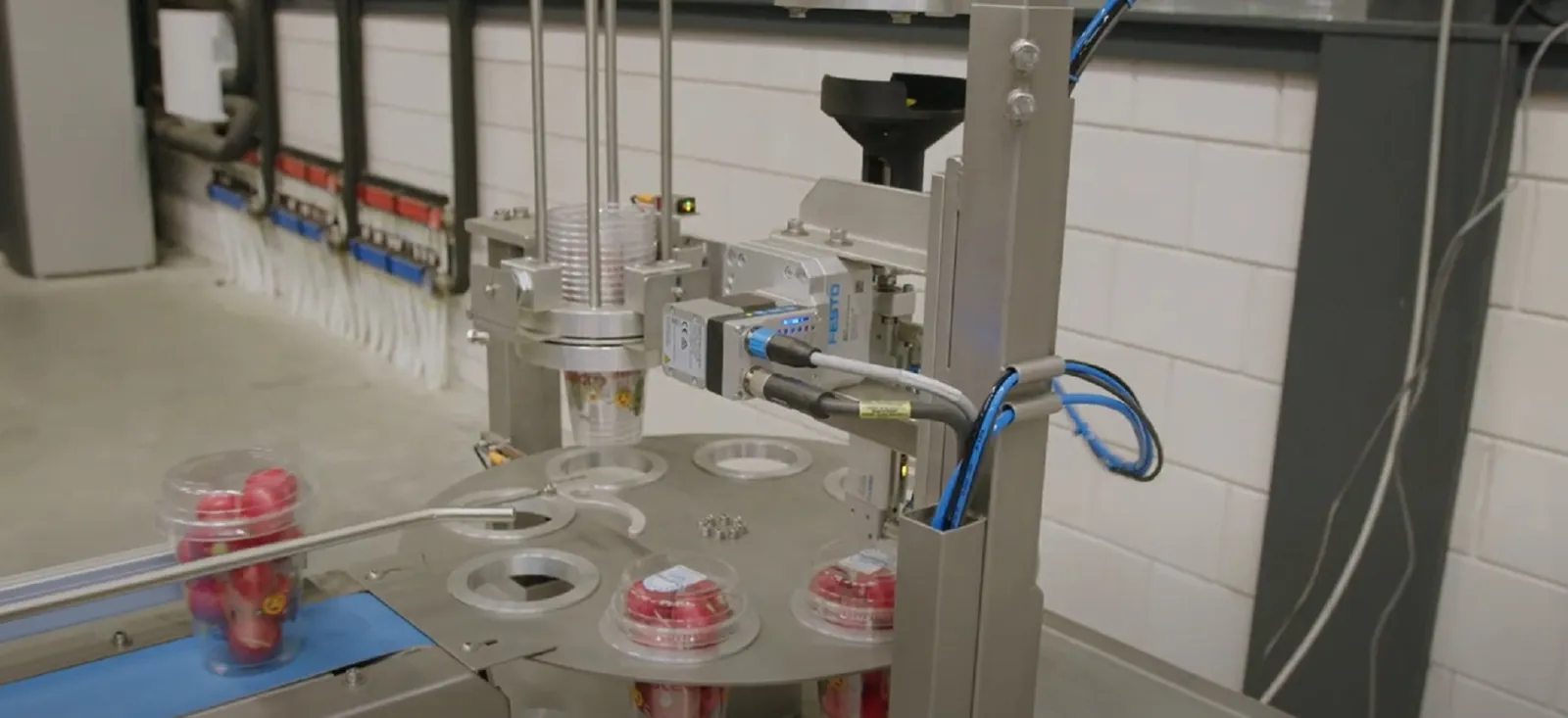
Packaging machines are among the areas he focuses on. “Broadly speaking, we have two packaging machines,” he says. “The Multipacker, which also comes in an XL version, and the fully automatic cup and bucket filler. The latter was developed to separate stacks of cups and then position them beneath a fixed filling point. Once the packaging has been filled, for example with snack vegetables, a lid is fitted and pressed into place. A printed label can also be applied. Finally, the packaging is moved onto a conveyor belt for further processing or transport.”
Increasing speed
Previously, the various processes involved in filling, closing and discharging were carried out entirely pneumatically. The system used, among other things, a valve terminal, pneumatic (rotary) cylinders and valves, and an air preparation unit. It was a sound, robust solution, but when the company wanted to increase process speed by running the rotary cylinder faster, it reached the limits of pneumatics. The engineers therefore wanted to switch to an electric drive and asked Festo to help determine the sizing and select the right components.
“We looked at several solutions and kept coming up against limitations. A servomotor, for example, was very attractive in terms of speed and accuracy. But it didn’t fit with our aim of keeping the machine simple for our customers. If a customer wants to replace the actuator because they are switching to a different product, they need to be able to do so easily, efficiently and, of course, safely. With a servomotor, however, you would need a trained electrical technician to disconnect and reconnect the wiring correctly and put the drive back into operation safely. After all, you are also working with 230 VAC.”
Simplified Motion Series
Festo proposed the ERMS rotary drive as an alternative. This unit is part of the Simplified Motion Series (SMS), which Festo developed specifically as its answer to electrification. Each component in the series is a complete system consisting of an axis, a (servo)motor and a matching controller. All the elements are designed for simplicity and are configured as a complete solution for point-to-point movements. Force and speed can be controlled by entering the parameters directly on the device. No complex software, no control cabinet, no 230 V AC, just a safe 24 V DC. There is also no external servo drive, and only two cables are needed: one for the motor supply and one for the control and logic signals.
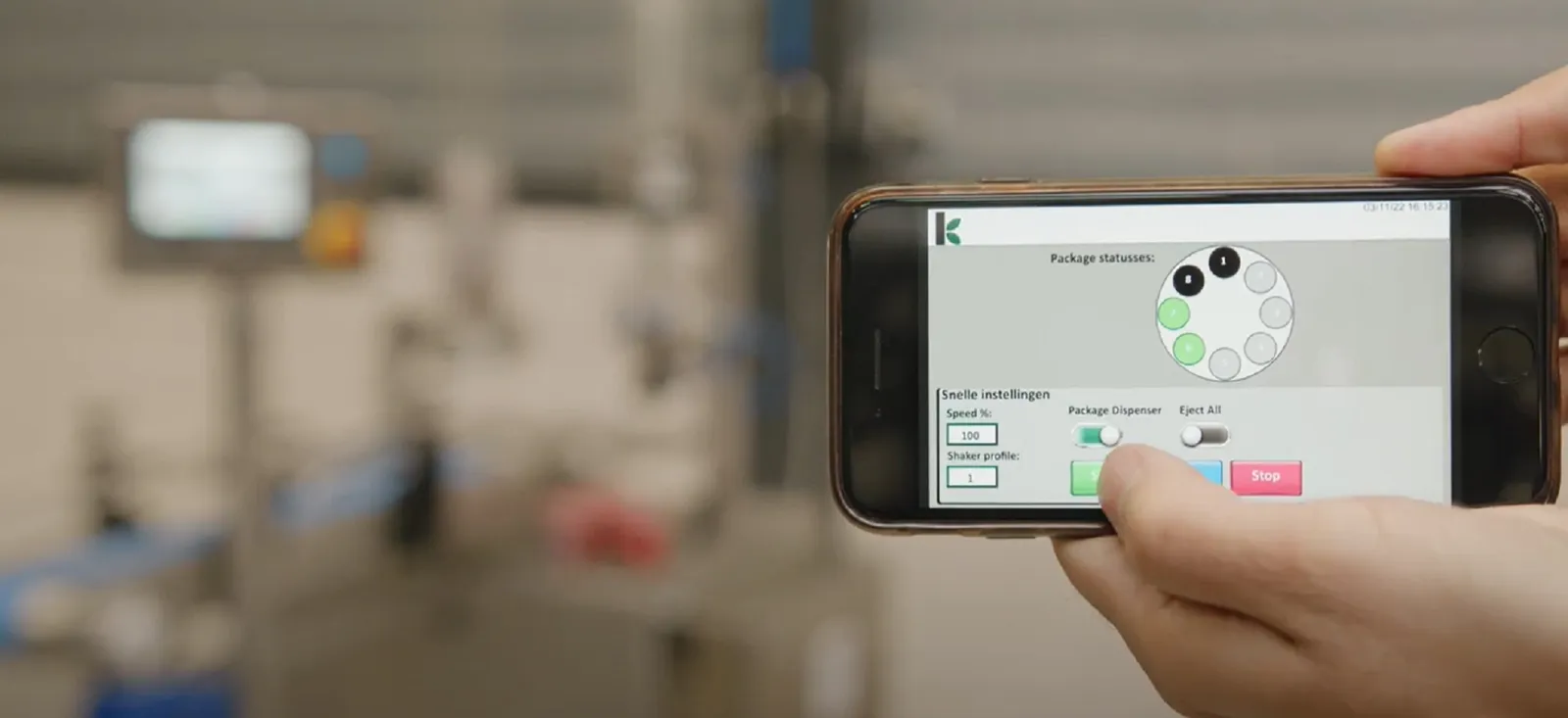
To enable seamless integration of SMS components into a wide range of machines and systems, they are controlled either via digital I/O, similar to pneumatics, or via IO-Link. Koppert chose IO-Link because it offers more possibilities. For example, parameters can be read and adjusted remotely with ease. The same applies to logged process values and the end-position setting. IO-Link also makes it possible to use the Simplified Motion Series for positioning, while the plug&work principle makes commissioning straightforward.
Benefits for the customer
Roshan says: “This proposal enabled me to implement exactly the solution I needed. Because the ERMS is an integrated solution, replacing the rotary unit is simple. There’s no need for a dedicated electrical technician: the mechanical technician, who is much more often on site, or even the machine operator can carry out the task. It’s simply a matter of reading the required values, disconnecting two cables, replacing the actuator and reconnecting the cables.”
As well as making it quick and easy to replace the ERMS, the company sees major benefits in using IO-Link to access the available data. Monitoring parameters such as voltage and current can help identify impending faults at an early stage. A steadily increasing current, for example, could indicate misalignment or unnecessary friction. Roshan says: “The great thing is that you can also read this data remotely. That means we can log in at a customer’s site if there are problems and immediately investigate whether the data can help us identify their cause.”
Benefits for Koppert
The solution is also easy for the machine builder itself to work with. The rotary unit has a sealed hollow shaft, allowing an integrated passage for pipes and hoses. It also features a standardised mounting interface and integrated end-position detection. This makes it easy to install during machine assembly.
Roshan concludes: “I’m pleased with the end result. Through productive discussions with Festo and the combination of their expertise with our knowledge of our customers, the machine has become faster without becoming more complex. That’s a good starting point for exploring further ways to use SMS. For example, we’ll soon be using various Simplified Motion actuators, such as the EPCS, for linear movement. It’s an ideal concept for a wide range of machines.”
View the application here www.festo.nl/koppertvideo
For more information about Festo products and services, visit www.festo.com
A business enquiry for Festo? Get in touch
Companies in this story

Keep following this
Get an email when a new story is published. No account needed.
- SubjectMotion, gears & drives
- CompanyFesto







