












Robotics Day showcases robotics in transition
Text KDV - Language & MoreImage Maxon Benelux
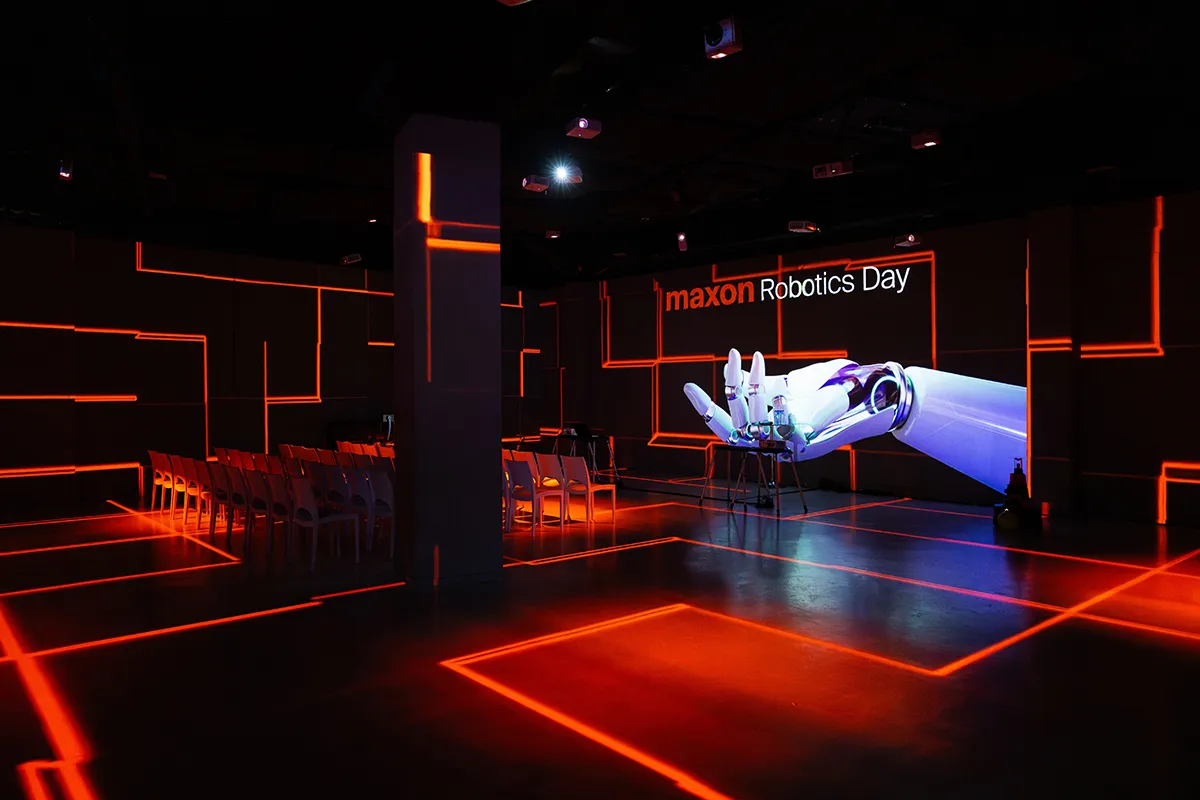
Robotics by experts, for experts: that was the theme of Robotics Day on 27 March, organised by maxon Benelux in Eindhoven. The aim was to share knowledge and overcome challenges to pave the way for wider applications in society and industry, with presentations and demos from Tech United, ExRobotics, Saxion and maxon itself.
In 2025, robots’ capabilities and relevance to society are growing rapidly. The same is true of the insight and know-how of research groups and companies that have made the development of robotic technology their core business. Despite impressive progress, many hurdles remain. Everyone agrees that an integrated approach is the way forward. In the meantime, we can enjoy robotics’ excellent achievements.
More than football robots
The student team Tech United, affiliated with TU Eindhoven, has been developing football robots since 2006, competing with them in the RoboCup competition. The competition is a catalyst for the development of robotics and artificial intelligence. Tech United has since also developed applications in other fields, such as RoboCup rescue, RoboCup @home and RoboCup industrial.
One of the biggest challenges identified by Tech United is the need for robots to work alongside people. Care robots, for example, must not only navigate and detect objects, but also communicate effectively and learn through speech recognition. This requires a continuously evolving system of perception, world modelling, strategy and execution. In any case, the ambition for the football robots is to play against human opponents by 2050, or, as they put it: ‘mixed teamplay’ is fun.
Developing solutions to societal challenges in response to demand
Dr Ir Abeje Y. Mersha, head of the Smart Mechatronics and Robotics research group at Saxion University, is clear about their vision for robotics: “We develop and innovate in response to demand. Our ‘Living Technology’ research agenda is about addressing societal issues with robotic technology.”
The team is working on dozens of projects, including building a firefighting drone for safer fire response and a robot dog for pipeline inspections. Mersha stressed that a lack of standardisation, collaboration and skilled technicians are major obstacles, and that we need a holistic approach bringing together technology, organisation and human capital to increase wider acceptance.

Safety robots for industrial applications
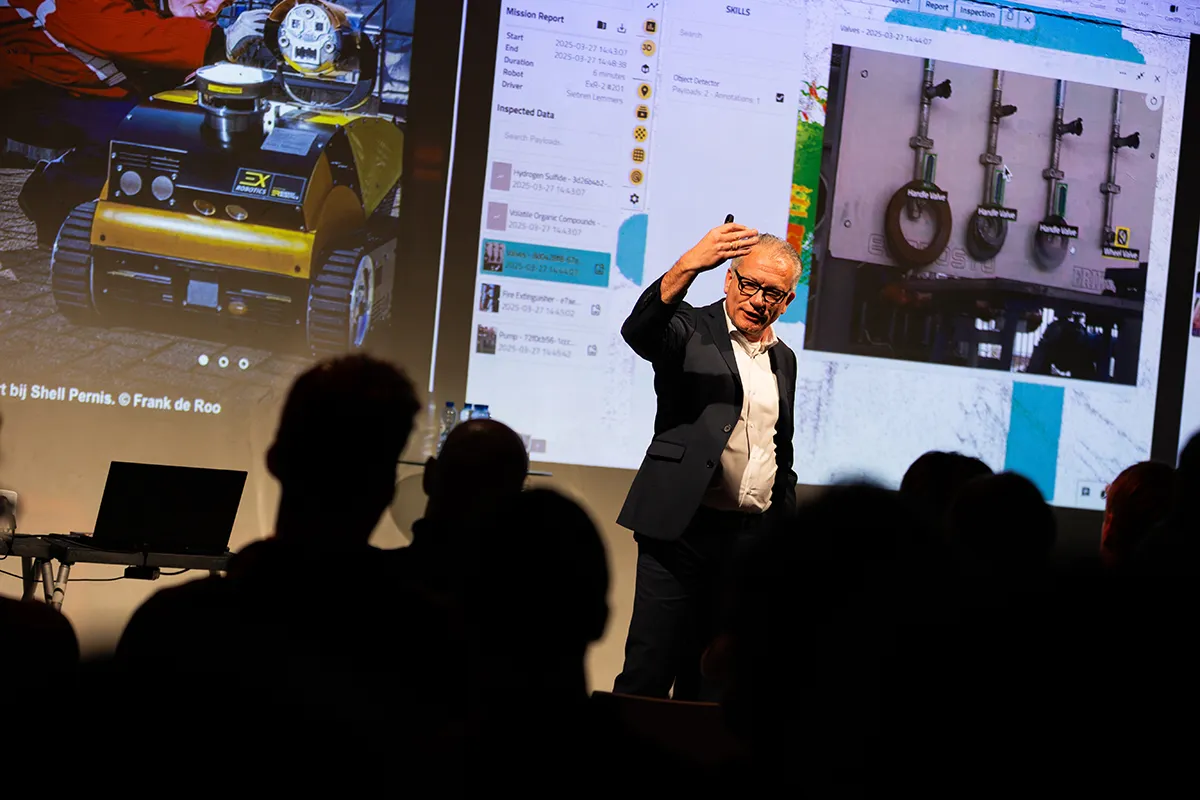
The aim is to make continuous monitoring and inspection in industrial facilities faster, simpler and more efficient. That is the focus of ExRobotics’ work. The company specialises in manufacturing robots for versatile use in hazardous environments, such as sites where explosives are handled. ExRobotics uses digital twins and AI to collect and analyse data. According to director Iwan de Waard, the challenge lies not only in the technology, but also in creating a robust system of work instructions, drawn up by the customer and executed by robots. It is all about collaboration, and striking a healthy balance between automation and human oversight.
ExRobotics’ robots are already doing excellent work for its customers, where inspections are now much more efficient. The photos and data produced by the robots make it possible to take action only when necessary. Scaling up is quick, because what one robot learns is passed on to the others.

From model-based control to reinforcement learning
Alessandro Forino of maxon closed the day with a presentation on the need to switch from model-based robots to reinforcement learning. Although model-based systems such as the Honda Asimo were robust, they proved difficult to scale because of issues such as noise and non-linearities. The focus is now shifting to neural networks and implementing AI on actuators, leading to a more flexible and scalable approach.
Reinforcement learning (RL) is a method in artificial intelligence in which a model learns through trial and error. A robot makes decisions based on a reward system, with successful actions rewarded and mistakes penalised. The aim is to accumulate as many rewards as possible over the long term. This approach is particularly useful in dynamic environments where traditional methods fall short. Forino stressed that there are still many opportunities, particularly to improve the reliability of AI models and increase collaboration to optimise systems. Anyone looking to develop robots with a clear purpose should do so in close collaboration with the customer.
Whether to lighten the workload, provide care or offer some fun and relaxation … robotics is making good progress. The next step is to build broader support for it across Europe.
Een zakelijke vraag aan maxon Benelux? Get in touch
Companies in this story

Keep following this
Get an email when a new story is published. No account needed.
- ThemeRobots on the shop floor
- SubjectMotion, gears & drives
- Companymaxon Benelux







