












Pneumatic cobot heralds a new era of human-robot collaboration
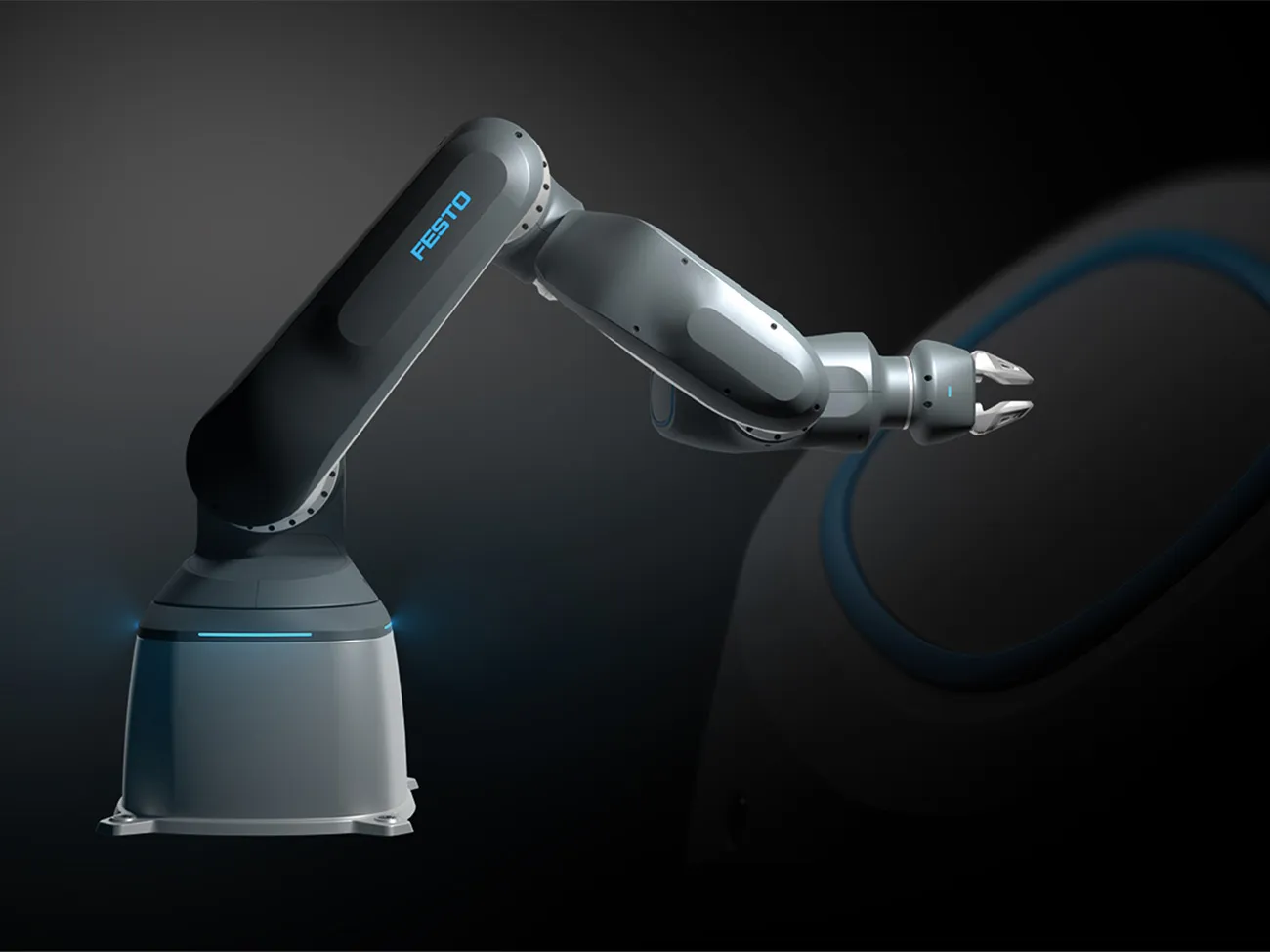
What if there were robots that were easy to operate, needed no safety fencing and were attractively priced? That would usher in a whole new era of human-robot collaboration. That era is now beginning, with the world’s first pneumatic robot from Festo.
Easy-to-use Festo cobot sets a new standard
Few industrial market segments are set to grow as quickly in the coming years as human-robot collaboration. Cobots take over strenuous or repetitive tasks, giving employees more scope while making their work less demanding and healthier. Pneumatics offers the most flexible and ‘sensitive’ solution for making this collaboration comfortable and safe.
The benefits of pneumatics
The Festo cobot owes many of its advantages to pneumatics: its sensitivity, low weight and price-performance ratio. For example, direct drives in the cobot’s joints are cheaper and lighter. This contrasts with an electric version, which requires heavier drives and expensive force-torque sensors. The world’s first pneumatic cobot is also the result of Festo’s exceptional expertise in controlled pneumatics.

An affordable option, also for SMEs
The Festo cobot makes cobots accessible to SMEs, where many processes are still carried out manually. Its flexibility makes it possible to automate smaller batches and individual work steps, too. And thanks to unique, intuitive commissioning and programming, employees can get started with the cobot quickly, without the need for expensive training programmes.
The pneumatic Festo cobot will also cost less than an electric model in the same class. Its price-performance ratio is particularly attractive in its main application area: handling small parts weighing up to 3 kg. “When the Festo cobot comes to market in 2023, its ease of use will set new standards for human-robot collaboration,” says Dr Frank Melzer, Director of Product and Technology Management at Festo.
Easy to operate and flexible to deploy
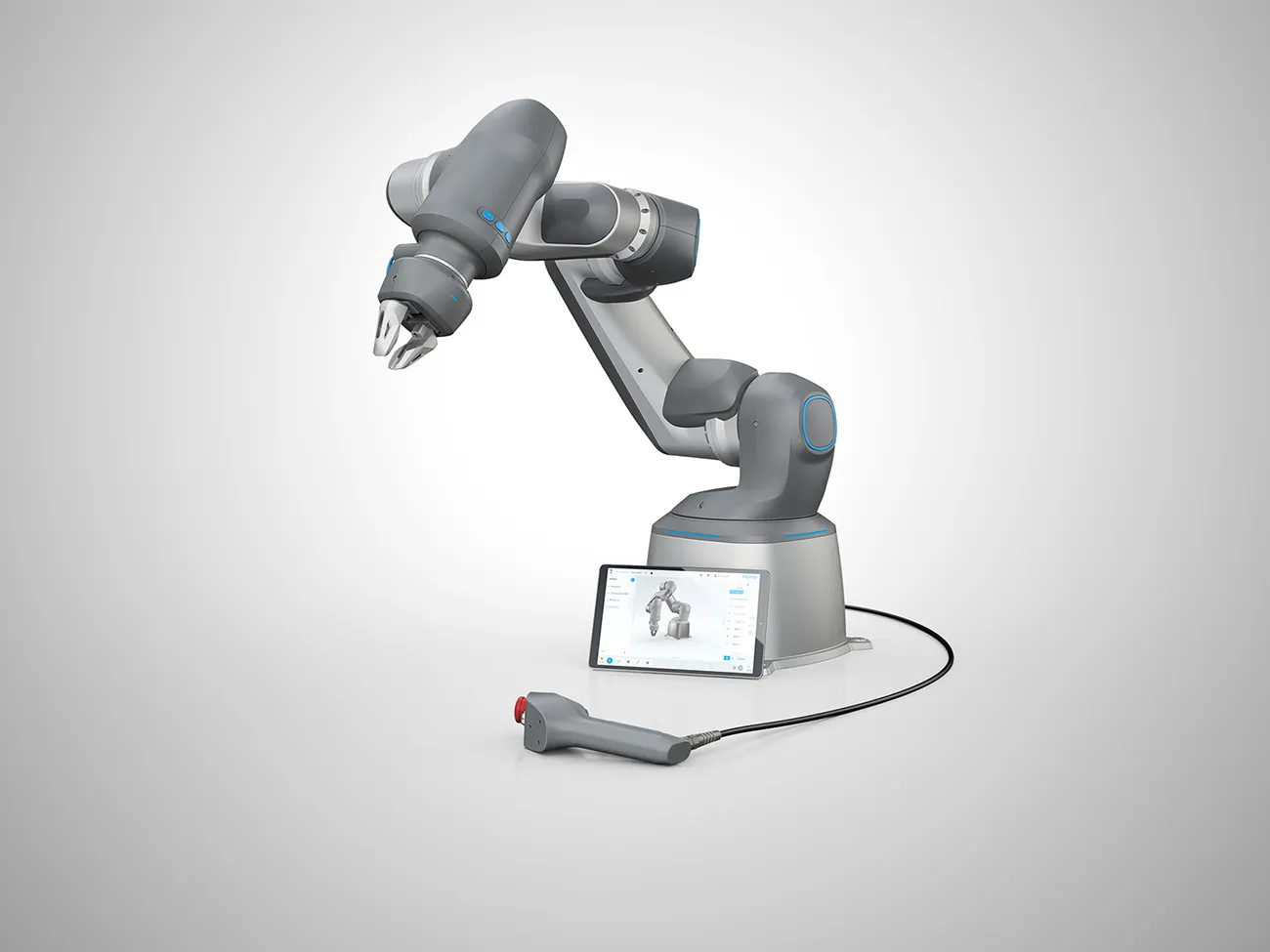
The Festo cobot comprises the hardware itself, a hand module and Robotic Suite, intuitive software that enables the cobot to be commissioned and programmed in just a few hours. No prior knowledge of robotics is required, thanks to the clearly presented, standardised function blocks available in the software. The pneumatic drives also make it easy to teach the robot arm specific points or paths by hand, with no resistance.
SMEs in particular benefit from cobots that can be deployed quickly and pragmatically for a new task, and can do more than simply perform the same task continuously. That is exactly where the Festo cobot excels. It requires no extra, cumbersome control cabinet that is also difficult to connect. Instead, its space-saving integrated controller in the cobot’s base makes it particularly flexible. Simple connections make it possible to deploy the cobot at short notice, without lengthy changeover times. Standard bus systems enable easy connection to higher-level control systems. This also means it takes up less space.
Thanks to the latest lightweight construction methods, Festo has managed to keep the cobot’s weight well below 20 kg. This means it can be moved quickly and flexibly from one location to another.
Work more safely and quickly
Like a human arm, the Festo cobot has exactly the right reach, at 670 mm, to act as a third hand when working as part of a team. Like a real colleague, it moves within a range that is easy for the human worker to monitor.
Thanks to the flexibility of its pneumatic drives, the cobot handles objects with sensitivity, moving at a speed suited to the situation and with smooth, harmonious movements. A touch therefore feels as gentle as human contact. The cobot’s direct pneumatic drive, combined with its low weight, also helps reduce contact energy.
Christian Tarragona, Head of Robotics at Festo, says: “Thanks to the precise pressure regulators in its joints, the robot detects when it is touched and responds with the appropriate safety functions.” This enables employees to work in complete safety alongside their sensitive technical colleague.
Question about this story? Ask your question
Companies in this story

Keep following this
Get an email when a new story is published. No account needed.
- ThemeRobots on the shop floor
- SubjectMotion, gears & drives
- CompanyFesto







