












Motion control at its best
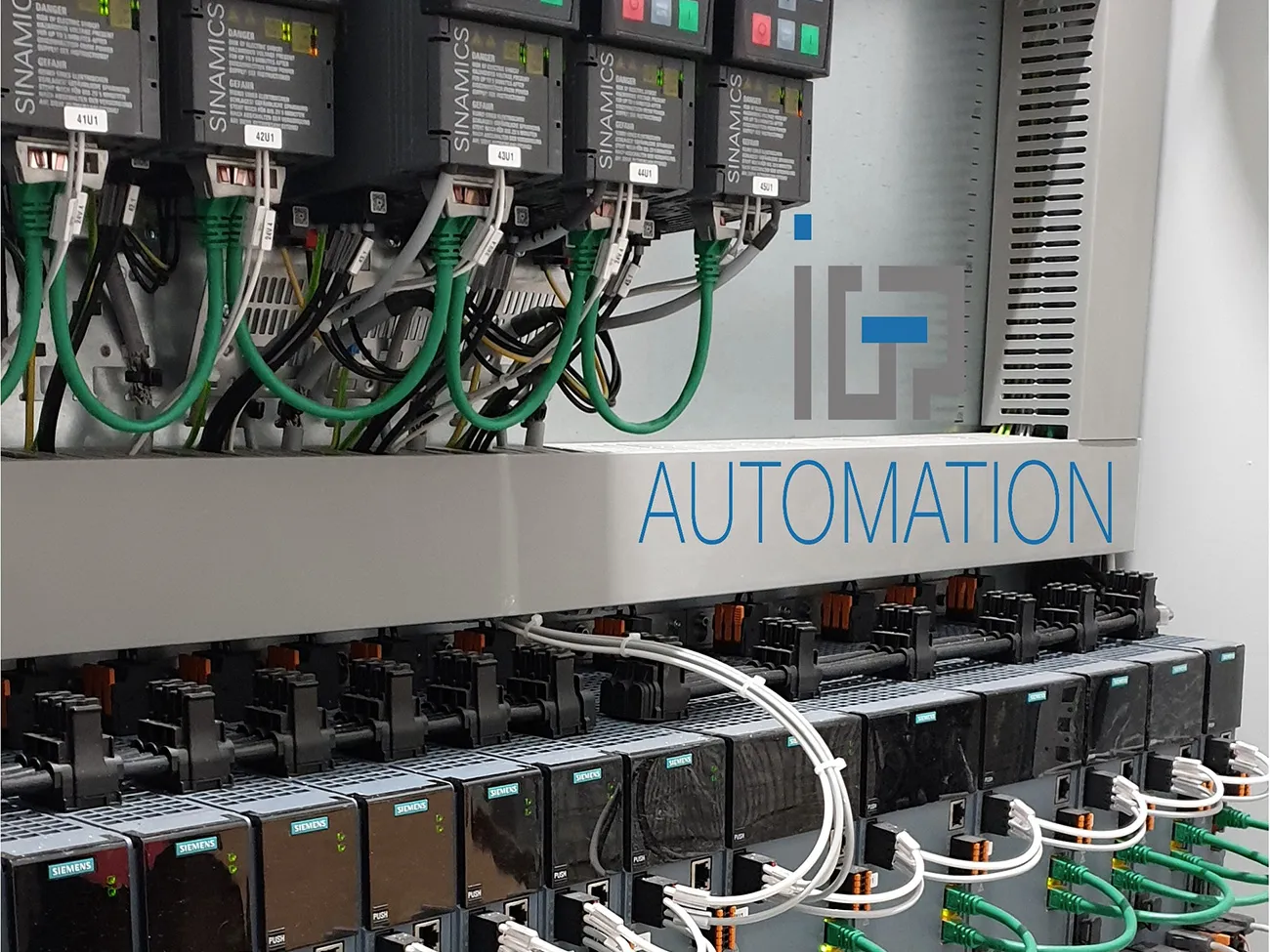
Getting industry moving. That is what Siemens’ hardware and software solutions do. At the latest edition of Indumation, Siemens recognised some excellent examples of how its motion control and drive technologies deliver clear added value in practice at the Best Application Contest. The online voting campaign was a close-run race right up to the last moment. So, without further ado, here are the winners.
Even in today’s digital world, the drive remains the starting point in machine building. “Motion control is about moving an object in a controlled way, which requires the synchronised interaction of a whole range of hardware components,” says Bart Laplasse, Head of Motion Control at Siemens Digital Industries. “With the devices we bring to market, we also want to help users easily and efficiently extract all the useful data available in a drive train. From there, we can help our customers build solutions that turn this data into valuable information, whether to optimise production processes or develop new business models. This is a first important pillar of digitalisation focused on the operational machine.”
“A second important pillar is to build the new machine as efficiently as possible. This means carrying out as much simulation as possible during the concept, design and engineering phases, shortening lead times and reducing the risk of anomalies after the machine is built to zero.” How customers combine Siemens’ motion control and drive technology portfolio with their own innovation and creativity is the basis of the Best Application Contest.
First place: Catael and Engima
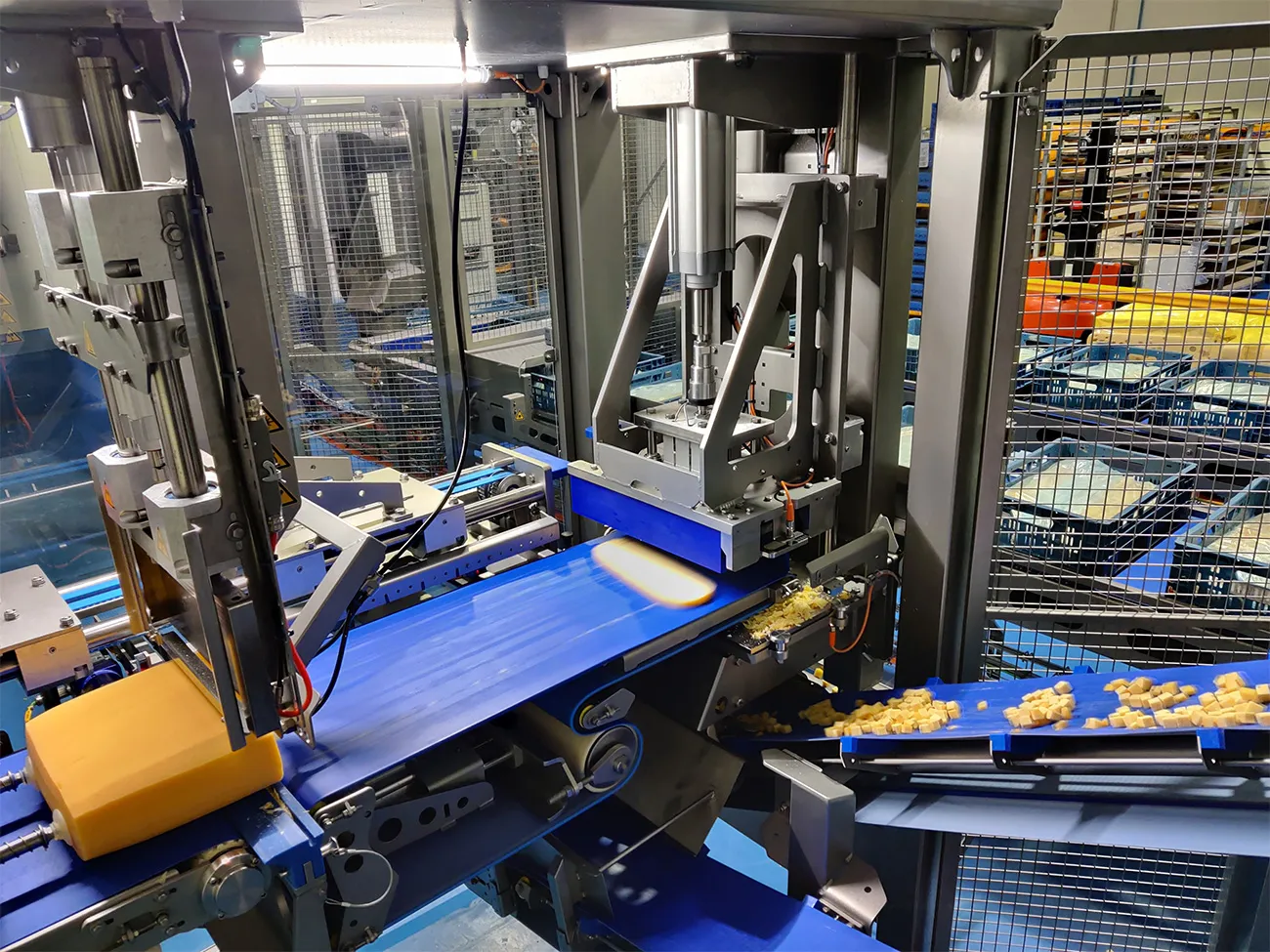
Cutting cheese into cubes presents a number of challenges. Cheese is a natural product, so no two wheels are ever exactly alike. When a customer wanted to optimise its existing cutting machines, machine builder Engima turned to engineering firm Catael. The aim was to improve product quality, switch more quickly between different types of cheese, drastically reduce waste per product and shorten cycle times.
“It soon became clear that a new machine concept was needed to meet the customer’s requirements. Engima developed the concept, while we took care of the control system,” says Bart Claeys of Catael. Servo technology was the obvious choice given the required dynamics. Sinamics S120 proved to be a perfect match for the specifications. “Siemens is a trusted partner for us. In this project, we made smart use of the simulation capabilities in TIA Portal V16. That meant we didn’t have to build our own simulation environment, but could still prepare and test everything before the hardware was available.”
The remaining task was to fine-tune the system. “By using more efficient cutting patterns and optimised motion profiles, we were able to tick every item on the customer’s wish list: smooth product changeovers, shorter processing times (20%) and less waste (10%). The fact that the customer has already placed an order for a second machine is the best proof that we have succeeded in our mission.”
Second place: CDC Automatisatie
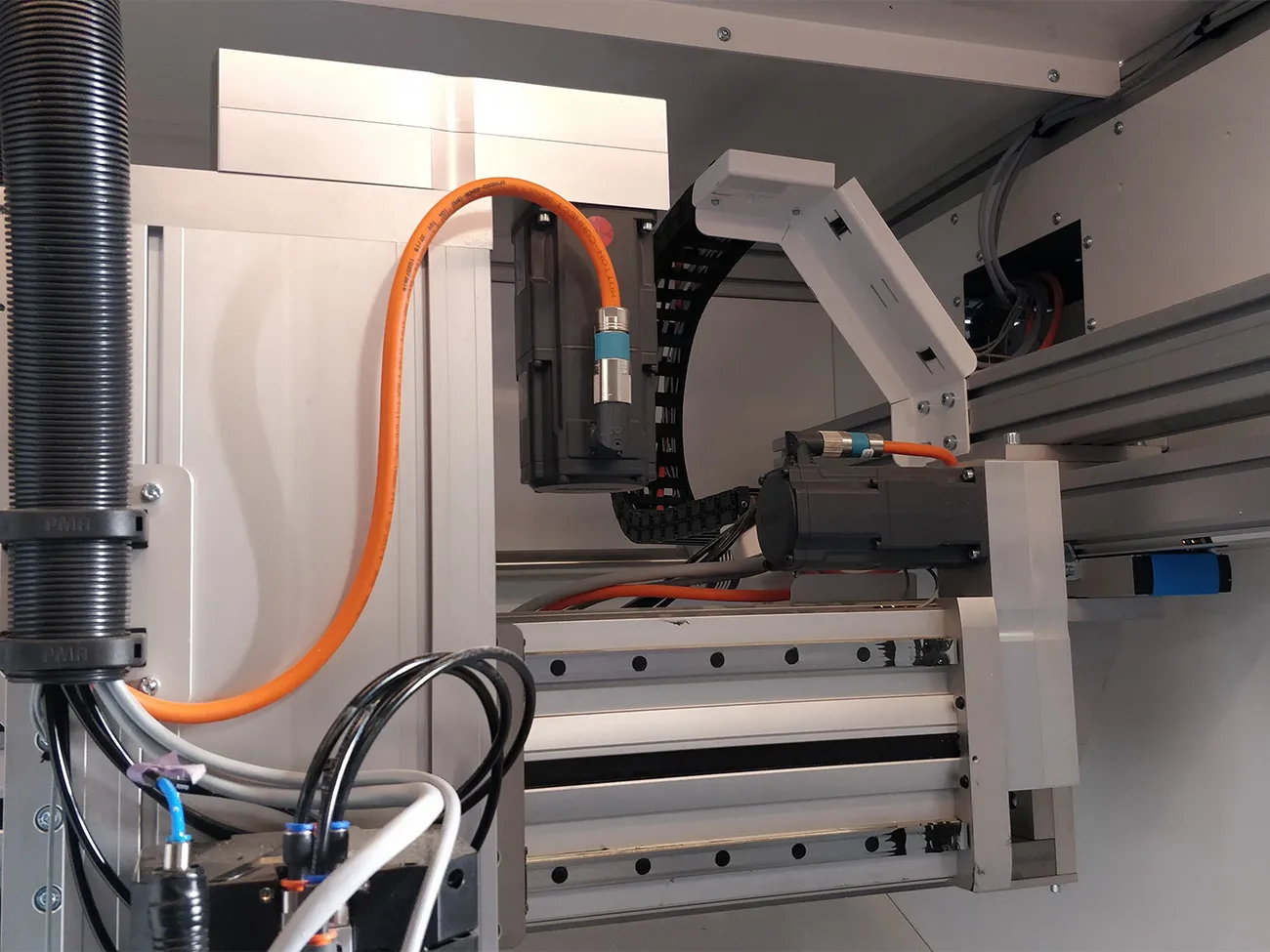
A third entry in the Best Application Contest, and a third podium finish. The public clearly appreciates CDC Automatisatie’s rapid progress. One of its recent achievements is a three-axis milling machine designed entirely in a digital environment.
“We are constantly looking to integrate new technologies, to help our customers move forward and give our employees new challenges. This project was our first introduction to digital twin technology,” says managing director Christofe De Craene. “We first designed the machine entirely in a digital environment using Siemens NX drawings, which enabled us to identify several errors in the machine design. For example, the tool changer was not positioned perfectly. We were also able to programme and simulate everything in parallel with the mechanical design work. This significantly shortened our time to market.”
CDC Automatisatie now intends to make this approach standard practice across all its machine-building projects and to help other companies create digital twins. “We believe this is truly the way of the future, and Siemens supported us throughout the process as we got to grips with this way of working.”
Third place: Vermeire
In just a few months, and in the middle of the pandemic, Peps Engineering, IGP Automation and Vermeire managed to get a new, 100% automated production line for PVC pipes up and running.
“The company manufactures wastewater treatment tanks for residential buildings. The PVC pipes are used to carry wastewater in and out. Investing in this cutting machine enabled production to be brought in-house from a subcontractor,” says Grégory Bragard, Area Sales Manager at Vermeire. The PVC pipes come in a wide range of diameters and lengths, and therefore in a range of weights and dimensions. No fewer than thirteen Sinamics S210 servo drive systems, controlled by a Simatic S7-1500T controller, are needed to fully automate conveying, cutting and sorting, regardless of the dimensions being produced.
“One of the biggest advantages of the Sinamics S210 servo drive system is that a single cable handles both power and control. Combine that with the more compact motors for the same power rating, and you get much greater flexibility and more design options. Configuring the system via TIA Portal also brings significant benefits in terms of ergonomics and standardisation.”
You can read more about these and all the other entries in the Siemens Best Application Contest 2022 at www.siemens.be/best-
application-contest
Question about this story? Ask your question
Keep following this
Get an email when a new story is published. No account needed.
- ThemeFrom design to flexible machine
- SubjectMotion, gears & drives







