












Mobile robots on the factory floor call for a focus on safety
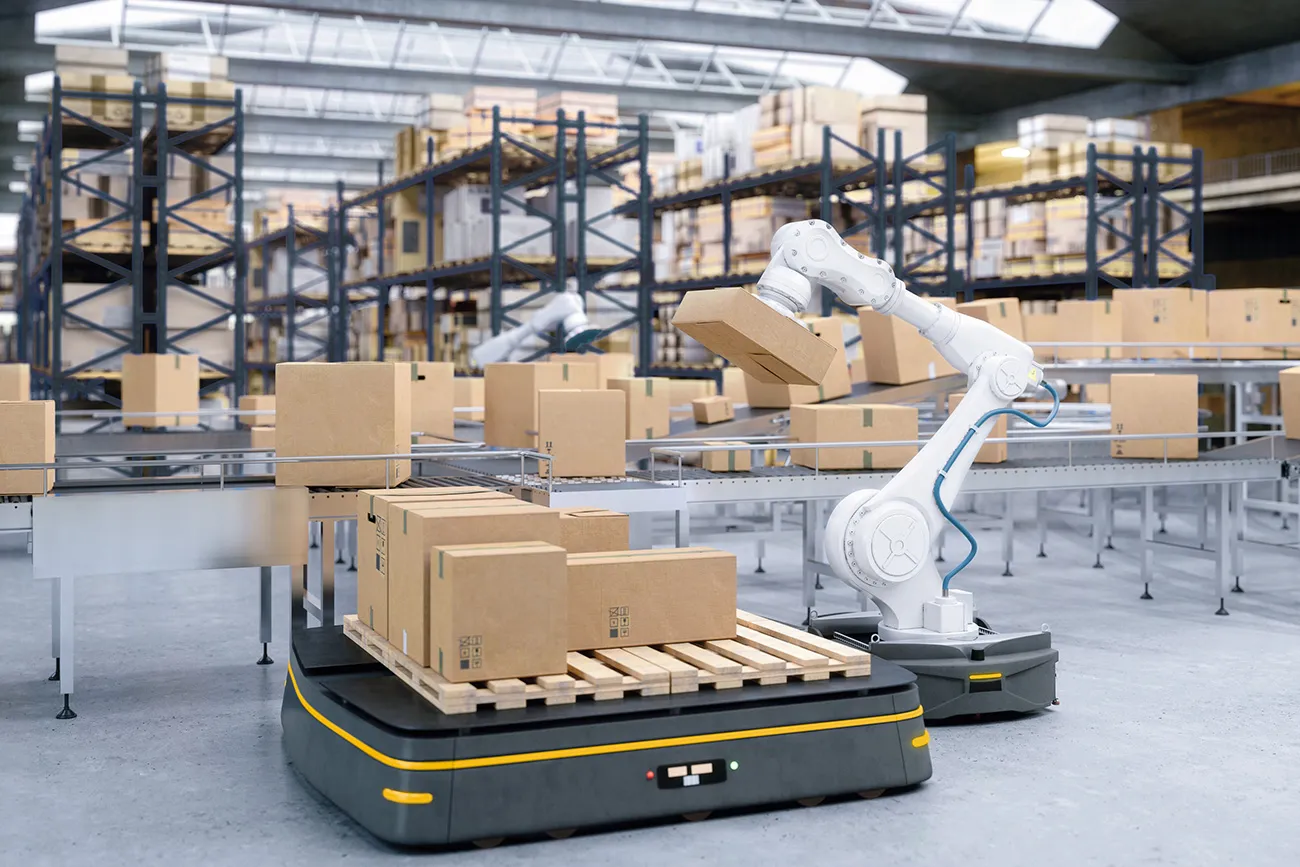
They are a familiar sight at an increasing number of production sites: automated guided vehicles (AGVs). Their value in making logistics processes more efficient is beyond question. But when it comes to safety, this technology must not involve any compromises. That is why Pilz, a global technology leader in safe automation, helps manufacturers procure and commission all kinds of automated vehicles for intralogistics.
Companies do not always realise the impact an AGV system will have on the entire factory floor. For example, they may give their supplier a plan of the production site, but by the time the system is delivered, the two no longer match exactly. Or they may assume that using fewer forklifts with drivers will automatically lead to fewer accidents, whether major or minor. But the safety of people and products is not guaranteed. A sudden stop could send the entire load flying off. Or, on their way to an automatic charging point, AGVs could give unsuspecting employees a real fright. Making sure AGVs navigate and manoeuvre safely therefore involves a great deal.
A new standard
Anyone designing and building autonomous industrial trucks or complete fleet systems must comply with ISO 3691-4. The standard defines safety requirements and specifies how the validation of automated vehicle functions must be carried out. It also sets out the required performance levels for, among other things, the various operating modes and braking control.
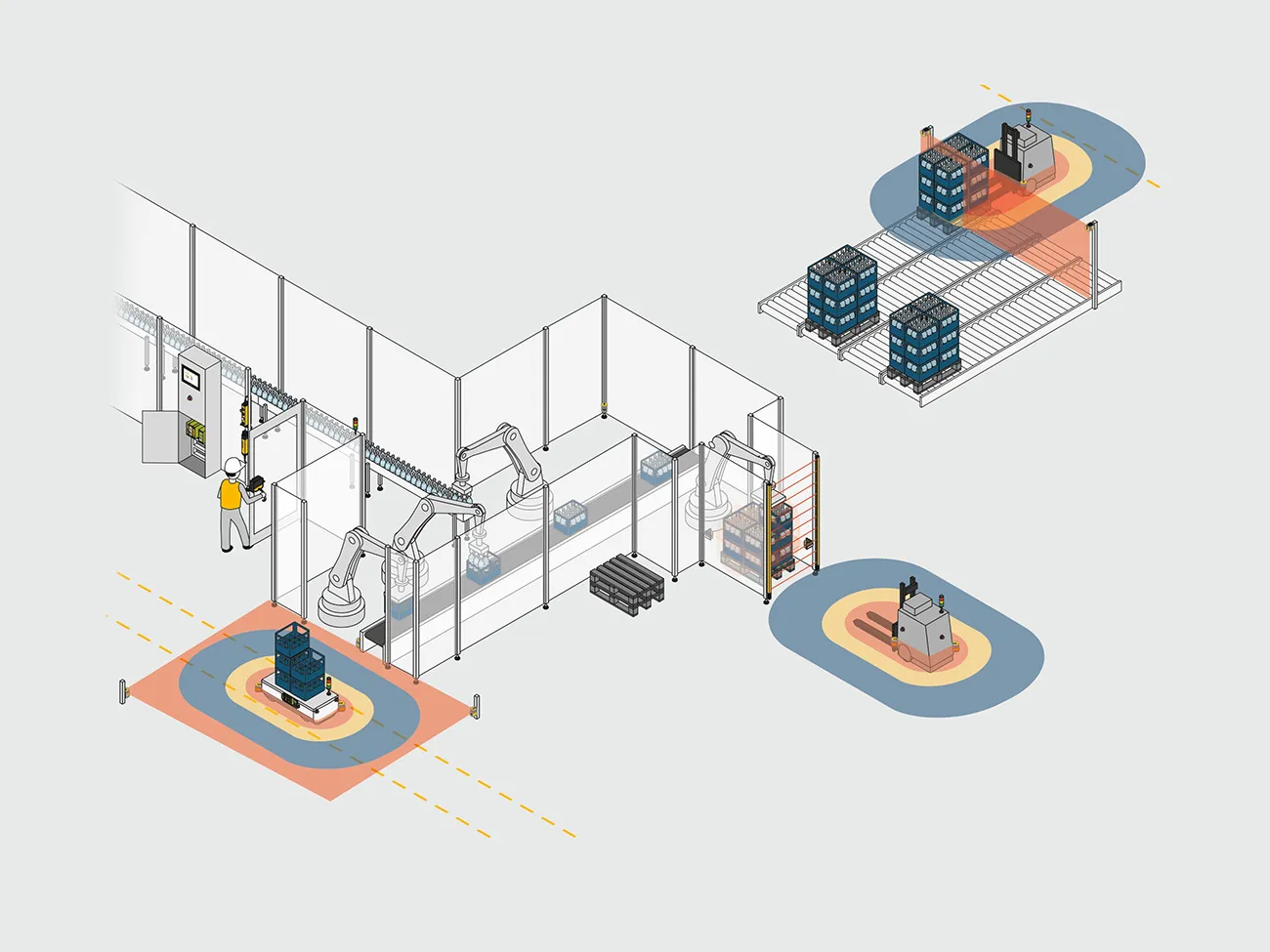
The new ISO standard was urgently needed in view of rapid technological developments. In addition, the existing EN 1525:1997 is now 24 years old. The new standard is more extensive and specific, particularly when it comes to integration with the factory floor. It also sets out requirements for companies using AGVs in their processes, such as the need for effective zoning on the factory floor. In Europe, EN 1175:2020 complements the ISO standard for AGVs. This European standard focuses in particular on electrical aspects.
A complex subject
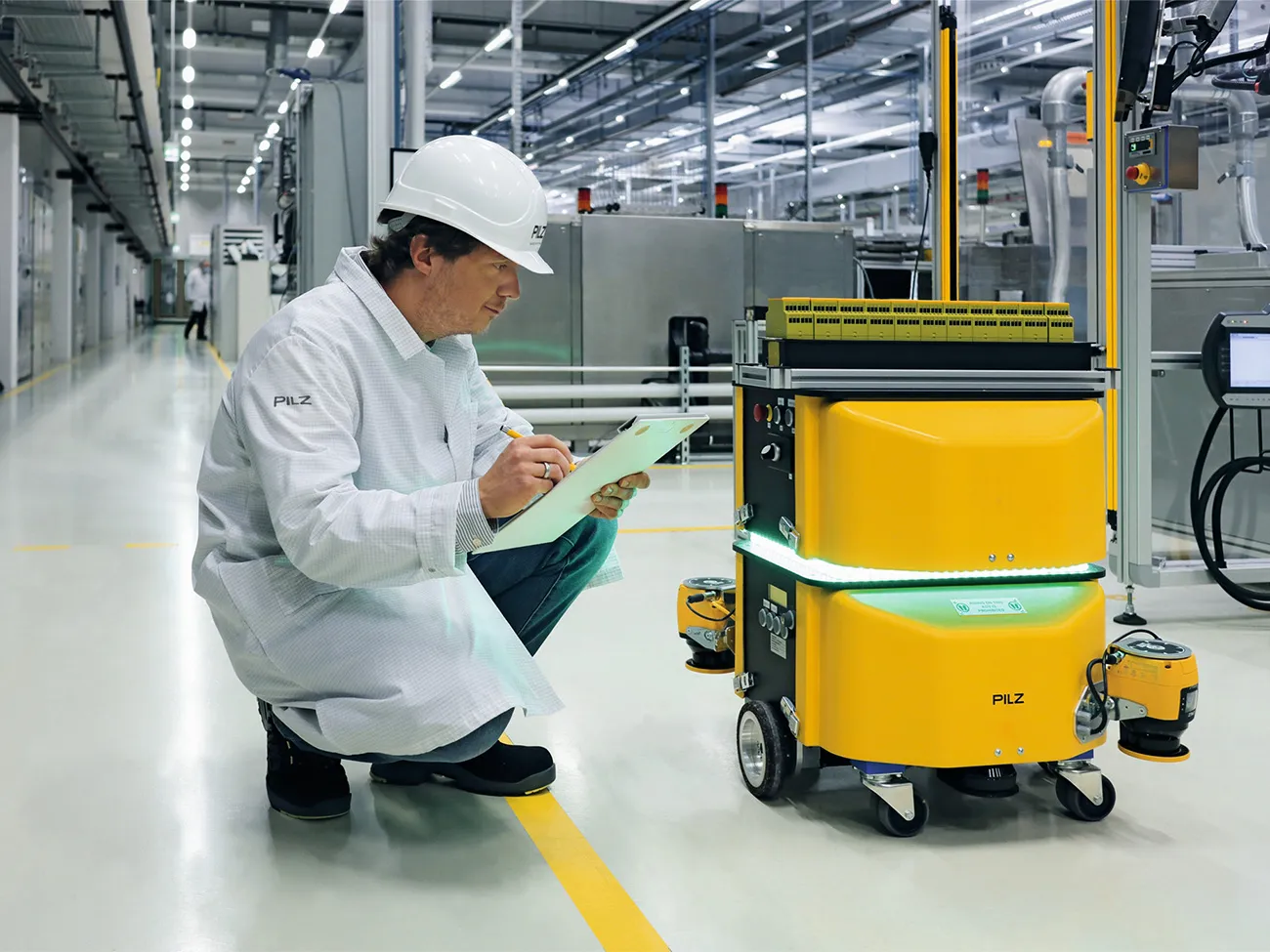
The subject is complex, which is why Pilz has developed a service package for the safe use of automated transport systems. Experts provide support from the design and purchase of AGVs through to regular inspections once the robots are operating on the factory floor. Procurement, construction and implementation often involve several parties working together. Systems must be able to communicate with each other and provide the right information. Pilz’s service package includes several elements, one of which is a design risk assessment. Pilz carries out a risk assessment based on the AGV supplier’s design drawings. The Pilz safety engineer examines the design features and checks whether the design complies with legal standards and regulations. What points need attention? Have potential risks been addressed? Does the AGV stop in time, or does it brake too sharply? The customer receives a review report showing what is necessary or recommended to improve safety or future productivity.
Theory versus practice
Pilz can also carry out a factory acceptance test (FAT), a detailed analysis of the key safety functions of a completed AGV at the manufacturer’s premises. During the FAT, Pilz identifies various necessary and recommended measures. Any changes made in practice must be carefully recorded in the safety system. There is often a happy medium between performance and safety. Pilz takes an objective approach: does everything comply with the standards, and is safety guaranteed for a given application in a particular production environment?
A safety culture on the factory floor
Next come site acceptance tests: risk assessments and inspections of AGVs and complete systems during commissioning. These involve extensive testing on the production floor or in the warehouse. How do employees work with the AGV? How does it fit into the overall operation and environment, and what risks does this bring? Employees on the factory floor also need training: what do they need to bear in mind now that robots are being used for intralogistics? The way the system is ultimately used at the customer’s site can still reduce its level of safety. People and machines must be able to operate in the same environment without problems or risks. Pilz gets involved as early as the development of the system concept and supports projects through to commissioning and training. This helps ensure safety and productivity when using AGVs.
For more information: https://bit.ly/Pilz-BE-AGV.
Question about this story? Ask your question
Keep following this
Get an email when a new story is published. No account needed.
- ThemeRobots on the shop floor
- SubjectMotion, gears & drives







