












Maxon moves into complete robot modules
Text Alexander PilImage Alexander Pil/maxon
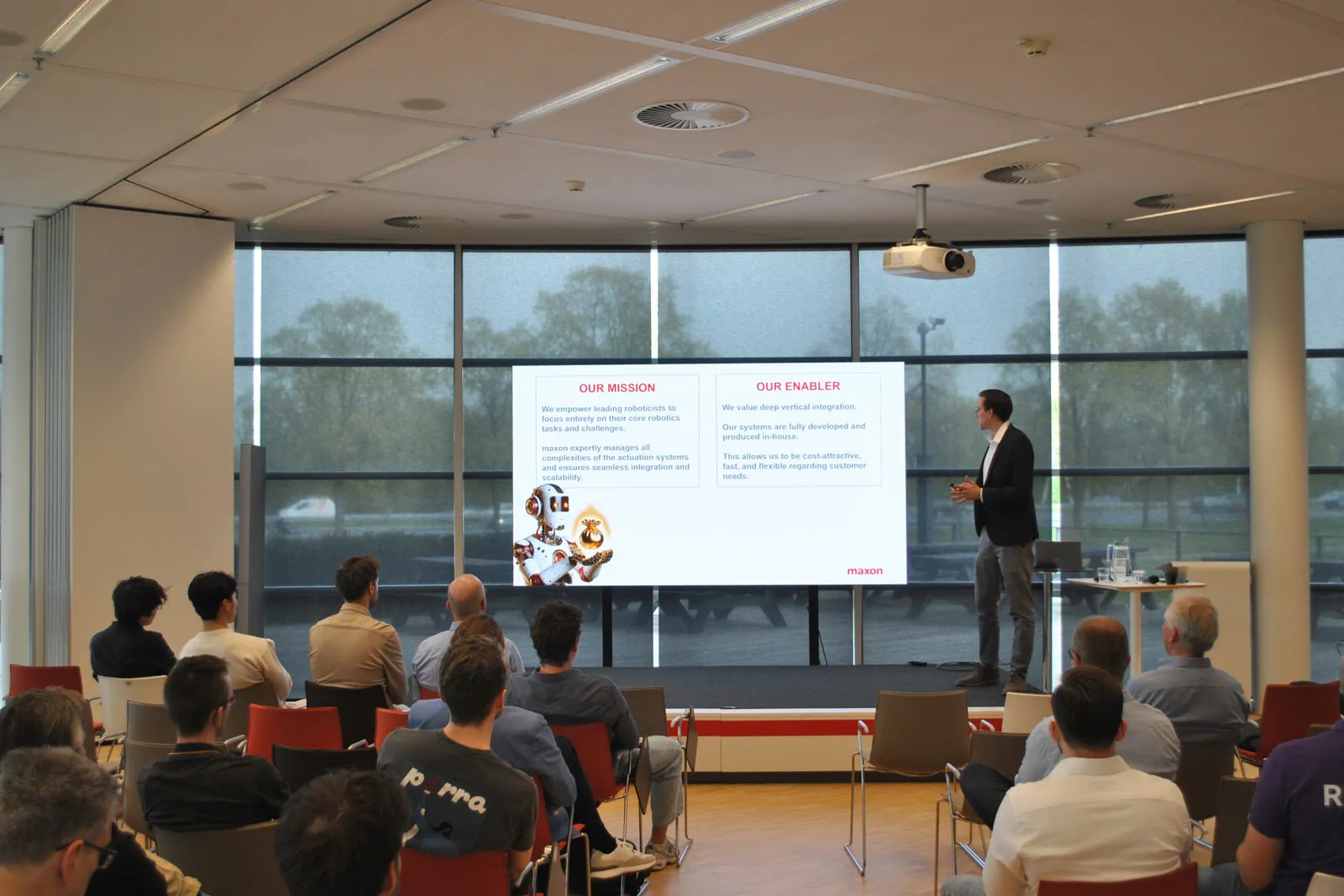
Building robots is easier than ever. But a working system is not yet a product. Mario Mauerer of maxon sees where things get stuck in practice.
At the recent Maxon Robotics Day in Delft, Mario Mauerer described how quickly the robotics landscape has changed. ‘When I started in 2018, the supply chain looked completely different. A lot of robotics technology simply wasn’t available,’ says maxon’s global business development manager robotics. Things are fundamentally different now: components, sensors and computing power are widely available and relatively easy to integrate. ‘These days, you can build something that moves and responds fairly quickly.’
Companies are increasingly developing their own robots, tailored to specific applications. ‘Building a robot is almost easy nowadays,’ says Mauerer. ‘What remains difficult is turning it into a successful product. There are plenty of robots that can dance or give impressive demos in a lab. But that doesn’t mean they solve a problem or deliver value in the field. That’s what really matters.’
More complex than it seems
The complexity under the bonnet suddenly increases substantially. The real challenge lies in interacting with the environment, and that has an immediate impact on development time. ‘Even the fastest customers, those who already have a good product-market fit, take two to three years to reach series production,’ Mauerer observes. Development is not the only factor affecting lead times. ‘Setting up supply chains takes time. Sourcing alone takes at least six months.’
Hardware and software are also inextricably linked in robotics development. ‘People often say that software eats the world. But that’s only true if you really understand the hardware,’ says Mauerer. This is particularly challenging in robotics, where systems operate with forces, touch and changing environments. ‘You have to understand the interactions between all the subsystems. Otherwise, you can’t move that complexity into software.’
From components to modules
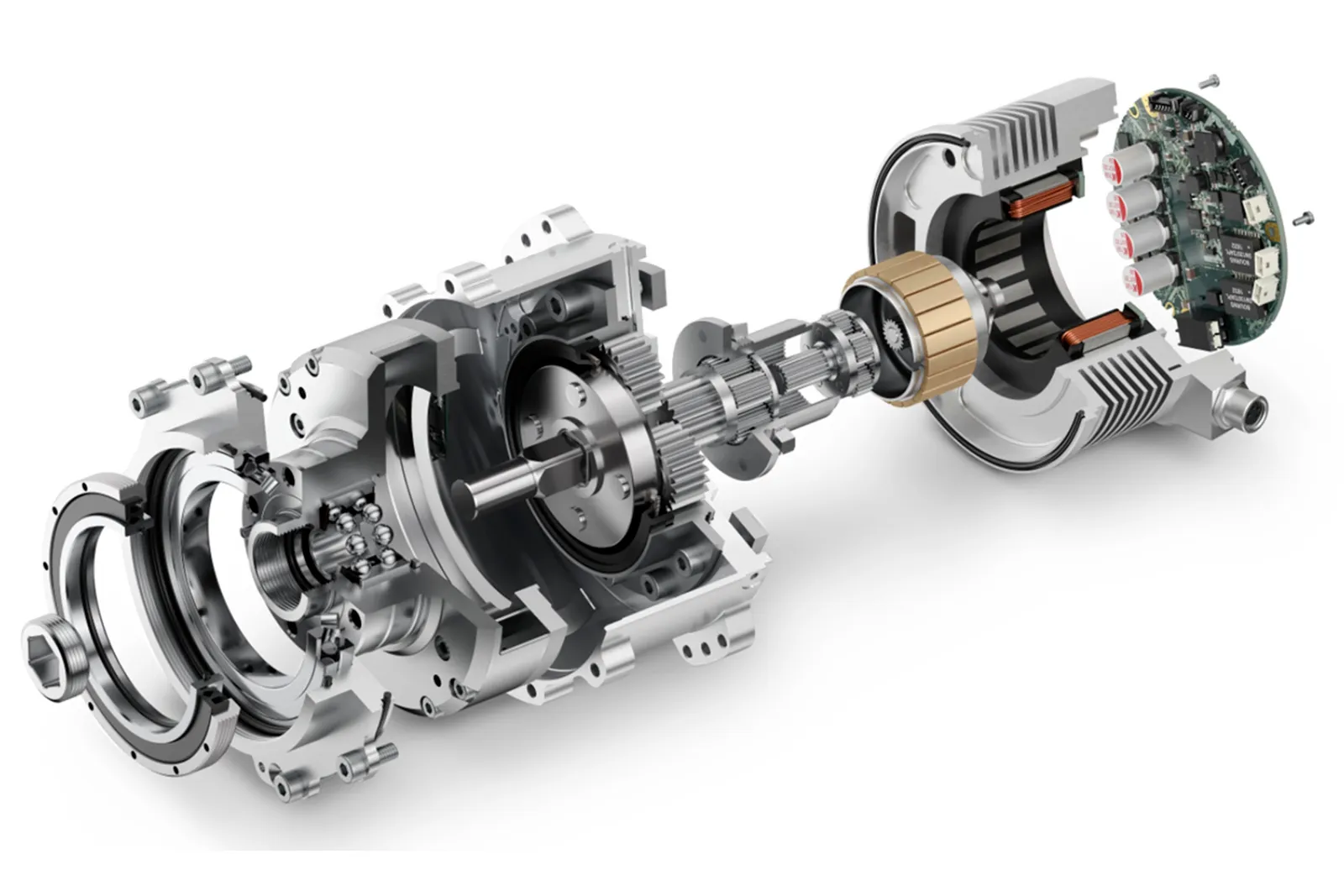
Against this backdrop, maxon’s role is changing. Whereas the company used to supply individual motors, gearboxes and controllers, it is increasingly developing integrated modules. ‘Motor, gearbox, encoder, electronics, firmware, all in one package,’ says Mauerer. But in his view, the idea of building a robot from standard building blocks has its limits. ‘Industrial Lego sounds appealing because it would make it easier to combine things. But if you want an optimised system, you have to tune everything together. Many companies underestimate that. We regularly see companies wanting to develop their own actuators. A few years later, they come back because it turned out not to be so simple.’
The choice between developing in-house and buying in remains a strategic decision. ‘Make versus buy is always complex,’ says Mauerer. Maxon is positioning itself ever more firmly on the side of integration and collaboration. ‘We are vertically integrated and can combine components into modules that are ready to use. That means we are involved earlier. We now have a say in the design, not just after the order has been placed.’ That is at the heart of maxon’s position. ‘We need to be more than a supplier of metal parts,’ says Mauerer. ‘The value lies in the system, in combining actuators, electronics and software, and in how you apply them.’ In a market where more and more companies can build a robot, success goes to those who make it work in practice.


Een zakelijke vraag aan maxon Benelux? Get in touch
Companies in this story

Keep following this
Get an email when a new story is published. No account needed.
- ThemeRobots on the shop floor
- SubjectMotion, gears & drives
- Companymaxon Benelux







