












Hydraulics and pneumatics replaced by … servos?
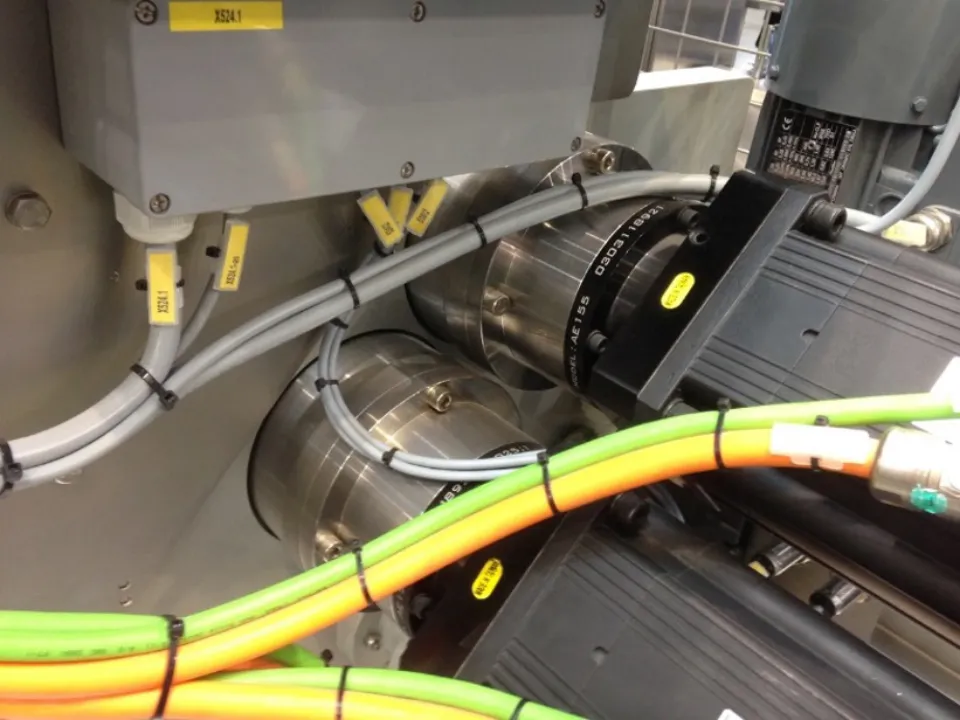
Why are more and more engineers replacing their pneumatic or hydraulic drive systems with a servo motor and gearbox?
First, we list the advantages of both pneumatic and hydraulic drive systems. We then explain why these systems are increasingly being replaced by a servo motor and gearbox combination, for example in the automotive industry. With extensive experience of this transition, Apex Dynamics is ideally placed to advise our customers on the options available.
Many industrial processes still make extensive use of hydraulics and pneumatics. Hydraulics uses a pressurised fluid, while pneumatics uses compressed gases such as air. Both types can be used in rotary applications (motors, pumps) and linear applications (cylinders).
Both types of drive naturally have their own advantages and disadvantages:
Advantages of a pneumatic drive system
The advantages of a pneumatic drive system are:
- Pneumatic systems are inexpensive. Pneumatics is also a reliable system.
- A compressed air system is highly flexible and can be installed, used and expanded in various ways.
- Compressed air is clean and non-polluting, which means it can also be used in the food sector.
DISADVANTAGES OF PNEUMATICS:
- The hissing sound produced when air pressure is released through the valves.
- Although purchase and installation costs are low, energy costs are often high. There is also a risk of leaks in the hoses used in pneumatic systems.
- Inaccurate movements and no “holding torque”.
Advantages of a hydraulic drive system
The advantages of a hydraulic drive system are:
It can easily handle a very wide range of forces and provides a constant force regardless of changes in speed.
- Hydraulic systems are generally simple, safe and economical because they use fewer moving parts than other systems.
- Hydraulic systems are safe to use in chemical plants and mines because they do not produce sparks.
DISADVANTAGES OF HYDRAULICS:
- Handling hydraulic fluids is messy, and it can be difficult to seal leaks in a hydraulic system completely.
- Hydraulic fluids are often highly corrosive and polluting.
- The pump unit that supplies the pressure requires regular maintenance.
Servo motor and gearbox replace pneumatic and hydraulic drive systems
At Apex Dynamics, we are seeing more and more pneumatic and hydraulic systems being replaced by servo systems with a gearbox. This is because a servo-controlled drive knows its exact speed, velocity and position. This allows you to turn a ‘dumb’ drive into a ‘smarter’ one, adjusting speeds and positions to achieve a better, more refined, faster or more accurate result.
A servo motor and gearbox combination also requires little to no maintenance: the control system, motor and gearbox are maintenance-free. There is no risk of leaking hoses or pipes, and the settings always remain the same. The irritating hiss of pneumatics and the hum of hydraulics are also absent. What’s more, a servo system is an excellent fit for a mobile solution, thanks to its compact design and high efficiency.
Example of a servo motor and gearbox combination in the automotive industry
The best examples of this can be seen in the automotive industry. The pneumatic and hydraulic drive systems in modern cars, for example power steering, brake assist, the parking brake and the clutch, have been replaced by small servo motors. This eliminates a great deal of mechanical equipment, and therefore wear-prone hoses, timing belts, V-belts and tensioning systems under the bonnet!
Over the years, Apex Dynamics has converted a wide variety of projects from pneumatic or hydraulic drive systems to servo-mechanical solutions. Examples include shearing and press brakes, punching lines, cutting machines, bending machines and shears. Are you considering this step for your application, or would you like to know more about the benefits?
We’d be happy to tell you more!
Question about this story? Ask your question
Companies in this story
Keep following this
Get an email when a new story is published. No account needed.
- ThemeMotion with less energy
- SubjectMotion, gears & drives
- CompanyApex Dynamics







