












Fully automated packaging with cleanroom robots
Text and images Stäubli
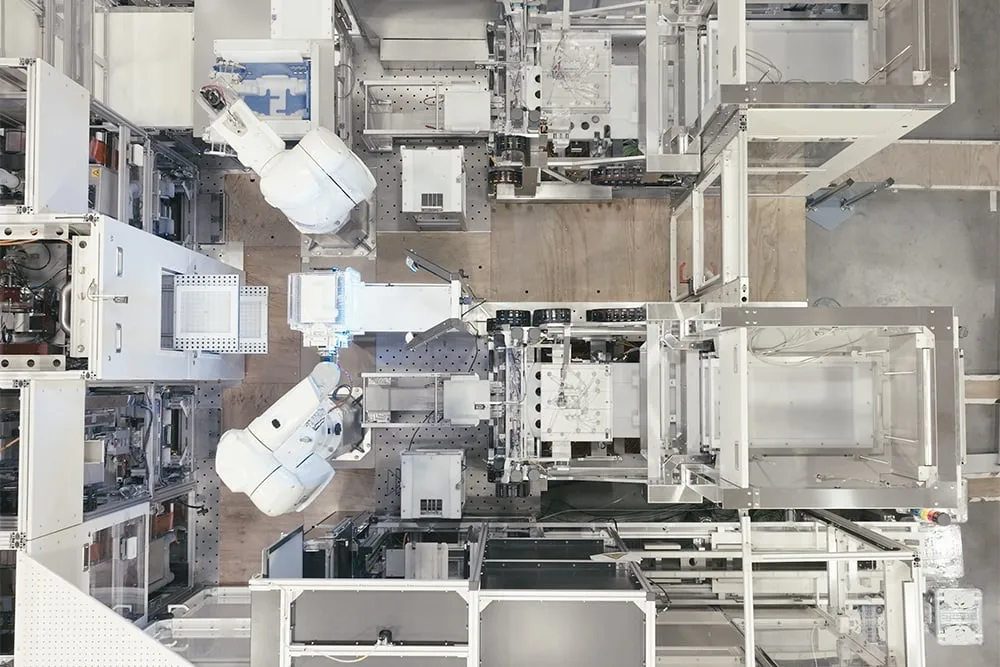
Packaging wafers in FOSBs (front opening shipping boxes) is a complex process carried out under strict cleanroom conditions. To eliminate human error, a Bavarian company has developed a pioneering, fully automated solution. Two Stäubli cleanroom robots handle the boxes from start to finish.
In 2006, a small but promising machine manufacturer set up in Burgkirchen, in the far south of Bavaria. Thanks to its innovative automation solutions, cts soon attracted international attention and established a foothold in some of the most demanding sectors. After years of strong growth, cts GmbH now has more than 350 employees across several locations. The company continues to innovate, as its new AutoBagging Tool (ABT) demonstrates. Alfred Pammer, a member of the cts management team, describes the system: “The ABT is a complex, fully automated robot cell equipped with two cleanroom-compatible Stäubli six-axis robots that handle the complete bag-in-bag packaging process for FOSB containers carrying wafers. This pioneering solution offers benefits in terms of process reliability, efficiency and quality.”
Manually packaging FOSBs, which can weigh up to 10 kg, is physically demanding. Employees have to ensure that the wafers are stacked correctly, check that the accessories have been fitted properly, and then complete the inner and outer packaging, all under strict cleanroom conditions.
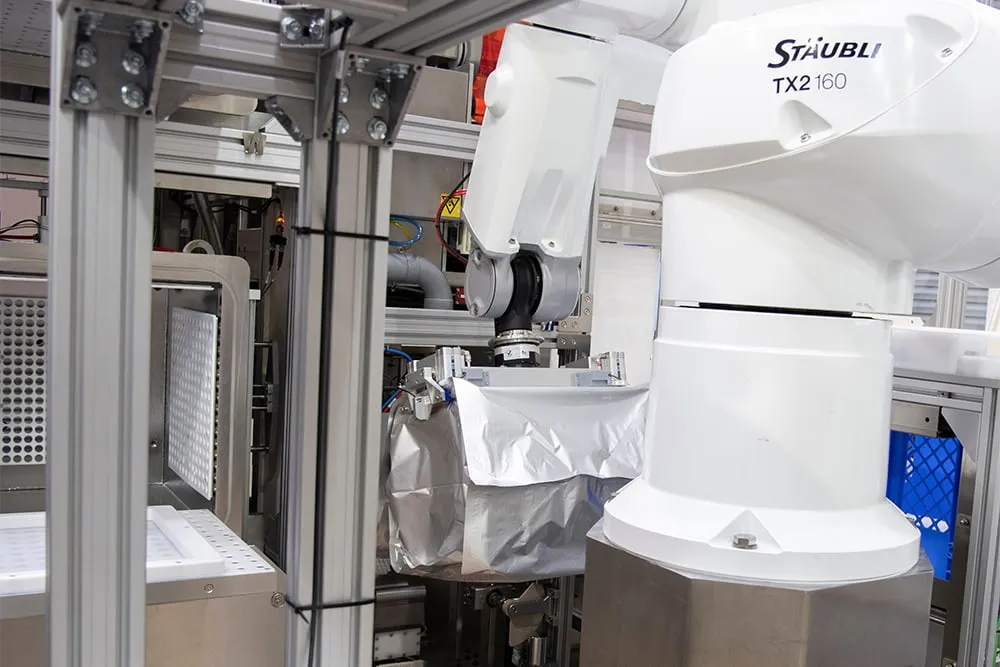
Fully automated instead of manual
The compact cell, which integrates all components such as packaging stations, inspection chambers, robots, vision systems and printers, demonstrates how quickly and efficiently packaging can be fully automated using the two Stäubli TX2-160 cleanroom robots. Before the FOSBs, usually loaded with 25 wafers, begin their journey through fifteen stations, they are identified using RFID, as is standard in the semiconductor industry. The host system retrieves the required parameters via the SECS/GEM interface, after which all necessary process steps are carried out. All necessary process steps are carried out based on this information.
The wafers are delivered via an OHT (overhead hoist transport) system and fed into the packaging system. The first step is to check that all the wafers have been placed correctly in the box. A Stäubli six-axis robot picks up the FOSB and positions it in front of a vision system. The packaging is then labelled and the label undergoes a quality check. The TX2-160 robot holds the packaging securely and moves it to the labelling and image-processing stations. To keep cycle times short, all movements are performed with high speed and precision.
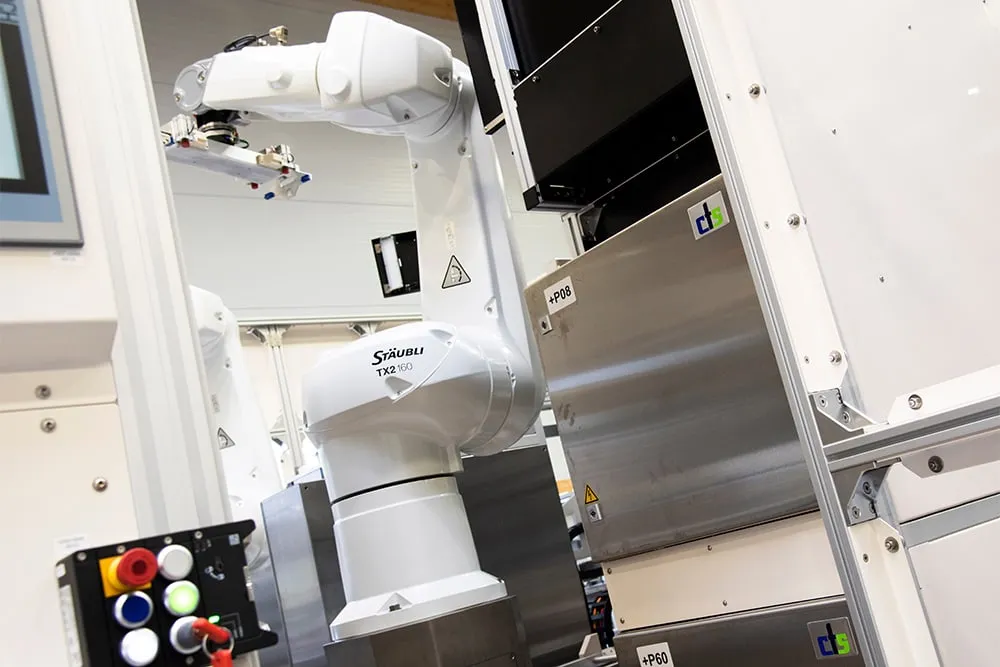
A complex process
The first packaging process now begins. The six-axis robot places the packaging in a fully automated station, where the inner bag is packed and sealed. The flap is then folded and glued, and the vacuum packaging is tested. At this point, robot 2 takes over from robot 1. The first TX2-160 sets the box down for inspection, after which the second robot picks it up once the inspection is complete. Robot 2 then carries out the steps required to place the box in the outer packaging. The same steps for packaging the inner bag are repeated, including labelling and a quality check. Finally, the robot places the fully packaged and inspected FOSB on the outfeed conveyor.
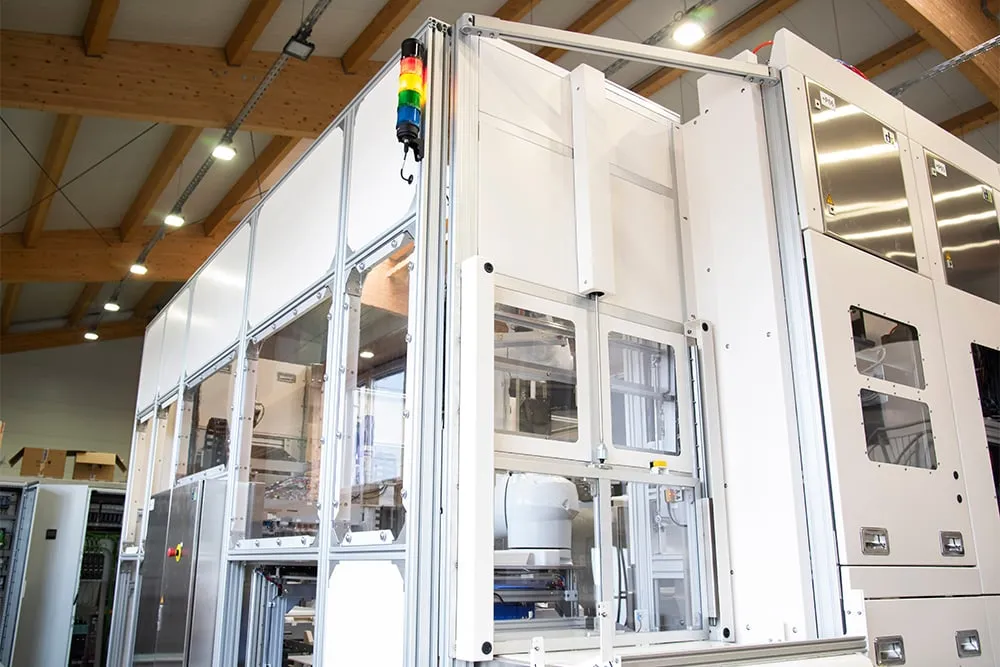
Higher quality, reliability and output
“The system not only improves quality and process reliability, but also increases output,” says Pammer. “The ABT can process up to 8,000 FOSBs per month.” One major advantage is that the system can handle different FOSB sizes and accessories using different attachments. Thanks to the flexibility of the Stäubli robots and the gripper technology developed by cts, almost all variants can be packaged without time-consuming changeovers, a unique feature appreciated by customers around the world. Even the stringent ISO 6 cleanroom standards pose no problem for the Stäubli robots.
“We always choose Stäubli robots for our semiconductor systems because they are the standard in cleanroom environments and are also extremely precise and reliable. These systems operate 24/7, so we cannot afford faults or downtime,” concludes Pammer.
Een zakelijke vraag aan Stäubli Benelux N.V.? Get in touch
Companies in this story

Keep following this
Get an email when a new story is published. No account needed.
- SubjectMotion, gears & drives
- CompanyStäubli Benelux N.V.







