












Four pillars for more sustainable drive systems
Text Valérie CouplezImage WEG
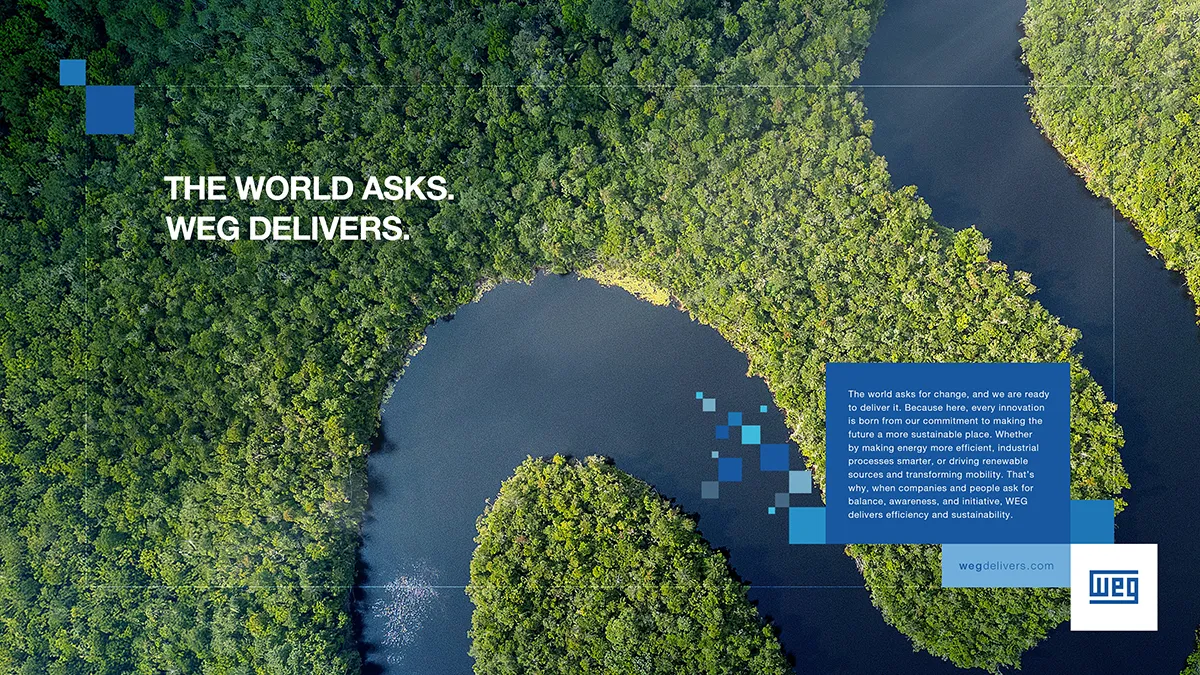
A catalyst for the energy transition
Europe expects industry to be carbon-neutral by 2050. WEG is helping its customers achieve this by supplying energy-efficient motors and variable speed drives that reduce their carbon footprint. But WEG is also leading by example when it comes to ESG. “Not because the law requires it, but because it has always been in our DNA,” says managing director Werner Lievens. He sums up WEG’s philosophy in four pillars.
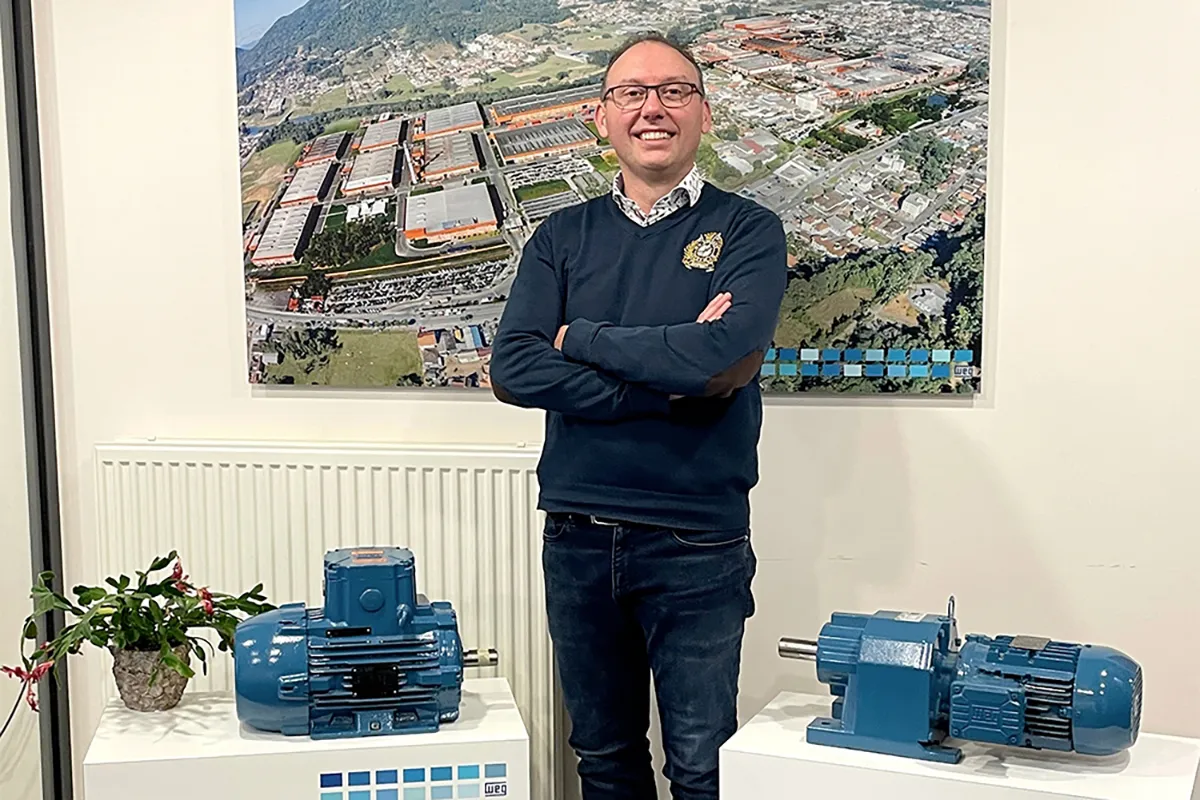
1. Sustainable products
“We want to keep making better products with lower energy losses. That is also what the efficiency classes in European legislation require. Moving from IE3 to IE4 reduces losses by around 20%. The same applies to every subsequent step”, Lievens explains. Although IE5 is not yet mandatory, WEG is going a step further. “We are already bringing IE6 motors to market. WEG recently also unveiled a model for an IE9 motor that uses permanent magnet technology to achieve an efficiency of around 98.8%.” Lievens cautions, however, that sustainability is about more than energy efficiency alone. “It is also about transparency. With WEGSEE+, for example, you can calculate the carbon footprint of our products. We also try to manufacture close to our customers to limit transport and the associated emissions. And we give our motors a circular design so they are easy to repair and recycle.”
2. Circular and efficient operations
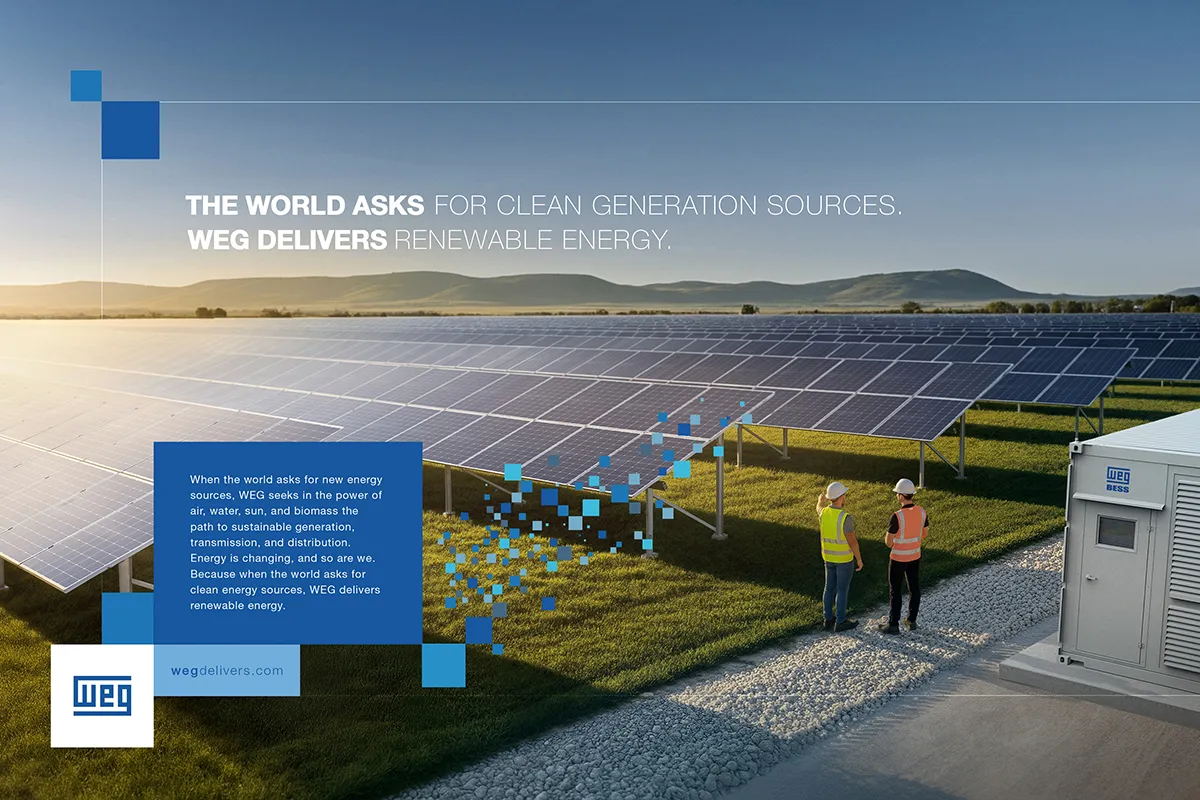
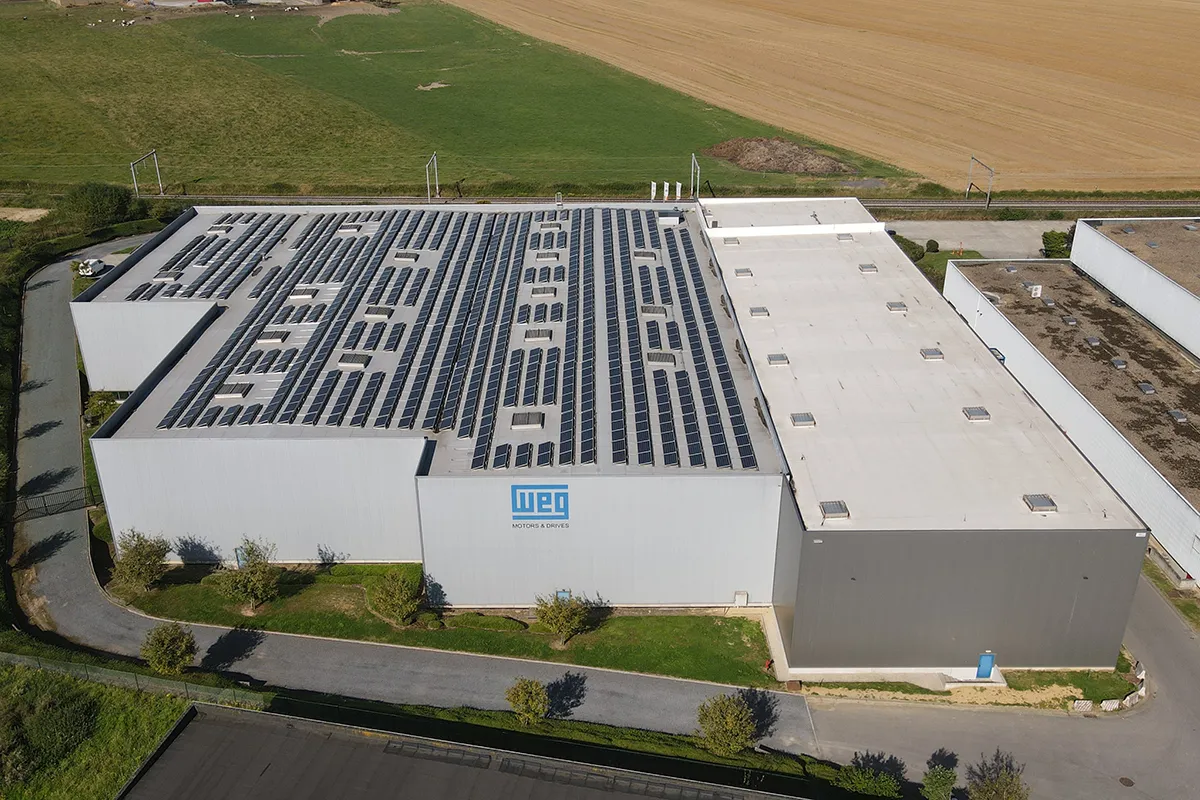
The concept of circularity is reflected in the requirements WEG sets for its own production processes. “We try to use all materials and raw materials as sustainably as possible. Worldwide, we recycle 70% of our own waste. Our vertical integration also helps with this. We can reprocess metal waste in our own foundry. We also make a point of collecting rainwater and using it wherever possible.” WEG has set itself ambitious energy-efficiency targets. “Compared with our consumption in 2021, we want to use around 52% less by 2030, with the aim of being climate-neutral worldwide by 2050.” WEG is on track to meet that ambition. By the end of 2024, the figure stood at -28%. “We have the portfolio to do it: our complete solutions, comprising motors, gearboxes, inverters and variable speed drives, show how ecology and economics can work perfectly together today. But we also manufacture wind turbines. So we are making a strong commitment to renewable energy. Our largest site in Brazil already runs on 86% renewable energy. Worldwide, we currently stand at 67%.”
3. Engaging employees and the community
“It is not easy to establish a company culture across all countries. Waste management may be well established here, for example, but that is not the case everywhere. Still, we try to take responsibility for all these issues,” says Lievens. That also applies to the fight against deforestation. WEG owns 11,600 ha of forest in Brazil, much of which remains untouched. Another part is used to produce the company’s packaging from pine and eucalyptus. “Even if we did not plant a single tree, we would still have enough for another 40 years. But we also make sure that the wood and sap do not go to waste. They are used as varnish for the windings in our motors,” Lievens says, giving an example of WEG’s commitment to the environment. Closer to home, WEG Benelux is taking numerous initiatives to support young people and education, exploring how it can share its energy with its neighbours in Nijvel, and now has employees from six nationalities.
4. Governance and code of ethics
For WEG, doing business also means acting ethically. “Everyone who works here or supplies us must sign up to a code of ethics,” Lievens explains. This goes beyond what the law requires. WEG applies its own embargoes. “For example, we do not supply countries involved in armed conflicts, while for other countries we require written guarantees that our products will not be used for military purposes.”
A catalyst for the energy transition
For WEG, these four pillars are not empty words. “We know the energy transition is necessary, and what the risks are if we as a company fail to take responsibility. As a society, we must therefore move from a system based on fossil fuels to one based on renewable energy sources. WEG can be a real catalyst in that transition: we have the products, the people and the will to make it happen,” Lievens concludes.
Een zakelijke vraag aan WEG Benelux S.A.? Get in touch
Companies in this story
Keep following this
Get an email when a new story is published. No account needed.
- ThemeMotion with less energy
- SubjectMotion, gears & drives
- CompanyWEG Benelux S.A.







