












FAULHABER stepper motors for precise cockpit displays
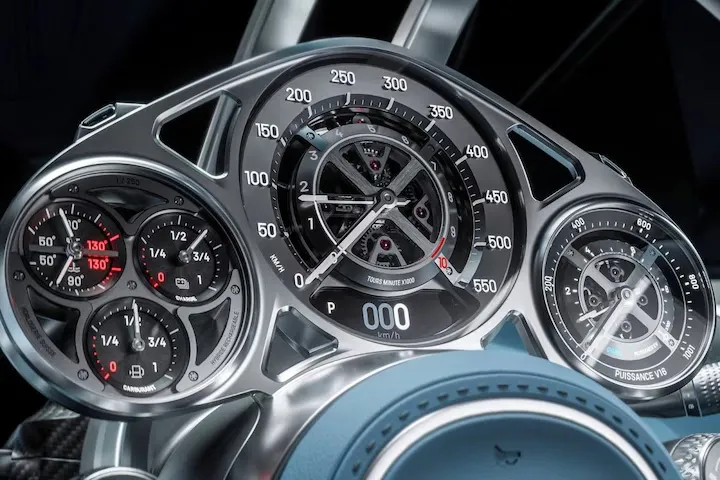
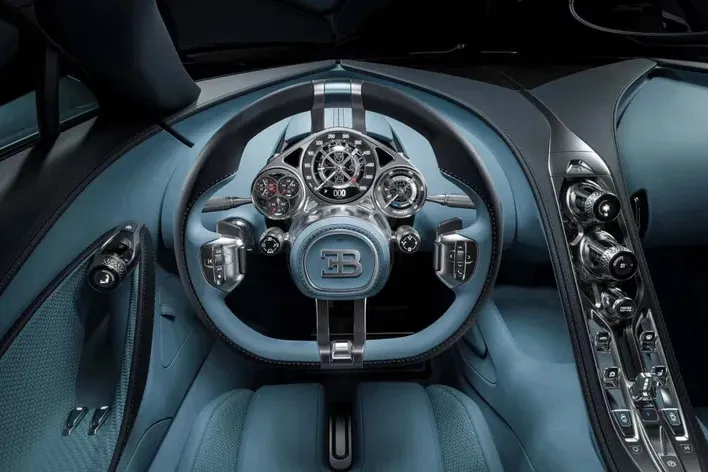
There are sports cars, and then there is Bugatti: the starting point is already exceptional, and the marque then pushes every single detail to the limit. For its forthcoming luxury model, the Tourbillon, Bugatti has chosen a very special design for the display. Behind the steering wheel, there is no digital display, but a genuine Swiss timepiece. The dashboard of the new hypercar is packed with high-end mechanics from Concepto, which creates timepieces for the world’s most prestigious watch brands. FAULHABER stepper motors translate electronic signals from the on-board computer into movement of the dashboard hands.
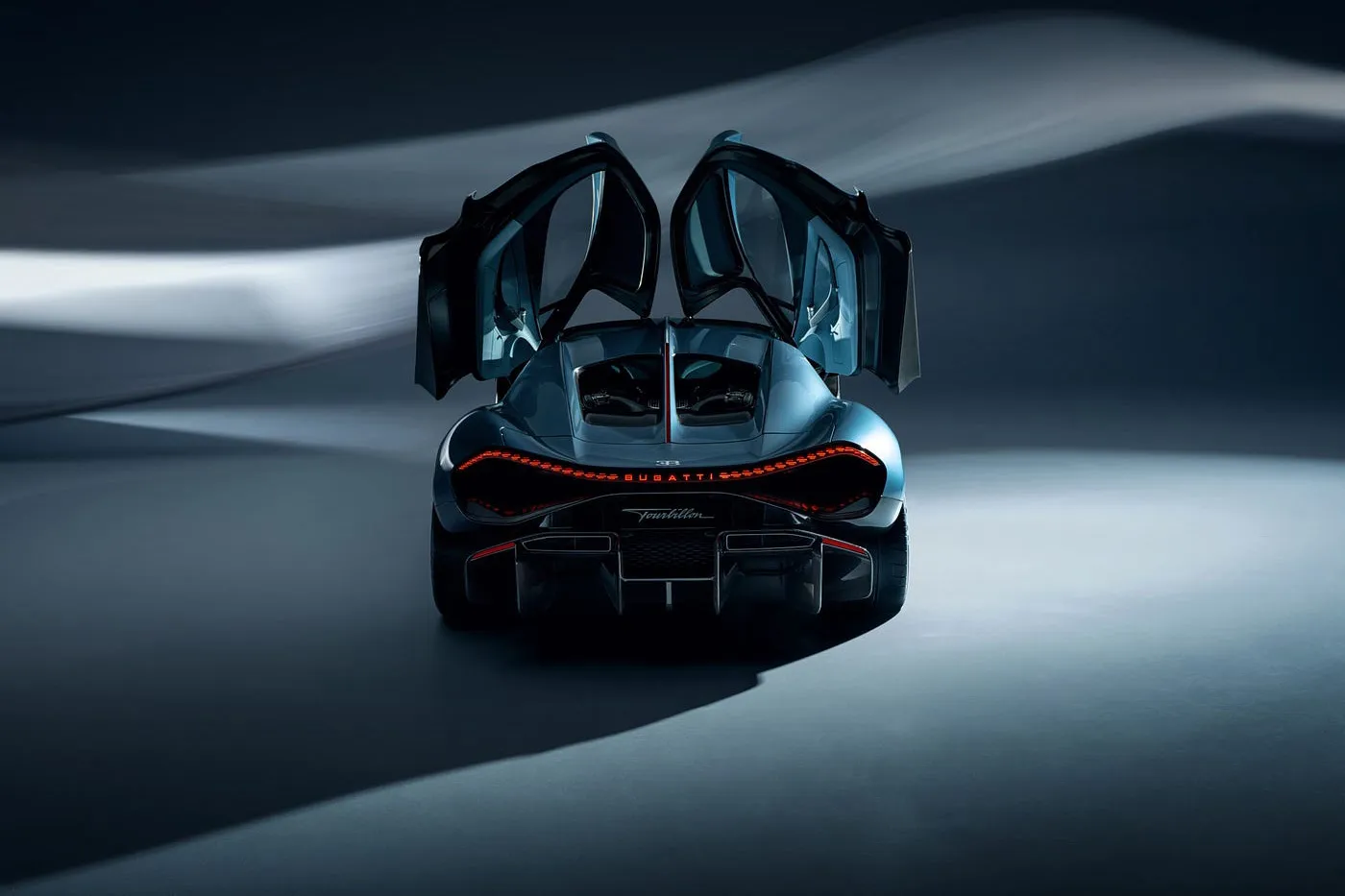
Describing the Bugatti Tourbillon without resorting to clichés is no easy task. “Breathtaking design” and “uncompromising technology” simply do not do it justice. Every aspect of this car is extreme: it has a top speed of 446 km/h and accelerates from 0 to 200 in 5 seconds. At 3.8 million euros for the “base model”, the price is in a league of its own too.
The powertrain for the new model, which is due to launch in 2026, has been completely redesigned. The Tourbillon’s power comes from a complex system combining electric motors, a naturally aspirated V16 engine and the latest eight-speed dual-clutch transmission. Bugatti says: “We absolutely wanted this car to deliver the pure, unadulterated analogue feel of an internal combustion engine, but with the flexibility and added capabilities of electric motors.”
The pinnacle of watchmaking
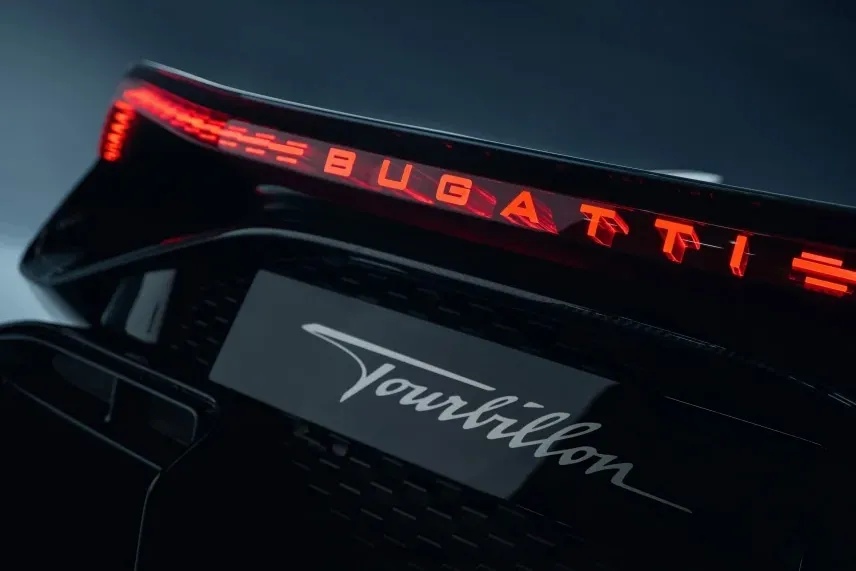
The French word “tourbillon” means whirlwind, a fitting name for this unique car. But the name also refers to an invention by Abraham Louis Breguet, one of the great names in haute horlogerie. Breguet learned watchmaking in 18th-century Switzerland before moving to France. Italian-born Ettore Bugatti also settled in France in 1909, in Alsace. To this day, legendary Bugattis are produced there.
Breguet’s tourbillon is an exceptionally complex and delicate mechanism that counteracts the effect of gravity on the accuracy of pocket watches and wristwatches. These masterpieces of precision engineering are now made primarily in La Chaux-de-Fonds, including at Concepto. Valérien Jaquet, who founded the company in 2006, is an admirer of Breguet and an exceptional watchmaker in his own right. In less than 20 years, he has built Concepto into one of the most important suppliers of movements to major watch brands. Among other achievements, the company has produced the world’s thinnest mechanical watch, measuring just 1.70 mm thick. As well as tourbillons, Concepto supplies movements with every complication imaginable.
When Bugatti decided to create a mechanical display for its latest model, Concepto was the obvious choice for the technology required. The car also has a retractable digital display in the centre console, offering all the functions an owner would expect from a modern car. But the speedometer directly in front of the driver had to be truly exceptional.
A leap in scale and new electronic territory
Guillaume Tripet leads the Bugatti project at Concepto. He explains: “Bugatti wanted the display not only to look like a luxury Swiss watch, but also to use the same kind of mechanics inside. Based on that idea, we developed a concept with a large circular display in the centre and two smaller satellite displays on either side. It is reminiscent of a classic wristwatch with several complications, except that here they show not a stopwatch or a moon phase, but the vehicle’s key data. The fine mechanics behind the hands are also on show.”
The complex timepiece consists of 600 components, all of which had to be designed from scratch. Concepto also produces desk clocks and larger timepieces, but the display for the Bugatti Tourbillon required components that were 80% larger. The company had to adapt its production machinery to make them, without compromising its usual precision.
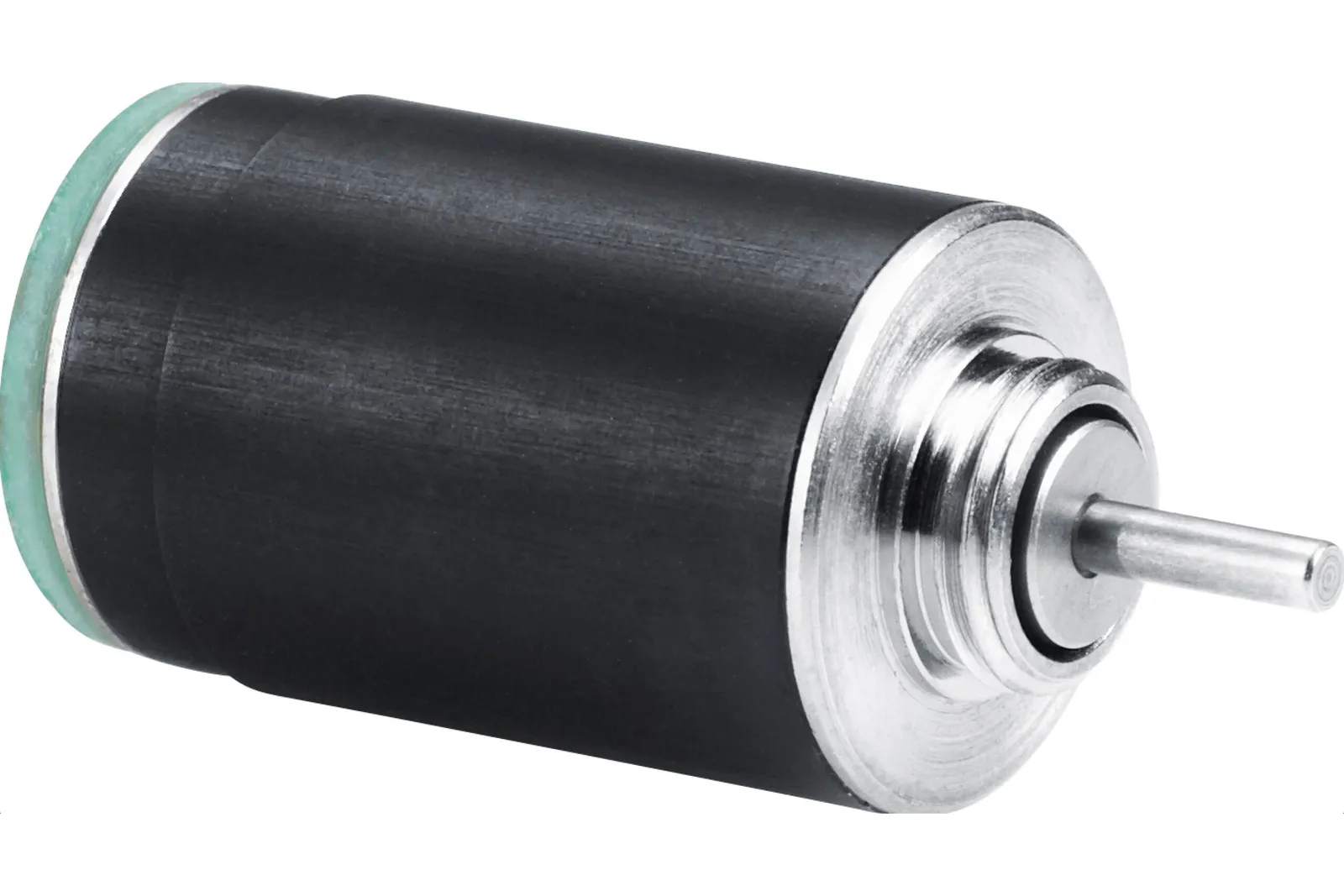
Another challenge was integration: the timepiece’s mechanics ultimately had to work in concert with the Bugatti’s on-board computer and electric motors. Electronic sensors record data on the powertrain, fuel level and batteries, then send it to the central on-board computer. To display information from electronic signals on a mechanical display, the signals first need to be translated. This conversion is carried out by eight FAULHABER stepper motors, which are also manufactured in Chaux-de-Fonds. The motors convert the electronic signals directly into precisely counted motor steps, which then move the hands of the timepiece.
Extremely heat-resistant and lightning-fast
The strength of all FAULHABER stepper motors lies in their ability to convert control signals into extremely precise movements. But this project involved additional requirements and criteria for selecting the right miniature motors. The electromechanical display sits almost suspended above the steering column and is very shallow. This leaves little room for the eight stepper motors alongside all the complex mechanics. The choice ultimately fell on the AM0820 and AM1020 models, with diameters of 8 and 10 millimetres.
Each motor moves one hand. This means that the left satellite display, with its four display elements, contains four motors. These four motors are connected to the hands solely via a worm gear. The other motors have a more complex transmission, visible to the driver through the display’s sapphire crystal. FAULHABER designed this component specifically for this application, as well as the motor controller, which converts measurement signals into hand movements or holds a steady position when the readings do not change.
Guillaume Tripet explains: “The display must be easy to read in all conditions, so we have built numerous LEDs into the cluster. Its prominent position also exposes it to direct sunlight and therefore high temperatures, particularly as the limited installation space allows for just one ventilation opening. At the same time, the timepiece motors must work straight away when the car is started in sub-zero temperatures. There can be no start-up delay, and they must immediately move relatively large loads for their size, for long periods and without any loss of performance.
The FAULHABER motors in the Bugatti Tourbillon operate over a temperature range of –30 to +120 °C. They also deliver the accuracy and response time sought by Concepto’s engineers. Comparable products could achieve this kind of performance only with much larger motors. During pre-production, the motors have already proved that they work flawlessly in the cluster, and have also passed various tests, including a vibration test. Guillaume Tripet says: “We are now fine-tuning the system so that the latest hypercar can be delivered on time with this exceptional display.”
Question about this story? Ask your question
Keep following this
Get an email when a new story is published. No account needed.
- SubjectMotion, gears & drives







