












Electromechanical actuators open the door to Industry 4.0

A digital revolution is under way in manufacturing. Around the world, companies are embracing the potential of Industry 4.0 and the IIoT to achieve greater productivity, profitability and growth.
When companies consider their digital strategies, it is easy to get bogged down in the complexity. But choosing the right technological approach, with smart components, makes it easy to create added value by automating linear motion. The focus here is particularly on electromechanical actuators.
There is now plenty of evidence that large-scale Industry 4.0 projects can deliver significant benefits. But there is another way to think about digitalisation in manufacturing. Industry 4.0 makes it cheaper and easier for companies to launch new digital initiatives from the ground up: improving the performance and flexibility of existing machines and automating a wider range of tasks. In fact, front-line applications of new digital initiatives are likely to be one of the fastest-growing areas of industrial technology in the coming years, particularly as the global factory automation market is expected to grow by an average of 9% per year over the next five years.
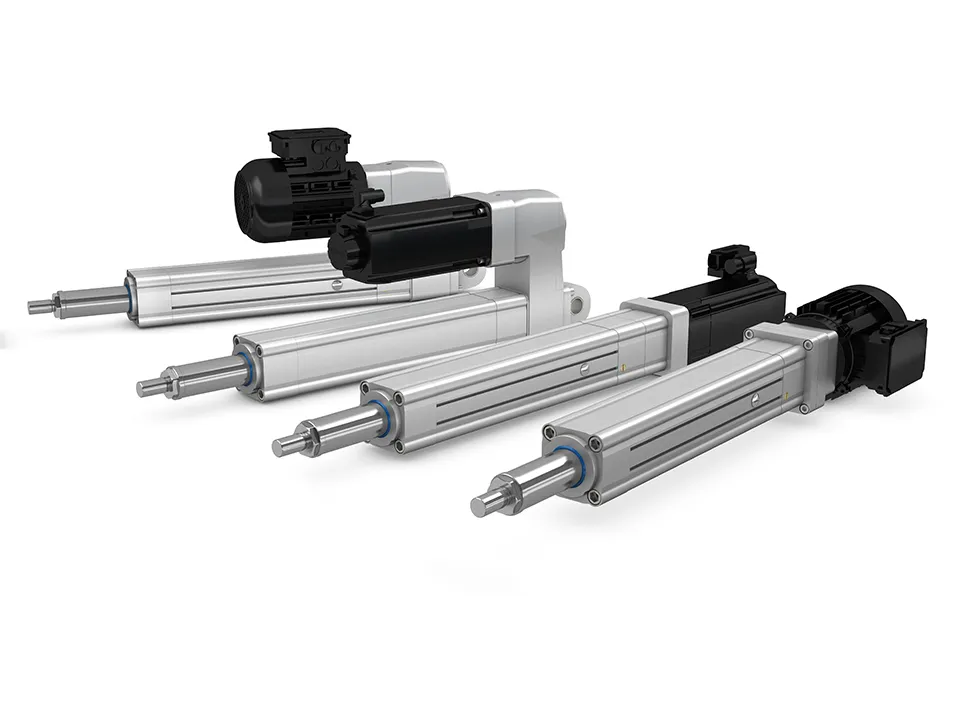
Integrating automation into broader networks
More and better automation offers compelling benefits for manufacturing. First and foremost, it directly addresses short-term objectives: reducing operating and labour costs while improving productivity, quality and safety. This means that many automation solutions, particularly simple, small-scale applications, pay for themselves straight away. But the benefits go further. If an organisation chooses the right technological approach, with capable, flexible components that are ready to use in an existing or future digital infrastructure, it can create additional long-term value by connecting and integrating its automation systems into broader Industry 4.0 networks and applications.
Electric actuators are a better fit for new automation requirements
One of the most common cornerstones of production automation is the use of linear motion. Linear actuators are used in a wide range of industrial applications to move, locate and position products, components and materials. Traditionally, linear motion in a factory has been achieved using hydraulics. Companies have long relied on pneumatic systems for high-speed, low-load applications and hydraulics for high loads and forces. But as we enter the world of Industry 4.0, many manufacturers and machine designers are finding that electromechanical actuators are a better fit for both their current and future automation needs. Electromechanical actuators replace hydraulic or pneumatic cylinders with a ball or roller screw driven by an electric motor. They are available in a wide range of standard products, but are also modular, allowing force, speed and precision to be adapted for almost any application.
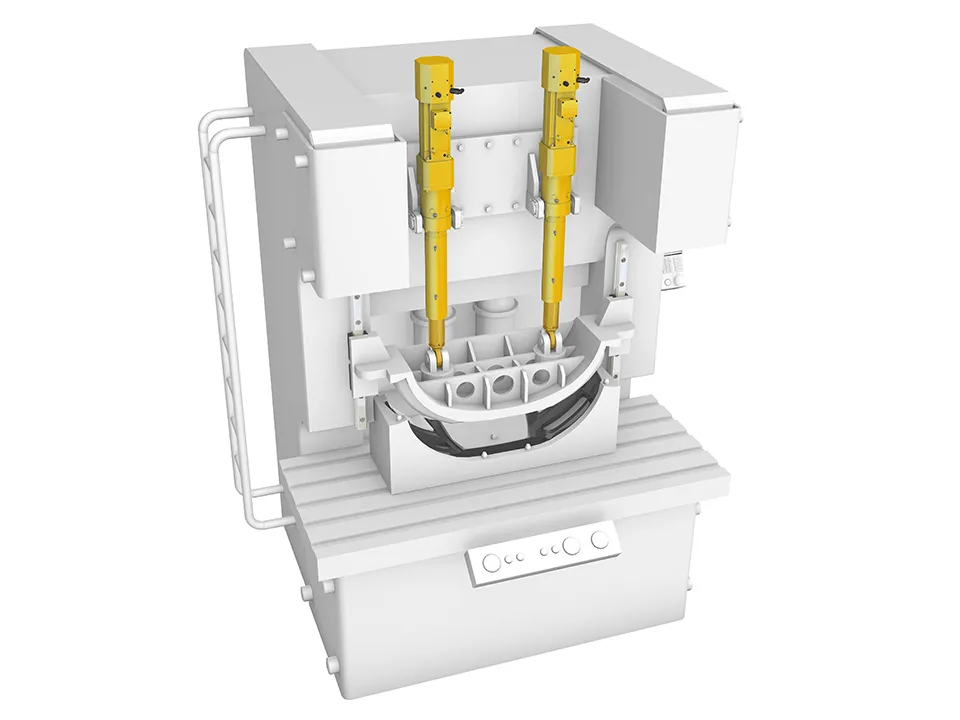
Building machines simply and compactly
The benefits of electromechanical actuators start with their simplicity. Hydraulics require complex, dedicated infrastructure. Pneumatic systems need numerous components, including hoses, pumps, valves, regulators, lubrication systems and air filters. Hydraulic systems require an oil reservoir, pumps, motors, vent valves and heat exchangers, and often need noise-damping measures. An electromechanical actuator, by contrast, needs only a few cables to connect the power supply and control system.
This simplicity results in a smaller footprint and a straightforward mechanical layout, reducing the time needed to design, install and commission an automation project. Electromechanical actuators are easy to integrate. With fewer components to consider, and no need to account for pipe routing or the relative positions of different system elements, electromechanical systems can be used to add extra vertical and/or horizontal linear motion in confined spaces or to existing machines. Control systems are also easy to integrate, with simple interfaces to all major industrial network protocols.
Suitable for demanding tasks too
As automation tasks become more demanding, the benefits of electromechanical drives become even greater. In hydraulic systems, precise control of drive speed and position is often difficult or impossible to achieve, particularly when linear motion requires significant variation in these parameters. Electromechanical actuators have a direct mechanical connection between the motor and the screw, making the entire system controllable, with a high degree of repeatability, to within a few hundredths of a millimetre, and greater stiffness. What is more, it is very easy to adjust the speed precisely during the motion cycle. Since an actuator's speed, acceleration and position are controlled by software, automation systems using this technology can be fine-tuned with ease, enabling users to continually adapt and improve their processes. This flexibility is essential in many Industry 4.0 applications, from data-driven continuous improvement activities to large-scale mass customisation in manufacturing.
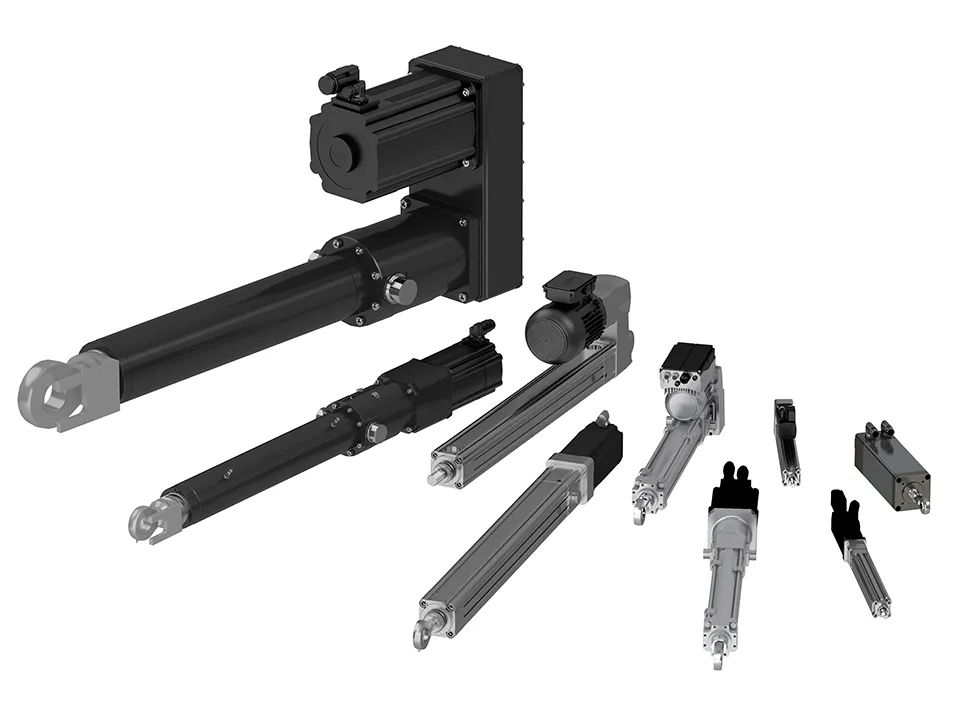
Well protected against damage and contamination
The electromechanical approach to linear motion can also deliver significant TCO benefits over the entire lifecycle of an automation system. Actuators use high-precision components, but most essential parts are well protected against damage and contamination, resulting in a long and predictable service life. If an actuator needs replacing, the job is quick and straightforward, requiring neither extended downtime nor specialist expertise. Electromechanical systems are also highly efficient. An electromechanical actuator converts 80% of its energy input into motion output. This is about twice as efficient as a hydraulic system and more than four times as efficient as a compressed-air system.
Physical power to match intelligence
New digital technologies make it possible to upgrade the intelligence, responsiveness and flexibility of production processes. But manufacturing is both physical and digital: the next generation of production machines needs physical power to match its intelligence. When it comes to linear motion applications, electromechanical actuators prove to be the smartest choice.
Question about this story? Ask your question
Keep following this
Get an email when a new story is published. No account needed.
- ThemeData from shop floor to decision
- SubjectMotion, gears & drives







