












Controllers for a green, digital future
Text Valérie CouplezImage Lenze
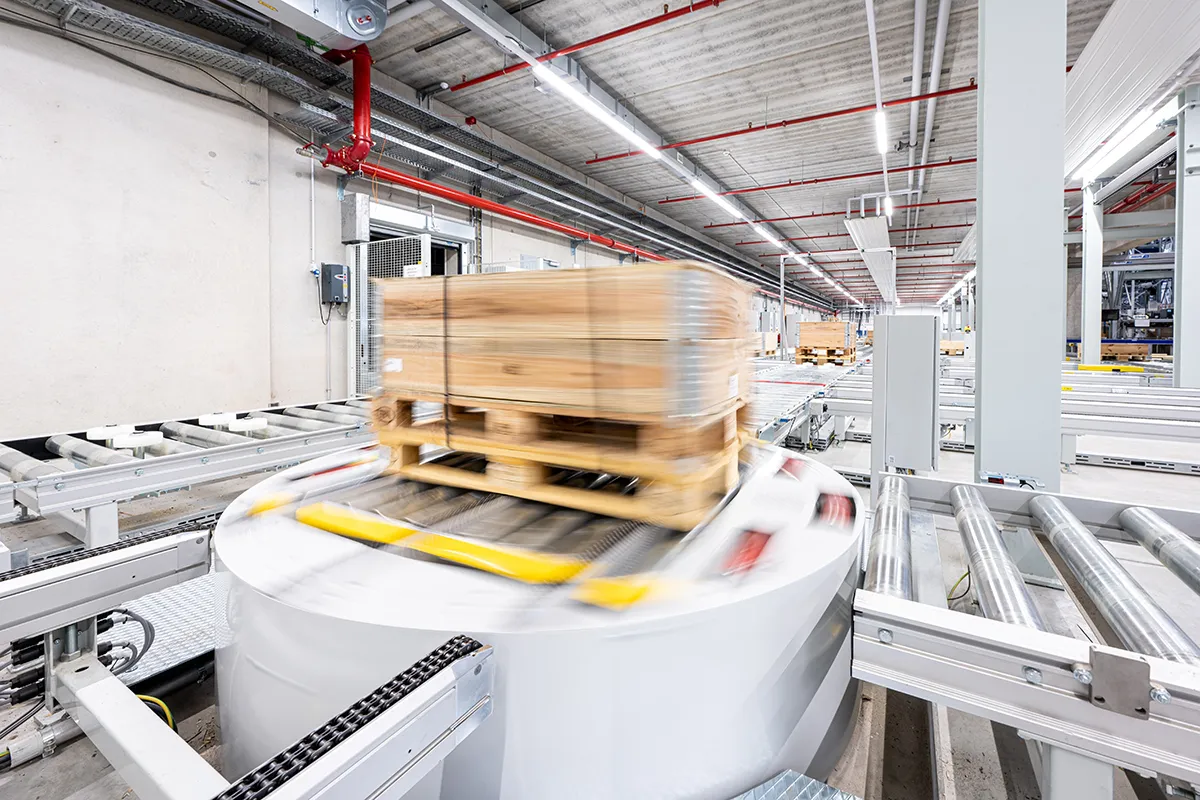
Anyone looking to build an energy-efficient machine needs to look beyond the motor alone. Lenze understands this well: the motion specialist from Hamelin offers the building blocks to put together a complete drive train. This article focuses on the decentralised controllers in the i-series. They share the same DNA as Lenze’s IE5 and IE7 motors: innovative, energy-efficient and user-friendly.
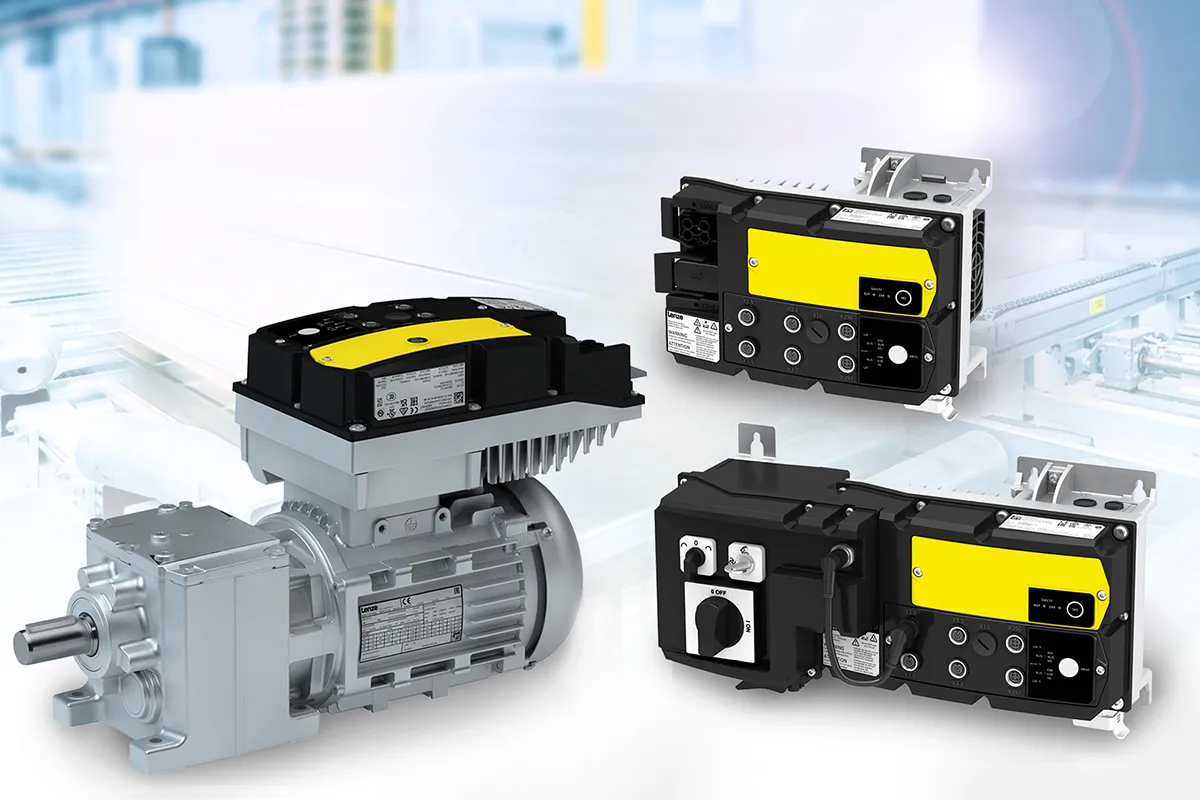
Depending on the application, controllers are best installed in a cabinet (i5 cabinet), on a wall (i5 protec), or on a motor or wall (i5/i6 motec). Lenze users do not have to keep working out how to commission and operate the units. Francis Denayer, sales manager for Belux at Lenze, says: “Because they use the same software, switching between them is easy. If you know one, you know them all, so you can choose the right model for each application.” Denayer has noticed that decentralised solutions are gaining popularity. “The cabling cost and time savings are a major advantage of these controllers.”
More than drives
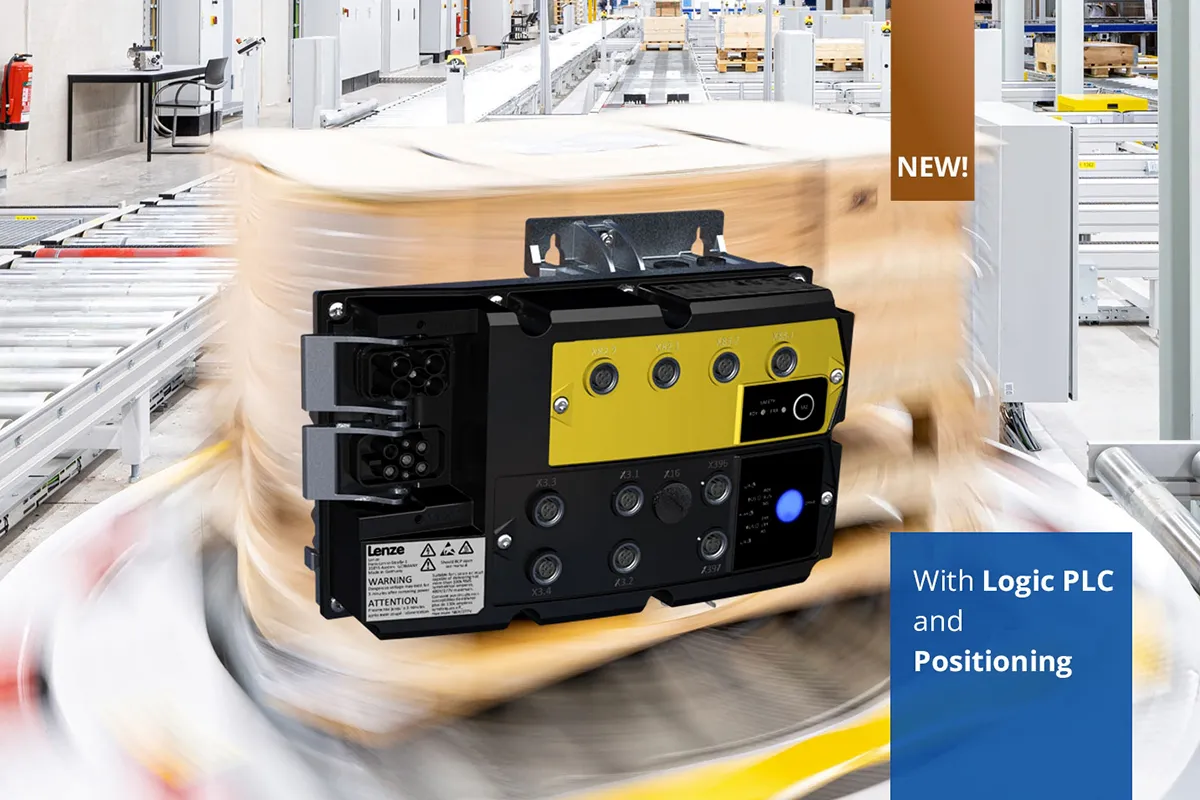
Lenze’s response to this trend is the new i550 and i650 motec controllers, covering a power range from 0.37 to 45 kW. “They are much more than drives. They are solutions for a green future, for digitalisation, and for fast, straightforward implementation.” Denayer explains how these motec models help improve energy efficiency. “Energy-efficient operation rests on three pillars. First, the system must be correctly sized. This alone can save 20 to 30%, with sizing done intuitively using Easy System Designer and, of course, our expertise. In addition, the motor, gearbox and controller must be selected to work together to achieve high energy efficiency. Finally, regenerative feedback is important: the ability to recover energy by feeding it back into the grid. Our motec meets all these requirements.”
Use less energy, lose less energy
The various operating modes available on the motec help it save energy. Denayer highlights VFCeco mode, which is unique to Lenze. “In normal inverter operation, the reactive current is kept constant and the active current is adjusted to match the load. We do the opposite: thanks to our expertise, we can reduce the reactive current according to the load,” Denayer explains. “The motor then draws less current, resulting in lower losses and less heat. This makes it particularly useful in applications such as freezer environments. Anything you do not heat up does not need to be cooled down afterwards, directly reducing the energy costs of running your freezer warehouse.” Lenze also takes a slightly different and more effective approach to energy recovery. “We do not need braking resistors and can continuously feed high levels of power back into the grid. This is particularly useful in applications such as pallet lifts in intralogistics projects.”
Digital skills
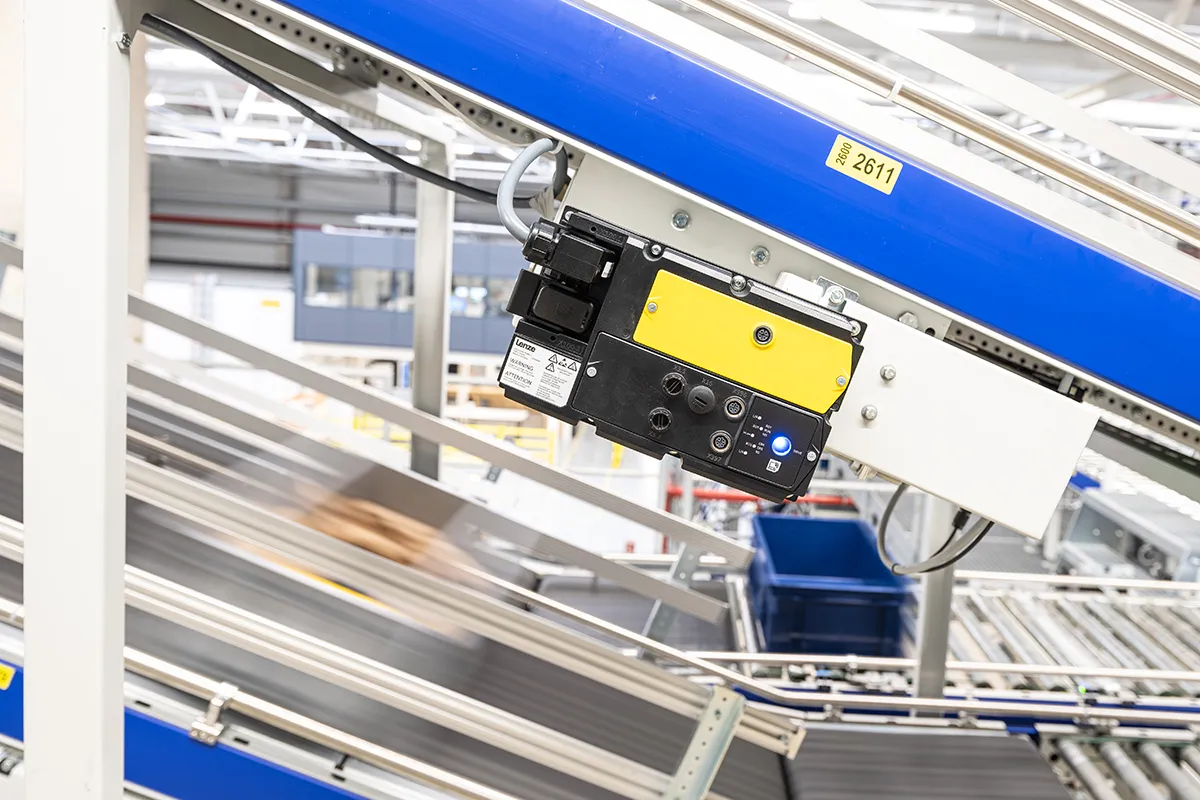
Lenze has also done its homework when it comes to digitalisation. Denayer says: “All data from the controllers is sent to a central PC using our Drive Datahub software. It can then be analysed in detail and the necessary measures taken to prevent downtime, making this a highly proactive approach.” To see how it works, look at Lenze’s automated warehouse. “You do not need any additional sensors: the inverter is the smartest sensor you can have. By analysing the harmonic frequencies of the currents, you can detect where and when problems might occur. This is important, because reliability is crucial in fully automated warehouses.” The i550 and i650 motec can also be fitted with an optional IO-Link master. Intelligent IO-Link sensors can then be connected locally, saving customers money because they do not need to provide additional IO-Link masters.
Integrated positioning and intelligence
And then there is the promised ease of use. The controllers cover a wide power range and all use the same software. But what else? “First, only one cable is needed for the i550 or i650 motec, with connectors as standard, for the 400 VAC and 24 VDC connections. If the 24 VDC supply is also provided, communication between the inverter and PLC will be maintained if the mains supply fails. Second, we use M12 connectors as standard for communications, I/Os and safety connections. It is all plug and play, making implementation faster and reducing the risk of errors.” As a third example, Denayer points to two special capabilities of the i650: integrated positioning, which can also be extended with additional PLC logic. “The i650 controller can then handle many applications locally, significantly reducing the load on bus communication. The i650 also comes in additional safety variants. As well as the version with STO, it can be equipped with additional safety functions such as Limited Speed and Safe Brake Control. A version with extended safety functions and additional safety I/Os will also be added to the range. This will be available for the various communication networks (Profinet-Profisafe, Ethercat-FSoE and Ethernet-CIP safety).”
Een zakelijke vraag aan Lenze BV? Get in touch
Companies in this story

Keep following this
Get an email when a new story is published. No account needed.
- SubjectMotion, gears & drives
- CompanyLenze BV







