












Autonomous flight in a swarm
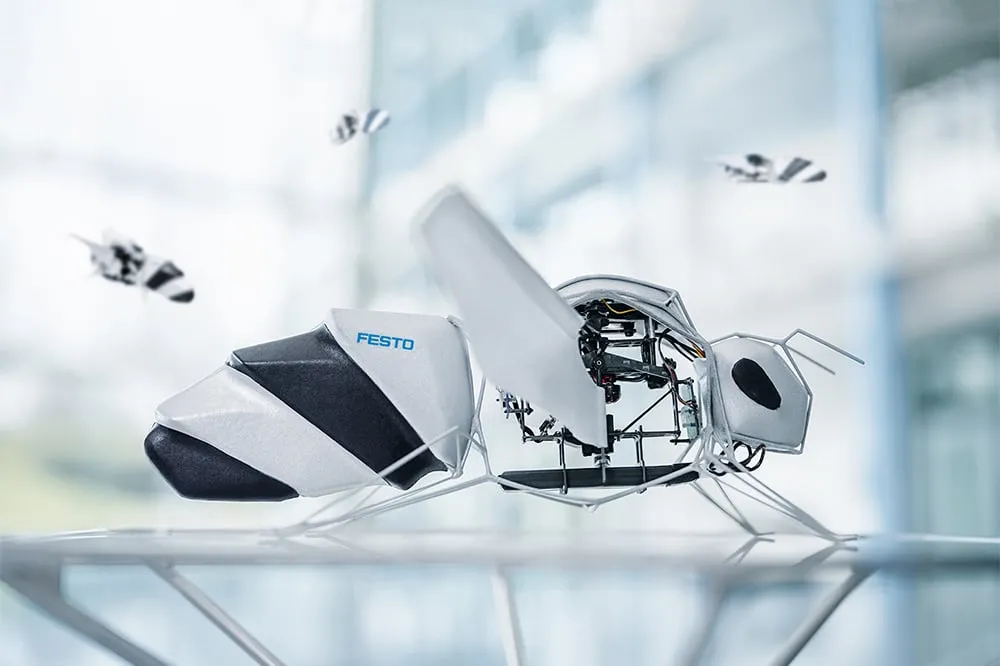
BionicBee: an ultra-light flying object with precise control
For more than 15 years, the Festo Bionic Learning Network has explored the fascination of flight. Alongside the technical analysis of bird flight, the team has studied numerous other flying objects and their natural principles, and implemented them technologically. With BionicBee, the Bionic Learning Network has now developed its first flying object capable of flying in large numbers in a fully autonomous swarm. BionicBee recently made its flying debut at Hannover Messe 2024.
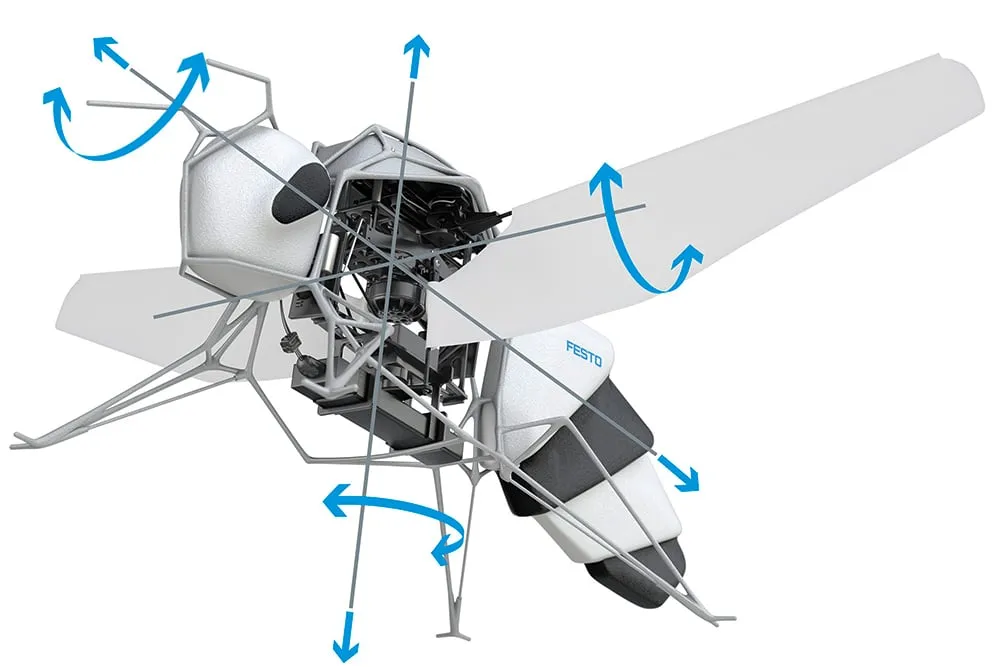
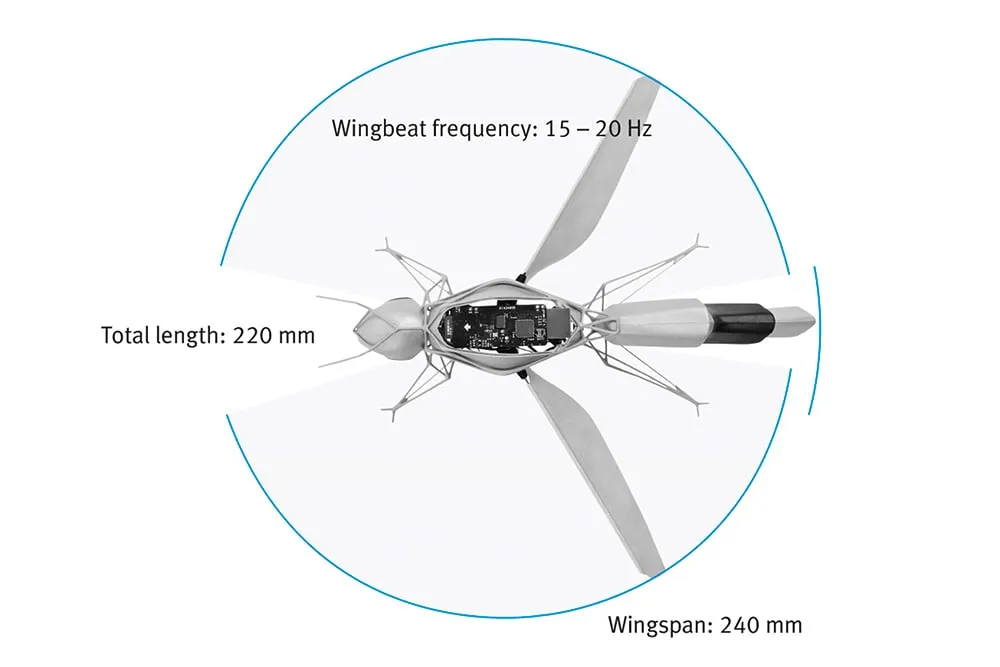
Weighing approximately 34 grams, measuring 220 millimetres in length and with a wingspan of 240 millimetres, BionicBee is the smallest flying object created to date by the Bionic Learning Network. For the first time, the developers used generative design: after just a few parameters are entered, a software application applies defined design principles to find the optimal structure, using as little material as possible while keeping the construction as stable as possible. This consistent lightweight design is essential for good manoeuvrability and flight time.
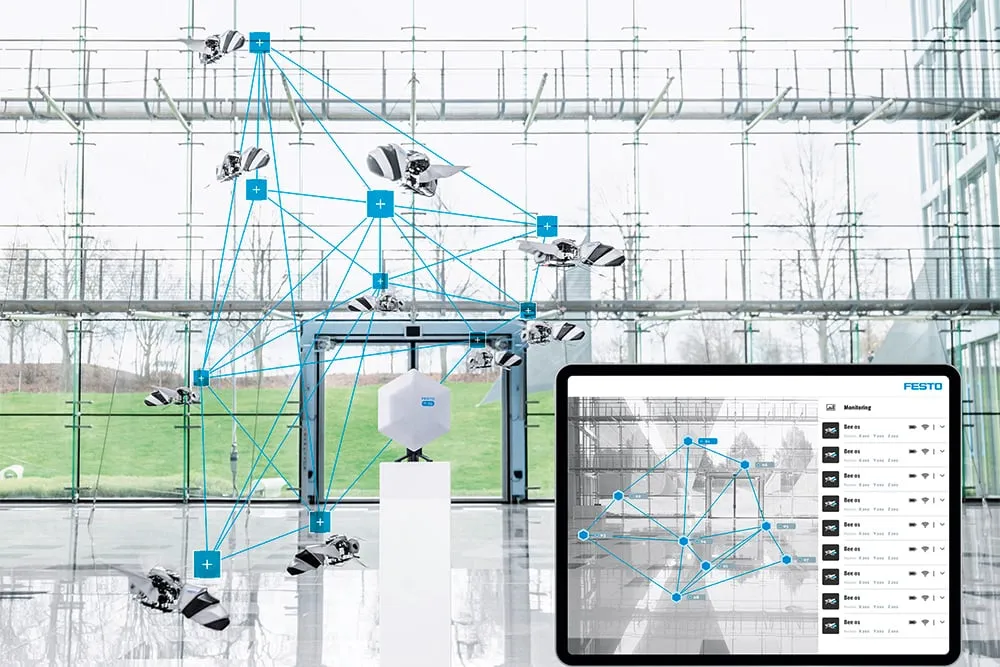
The autonomous behaviour of the bee swarm is achieved using an indoor positioning system based on ultra-wideband (UWB) technology. To this end, eight UWB anchors are installed in the room at two levels. This enables precise time measurement and allows the bees to locate themselves in the room. The UWB anchors send signals to the individual bees, which can independently measure their distances from the respective transmitters and calculate their own position in the room using the timestamps.
To fly in a swarm, the bees follow paths specified by a central computer. A high degree of spatial and temporal accuracy is required to fly safely in close formation without collisions. Path planning must also take into account possible interaction between the bees caused by air turbulence, or “downwash”.
Because each bee is handmade and even the smallest manufacturing differences can affect flight behaviour, the bees also have an automatic calibration function. After a short test flight, each bee determines its individually optimised controller parameters. The intelligent algorithm can thus account for hardware differences between individual bees, allowing the entire swarm to be controlled from outside as if all the bees were identical.
For more information, see www.festo.com/bionicbee
A business enquiry for Festo? Get in touch
Companies in this story


Keep following this
Get an email when a new story is published. No account needed.
- SubjectMotion, gears & drives
- CompanyFesto
- CompanyHANNOVER MESSE







