












ACE industrial shock absorbers: damping in every dimension
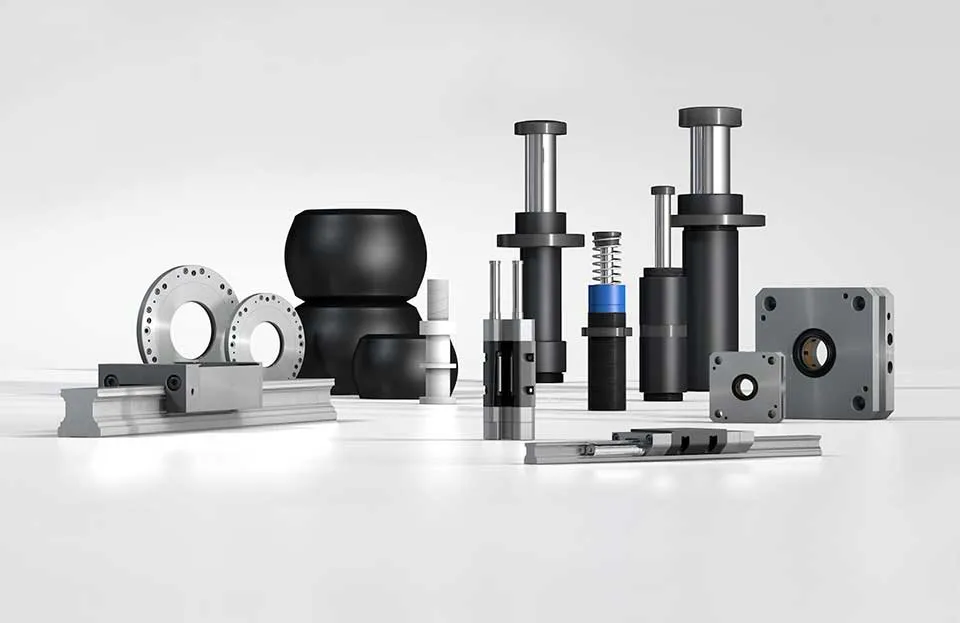
Energy absorption of 2,350 Nm/stroke to 126,500 Nm/stroke, with stroke lengths from 50 mm to 406 mm: these are the key characteristics of heavy-duty industrial shock absorbers.
In emergency-stop situations, however, they can do much more. Damping specialist ACE Stoßdämpfer GmbH has almost 60 years of experience in developing new technologies and expertise across all sizes. This enables engineers to find the right shock absorber for their installation.
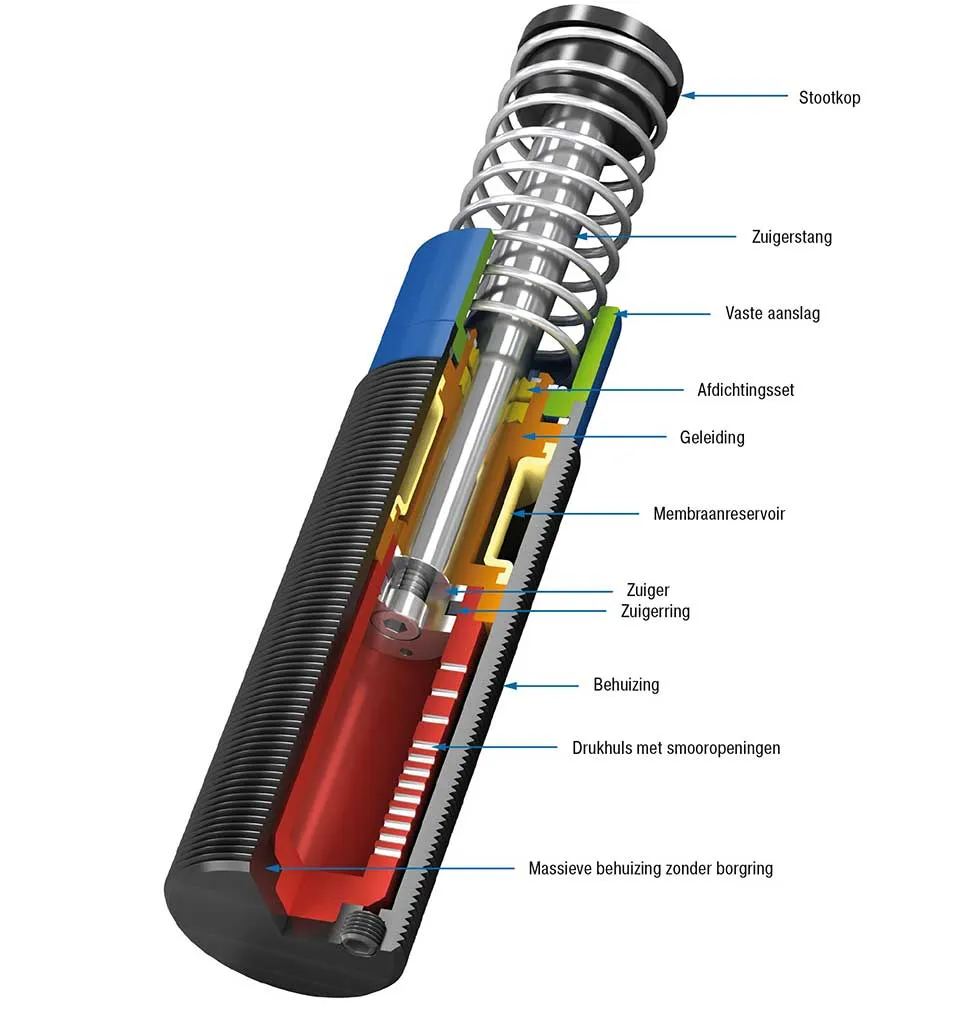
Precisely decelerating effective masses of up to 326,000 kg without rebound is a truly mammoth task. Designers of transport and gantry systems, or reach trucks, often rely on ACE heavy-duty industrial shock absorbers to protect their machines. As with the company’s small and medium-sized models from Langenfeld, this type of overtravel protection works by forcing the piston rod into the cylindrical shock absorber element during deceleration, while hydraulic oil in front of the piston is simultaneously pushed through all the orifices.
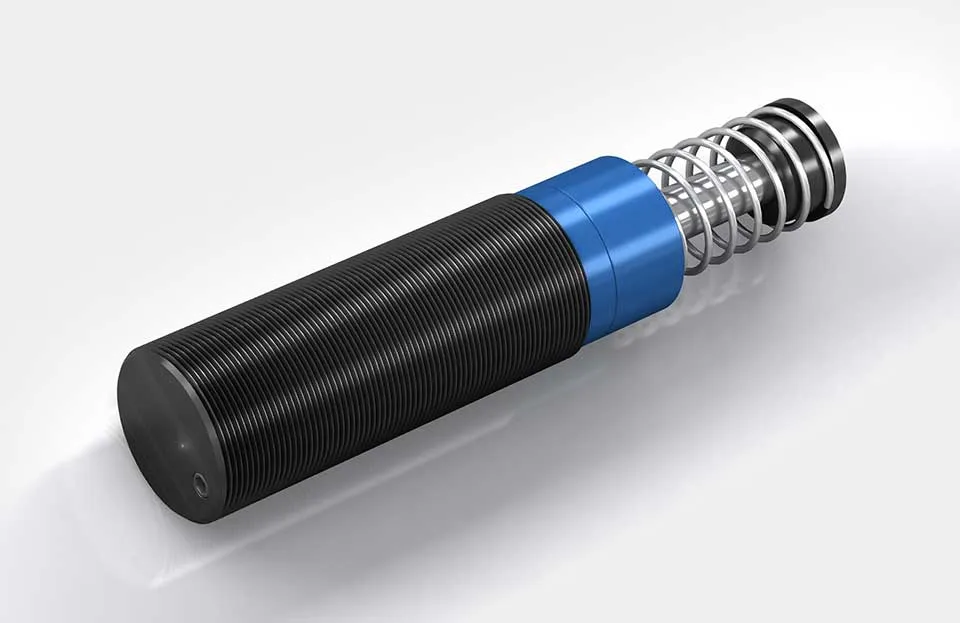
Since the number of active orifices decreases as the rod is drawn further in, not only does the insertion speed remain constant, but the dynamic pressure and counterforce on the piston also stay the same. In addition to the high effective masses that can be decelerated, this is a decisive advantage over other shock absorber solutions available. While the braking process with ACE small shock absorbers takes only a fraction of a second, the hydraulic heavyweights need up to 2.3 seconds to cover a stroke length of more than 400 mm. This makes it possible to decelerate even large masses fully, precisely and gently, without rebound.
Wide range for diverse applications
ACE heavy-duty industrial shock absorbers, available in self-compensating or adjustable versions, are characterised by their robustness and quick deployment. ACE’s range of heavy-duty self-compensating shock absorbers is also suitable for emergency-stop applications, as are the adjustable models. The effective mass to be decelerated can be increased considerably further. ACE uses its calculation tool to design the shock absorbers to suit each application.
This eliminates the risk of crashes and incorrect settings. The CA types can decelerate both very small and very large masses. They can be used to decelerate effective masses from as little as 700 kg and 3,600 Nm/stroke. The largest shock absorbers, with stroke lengths of up to 406 metres and energy absorption of 126,500 Nm per stroke, can decelerate effective masses of up to 115,000 kg. These robust shock absorbers are used particularly in heavy engineering.
Test rig fitted with safety shock absorbers
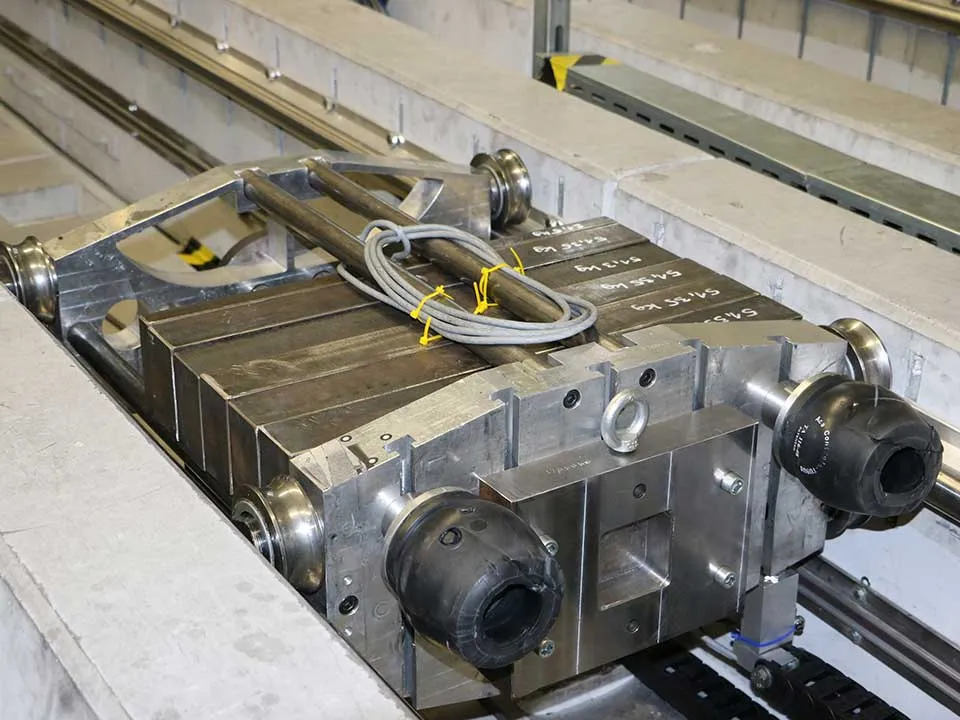
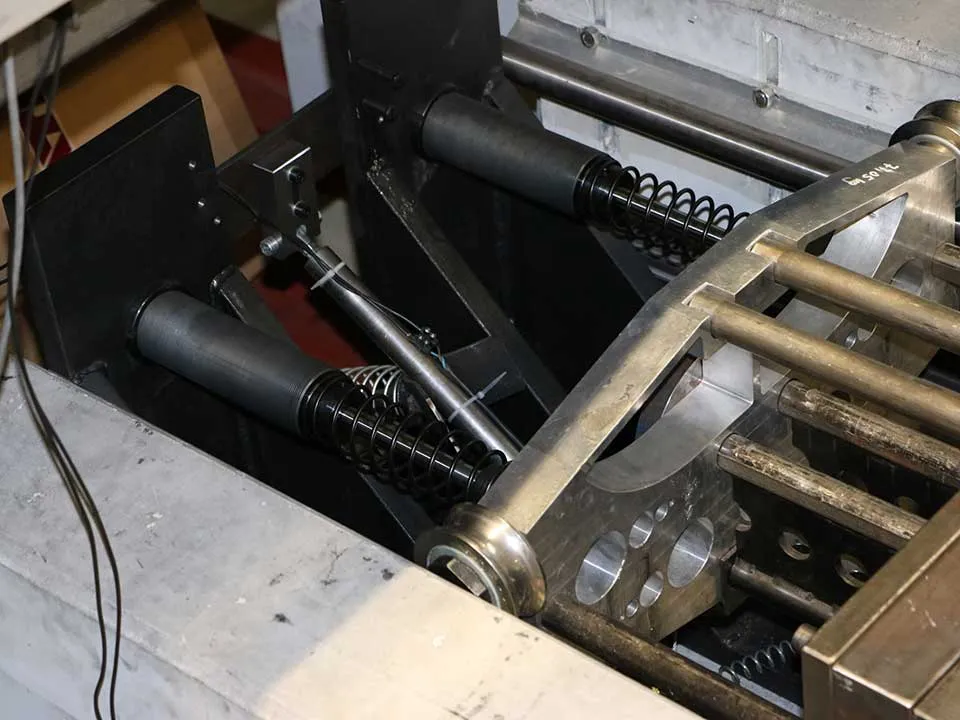
The function of heavy-duty industrial shock absorbers can be illustrated by their role in a test rig. In this case, they are installed at the end of a 6-metre acceleration track, along which a carriage carrying test material slides. The shock absorbers are designed to decelerate kinetic energy of up to 32 kJ. This ensures that the test rig remains undamaged and can be used for crash tests and subsequent measurements at different speeds after testing a particular material.
And to do so as safely, flexibly and maintenance-free as possible. At an earlier testing stage, ACE safety dampers from the TUBUS TA, TC and TC-S series were used for this purpose. Since these components, made of co-polyester elastomer, could not absorb the mass fully without the carriage rebounding, the next step was to opt for the company’s hydraulic safety dampers. These shock absorbers can absorb the forces generated by the moving mass evenly over the entire stroke length and decelerate it with the utmost precision at the end position. The load on the shock absorbers is very high. Immediately after impact, the internal pressure in the pressure tube rises abruptly to 460 bar. As a result, the shock absorber oil begins to flow much faster within a short time, reaching speeds of up to 750 km/h. To develop the optimum safety damper, all the test rig’s required parameters were entered into ACE’s in-house calculation tool during the collaboration and installation process. The ideal damping characteristic was then determined for a wide range of masses and impact speeds. ACE engineers incorporated this precisely into the SDH and SCS safety dampers used in the crash installation.
Cost-effective alternative to industrial shock absorbers
In this case, too, the safety dampers are a cost-effective alternative to ACE’s even more powerful industrial shock absorbers. Although certain types of safety shock absorbers are designed for continuous use, their primary purpose is to provide reliable, effective protection for structures in emergency-stop situations. For its SCS33 to SCS64 product range, which is also used in the test rig described here, ACE uses standard components from its MAGNUM shock absorbers. Their even more robust design enables service lives of up to 1,000 strokes. ACE safety dampers are available in a wide range of versions with different stroke lengths and energy absorption capacities. The position of the orifices can be calculated and configured to customer requirements. ACE safety shock absorbers, particularly those in the SCS product range, are proving to be the answer to increasingly complex demands in drive technology. With their compact dimensions and immense energy absorption in crashes, they protect ever smaller and faster structures. Compared with other ACE industrial shock absorbers, these damping elements provide immediate deceleration, up to 300 per cent greater energy absorption and a cost per Nm of energy absorbed that is more than 80 per cent lower. They are therefore often an attractive alternative, especially when safety is at stake.
Question about this story? Ask your question
Companies in this story

Keep following this
Get an email when a new story is published. No account needed.
- SubjectMotion, gears & drives
- CompanyACE Stoßdämpfer GmbH







