The industrial multicloud: significant benefits with the right approach
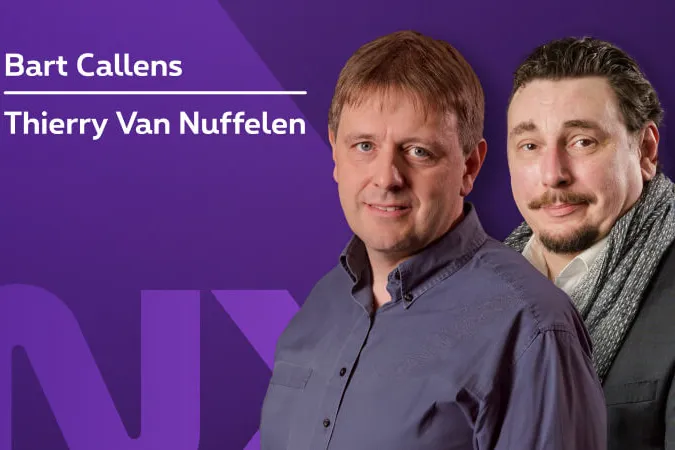
More and more industrial companies are adopting a multicloud strategy, tailoring their cloud infrastructure to their specific needs. But combining cloud solutions also brings challenges in terms of management, integration and security. Proximus NXT experts Thierry Van Nuffelen and Bart Callens explain how to manage this complexity.
A cloud model fully tailored to your business operations provides the ideal framework for rolling out automation, IoT and smart manufacturing projects. Several factors come to the fore when choosing the right cloud strategy: performance, security, monitoring, scalability and cost optimisation. To bring these elements together, multicloud, a mix of different public clouds, optionally supplemented by private cloud or on-premises infrastructure, is an attractive option for many manufacturing companies.
Flexibility and performance
“The reason companies combine different public clouds is simple,” says Thierry Van Nuffelen, Product Manager Cloud at Proximus NXT. “Each hyperscaler, such as Amazon Web Services (AWS), Microsoft Azure or Google Cloud Platform, offers unique services. For specific industrial applications, for example in real-time data analytics, IoT, energy management or AI, you may find that only one provider is suitable, or that one provider is a better fit than another.”
A multicloud approach also makes it possible to optimise costs. “If a provider raises its prices, a company can easily move certain workloads to another cloud offering similar services. Medium-sized and large organisations in particular have the scale to make this flexibility pay.”
A strategic choice
A well-considered strategy is essential. According to Thierry Van Nuffelen, there are two main approaches: a hyperscaler-centric approach or a distributed multicloud strategy. “With the first option, the organisation chooses one public cloud as its central hub, then builds components, or stacks in the jargon, from other clouds on top of it. This ensures operational efficiency. At the same time, this approach limits the freedom to make full use of every provider’s tools.”
The second option is a distributed architecture, in which tools work together compatibly across different public clouds, and often private clouds too. “This lets you use the best of each cloud.”
Security: more than configuration
Moving to multicloud also changes the security landscape. Bart Callens, Product Manager Cybersecurity at Proximus NXT, explains: “For applications and operating systems running in your own data centre, for example, you are responsible for patching. In a SaaS or PaaS environment in the public cloud, the provider takes on that role. The focus then shifts more towards secure configuration.”
The main challenge with multicloud is maintaining consistent security across different clouds. “You can build a separate security stack for each cloud, but that requires specialist knowledge of every environment. One alternative is Azure Cloud Security Posture Management (CSPM), for example, which detects incorrect configurations not only in Azure, but also in AWS and Google Cloud Platform. Or you can opt for a layer of security middleware that covers all the clouds in use.”
Management, expertise and collaboration
The technical complexity of multicloud calls for new approaches to management. “At an organisation that mainly works with Azure, for example, the business may ask to use AWS or Google Cloud as well for a specific industrial application,” says Thierry Van Nuffelen. “That requires additional expertise, both in terms of functionality and security.”
If sufficient knowledge is available in-house, one possible solution is to use a cloud management platform across different clouds to manage the multicloud environment. “If your company does not have the necessary skills in-house, you can draw on Proximus NXT’s expertise. We can also take full responsibility for managing and maintaining your multicloud.”
Modular support
Support from Proximus NXT also offers significant added value in terms of security. “With specialist security professionals in short supply, many manufacturing companies are turning to external expertise,” says Bart Callens. “We not only provide the licences and tools, but also manage security controls, both on-premises and in the cloud, regardless of the multicloud strategy chosen.”
Proximus NXT offers modular services at operational, tactical and strategic levels: from keeping security controls available and providing SOC (Security Operations Centre) services to a comprehensive GRC (Governance, Risk & Compliance) service.
Curious about how your company can make the most of a multicloud infrastructure with Proximus NXT?
Een zakelijke vraag aan Proximus NXT? Get in touch
Companies in this story
Keep following this
Get an email when a new story is published. No account needed.
- ThemeData from shop floor to decision
- SubjectControl & network
- CompanyProximus NXT