Safety is an ongoing process
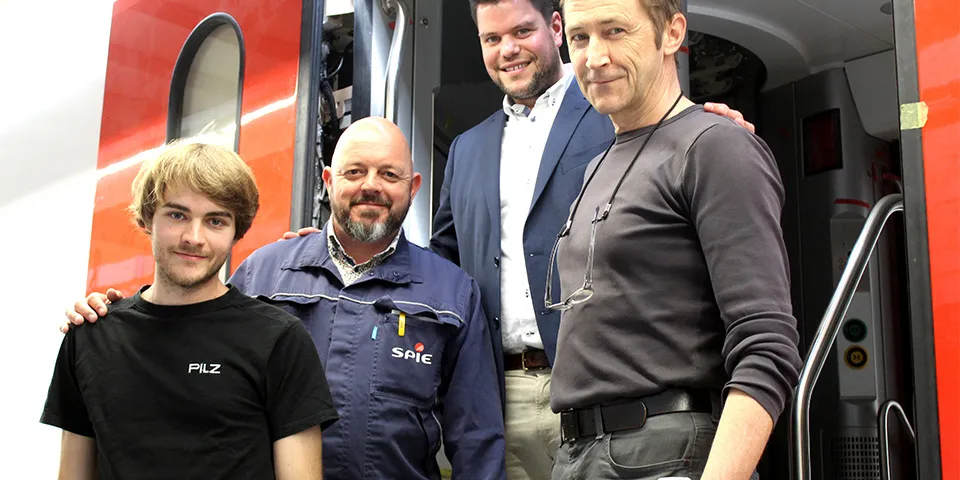
Bombardier has been building trainsets in Bruges for many years. Before these carriages can enter the international rail network, they must undergo various functional and electrical tests. High voltage is connected in the test cells, making safety paramount in the installation. Pilz developed a safety plan for Bombardier’s test cells, enabling employees to test the trainsets safely. The installation is based on a PSS 4000 safety PLC.
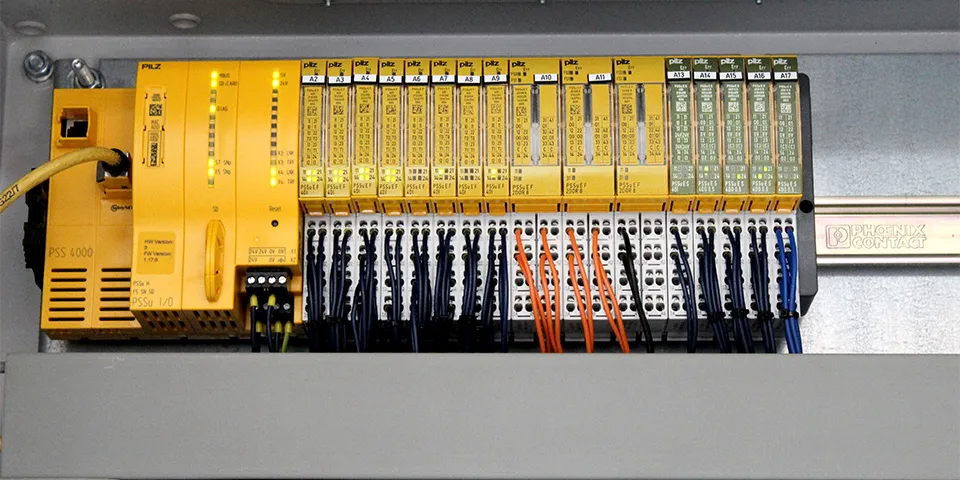
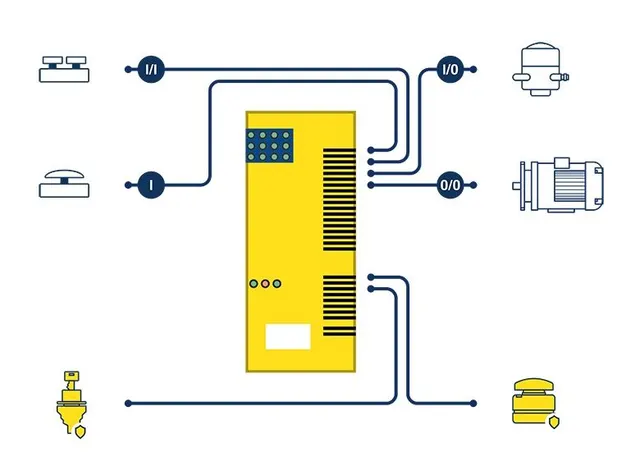
The heart of the safety system is Pilz’s PSS4000 safety PLC, which processes all the I/Os.
Facility manager Marc Wuidart, who has worked at Bombardier for 34 years, explains the tests that have to be carried out on a modern trainset: “Finished carriages are moved by rail into the test cell, where we start with the electrical checks. Literally every wire is tested. It is a substantial task, as a single carriage has more than 5,000 connection points. In the first cell, we test the quality of the wiring and use dielectric tests to check that the insulation is sound. The carriage then moves to another test cell, where we carry out functional tests from A to Z. These range from safety tests, such as checking the airtightness of the air lines and conducting pneumatic brake tests, to testing the air conditioning and heating. We also check the converter that steps the voltage down from high voltage to 220 and 380 V. The presence of high voltage calls for a specific approach, particularly since there was an accident involving 3 kV high voltage at the company a few years ago, fortunately with no fatalities.”
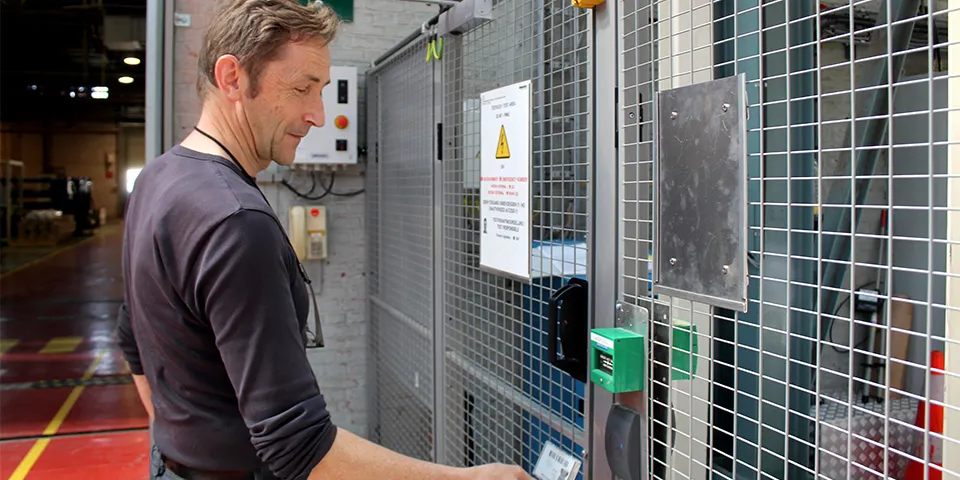
To ensure safety, Pilz developed a safety plan featuring several safety I/Os, including badge-controlled access.
Working with SPIE
Bombardier has an in-house technical department responsible for keeping all machines operational, but the train manufacturer calls on SPIE to install new systems. With 1,800 employees, SPIE is a major player in the Belgian installation market. SPIE site manager Hans Soulliaert explains: “For this project, we were asked to oversee the technical implementation of the test cells. Our expertise lies in implementing the mechanical and electrical aspects of the installation, but we called on Pilz’s expertise for the safety component. They carried out all the calculations, programming and validation, and developed the concept. They are highly skilled in their niche, just as we are in ours. This synergy has resulted in an installation where safety is given much greater priority. It was also an advantage that all three parties had worked together before, as Pilz had already been involved in earlier projects at Bombardier.”
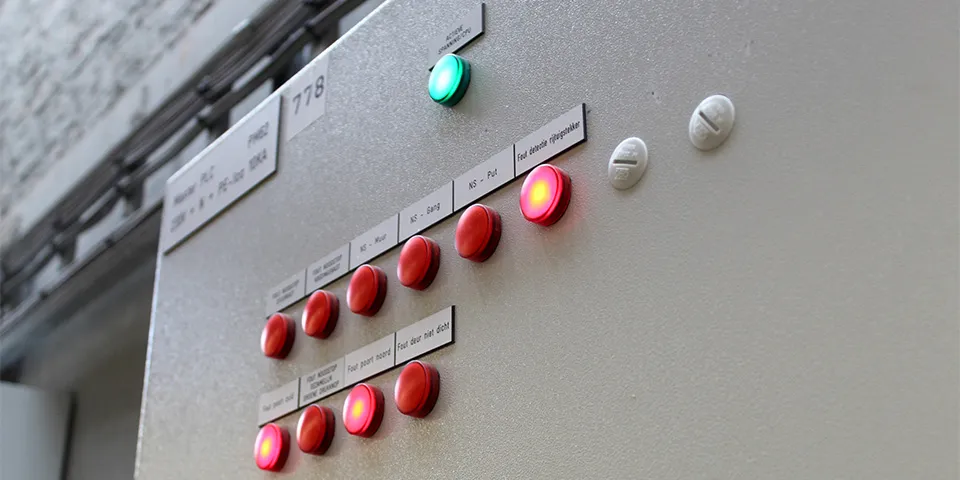
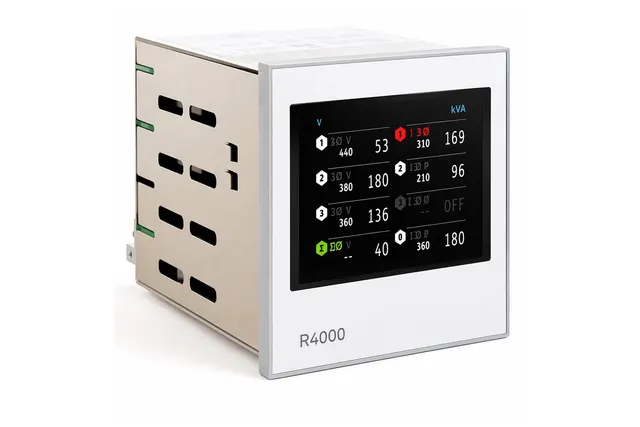
A clear visualisation gives employees an instant overview of the situation and makes rapid diagnosis possible.
A carefully designed safety cycle
Kwinten Cantraine, sales manager at Pilz, explains the steps involved in the safety study: “We always follow a complete safety cycle. The first, mandatory step is the risk assessment. We then work with Bombardier on the safety concept to find practical, compliant solutions for reducing the risks.

When the coded Pilz safety switches (PSENcode) are activated, the voltage in the test cell drops out immediately.
Question about this story? Ask your question
Keep following this
Get an email when a new story is published. No account needed.
- ThemeSafe and resilient installations
- SubjectControl & network