Real-time maintenance planning powered by artificial intelligence

They continue to call them ‘unexpected stoppages’, but many faults in production processes can be predicted with ease. In many cases, that also means they can be prevented.
A method for detecting deviations in production processes and scheduling the necessary maintenance activities in real time has been developed by the Electromechanics programme at PXL.
The method used to predict production faults is machine learning. At regular intervals, a whole series of relevant process measurements is sent to the cloud. There, the parameters are evaluated by a system that has learnt from historical measurements what is normal and what is not. If the model detects an impending fault, it returns an urgency score. A high score means that, in similar situations in the past, it did not take long for a serious fault to occur.
Real-time analysis
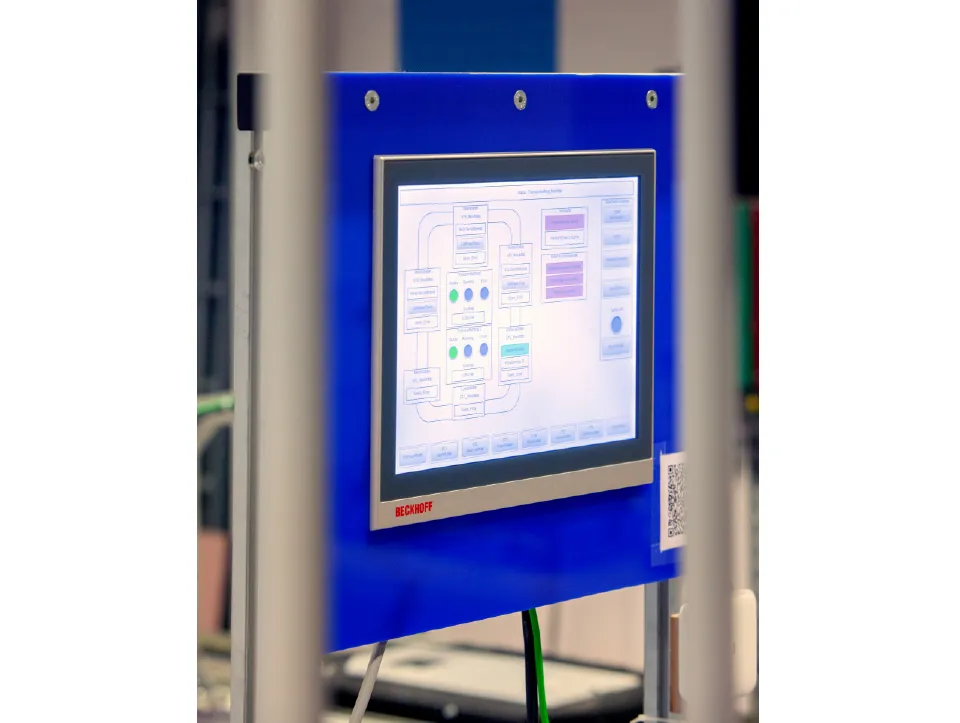
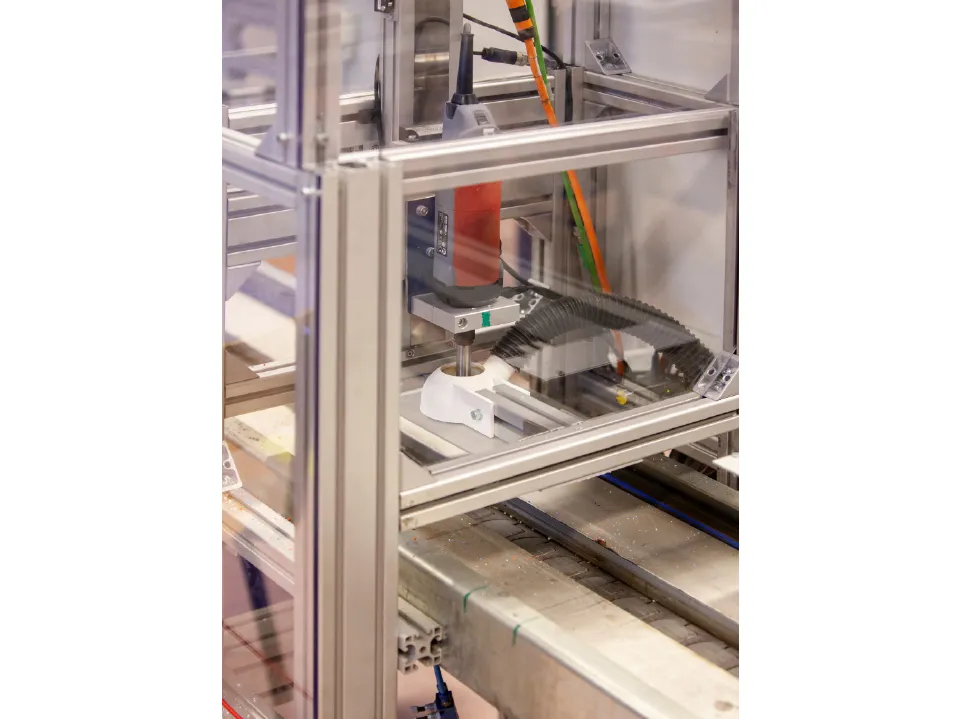
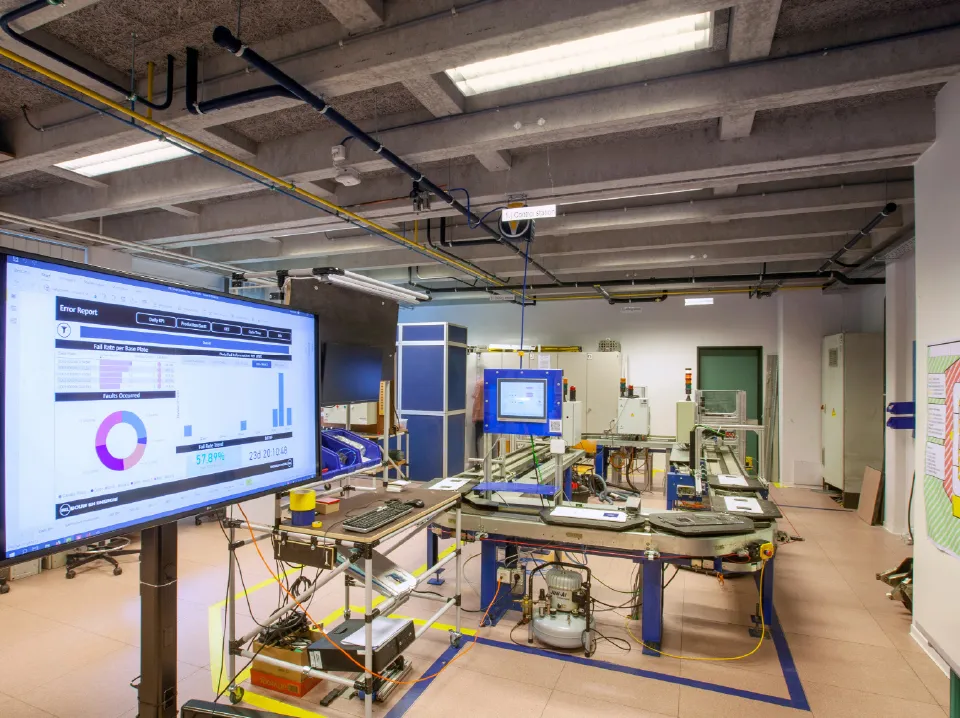
“A great deal of this kind of analysis is already carried out in industry, but it is generally used for process optimisation,” says Patrick Pilat, head of the Electromechanics programme at PXL University of Applied Sciences. “What is new about this project is that we carry out the analysis in real time and have the system take action immediately when needed. This link between production and maintenance is usually missing. You can see this in ERP systems too, where production planning and maintenance planning are completely separate.” To test the system, a production line was built at PXL, equipped with a Beckhoff PLC that not only controls the processes but also collects additional data such as voltage, current, temperatures and vibrations. “This data is used to create a dataset that is sent to the cloud periodically for analysis. If a fault is imminent, the model sends this information back to the PLC. The PLC can then schedule a maintenance task in the ERP software based on the level of urgency.”
Beckhoff PLC takes centre stage
Since the ERP software does not include this as a function, Pilat devised a workaround that enables the PLC to adjust the production schedule for urgent maintenance: “We added maintenance as one of the possible products the line can produce. When we have the PLC place an order for this product, the maintenance task is automatically added to the schedule.” This gives the PLC a central role in the whole process, going far beyond simply controlling the production line. “We use a Beckhoff PLC that supports open programming, allowing us to do much more than the standard function blocks offer,” says Gwen Vanheusden, lecturer in automation and project staff member at PXL. “There is an enormous range of I/O cards and communication protocols. Adding extra inputs, carrying out calculations and communicating with the cloud are all relatively straightforward to implement. We also receive support from the people at Beckhoff, who respond very quickly when we have a problem.”
Preparing for the industry of the future
“We attach great importance to working closely with educational institutions,” says Philip Neyens, support engineer at Beckhoff Automation. “Projects like these are interesting for us to be involved in too.” At PXL, the focus is on education. By incorporating projects like these into the curriculum, students are prepared for the industry of the future. The aim is also to share the knowledge and experience gained with people in industry. A number of workshops will therefore be held to explain the approach and implementation in more detail.
For more information, contact [email protected] or [email protected]
Question about this story? Ask your question
Companies in this story

Keep following this
Get an email when a new story is published. No account needed.
- ThemeData from shop floor to decision
- SubjectControl & network
- CompanyBeckhoff Automation