"Less complexity, more simplicity"
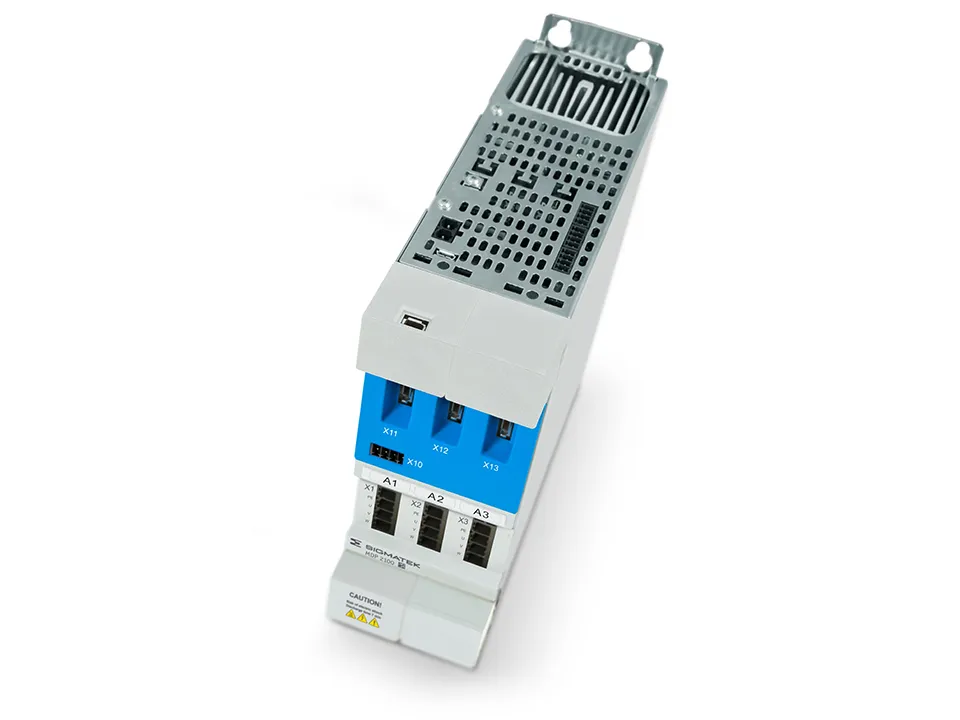
Improved performance and lower costs are a must for machine builders. With the new MDD 2000 multi-axis servo drive system, SIGMATEK aims to meet precisely these needs, because drive technology plays a decisive role in them.
In this interview, CEO Alexander Melkus explains how SIGMATEK has managed to fit all these advantages into a new compact housing.
Which applications is the new drive solution particularly suited to?
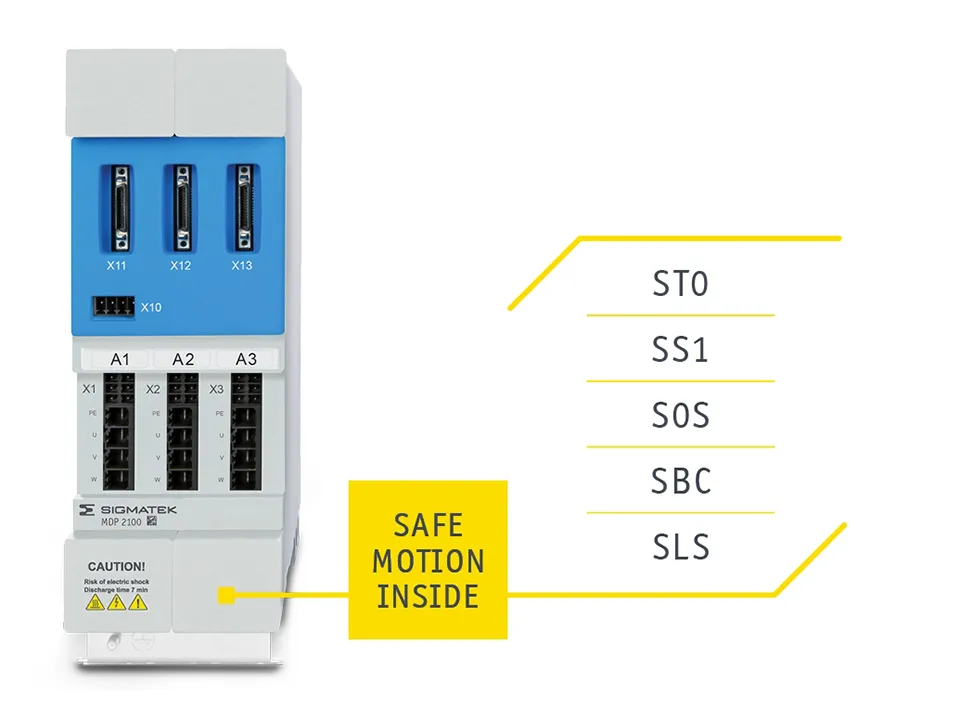
"The new MDD 2000 system is modular, compact and offers high power ratings. It is ideal for applications in a wide range of sectors, from the packaging and food industries, handling and robotics to metalworking and textiles. It suits any application where a lot of servo technology is used and demand for servo axes keeps rising steadily. With our system, we also support more functions, to give machine builders even greater safety."

Which technical tricks enabled you to achieve this high power density?
"We integrate all the essential functions in a single module, namely power supply, filter, DC link circuit and ventilation, for one to three axes. With many competitors, components are implemented externally. Simple expansion options are also included. Applications in which continuous power is not always required on all three axes, and especially three- or six-axis robots, benefit most from this solution. We have also installed a new generation of IGBT modules, which have a significantly higher power density. Combined with a few 'tricks', this allows us to deliver a market-leading power density."
On the modularity of the new drives: from your experience with customers, how important are flexible adaptability and, where necessary, the expansion of drive systems?
"Extremely important! Many machine builders have a standard machine
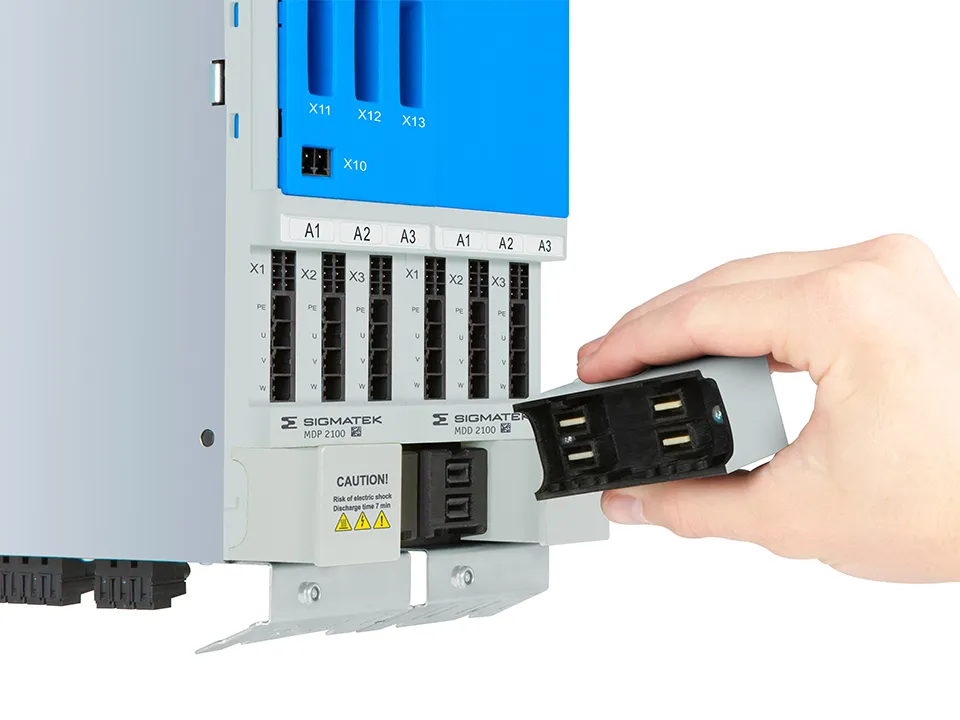
with, for example, six axes, which we can implement with two modules. For further expansions, however, extra axes have to be added according to the customer's requirements. It is crucial here that a servo module for extra axes can be connected easily or replaced by a higher-performance module. With the MDD 2000 series, this is possible via plug and play. Our modules vary in width but always have the same height and depth. The modular concept also offers servo modules in different variants. This means that single-, double- and triple-axis modules can be used, including power supply and network connection. The expansion modules can be coupled without tools. They are easy to install and can be scaled up simply at any time."
Your drives are connected via the hard real-time VARAN bus. Are there further developments and security measures?
"Yes, for both! We are fully committed to the VARAN standard, because hard real-time Ethernet has clear advantages over other technologies, especially in motion applications with many synchronised axes. Systems based on VARAN respond within microseconds rather than milliseconds. That can make a big difference when faults occur. A tool can quickly be damaged because it has travelled a few millimetres too far due to the cycle time. It is not that we, as early supporters of VARAN, are simply clinging to the technology. Other bus systems simply do not meet our requirements. VARAN is also not a 'frozen' technology: the standard is continuously developed, with strong involvement from the members of the VARAN User Organization (https://www.varan-bus.net/). The implementation of other bus systems is included in the concept."
Even the best servo technology is useless without software. As a central part of SIGMATEK's LASAL engineering suite, you offer ready-made motion modules. Does this point to a core problem that
many machine manufacturers who are not software experts struggle with?
"Exactly, because the complexity of machine control, including safety technology, is constantly increasing. Machine builders are absolute mechatronics specialists and have less and less in-house programming capacity, not least because of the shortage of skilled staff. That is why, with LASAL, we reduce the complexity for the machine builder and supply fully functional software components. With these, we reproduce entire machine components and motion tasks. The user works with a graphical interface and only has to enter information such as axis lengths, moving masses and similar parameters, and the basic function is already operational. The MDD 2000 system has an automatic tuning function to match the servo controllers and motors to the mechanics. In Expert mode, fine tuning can of course be carried out manually. With LASAL, however, we aim to simplify as much as possible and reduce complexity for the user."
Why should machine builders choose SIGMATEK as a supplier of drive technology solutions?
"Because an automation system is only complete if all the main components come from a single source and communicate perfectly with each other with the greatest possible reduction in complexity. Besides drive technology, we
enable complete machine control, including safety, through simple configuration and ready-made software functions, thanks to our aforementioned LASAL engineering suite. Our automation components are very compact, which is what SIGMATEK is known for. The machine builder therefore has the option of reducing the size of the control cabinet and thus integrating it better into the machine design, or eliminating it
altogether. In addition, we are a customer-focused development partner for machine manufacturers. If, despite our extensive and modular automation toolkit, a customer needs specific adaptations, we work with them to find a solution. "In combination with the LASAL engineering suite, our MDD 2000 multi-axis servo system considerably reduces complexity for the machine builder."
Question about this story? Ask your question
Keep following this
Get an email when a new story is published. No account needed.
- ThemeFrom design to flexible machine
- SubjectControl & network