IO-Link in the spotlight
Text Valérie CouplezImage Agoria
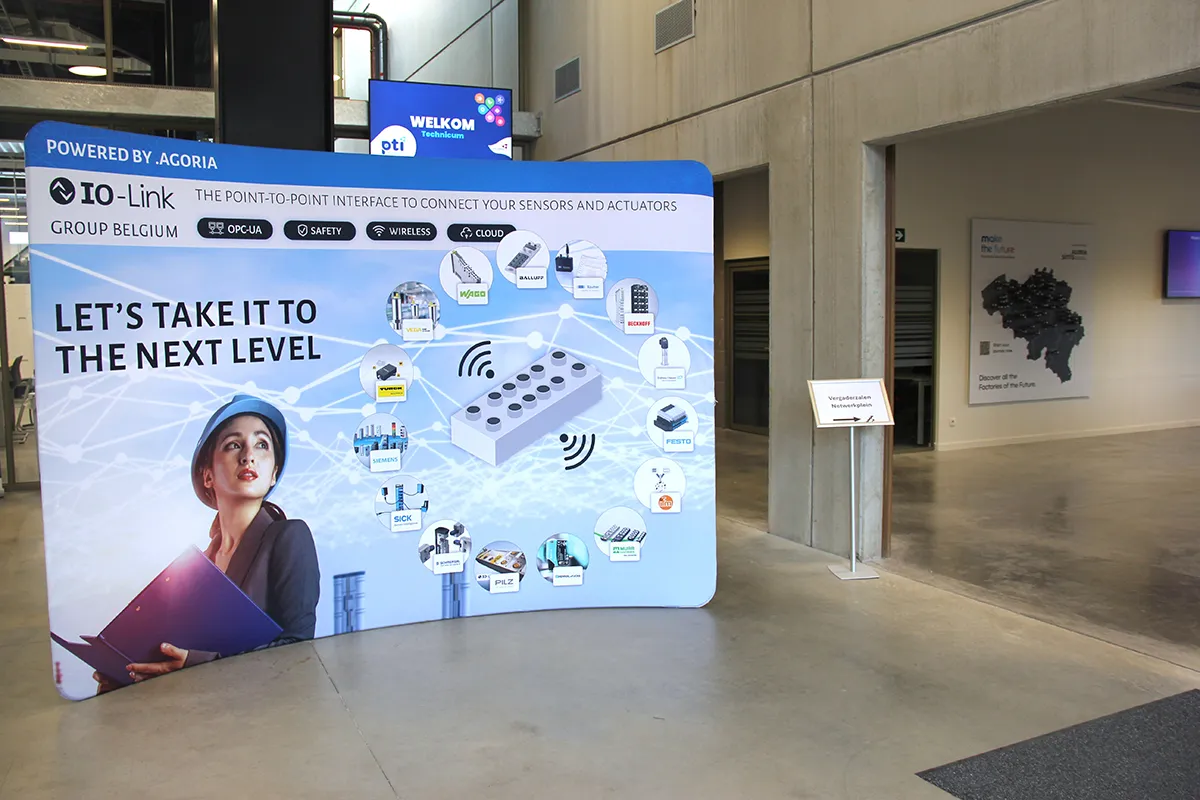
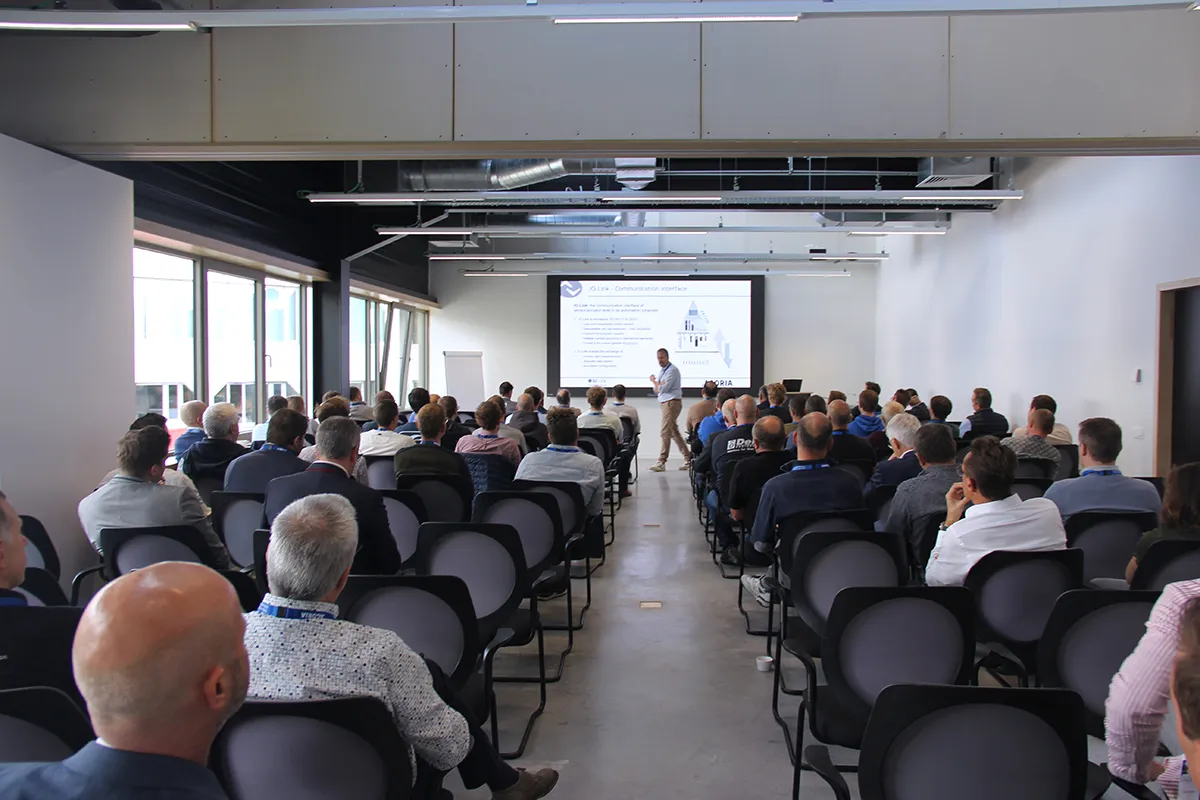
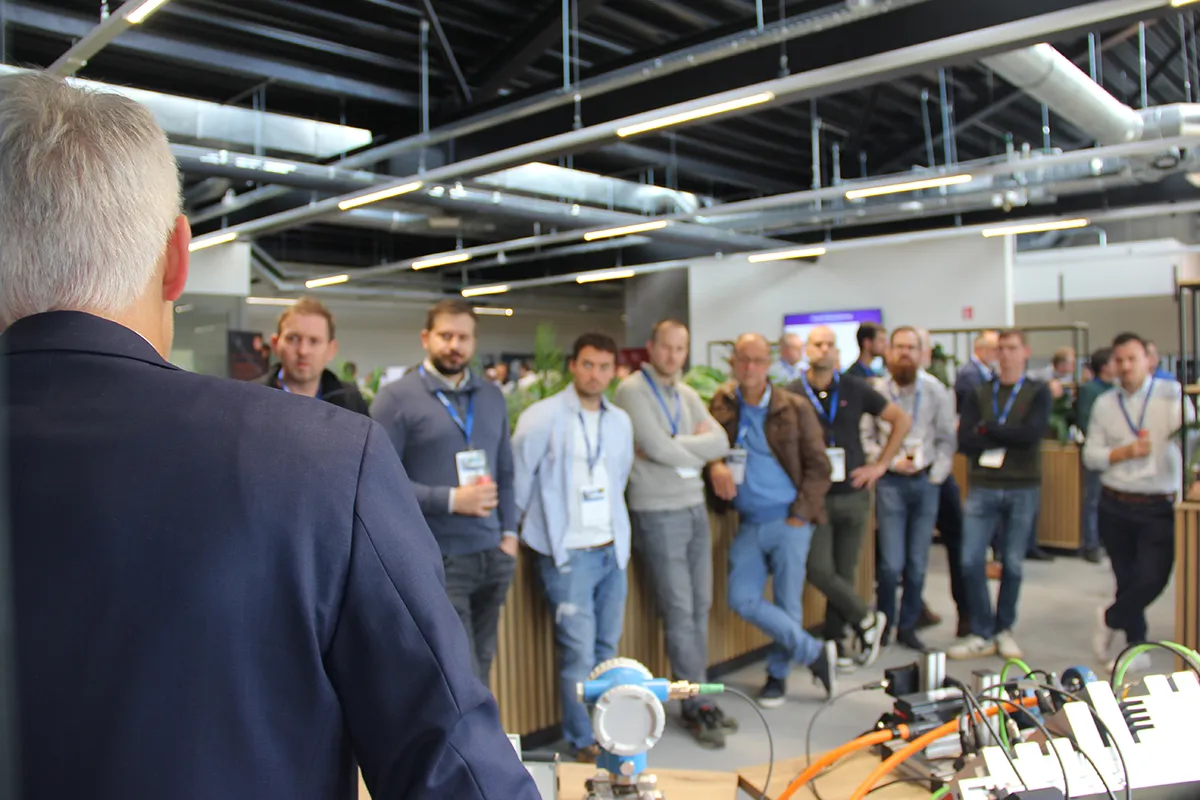
From an initiative to a global standard. The IO-Link community now comprises 485 companies, which together bring 33,000 IO-Link products to market. In Belgium, however, it is still often a case of ‘unknown is unloved’, or perhaps more accurately, of untapped potential. IO-Link Group Belgium therefore organised three events, in Genk, Kortrijk and Namur, to explain the basic principles and demonstrate what is possible with joint demonstration set-ups. Industrial Automation was there in Kortrijk.
IO-Link is a communications interface at sensor and actuator level within the automation pyramid. IEC 61131-9 is the international standard for it, officially titled ‘Single-drop digital communication interface for small sensors and actuators’ (SDCI). That is quite a mouthful for a system whose defining feature is simplicity. With traditional I/O, communication is usually limited to process data, whereas IO-Link allows much more to be exchanged over one and the same cable, including diagnostic data and parameters.
What are the key characteristics of this communications interface? Its open and independent nature, interoperability, future-proofing and reliability worldwide. Many Belgian companies already use IO-Link sensors and actuators in production, but their potential for diagnostics and parameterisation often remains untapped.
IO-Link system architecture
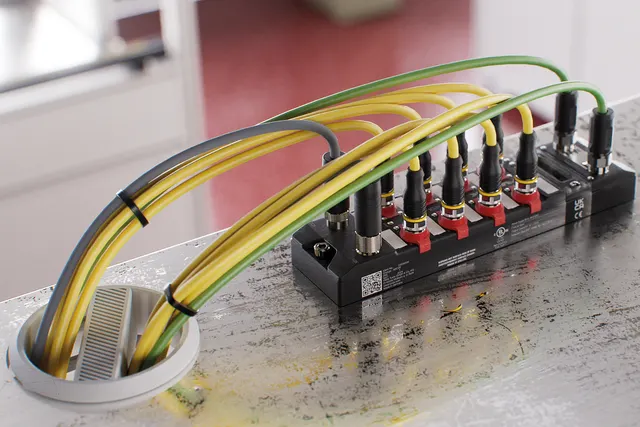
A conventional bus system uses addresses. IO-Link works differently, using point-to-point serial communication. The main component is the IO-Link master, now available in versions with four to sixteen ports. Essentially, the IO-Link master collects data from the field, from IO-Link sensors as well as other devices, and passes it on to the PLC above it.
The latest versions support multiple protocols and can retrieve data from different buses. They also support MQTT or OPC-UA, which often carry information to a second, higher-level network, such as the edge or cloud. The connection is made using a simple three-core cable. A five-core cable is also available as an option if you want to connect higher-power actuators. The fact that this is a standard 24 V cable is a major advantage: it is less susceptible to interference and reduces cabling costs.
Communication
The first IO-Link standard was released in 2006, followed by a major update in 2011. This introduced extensive diagnostic functions, backup capabilities in the master and higher communication speeds. The latest update, in 2024, added further maintenance capabilities. IO-Link enables bidirectional communication between the field and the system. Process data are transmitted cyclically, while parameters, diagnostic data and events are communicated acyclically. PLC integration is also possible.
Simple commissioning
Commissioning can be carried out in two ways. One option is to do it online, for example from the engineering software. You can set all the parameters there and transfer them to the actuators and sensors. Thanks to IODD (IO Device Description), this can be plug-and-play. Think of it as a digital information sheet for identifying sensors and actuators, which can be imported into the software. If this does not happen automatically, you can also look up the IODD for devices in the IO-Link organisation’s database.
The second method works offline, using a USB IO-Link master or a built-in web interface. You simply save the configuration there. If the sensor or actuator fails later, you can send it back and replace it; your IO-Link master retains the correct settings.
Four demonstration set-ups
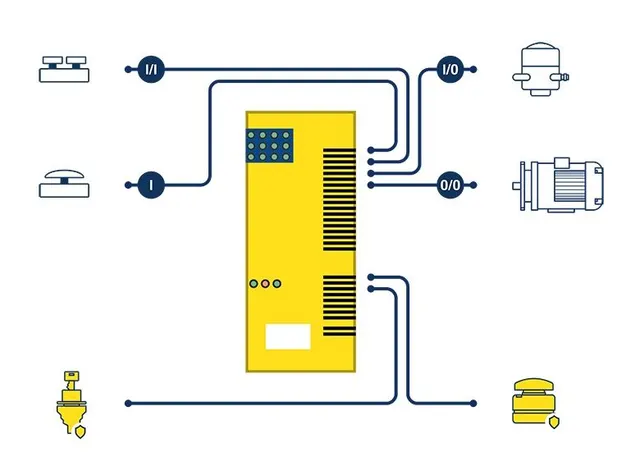
The participants then got a taste of what IO-Link can do at four demonstration set-ups. Different manufacturers worked together on each one to highlight the technology’s interoperability. IFM and Schmersal showed how automation and safety could be combined in a single solution. Balluff, Festo and Sick presented an application for condition monitoring and predictive maintenance. Murrelektronik, Pepperl+Fuchs and Pilz demonstrated a palletiser operating via IO-Link and IO-Link Safety. Beckhoff, Endress+Hauser and Multiprox showed how measurements of temperature and friction at a bearing could be fed back into the production process.
Question about this story? Ask your question
Companies in this story





Keep following this
Get an email when a new story is published. No account needed.
- SubjectControl & network
- CompanySchmersal
- CompanyBalluff BVBA
- CompanyFesto
- CompanyMurrelektronik
- CompanyPepperl+Fuchs N.V.