Fault tolerance in machine safety
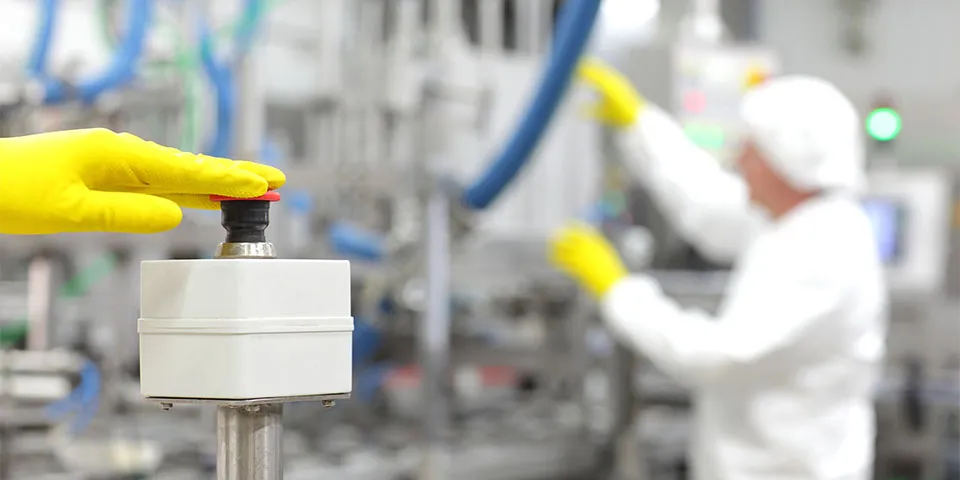
When a potentially dangerous failure is detected, fault-tolerant systems can allow operation to continue. While this increases availability, care must be taken to ensure employee safety. This means that faults must not only be detected but also assessed. This makes it possible to decide whether the detected fault can be tolerated or is too serious. In the latter case, the system must be stopped immediately. Alternatively, it can continue operating in a degraded state.
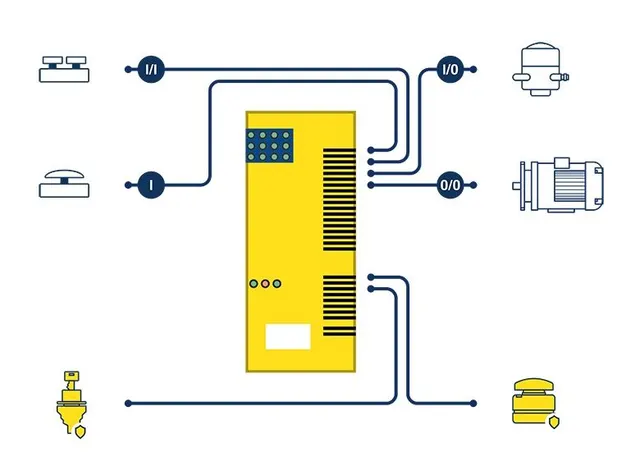
Safety control systems are now designed to bring the machine to a safe state when a fault occurs. In almost all situations, this means switching off the power. In complex production environments, that often means bringing the entire production line to a halt. Some programmable safety systems have functions that can switch off individual modules. This selection must be made according to the application and determined on a case-by-case basis. Nevertheless, depending on the control architecture, certain machines and machine functions will still be switched off. This system worked without many problems until now, but the advent of Industry 4.0 has brought greater dynamism, and this is set to continue. Individual machines are being connected into complete production lines and even linked to other production sites. In such cases, companies cannot afford downtime when something goes wrong on the other side of the world. Certain faults need to be tolerated. However, fault-tolerant systems must be clearly defined in relation to the following questions:
- Can dangerous faults be tolerated?
- How, and for how long, can a machine or factory continue operating after a fault has been detected?
- Can a machine or factory then continue operating without restrictions, or do processes need to be adjusted, for example in terms of speed or mode?
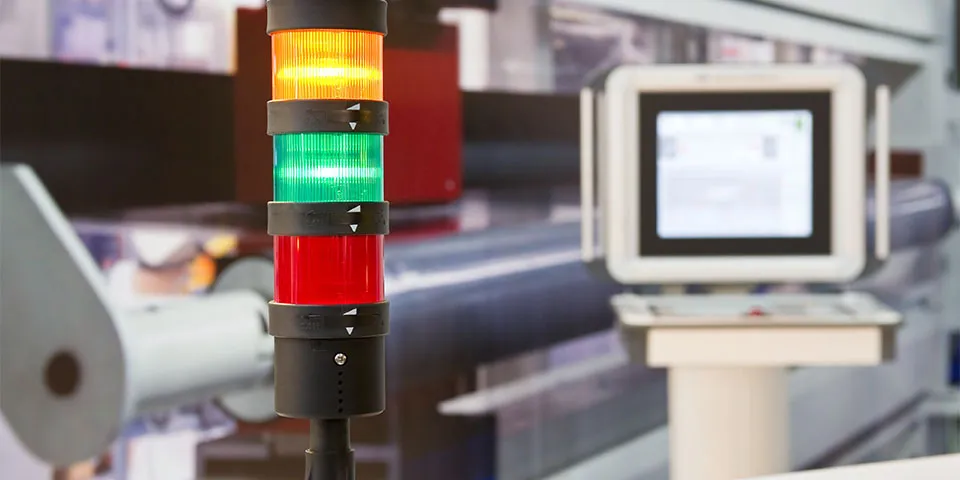
For example, when monitoring safely limited speeds in a drive system (SLS in accordance with EN 61800-5-2), the decision-maker could respond to a fault by allowing operation only at a reduced speed.
Fault assessment
To establish the extent to which the applicable standards permit an automation system with a safety-critical fault to continue operating for a limited period, ZVEI set up a working group. The findings were compiled in a white paper. The decision-maker must bring the system to a safe state no later than when the maximum permitted operating time in the degraded state is reached. The decision-maker also bears considerable responsibility: a fault and effects analysis must distinguish between tolerable and intolerable faults. With intolerable faults, such as a fault in the intra-processor communication between two controllers, safe continued operation cannot be guaranteed, so the system must be stopped immediately. Conversely, under certain circumstances, a short circuit/external power supply (stuck-at error) on a digital output of a controller or sensor can be tolerated for a period, provided a second, independent shutdown path can correctly perform the safety function.
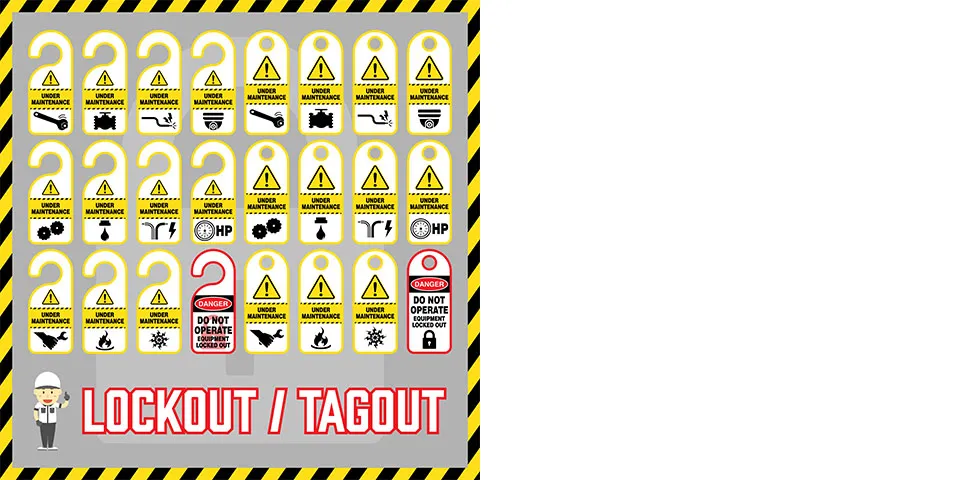
The authors of the white paper published by ZVEI conclude that the assessment of the measures described is consistent with the protective objectives of the Machinery Directive and does not conflict with the harmonised standards EN ISO 13849 and EN 62061.
Fault tolerance in the standards
An examination of the relevant standards EN ISO 13849 and EN 62061 reveals no requirement for an immediate or direct response when a fault occurs. Furthermore, the models used to calculate the probability of dangerous failure per hour (PFHD) allow the necessary design flexibility, since this probability starts at a low level in redundant architectures and only increases over time. Depending on the risk analysis and the quality of the fault-control measures applied, the decision-maker can extend the period before shutdown to a maximum of one week. The alternative calculation method used as the basis for EN 62061 defines a diagnostic test interval, which also contributes a negligible proportion to the PFHD in practice. However, both calculation approaches assume that the implementation of the safety function has sufficient fault margin to account for faults with the same cause (common-cause failure), and that these faults have been taken into account.
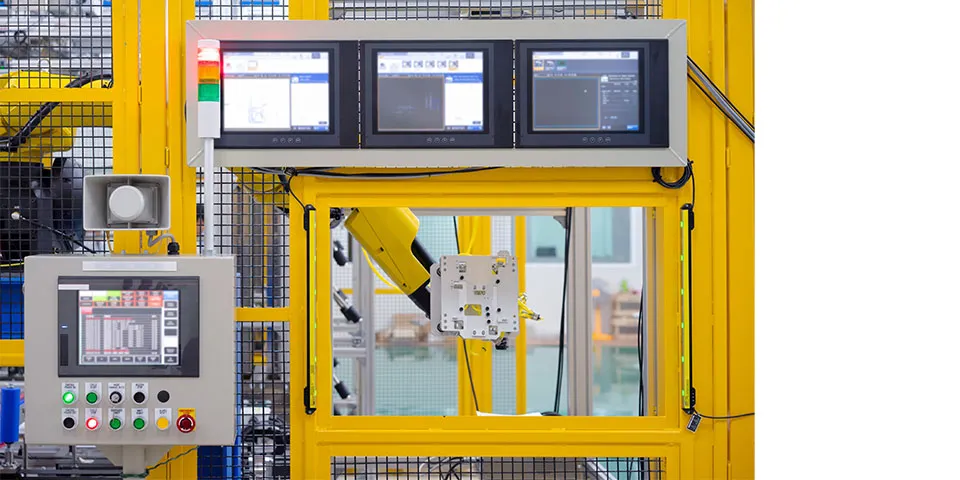
Depending on the risk analysis and the quality of the fault-control measures applied, the decision-maker can extend the period before shutdown to a maximum of one week.
Activating alternative safety mechanisms
Another principle is based on the idea that, in the event of a fault, a decision-maker activates alternative supplementary safety mechanisms. For example, when monitoring safely limited speeds in a drive system (SLS in accordance with EN 61800-5-2), the decision-maker could respond to a fault by allowing operation only at a reduced speed. Limiting the speed reduces the required risk-reduction level from PL d to PL c. Practical applications can also be found in driverless transport systems (FTS), where route monitoring is achieved by sizing the laser scanner’s protective field according to speed.
In line with the standards’ objectives
What is still a future prospect in mechanical engineering is already state of the art in many areas of the process industry. The authors of the white paper published by ZVEI conclude that the assessment of the measures described is consistent with the protective objectives of the Machinery Directive and does not conflict with the harmonised standards EN ISO 13849 and EN 62061. Acceptance and adoption will depend on whether the possibility of degraded operation can be measured and documented, or whether other factors, such as the increasing interconnection of IT and automation components, put plant availability at risk.
Based on a ZVEI white paper produced in cooperation with Beckhoff Automation, BGHM, Euchner, Festo, IFA, ifm electronic, Leuze electronic, Pilz, Phoenix Contact, Schmersal, Sick, Wago Kontakttechnik
Question about this story? Ask your question
Companies in this story




Keep following this
Get an email when a new story is published. No account needed.
- ThemeSafe and resilient installations
- SubjectControl & network
- CompanyBeckhoff Automation
- CompanyEUCHNER
- CompanyFesto
- CompanySchmersal