Condition monitoring is key to smarter maintenance planning
Text Valérie CouplezImage E-T-A
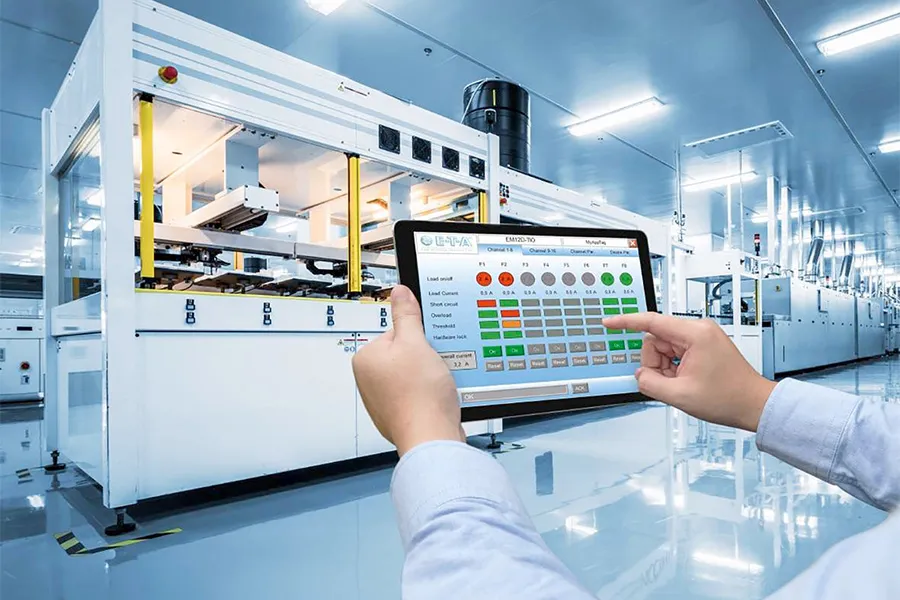
Industrialisation began with the invention of the steam engine. Many years later, we find ourselves in the midst of the fourth industrial revolution. Machines are now intelligent and connected to one another. Data are captured, processed and evaluated in real time using artificial intelligence.
A central task in an Industry 4.0 environment is to further increase machine availability and output through digital solutions. Collecting, storing and evaluating data from different machines and systems, as well as building digital twins, are prerequisites for comprehensive maintenance strategies. Data are the raw material of the future. An optimised maintenance strategy based on the health of your installations calls for continuous monitoring, also known as condition monitoring. REX system, the intelligent, communicative solution for protection and power distribution, helps collect targeted data across the entire 24 V range, the heart of every automation solution.
What maintenance strategies are available?
Broadly speaking, maintenance can be divided into two approaches: reactive maintenance, when a failure occurs, and planned maintenance. At first glance, plan A seems the easiest and cheapest option. But anyone who considers the full picture will see that unplanned downtime quickly leads to higher costs. Machines remain out of service for longer, it takes longer to find the cause, and the current bottleneck in the spare-parts market also plays a part. It is therefore better to plan maintenance in advance, and there are several options. Preventive maintenance is based on empirical values and predetermined intervals. Condition-based maintenance uses measurements to determine and monitor the health of the machine. If the measured values deviate, an alarm is triggered. Predictive maintenance, finally, combines both approaches. Using a range of data and empirical values, artificial intelligence predicts which components will fail and when. The result is a highly precise plan
of maintenance tasks.
Condition monitoring and its benefits
In industry, machines are often maintained preventively to minimise downtime. Wear-prone parts are replaced at predetermined intervals. However, this is not the most efficient use of components, making it a relatively costly operation. Operators are therefore increasingly opting for other approaches to keep their maintenance costs under control. Condition monitoring technology continuously monitors the state of the machine and provides data relevant to maintenance planning by determining the actual degree of wear. This makes it possible to replace components before they reach the end of their service life, while also reducing maintenance costs. Intelligent condition monitoring offers a number of additional benefits. Improved process stability increases machine availability and therefore output. The key is to detect anomalies and wear early enough to sustainably optimise all maintenance tasks.
Digital protection with condition monitoring
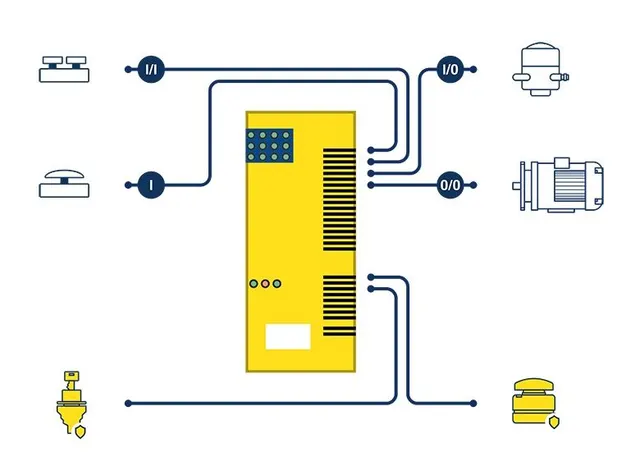
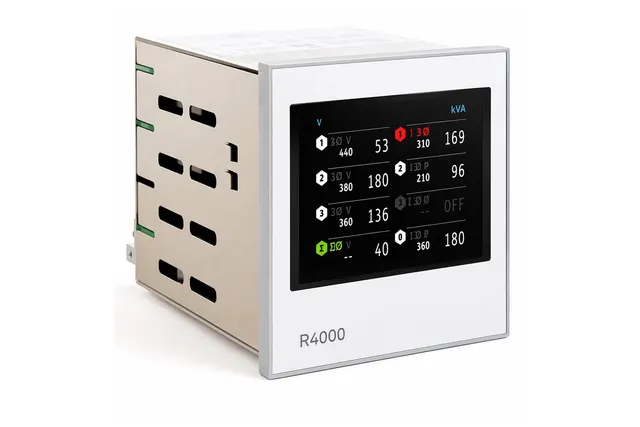
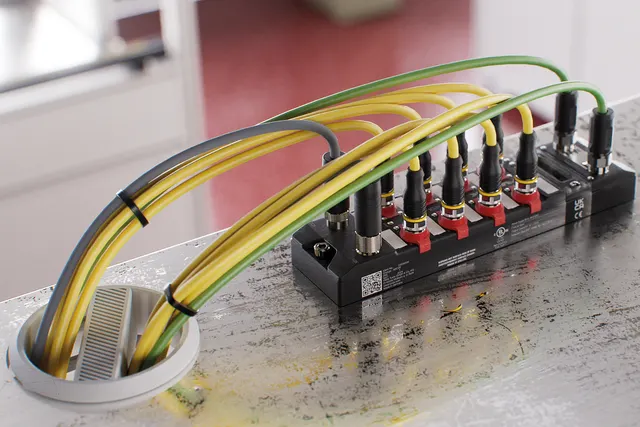
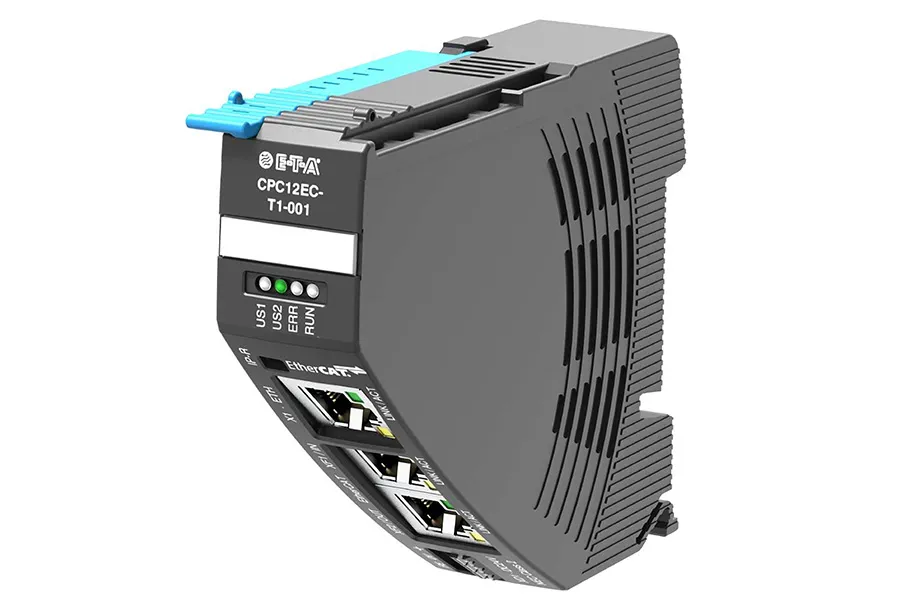
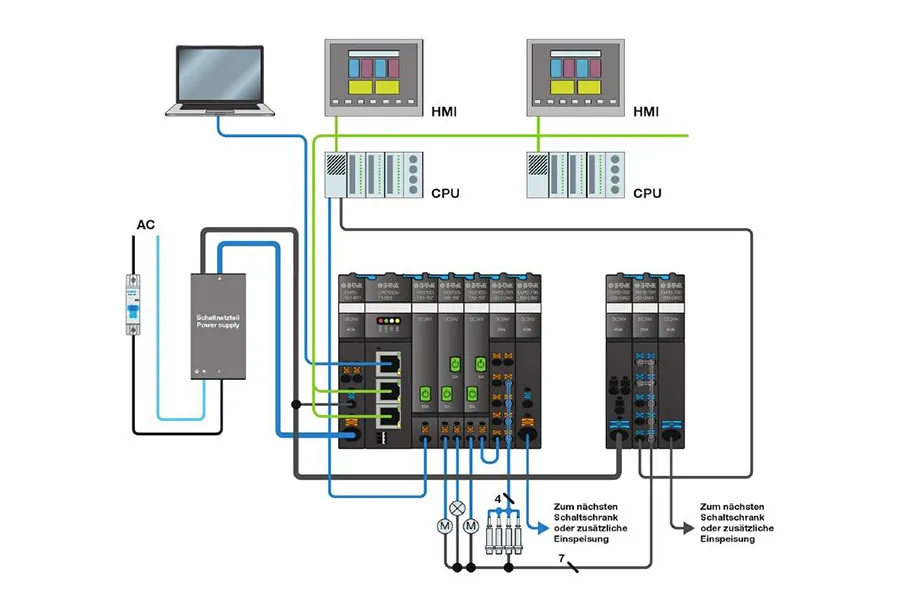
For a digital connection to the higher-level control system, machine operators rely on fieldbus solutions. These include Profinet, EtherCAT, Ethernet-IP and Modbus-TCP, while fieldbus-independent IO-Link communication is also becoming increasingly common. The REX system provides the foundation for smart maintenance planning. The 24 V condition monitoring solution combines selective overload protection, compact power distribution for load circuits, and the transmission of measurement data via the Control®Plex controller. These controllers support all conventional communication protocols and can send a wide range of diagnostic information for the entire 24 V range to the higher-level system. This includes information on input voltage, load current, load voltage and threshold values, as well as various settings, such as warning thresholds for operating load, expressed as a percentage. The measured values and continuous transparency lay the foundations for a condition-based maintenance plan. The values measured during system start-up form the basis for the target and warning thresholds. The current values derived from these are compared with the baseline measurements. If there is a deviation, an error message is displayed. Add an intelligent algorithm (artificial intelligence) and the operator’s knowledge and experience, and you have everything you need to move towards predictive maintenance. ■
Een zakelijke vraag aan E-T-A Benelux NV? Get in touch
Companies in this story

Keep following this
Get an email when a new story is published. No account needed.
- ThemeData from shop floor to decision
- SubjectControl & network
- CompanyE-T-A Benelux NV