Automation and flexibility go hand in hand in new weaving machines
Text Valérie CouplezImage Vintiv
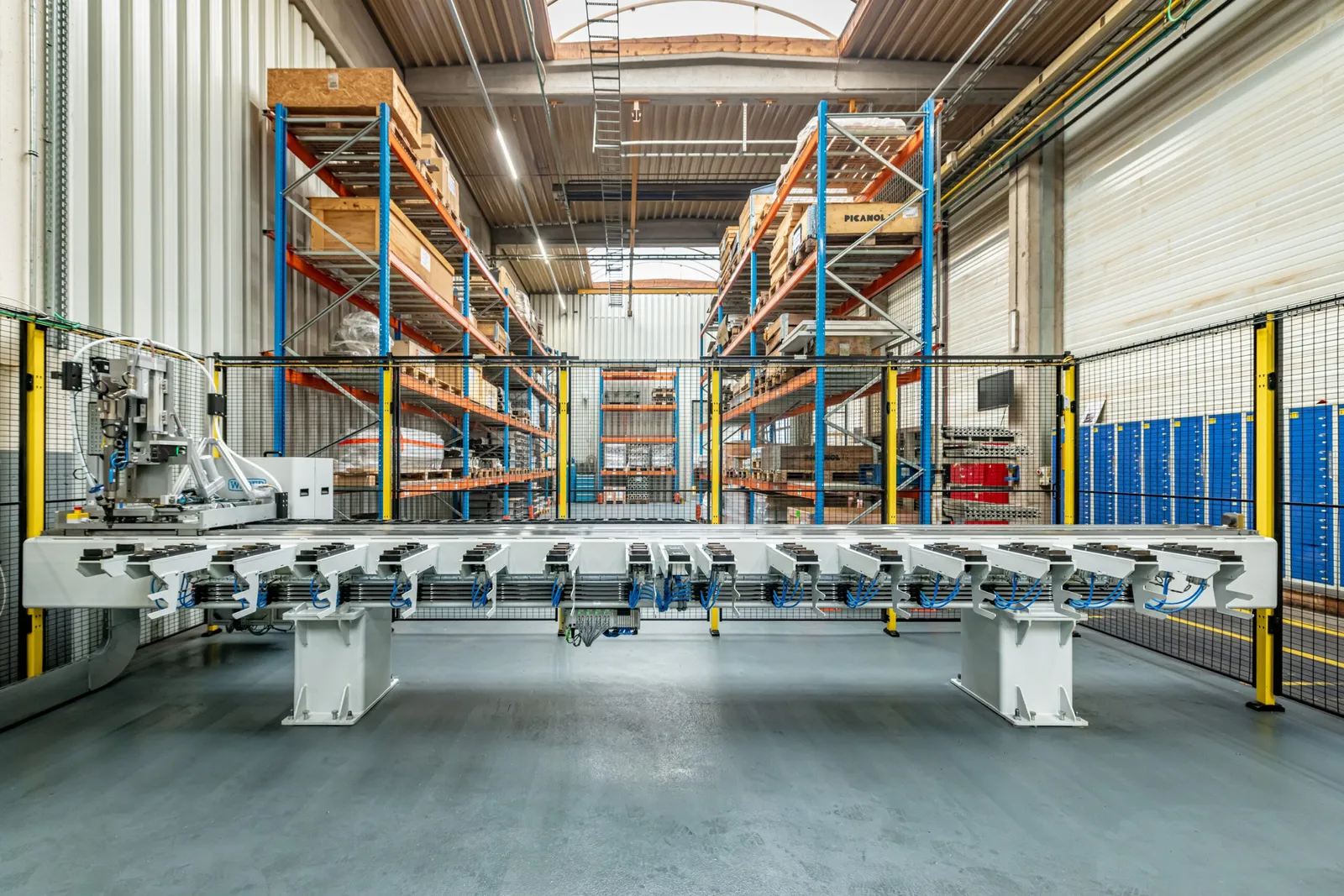
Weaving machines are high-tech, and so is their production. Picanol recently invested in a bespoke machine to automate the fitting of screws in reed holders. Designed by Vintiv, the investment boosts capacity and quality.
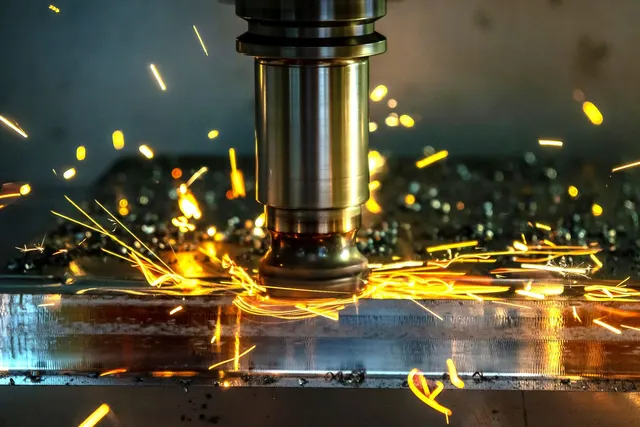
A weaving reed is a metal comb that keeps the warp threads evenly spaced. It also presses the weft threads against the edge of the fabric. Reed holders of different sizes are needed to keep each reed in place. To make these holders, holes are first milled to accommodate special screws. This is a time-consuming task, which either meant stopping the machine or assigning an extra operator. Picanol wanted to automate the process so that one operator could run the milling machine and screw in the screws. The automation also had to shorten cycle time to 20 seconds per screw and ensure consistent quality.
Wide variation in reed-holder designs
Vintiv was more than happy to take on the challenge. This kind of bespoke machine-building is right up the team’s street in Beringen and Waregem. The challenge was to build an installation that could handle the three current reed-holder variants, with between 16 and 61 screws, while also allowing for new types in the future. Reed holders range from 1,900 to 5,400 millimetres in length. Since the milling machine processes two reed holders at a time, the new machine had to do the same. It also had to ensure quality: the position, accurate to 0.1 millimetres, and the tightening torque of 25 Nm had to be guaranteed for each type of reed holder.
Two pairs of watchful eyes
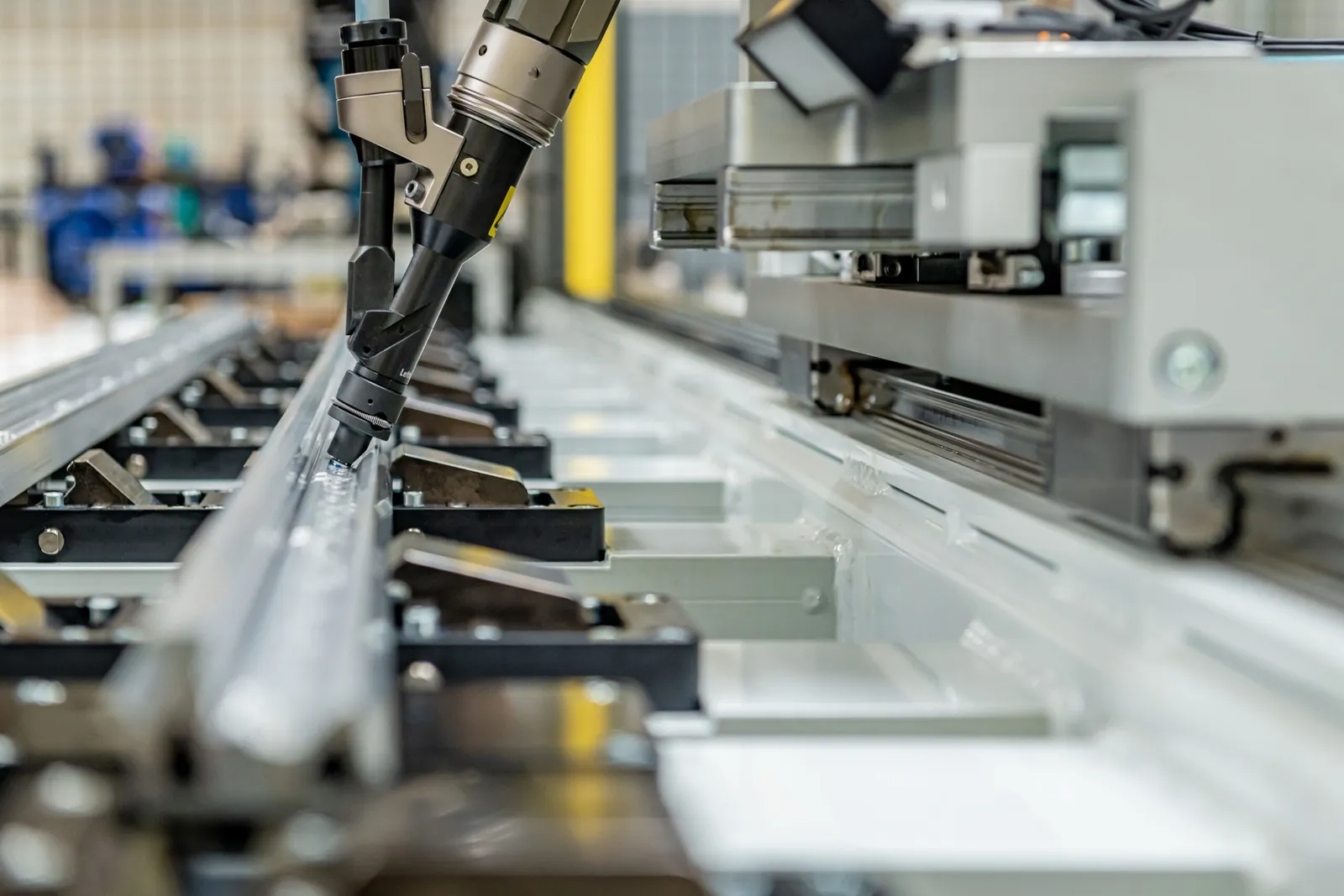
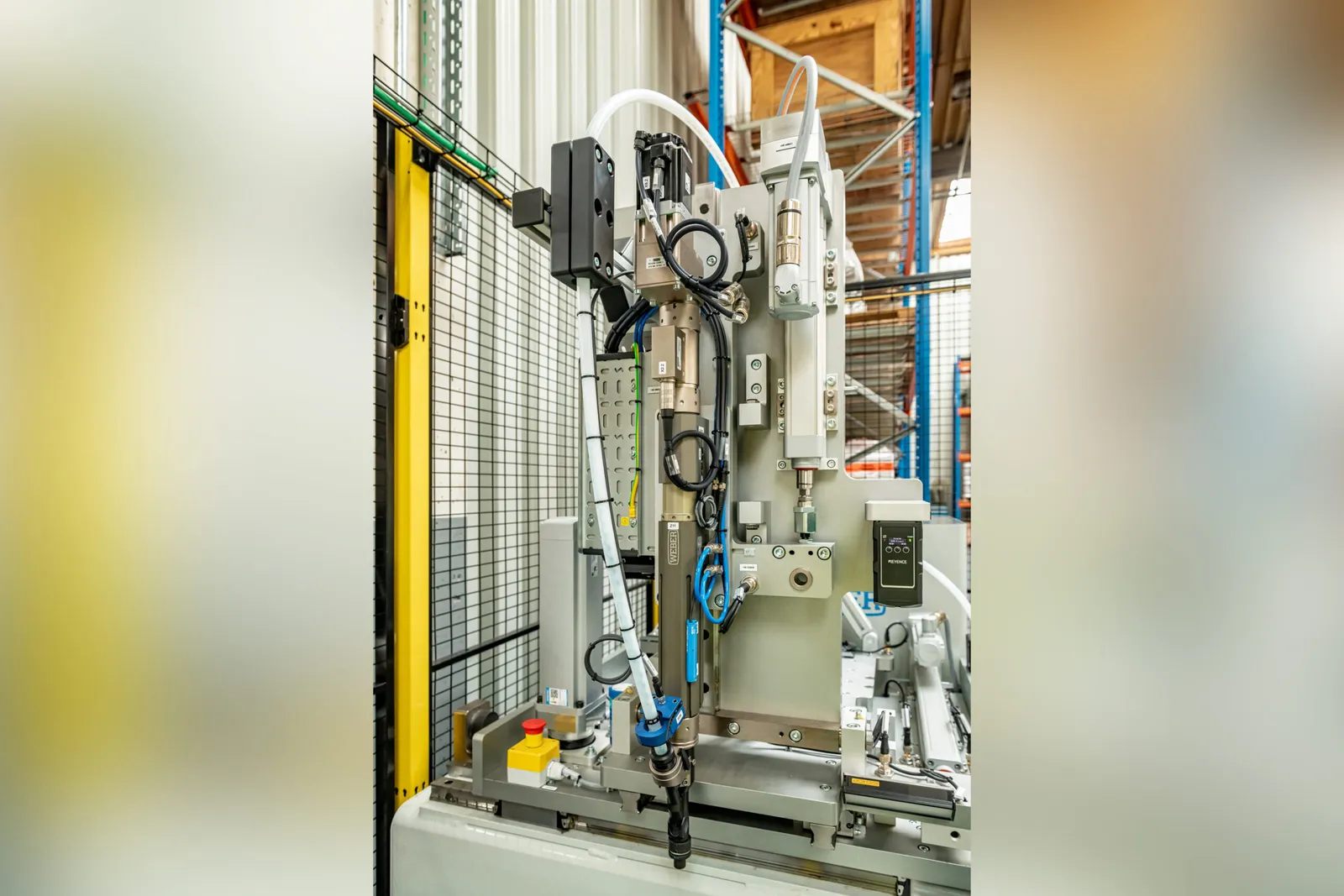
The result is a machine that requires the operator only to load the reed holders manually in pairs and select the correct type on screen. For holders shorter than 2.5 metres, the operator can load four at a time. The operator positions the holders against a mechanical stop. Since screw positioning requires absolute precision, Vintiv integrated a vision system for checking. First, a Keyence camera checks that the type selected by the operator matches the holder on the machine. It checks the unique visual features on the edge of the holder using an AI algorithm. If there is a mismatch, the operator is called back. If everything is correct, the reed holders are clamped pneumatically and the camera checks their exact position before screwing. The machine compensates where necessary.
Moving screw head
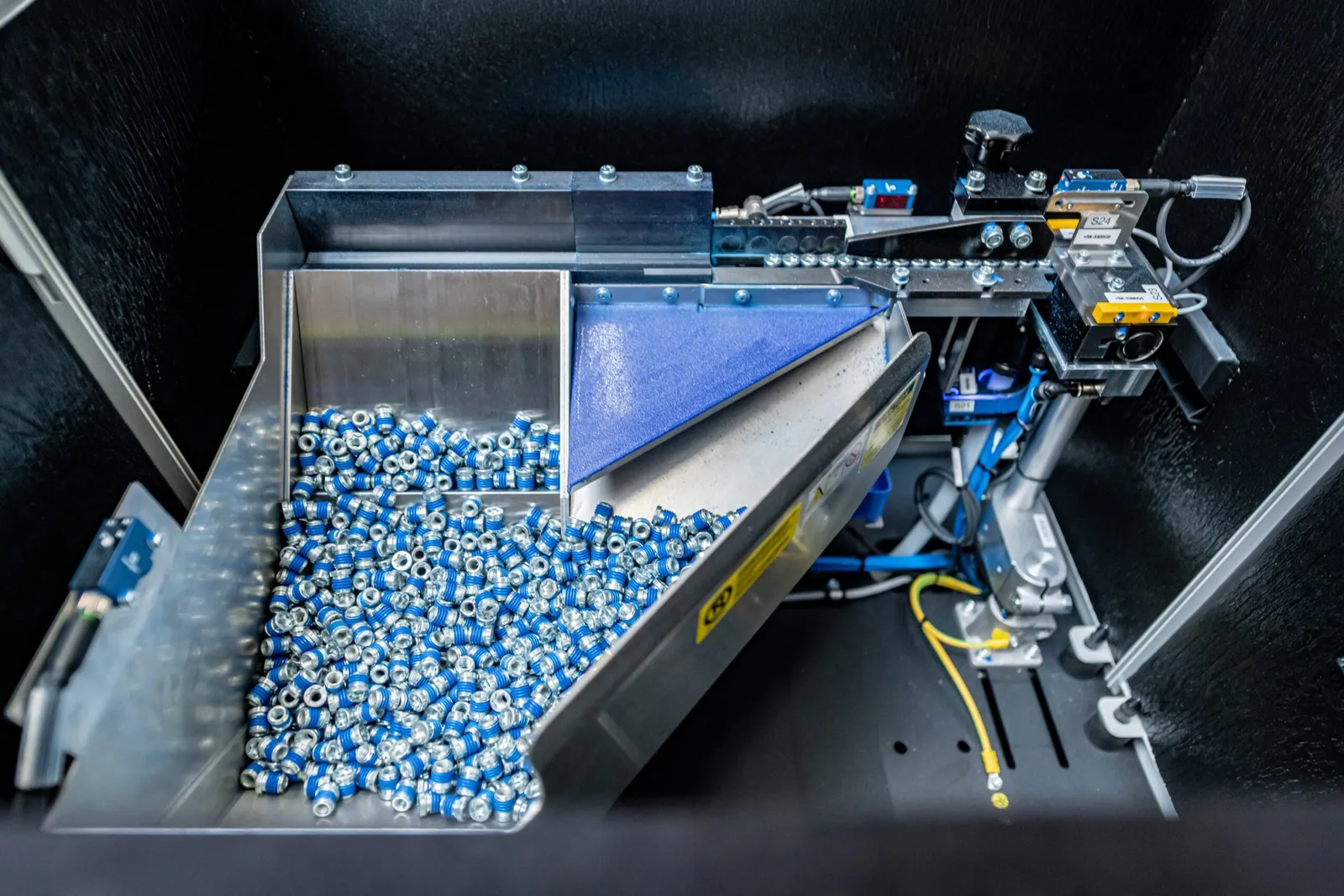
Time to tighten the screws, both literally and figuratively. The screwdriving system, supplied by specialist Weber, consists of an automatic screwdriving head with integrated depth measurement and tightening-torque monitoring, plus a step feeder that delivers the coated screws without damaging them and always in the correct orientation. To keep the installation’s footprint to a minimum, with the final length coming in at 6.6 metres, the team opted for a carriage carrying the screwdriving machine that moves along the full length of the reed holders. The final step is to set the screw head at the correct angle. Although there are only two different positions at present, which could easily have been managed pneumatically, Vintiv chose a servo spindle to accommodate future variants.
Vintage Vintiv
The result is a robust, flexible screwdriving machine that can adapt like a chameleon to future updates or modifications to the reed holders. It is safe to operate, accurate and easy to use, ready to meet higher production demands, and ensures quality throughout the screwdriving process. In short, vintage Vintiv, and a very satisfied customer.
Een zakelijke vraag aan VINTIV? Get in touch
Companies in this story

Keep following this
Get an email when a new story is published. No account needed.
- SubjectControl & network
- CompanyVINTIV