Automating cableway containers with Sigmatek’s control solution
Text Andreas LeuImage SigmaControl
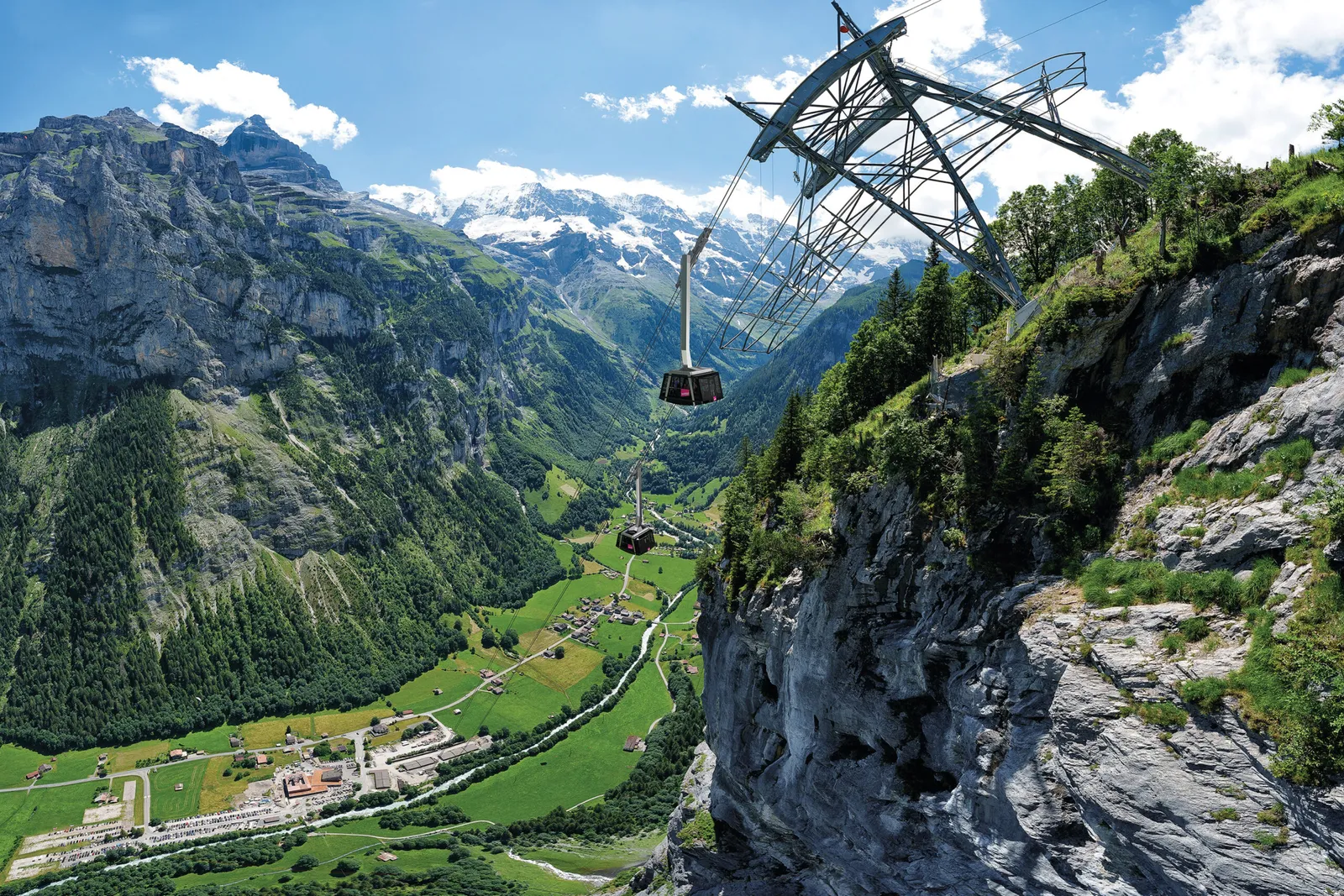
The new cableway, the steepest in the world, can transport up to 800 people an hour from Stechelberg station to Mürren. It is not only tourists who need to be transported to the village, but also luggage. To ensure this transport runs smoothly, containers can be attached directly beneath the cableway cabins. Automation company Bürki Electric is responsible for the solution used to carry out this attachment process. One component of the concept is the handy control panel from Sigmatek.
At 2970 metres above sea level, the Schilthorn in the Bernese Oberland, with its popular panoramic restaurant Piz Gloria, is a must-see for tourists from Switzerland and abroad. In perfect weather, with clear skies, you can enjoy the Alpine scenery over lunch or dinner, particularly the majestic views of the Eiger, Mönch and Jungfrau.
Food and drink must be transported to the summit to serve guests. Foreign tourists in particular also bring luggage for overnight stays in the car-free town of Mürren. This transport is carried out using specially designed containers attached to the cableway cabins to Mürren. The catering supplies are then transferred to two Funifor cableways and transported via Birg station to the summit.
The world’s steepest cableway
As part of the ‘Schilthornbahn 20XX’ project, the new Stechelberg-Mürren cableway link entered service in December 2024. This section is home to the world’s steepest cableway, with a maximum gradient of 159.4%. In less than four minutes, the cableway climbs 775 metres over a distance of 1194 metres.
The project required freight logistics, for which Derap AG was responsible. The company commissioned Bürki Electric AG, based in Steffisburg and a system partner of Sigmatek Switzerland, to design and implement the automated solution. Bürki Electric handled the entire technical process, from planning and drawing up the schematics to building the control cabinets, programming and commissioning.
Docking containers safely and easily
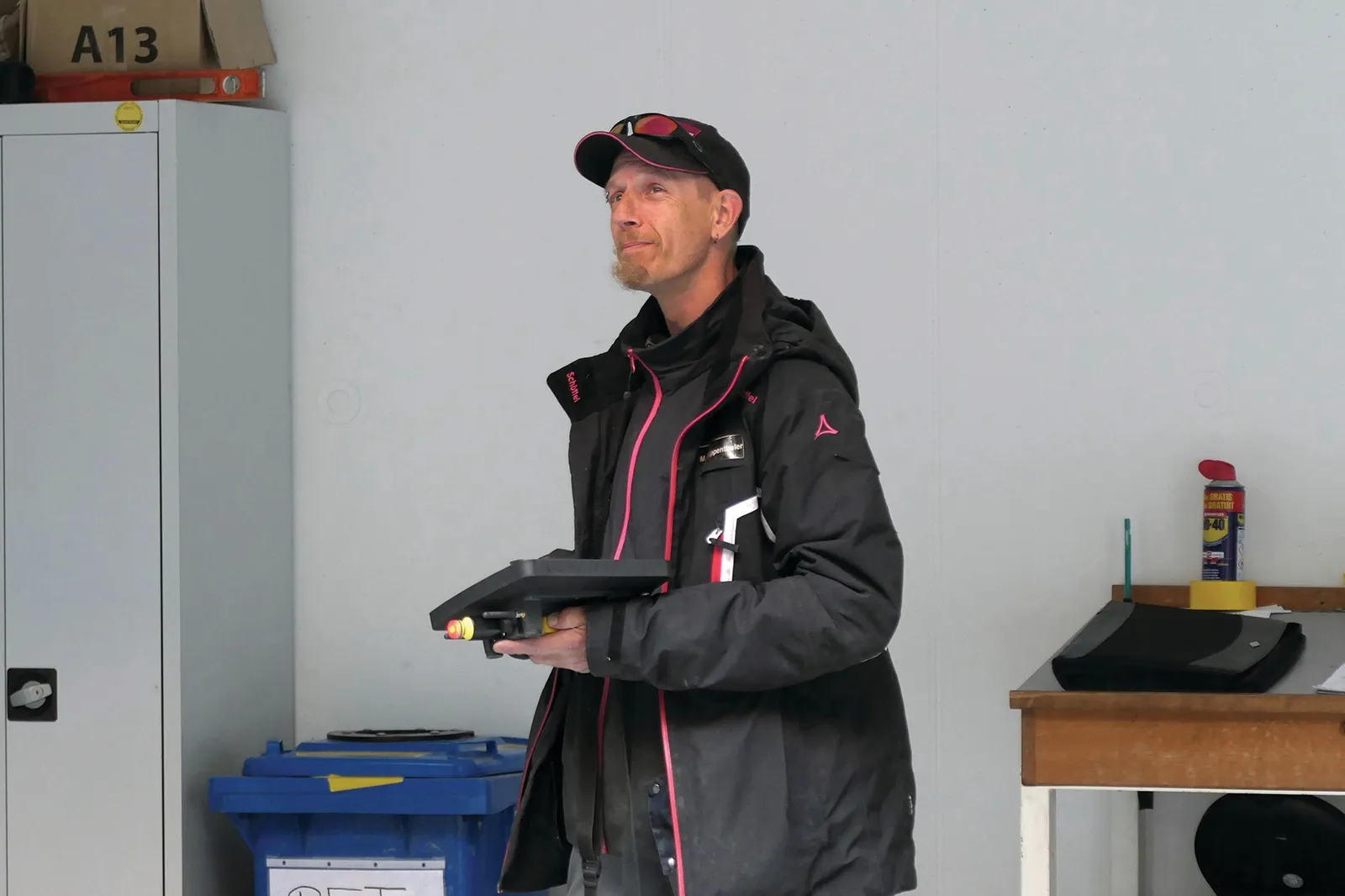
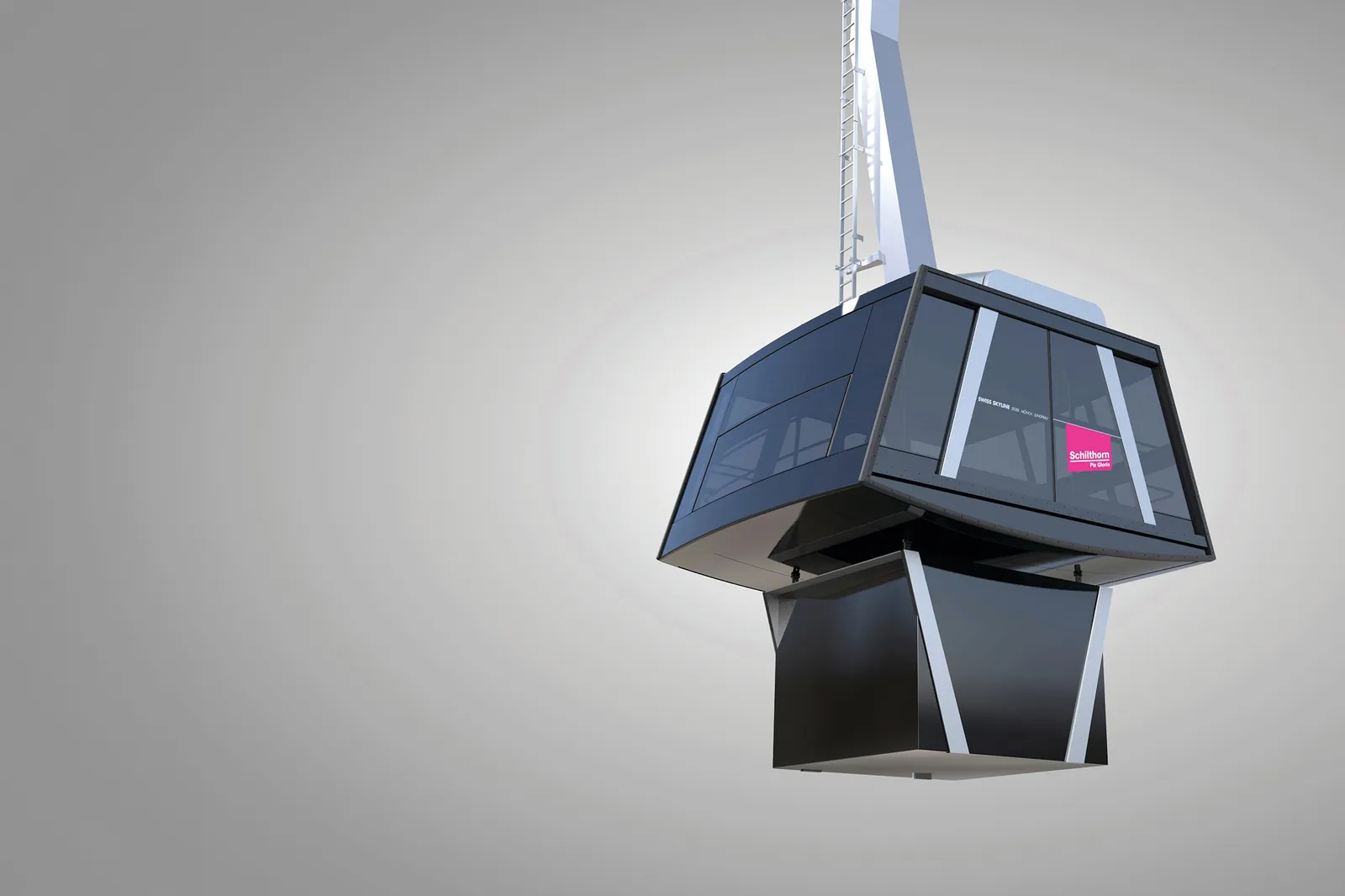
“A container for Schilthornbahn weighs about 950 kilos and can carry up to 2500 kilos of goods,” explains Marcel Duppenthaler of Schilthornbahn. “The containers usually arrive already weighed and labelled. Our own scales ensure that the maximum weight is not exceeded. The entire process of loading and docking a container takes just a few minutes, which meets our requirements perfectly.”
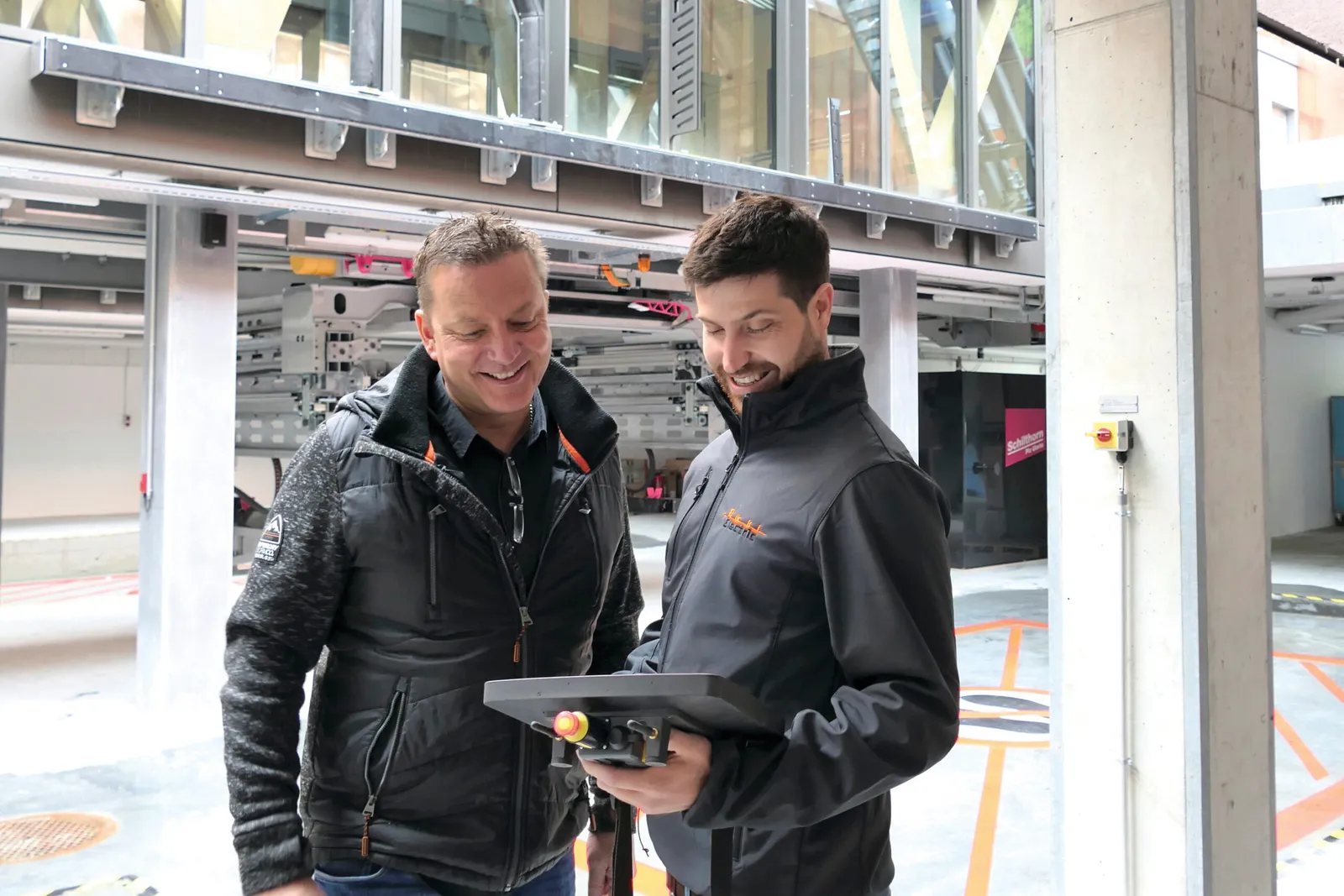
How does the process of attaching a container to the cabin work? Marcel Pecka, project manager at Bürki Electric, explains: “The automation uses a Siemens control system, as this is where we have the most expertise. Logistics staff use the mobile control panel from Sigmatek to operate the process safely. The panel’s main advantage is that it incorporates all the necessary safety functions and is connected to the control system via WLAN. This allows the operator to move freely in the space beneath the cabin and control the processes.”
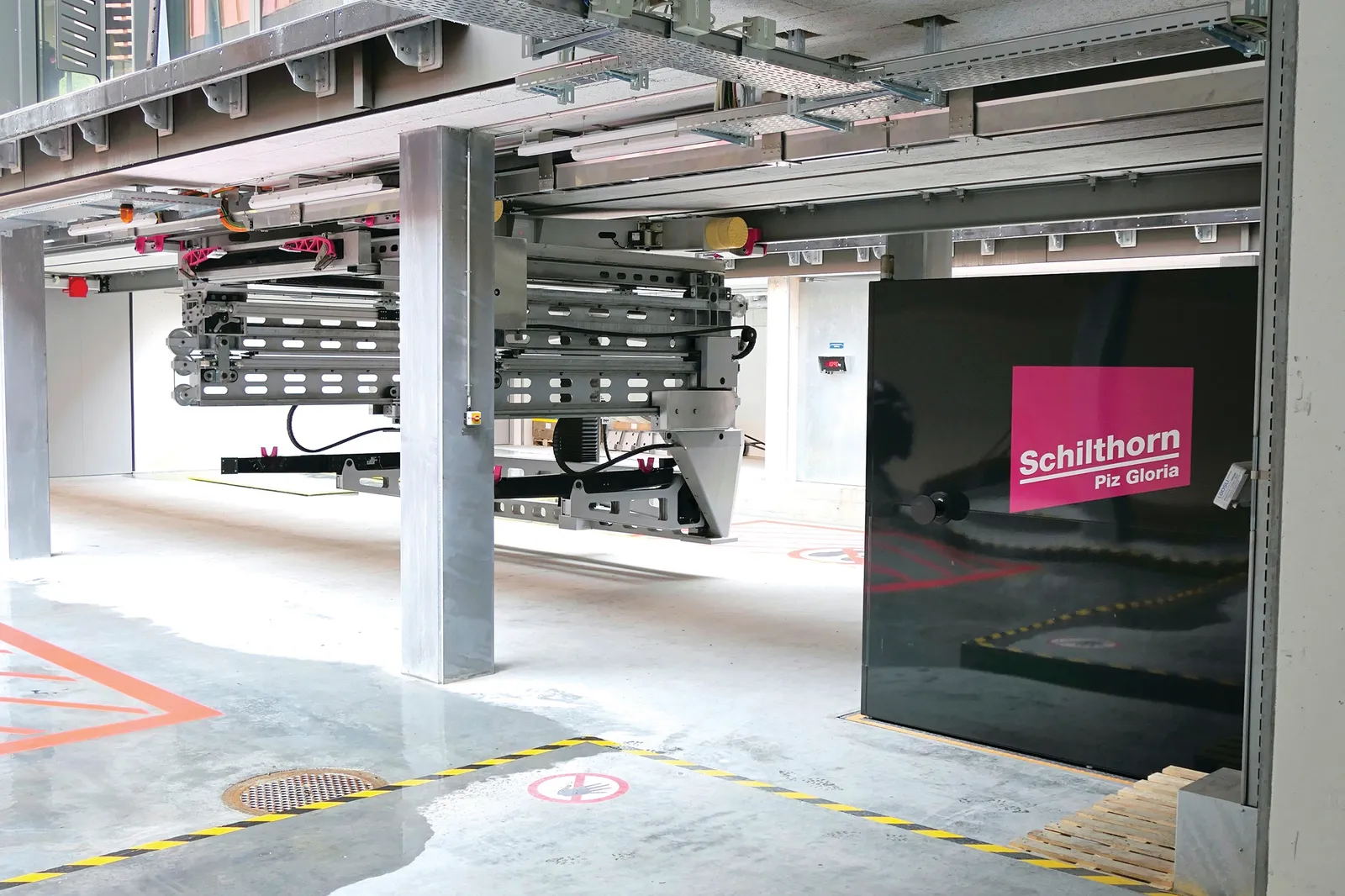
A total of seven servo axes are installed in the robust mechanical coupling system: one for the lifting movement, one for rotating the container and a drive for longitudinal movement, two axes for extending the telescope beneath the cabin, and the final two for longitudinal fine adjustment and the clamping jaws that centre the cabin. They all move point to point, except for the telescopic drives, which are synchronised with one another for linear movements. Electric cylinders are installed to couple the container to the cabin.
Safe and convenient operation of the process
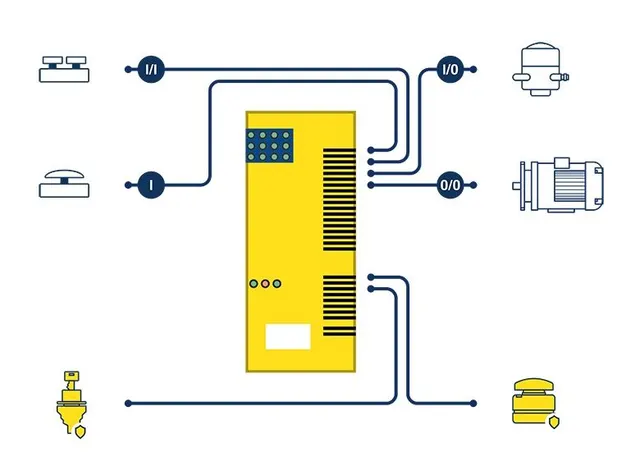
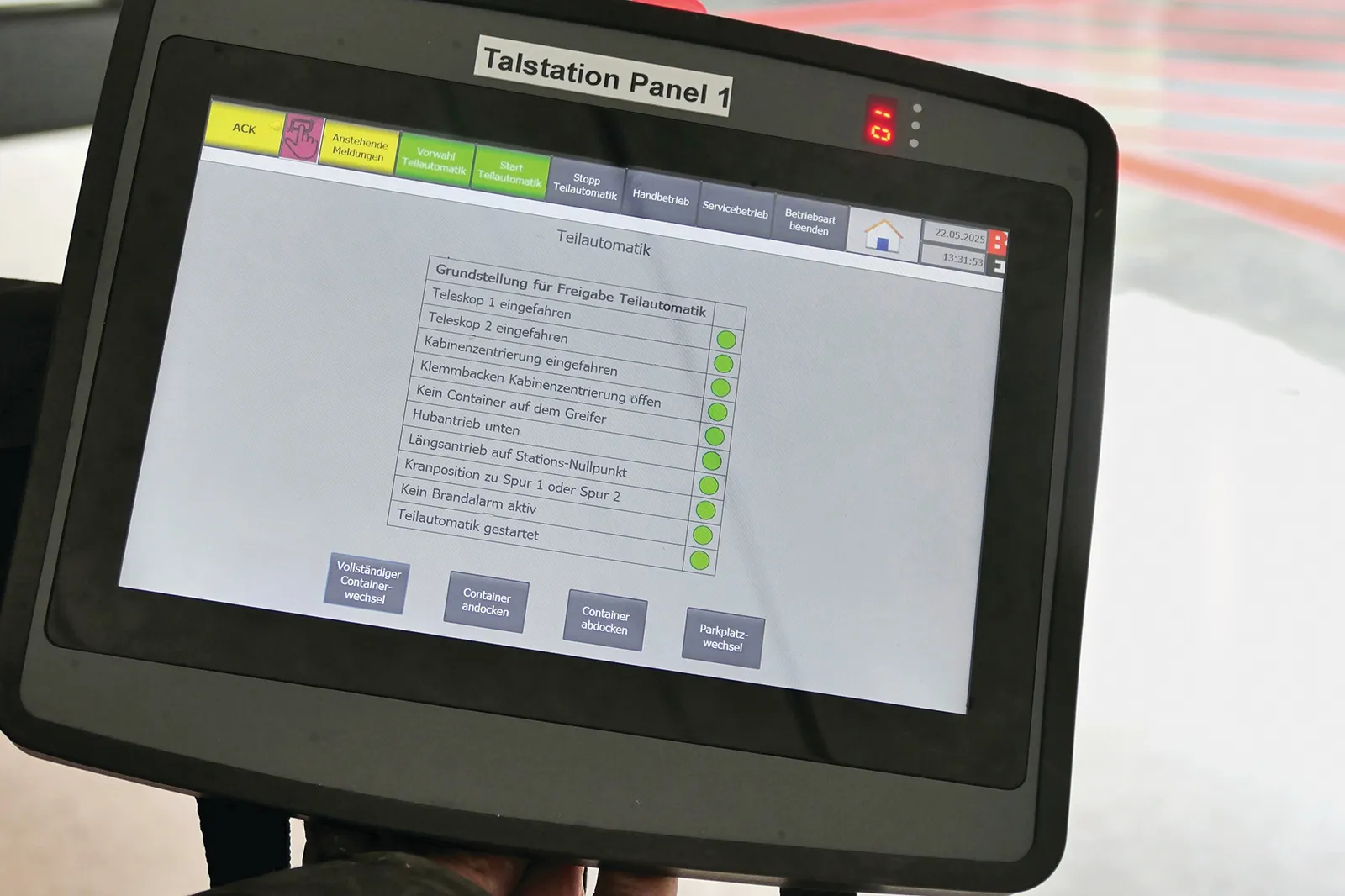
“The entire container attachment process is controlled semi-automatically via Sigmatek’s handheld control panel,” explains Pecka. The panel has all the necessary safety components and functions, including an emergency stop, an enabling switch and a key switch. For safety reasons, operational staff can only carry out individual process steps while the enabling switch is pressed. The key switch is used to activate service mode, in which all axes can be moved individually in jog mode or moved to the absolute position entered.”
To connect the wireless panel to the higher-level control system, Bürki Electric installed Sigmatek SRO 021 safety relay output cards in the control cabinet and connected them to the PLC via two channels. For visualisation, the mobile control unit is connected to the local panel via VNC (Virtual Network Computing). Sigmatek provides a ready-made software module for this. “There were initially some issues with entering the parameters for this connection, though,” recalls Pecka. “Together with its parent company, Sigmatek Switzerland gave us prompt, straightforward support. The keyboard template was adapted to the specific application, making it easy to enter the inputs. The entire system has worked flawlessly ever since.”
Mobile safety panel practically unrivalled
“Naturally, we would have loved to equip the entire system with our automation solution, particularly as we also offer all the components, including the control system, visualisation and drives. But those are the specifications,” says Stephan Mack, responsible for sales in central and western Switzerland at Sigmatek. “With this project, we are demonstrating that we can also support applications like this and ensure the system runs flawlessly. This is particularly important for safety-critical projects such as this cableway on the Schilthorn. Our mobile WLAN control panels often act as a real ‘door opener’ with new customers. Thanks to their exceptional value for money, there is hardly a comparable alternative on the market.”
Question about this story? Ask your question
Keep following this
Get an email when a new story is published. No account needed.
- ThemeFrom design to flexible machine
- SubjectControl & network