A smart, seamless I/O upgrade
Text Valérie CouplezImage Beckhoff Automation
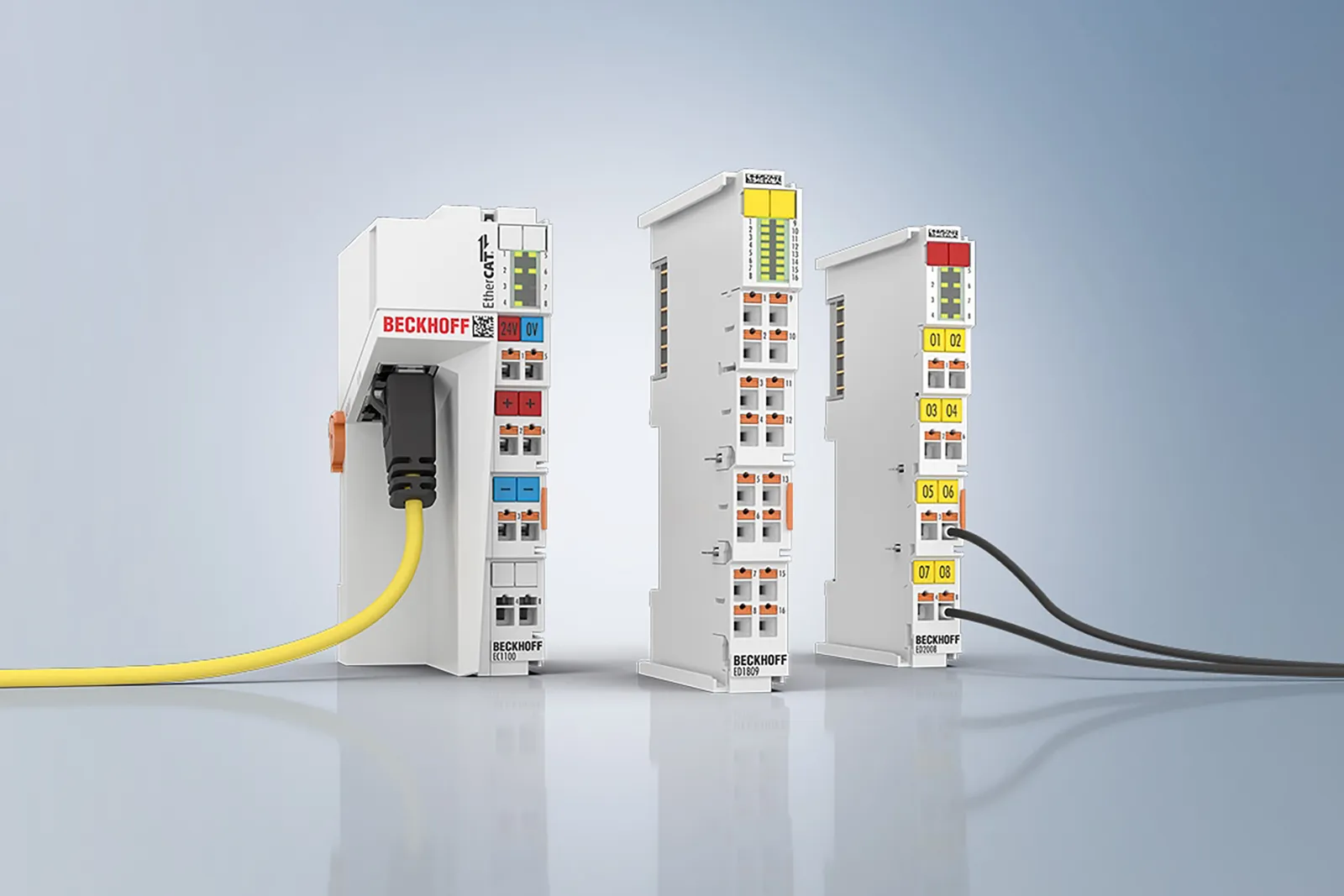
Users have been benefiting from the outstanding performance, modular scalability and ease of use of Beckhoff’s EtherCAT terminals since 2003. The ED series now brings a technological upgrade to the entire portfolio while remaining fully compatible with the existing series. Account manager Vincent Gielis explains why this successor to the highly regarded EL series is a no-brainer.
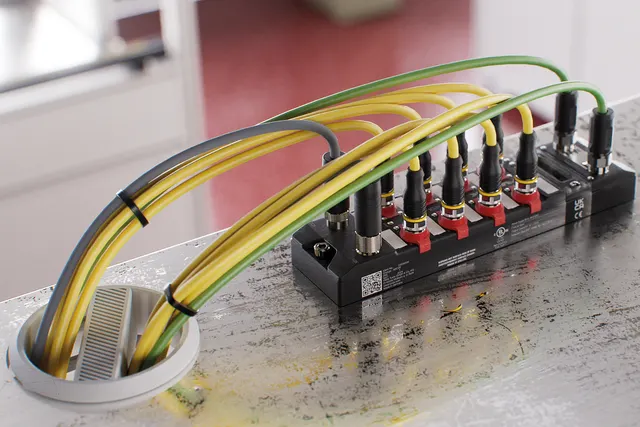
The new EtherCAT terminals in the ED series feature a modernised design, tool-free installation via push-in connections and app-based diagnostics via Bluetooth. This systematic further development of the I/O system for control cabinets makes signal acquisition more efficient and, like the original bus and EtherCAT terminals, is designed to set a standard for the future. Gielis says: “The ED series is essentially the successor to the EL series. Not that the EL series necessarily needs replacing; it is a trusted, proven automation component for many machine builders. But as technology has evolved, there have been opportunities to improve the terminals and, above all, make them even easier for customers to use.”
Save 40% of the time
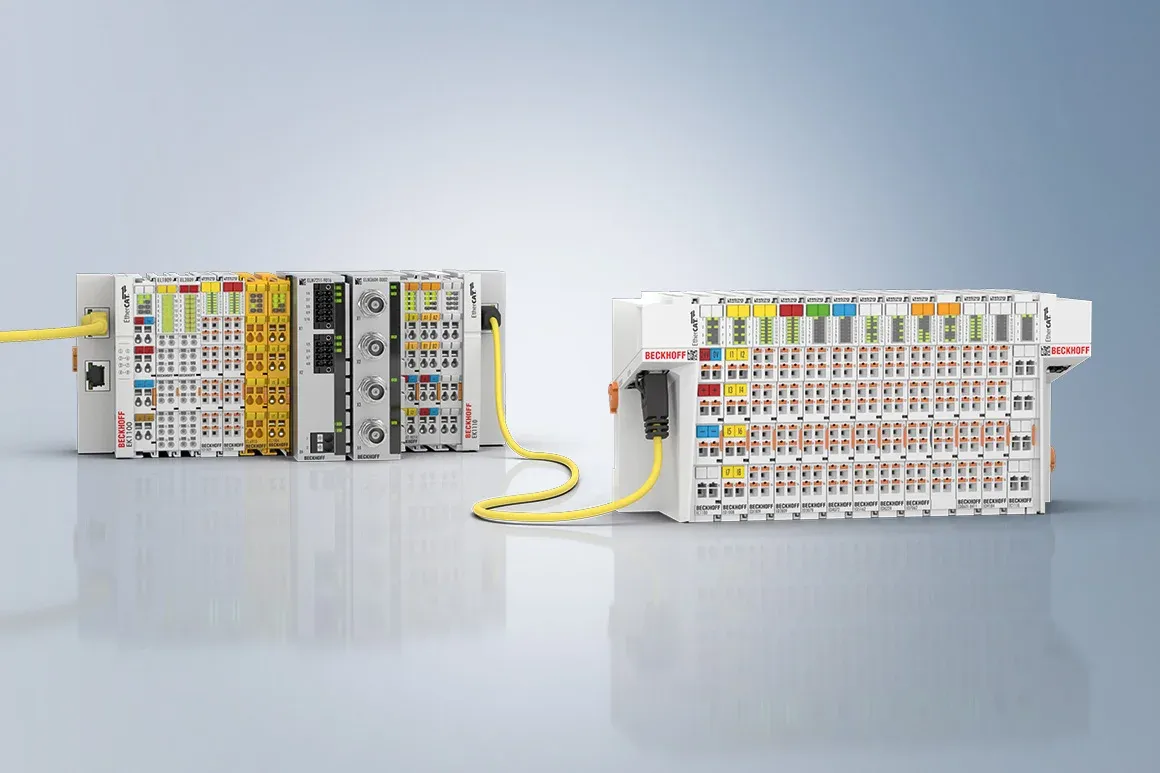
Gielis immediately highlights one of the main changes: the connection technology. “The ED series uses push-in contacts, so no tools are needed to connect the terminals. The electronics have also been made more compact. The new LEDs, for example, are smaller, creating more space. This means the contacts are spaced further apart, making them easier to work with.” These simplifications speed up installation, commissioning and maintenance. “Tests have shown that users can save up to 40% of their time,” says Gielis, calculating the tangible benefit for machine builders. But despite these improvements, the ED series fits in the same way as its predecessor. “Innovation shouldn’t mean making customers do the same. You can use the two series interchangeably, or switch to the new series, without having to change existing configurations or diagrams.”
Diagnostic capabilities
Customers also get additional functionality in return. “Each terminal has a unique identifier in the form of a DMC code. Think of it as a QR code that is easy to scan. This makes simple traceability possible for quality assurance and spare parts management.” The code also provides a second benefit. “The ED series has been designed to connect to the Beckhoff Diagnose app. This can be done using a terminal that acts as a Bluetooth dongle. Once you have connected the ED module to the app via Bluetooth, all you have to do is scan the DMC code to immediately see basic diagnostic data: the communication status, whether the terminal is still powered, live monitoring of the inputs and outputs … In other words, you can check whether things are happening as expected.”
No more expensive
So what sort of price premium comes with all this extra functionality? “None,” says Gielis firmly. “Depending on the type you choose, the new terminals will cost the same as the EL series or less. All in all, these new IP20 EtherCAT terminals therefore reduce system costs without compromising on functionality or performance. Machine builders do not need to update their existing machines, but can benefit from greater ease of use and more diagnostic capabilities on new ones.” At present, not every product in the portfolio has a direct ED-series replacement. “Development and certification take a long time. There will certainly be more in the future,” Gielis assures us.

Een zakelijke vraag aan Beckhoff Automation? Get in touch
Companies in this story

Keep following this
Get an email when a new story is published. No account needed.
- ThemeFrom design to flexible machine
- SubjectControl & network
- CompanyBeckhoff Automation