Software, IT, OT & cybersecurity
Dymo: from Excel to real time, how a Factory of the Future is preparing for AI on the shopfloor
Texte & photos Devoteam
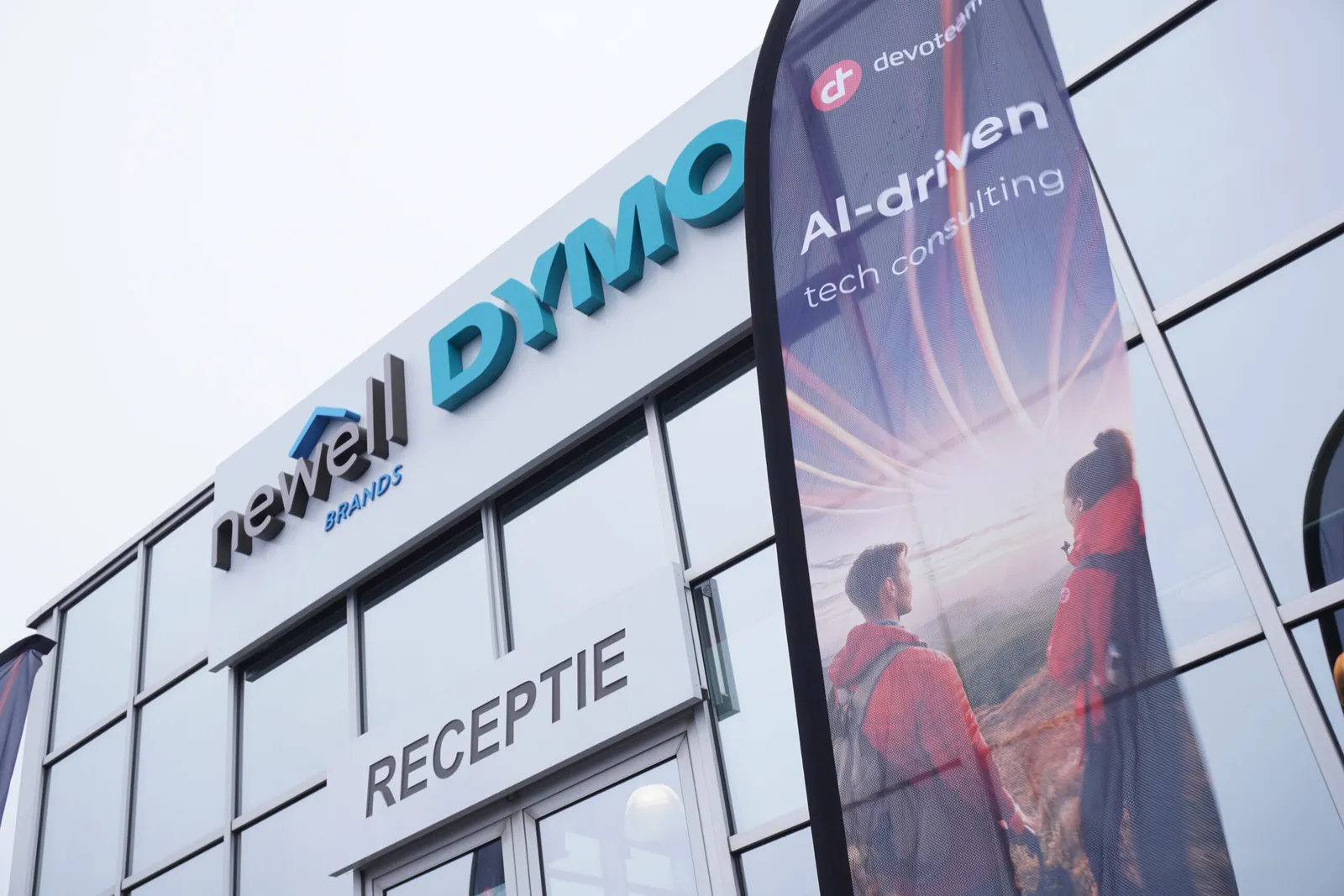
At Saint-Nicolas, the Dymo plant has been running highly automated production lines for years. Yet until recently, part of its day-to-day management still relied on very "traditional" habits: paper forms, Excel files, reminders by e-mail, manual approvals, and information passed from one department to another.
This gap is common in mature industrial sites. The machines are fast and the physical flows are under control, but information moves more slowly. As a result, decisions come too late, teams lose time on administrative tasks, and the same questions keep coming back because the data is scattered or unreliable.
For Dymo, the real issue was not to add yet another layer of technology. It was to treat data and the digitalisation of workflows as production infrastructure, on a par with a line, a process or a quality standard. It was in this context that the collaboration with Devoteam and Microsoft began, with Ometa providing connectivity and integration at shopfloor level.
Automated, but held back by information
Dymo, part of Newell Brands, is a globally recognised manufacturer of label printers and their consumables. Over twenty-five years, the Saint-Nicolas site has evolved into a highly automated and progressively digitalised plant. But the team ran into a paradox: the lines were automated, while the processes around them, namely planning, maintenance, quality, data entry and follow-up, still depended on fragmented media.
"Working with paper frustrated our operators," explains Niels Brack, Digital Innovation Manager at Dymo. "Now that paper has gone, the shopfloor looks and feels completely different."
Treating "invisible friction" as a genuine industrial problem
In a factory, losses are not always where you can see them. When information arrives after the fact, problems surface too late. Teams spend time searching, re-entering and checking data rather than improving.
Dymo reached a simple conclusion: staying competitive in a high-production-cost country means reducing this invisible friction. That starts with digitalising the real work, the work done during the shift, and building shared trust in the data.
It was on this basis that Devoteam was brought in, to modernise the operational backbone, connect the systems and build a data platform that teams can use every day.
The project gained momentum after a very concrete step. Dymo visited the Duracell site in Aarschot, also certified as a "Factory of the Future" and also supported by Devoteam in its transformation. The idea was not to copy a factory, but to check whether a comparable path was possible at Saint-Nicolas.
From paper to platform: building the foundation before moving too fast
The first stage targeted shopfloor workflows. Paper forms were replaced by digital ones, and what used to be on physical boards was turned into dashboards.
Integration then became the priority. With Ometa, the on-premises systems (including SAP), together with data from the warehouse, maintenance and quality, were integrated into Microsoft Azure. Devoteam structured the pipelines and governance so that Power BI would be not just a reporting tool but a daily decision-making point.
Dymo then began to integrate Microsoft Fabric in order to enable real-time data flows. The goal is clear: to shrink the gap between what happens on the line and the moment the plant sees it, understands it and can act on it.
"Building a data platform takes a solid foundation, just as when you build a house," explains Stéphane Scavée, Microsoft Data Tribe Lead at Devoteam. "You don't start with AI, you start by making the data usable."
Arnold De Ploey, Expert Director at Devoteam, sums up the impact on how data is used: "The days of sharing information via paper, Excel files or e-mails are over. Digitalised data is structured and immediately accessible. That means AI agents can already interpret reports. It is a major step forward."
From push to pull: production planning finally follows demand
One of the most visible changes is the shift from a "push" model to an automated "pull" model for production planning. Previously, orders were created manually, based on forecasts, historical data and experience. Now, orders can be generated automatically according to real-time global demand.
This is a technical change, but also a cultural one. Planning no longer rests on assumptions and partial trade-offs; it relies on shared facts, available at the moment they matter.
Steven Stokmans, spokesperson for Microsoft, comments: "The steps Dymo has taken are impressive. Building a solid data platform does not happen overnight. It is a privilege to see at first hand how a partner as important as Dymo is preparing for the future with our platforms."
People at the centre, the bridge to Industry 5.0
Industry 4.0 put IoT, robotics and connected systems at the heart of production. Industry 5.0 goes further, stressing collaboration between teams and systems that can assist, recommend and support decisions without taking control away from the shopfloor.
At Dymo, the change is measured in everyday work. Teams work with consistent information, at the same moment. Errors are falling. Engagement is rising because the technology removes irritants rather than adding them.
"Operators now base their decisions on facts and real-time information, not on instinct," explains Niels Brack. "There is no longer any room for misinterpretation, and the frustrations caused by paper have gone for good."
This is the underlying issue: human-centred digitalisation, in which data and AI strengthen people's role rather than replace it. In this context, applications such as predictive maintenance, AI assistants or automated recommendations stop being promises and become natural extensions of a well-built foundation.
Working with Devoteam
Devoteam is an AI-focused technology consultancy that helps manufacturers turn their operational data into reliable, actionable decisions, at the pace of the shopfloor. With more than 11,000 specialists across EMEA and expertise in cloud, data, cybersecurity and AI, its stated approach is pragmatic: adapting the solution to the industrial context rather than the other way round.
The method rests on a clear sequence: digitalise the real work, connect OT and IT to establish a secure and reliable data foundation, make shared KPIs visible as a "single source of truth", add real-time signals so that action can be taken during the shift, and only then introduce predictive and AI-assisted capabilities.
At Dymo, this translated into mapping the paper flows, setting up a cloud-ready backbone with Ometa, implementing governance and adopting live metrics as a common language. The result is not one more dashboard, but a factory that acts on the basis of data.
Question about this story? Ask your question
Keep following this
Get an email when a new story is published. No account needed.
- SubjectSoftware, IT, OT & cybersecurity