An engine for sustainable innovation and talent development
Texte : Valérie Couplez Photos : Siemens
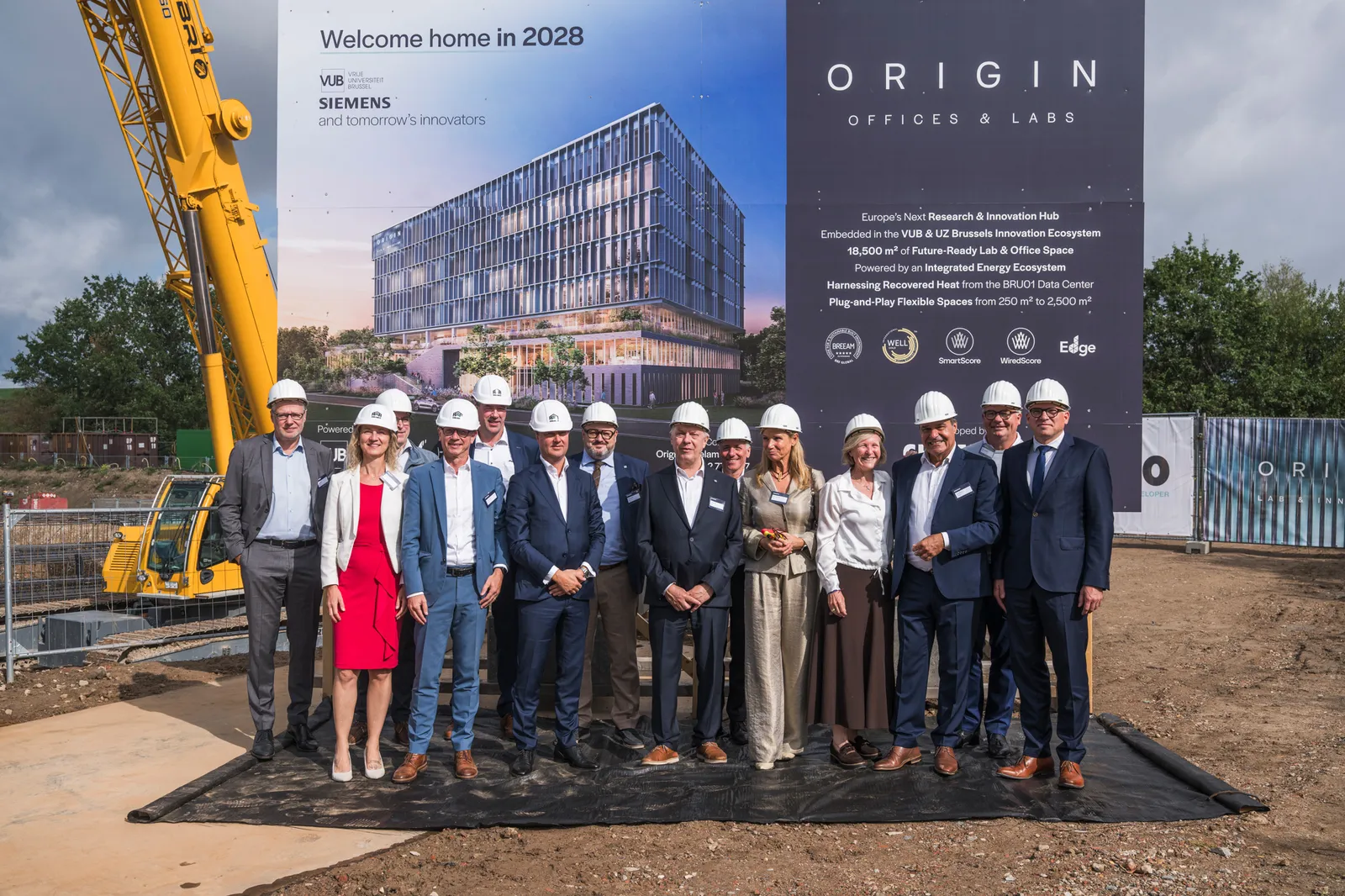
The new Belgian headquarters will become an innovation hub
On 1 September, construction of Origin, which will house Siemens from 2028, was officially launched. There was no ground-breaking and no foundation-stone ceremony: work is already ahead of schedule. Instead, a ribbon in the Belgian colours was cut. A strong symbolic gesture, since on the very day of its 128th anniversary in Belgium, Siemens reaffirmed its local roots. And with ambition: the new facilities are to become an innovation ecosystem where industry and society will work together to tackle tomorrow's challenges.
Origin marks a new stage in the transformation of the Researchpark Zellik into a leading innovation hub. "An environment where knowledge, technology and entrepreneurship meet. Where research does not remain isolated but leads to concrete applications, and where companies, research and educational institutions and public authorities jointly create the conditions for innovation. This is essential, because today's major challenges cannot be solved within the walls of a single organisation," said Elvira Haezendonck, professor of sustainable strategy at the Vrije Universiteit Brussel and chair of the non-profit association Green Energy Park, in her opening address. The organisation aims to make the Researchpark Zellik the gateway to knowledge in the west of Brussels, serving innovation in healthcare, biotechnology, digital transformation and mobility.
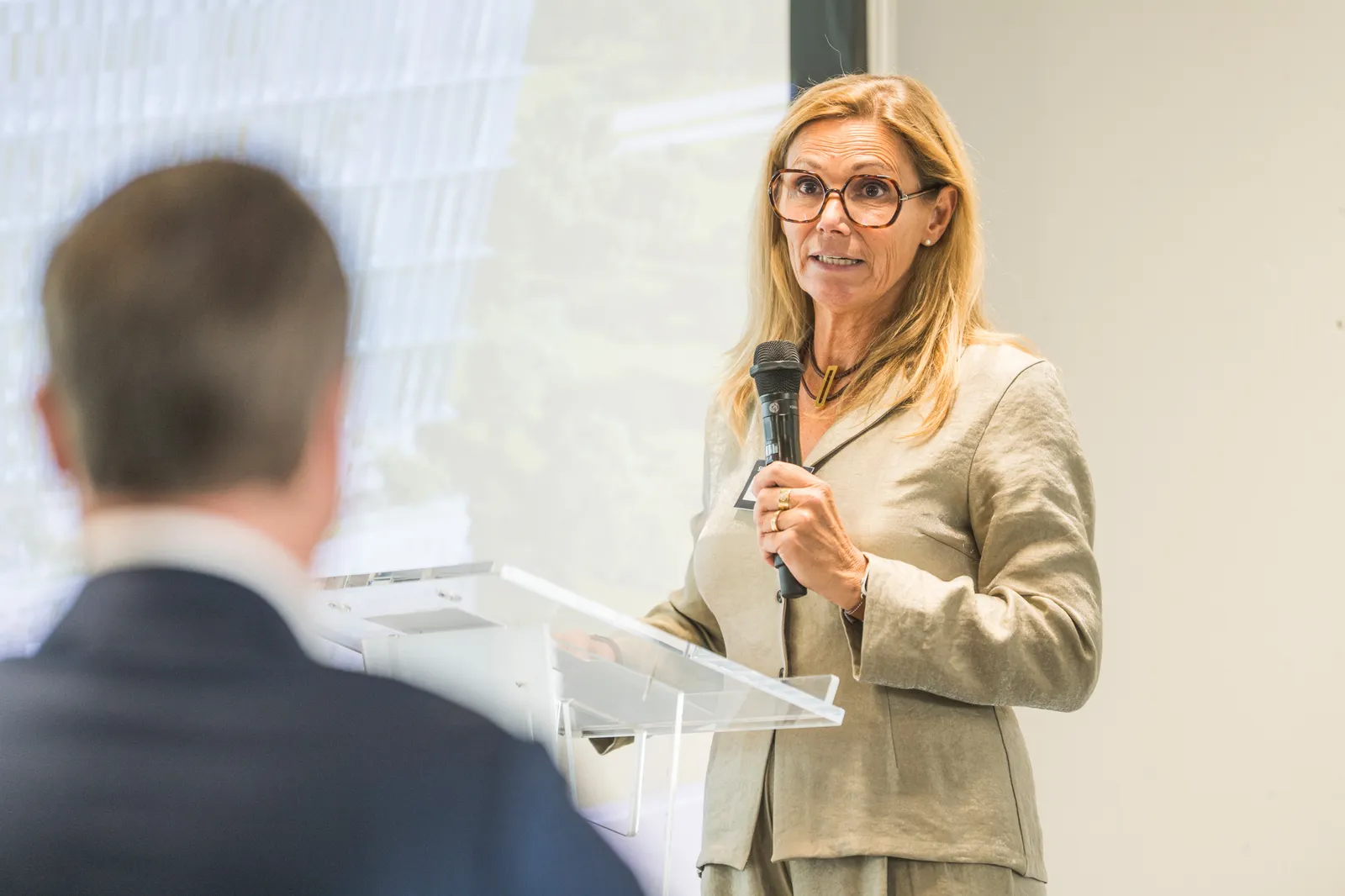
Technology, knowledge and talent
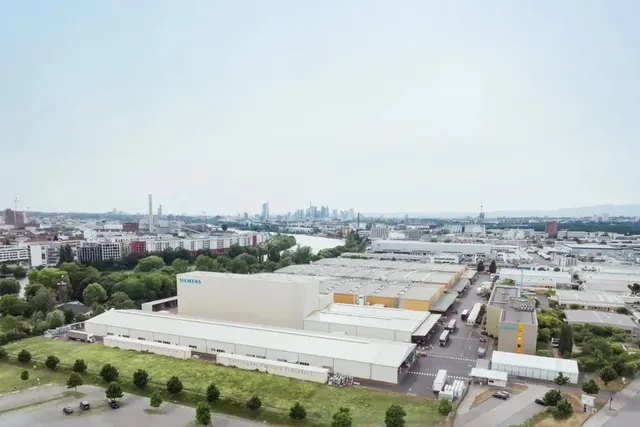
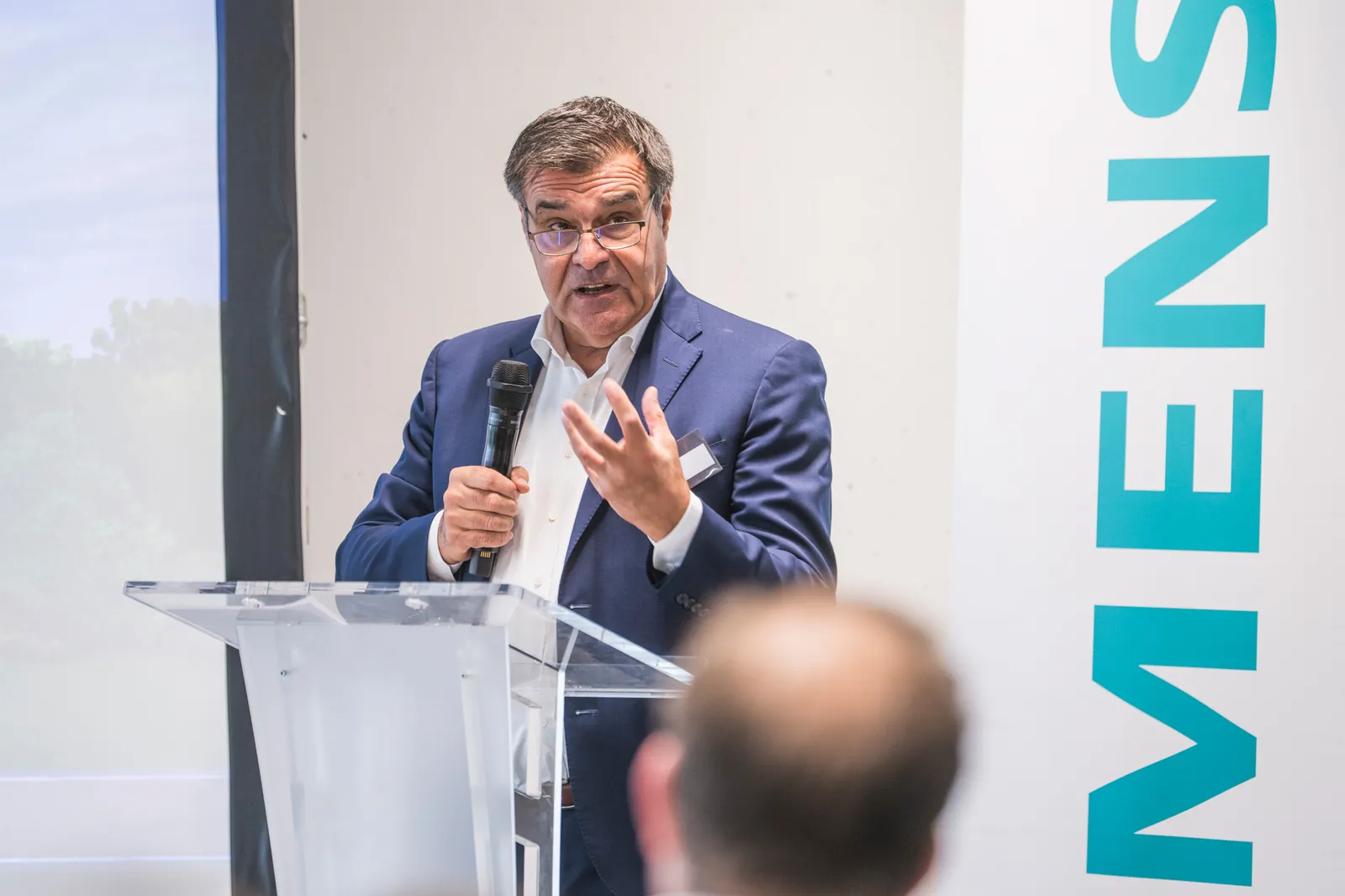
Origin was presented in a place that already embodies this ambition: Nexus, the Bru01 data centre, which houses the Flemish supercomputer and the Flanders 7 Tesla MRI project. There is no shortage of synergies. "After Nexus, Origin will be a second cornerstone of the transition to a climate-neutral science park. Among other things, the two buildings will exchange heat and recovered rainwater to achieve this ambition," explains Elvira Haezendonck. The building will have seven storeys above ground, with a total floor area of 20,000 m², which can be flexibly configured to suit users' needs. Siemens will occupy four and a half floors. "This building will be much more than the walls that make it up. For us, it is an environment where technology, knowledge and talent meet and reinforce one another," stresses Serge Molinari, CEO of Siemens.
A sustainable working environment
Siemens, whose lease on its current site in Huizingen expires in 2028, has found the ideal location in Origin. "Fully digitalised, this smart building will integrate our own technologies to show in practical terms how the convergence of the physical and digital worlds delivers greater sustainability, productivity and resilience." It will help Siemens Belux achieve its ambition of carbon neutrality by 2030. "By then we will have cut our emissions by 90% compared with 2019," says Katrien Valckiers, head of communication and sustainability at Siemens.
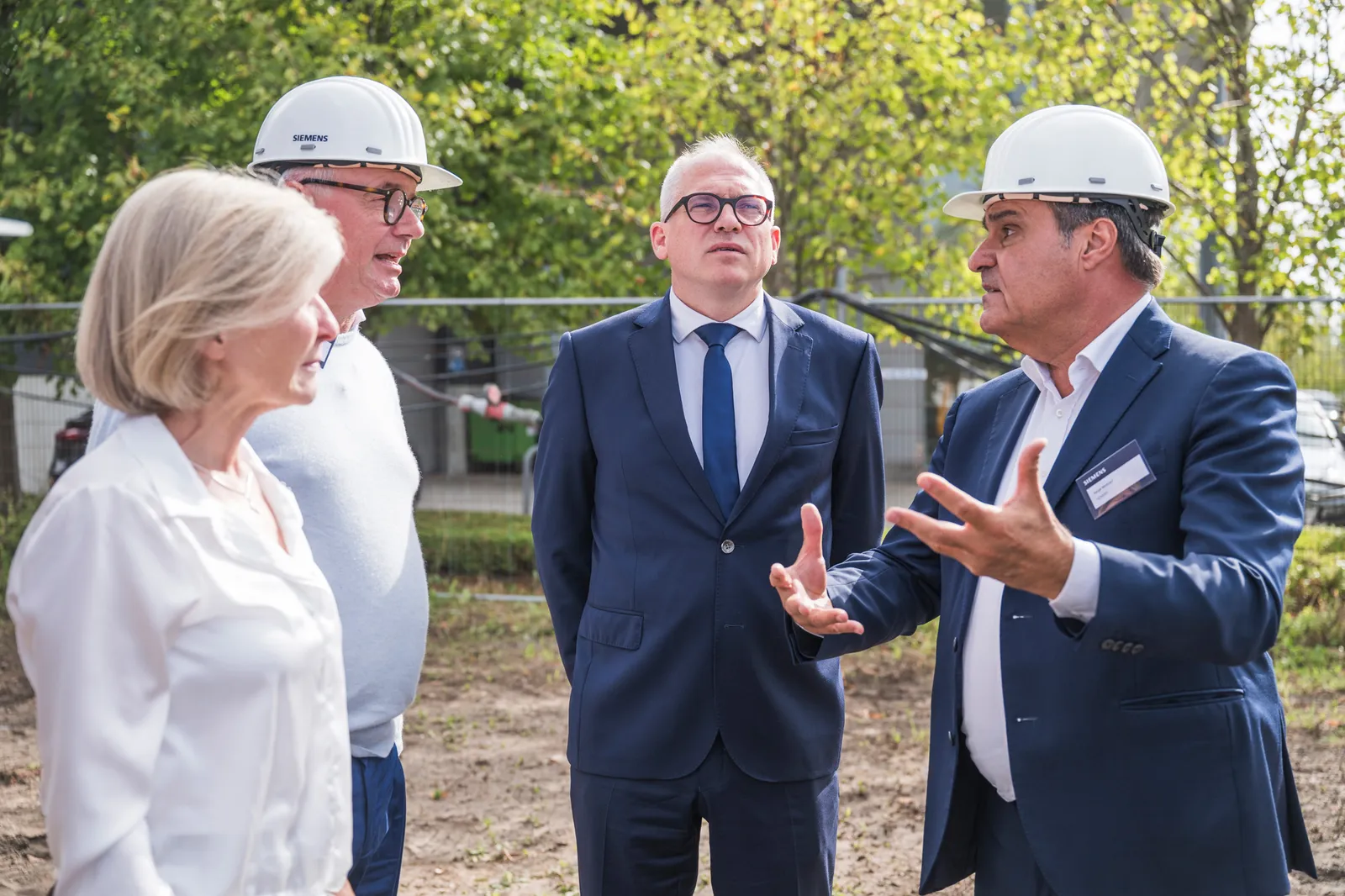
Together
For Siemens, the interior spaces matter just as much. Serge Molinari insists that the ambition does not stop at the building's front door. "It is part of an overall strategy to create new concepts here and to accelerate their deployment on a larger scale, by linking research and technological expertise to concrete applications. In building management, but also in automation and digitalisation. In time, this site will, for example, house the VUB's robotics hub. It must become an open innovation space in all the areas that matter today." In a collaborative space planned within Origin, researchers, start-ups, customers and suppliers will develop, prototype and test new solutions for industry and smart infrastructure. "Innovation is not a solo effort. It arises from close interaction between research and entrepreneurship."
Accelerating the commercialisation of innovation
The collaboration between Siemens and the VUB is already taking shape: the VUB is officially joining the Siemens Industry Academy as a partner. This initiative builds a bridge between engineering programmes and the business world. Through this collaboration, Siemens and the VUB want to bring students closer to technological practice, encourage joint projects and give young talent the opportunity to work on real industrial challenges. At the official launch of Origin, Flemish Minister-President Matthias Diependaele also stressed the importance of education. "In the 1980s, we chose to make Flanders shine internationally by betting on a knowledge economy. It all starts at school. Today, Flanders performs well on innovation, but it can still improve at turning that knowledge into marketable products. I am convinced that this project is an important link in that effort. It is precisely these collaborations between academia and business that will allow innovation to be commercialised faster and our industry to be strengthened in the long term."
A business enquiry for Siemens NV/SA? Get in touch
Companies in this story
Keep following this
Get an email when a new story is published. No account needed.
- ThemeHigh-performance drives and precise motion
- SubjectNews
- CompanySiemens NV/SA