A demanding environment that leaves radars unfazed
Texte & photos Valérie Couplez
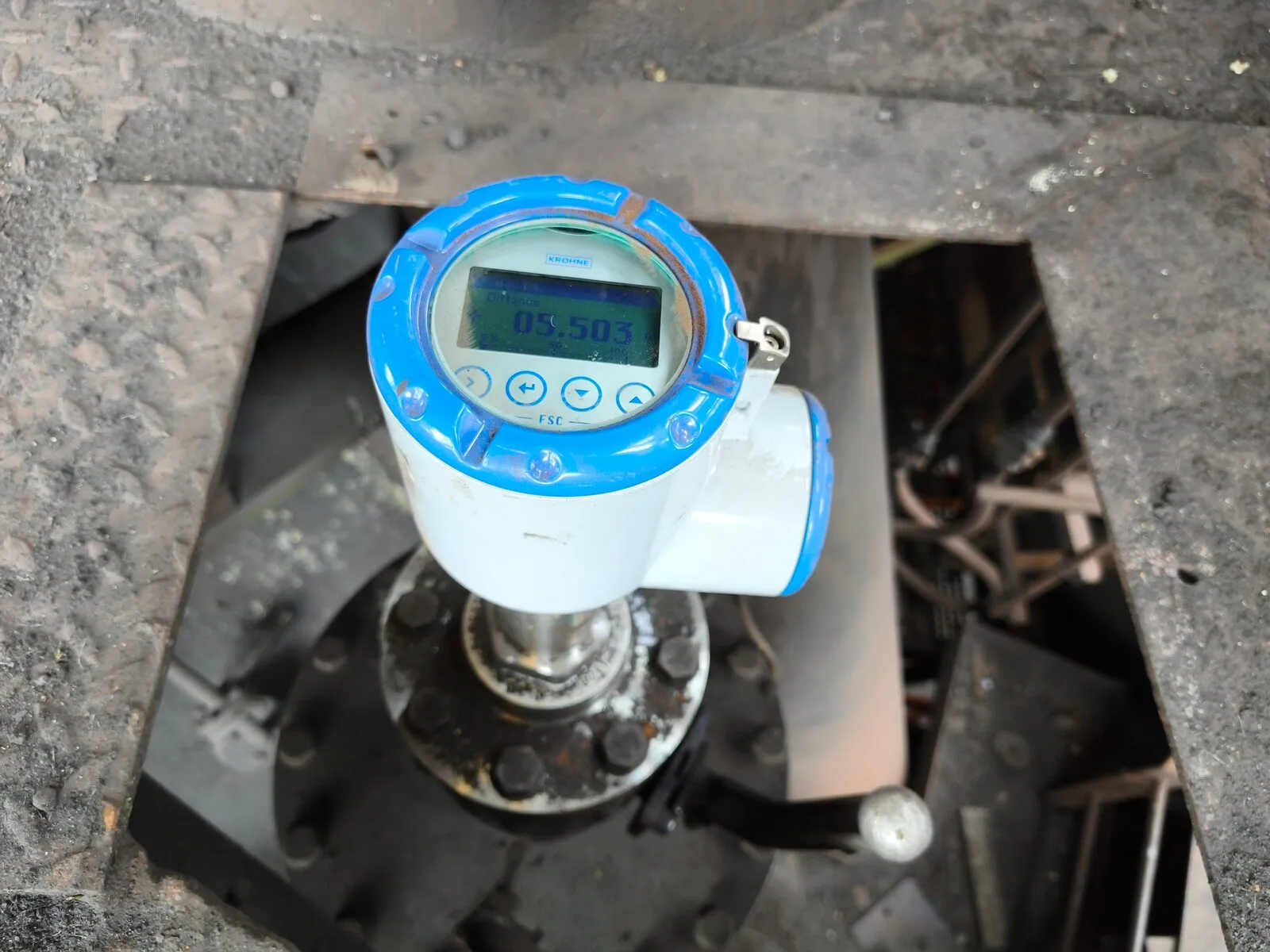
There is no more demanding environment for instruments than a blast furnace. Yet even in these conditions, the process information provided by sensors is indispensable. Thanks to KROHNE’s radar technology, it works perfectly. ArcelorMittal Belgium can therefore maintain full control over the supply of coke and ores for optimum production.
ArcelorMittal Belgium has two blast furnaces, A and B, in Ghent, where pig iron is produced. Ore is charged from the top and, during the reduction process, at temperatures well above 1,400 °C, it is turned into pig iron, which is tapped from the bottom. It is then transported to the steelworks in “torpedoes”, specially designed vehicles, to be turned into steel. The two blast furnaces operate in the same way, but because their designs differ slightly (blast furnace B was modernised in 2020), B has a higher output. “We are constantly looking for improvements. We look at how we can make a significant difference to energy efficiency or safety, sometimes through small interventions,” says Koen De Bruycker, foreman responsible for process control and automation.
Radar technology for optimum blast furnace operation
Major investments have also recently been made in blast furnace A. Following a major refurbishment in 2023, the plant is ready to ensure reliable production for many years to come. It therefore remains a key link in steel production as the sector works to develop and deploy new, more sustainable technologies. The existing measuring equipment was replaced with a modern system. “The four radars had been in service for almost twenty years, and the echo signal was gradually losing strength. With this new installation, we wanted not only to make measurements more reliable, but also to improve access for maintenance and inspection,” explains Jonas Van Coillie, an electronics technician specialising in process automation. Level measurement is crucial for controlling the blast furnace process.
“We continuously measure the burden level to determine when more material can be added and when it is time to empty the batch. If the level gets too high, the pressure rises excessively. Conversely, if the level is too low, too much energy is lost. With a diameter of around eleven metres, the blast furnaces are imposing in size, but the tolerances are surprisingly tight. The burden level must deviate only slightly from the ideal profile, and the burden must also be distributed extremely evenly. That is the only way to ensure the process runs optimally,” explains Koen De Bruycker.
Making a difference
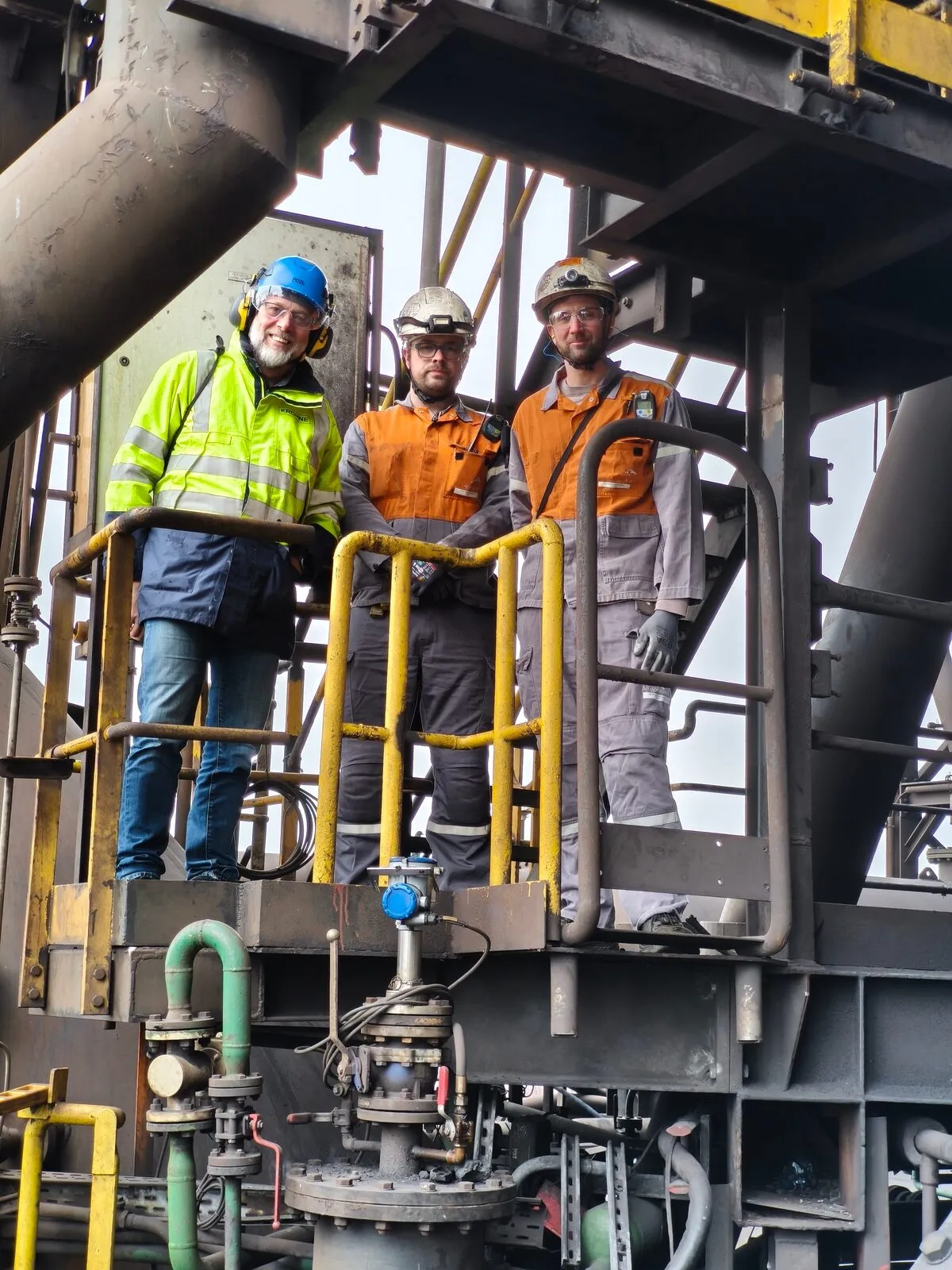
The decision to replace the old radars with new high-frequency radar technology offered an additional benefit: it made it possible to install a valve between the instrument and the blast furnace. Jonas Van Coillie explains: “As well as high temperatures, there are combustion gases, and everything is under positive pressure. In the past, this meant we could only work on the radars when the blast furnace was completely shut down.” So everything was going well. Was everyone happy with the new radars? “Unfortunately, they could not track the burden level accurately enough. Our measurements are configured redundantly, and we found that the results did not match expectations perfectly. We then examined the parameters in detail with the manufacturer, but could not find a solution to these apparent anomalies,” says Koen De Bruycker.
That is where KROHNE came in. “We are a familiar name in this field for flow measurement,” explains account manager Wim Lintermans. “But we are not usually the first name that comes to mind when it comes to radar technology. Yet, thanks to our frequency-modulated continuous wave technology, and our extensive fifty years of experience in this field, we can often make a real difference.”
An outstanding partner
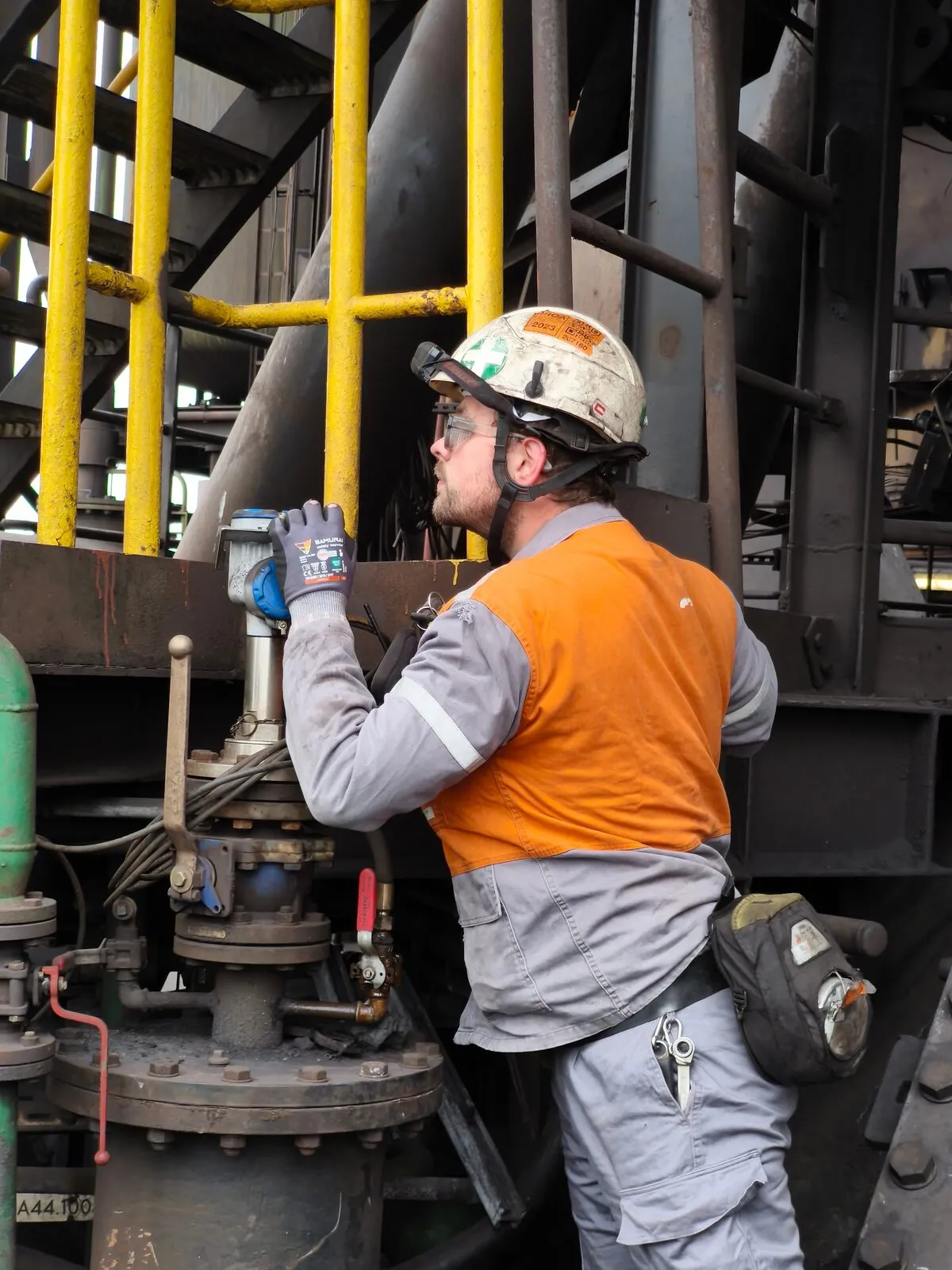
That was also the case in this application at ArcelorMittal Belgium, where the OPTIWAVE 6500 replaced two of the radars already installed. Jonas Van Coillie says: “We were astonished. Normally, installing a new instrument requires fine-tuning all the parameters. Here, everything worked first time, and we immediately got a reliable, stable measurement we could depend on.” It was an impressive achievement, carried out by Jonas Van Coillie and his team. He installed and commissioned the radars himself.
“KROHNE is an excellent partner, always ready to step in when needed. They have already proved that. We were also able to count on their support when setting the parameters. But we now know our process inside out: we know how the level changes and what measuring range is needed. The OPTIWAVE 6500 is easy to programme to achieve the desired result, thanks to its simple dialogue-based user interface. Copying the programme to the second OPTIWAVE 6500 was then a piece of cake.”
Two more to come
ArcelorMittal Belgium is particularly pleased with the change. Before the end of 2026, the two other radars at the top of this blast furnace will also be replaced with OPTIWAVE 6500 radars. At the same time, the company is preparing to equip the second blast furnace with the same devices. “In Ghent, our ambition is to produce almost 5 million tonnes of pig iron a year with our two blast furnaces. We can only achieve this if we can rely completely on our instruments. The level sensors are essential for monitoring the fill level and therefore for the operation of our blast furnaces. The four radar measurements are spaced approximately 90° apart, so each quadrant at the top of the blast furnace has a measurement point. They tell us about capacity and any deviation from the ideal burden level. But above all, they are essential for adjusting the process in the event of malfunctions, so we can recharge the blast furnace in a targeted way and stabilise the process again. “We may not be the group’s largest site, but thanks to our process knowledge and the high level of automation at our facilities, we achieve particularly high output,” concludes Koen De Bruycker.
Een zakelijke vraag aan KROHNE Belgium NV? Get in touch
Companies in this story
Keep following this
Get an email when a new story is published. No account needed.
- ThemeSensing and vision in production
- SubjectProcess & instrumentation
- CompanyKROHNE Belgium NV