20 years making automation accessible
Texte Valérie Couplez | Photos Louwers Uitgeverij
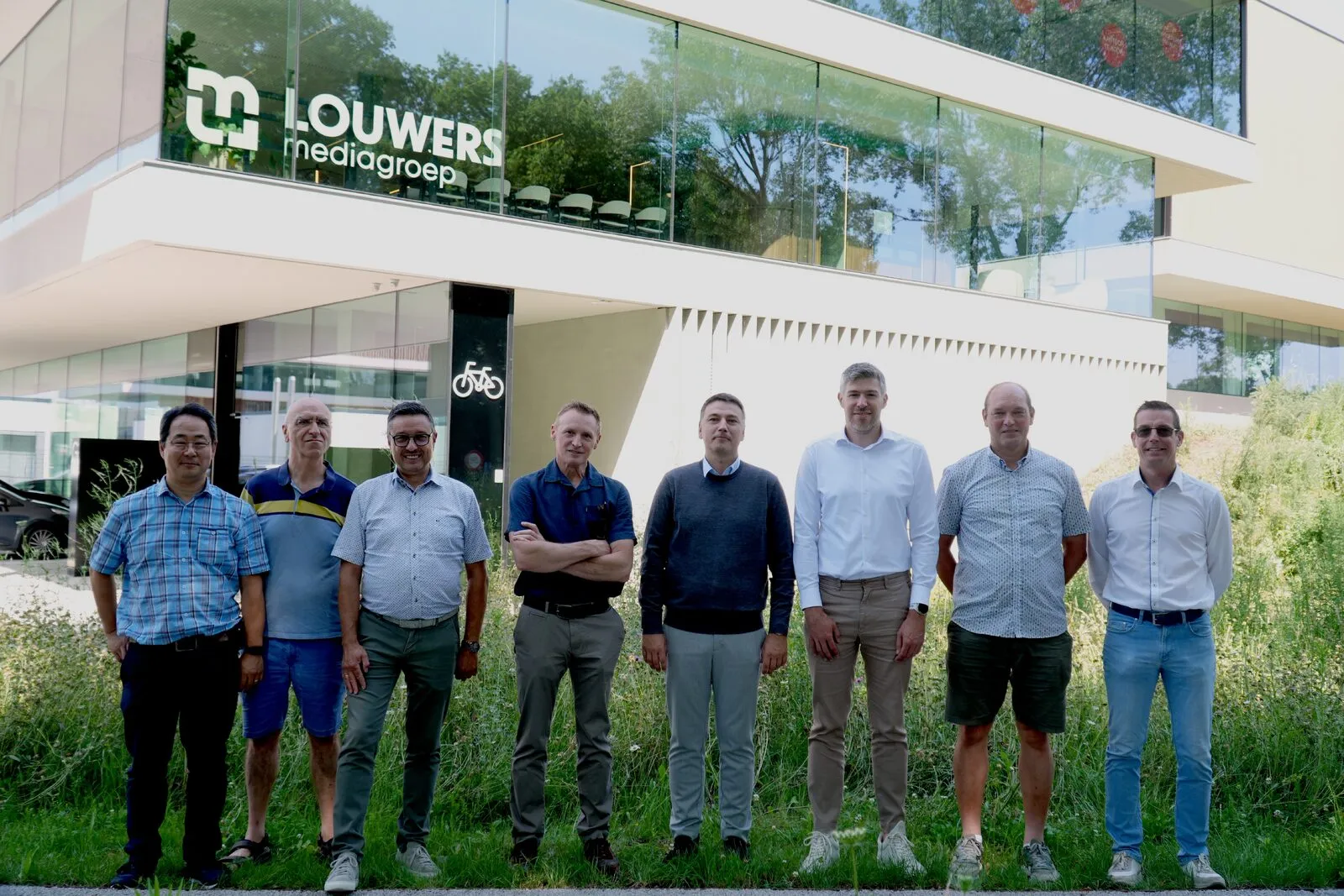
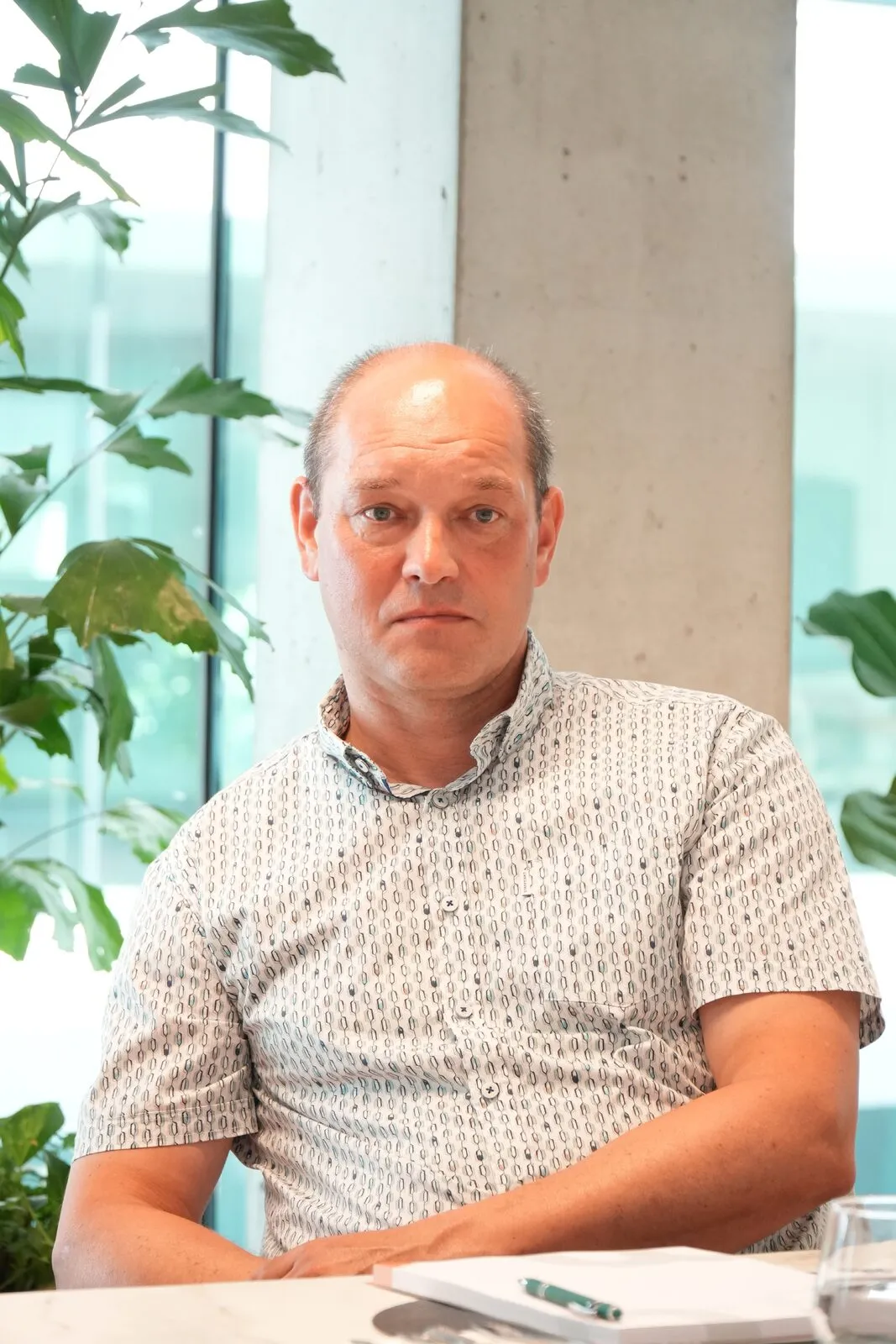
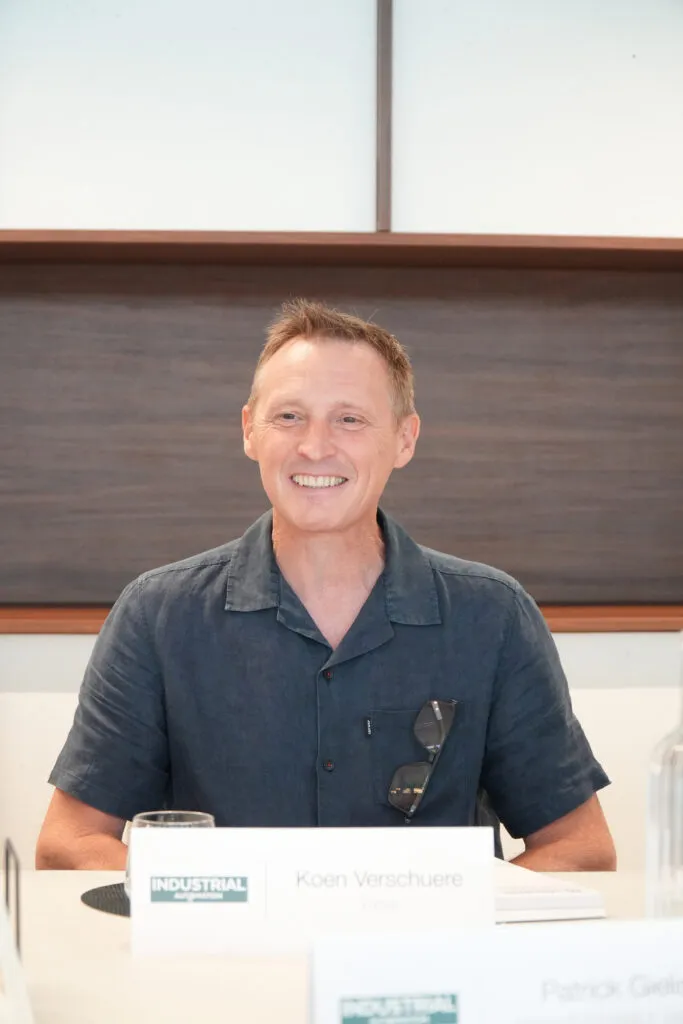
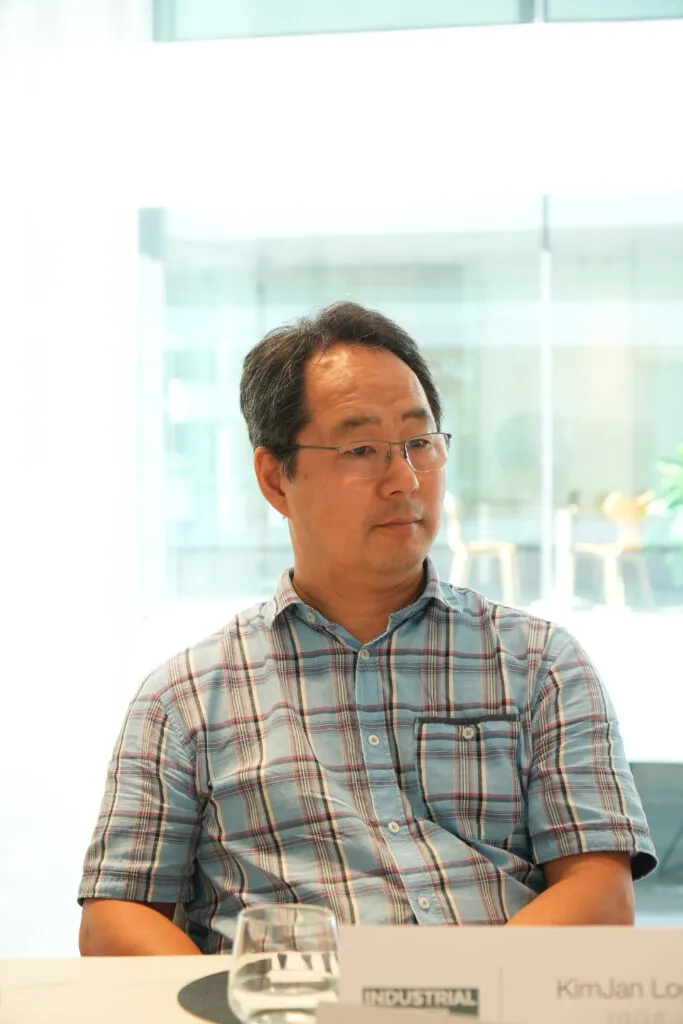
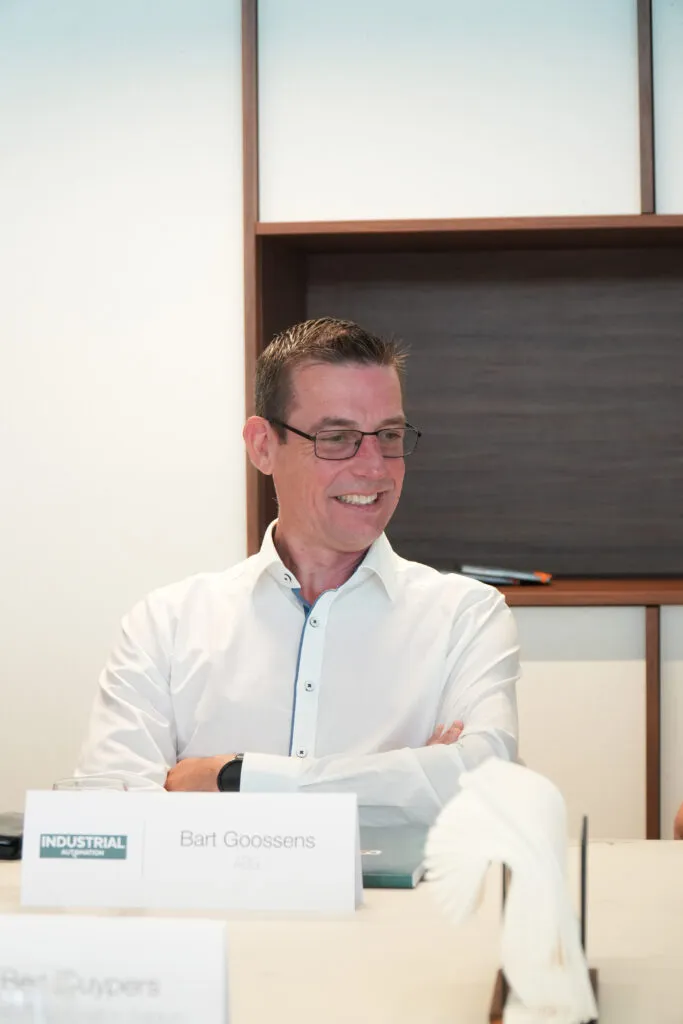
Beckhoff Automation Belgium celebrates its 20th anniversary in 2026. Two decades dedicated to the automation of machines and buildings. Two decades of growth and innovation. Two decades of listening and commitment. A story Beckhoff has not written alone, but in collaboration with its solution providers and customers. At a round-table discussion, the company looked back on the years gone by with its earliest partners and looked to the future, imagining what automation will look like tomorrow. Bert Cuypers (Beckhoff), Pascal Degezelle (Optidrive), Patrick Gielis (Beckhoff), Bart Goossens (ABG), KimJan Logie (Indusoft), Ronny Noynaert (Beckhoff) and Koen Verschuere (Fixsus) took part in a lively discussion.
But let’s start the story where stories usually begin: at the beginning. Patrick Gielis: “With the introduction of bus terminals, Hans Beckhoff made his mark on the world of automation. This made automation simpler, a principle that remains the starting point whenever Beckhoff brings new products to market. His concept of PC-based control technology attracted interest around the world, including in Belgium. Distribution was initially handled by Multiprox, where I first discovered these products. Building on this success, Beckhoff realised that having its own branch offered more opportunities to spread its philosophy. The aim is not to sell products, but to support customers as they automate their projects. With this in mind, we opened our doors in Hasselt (and later in Lummen) in 2006. There were three of us. In 2011, we opened a second branch in Kortrijk (and later in Zwevegem), so that we could have a local team in every region of the country. We want to be ‘the friendly local engineer’.”
Never just a number
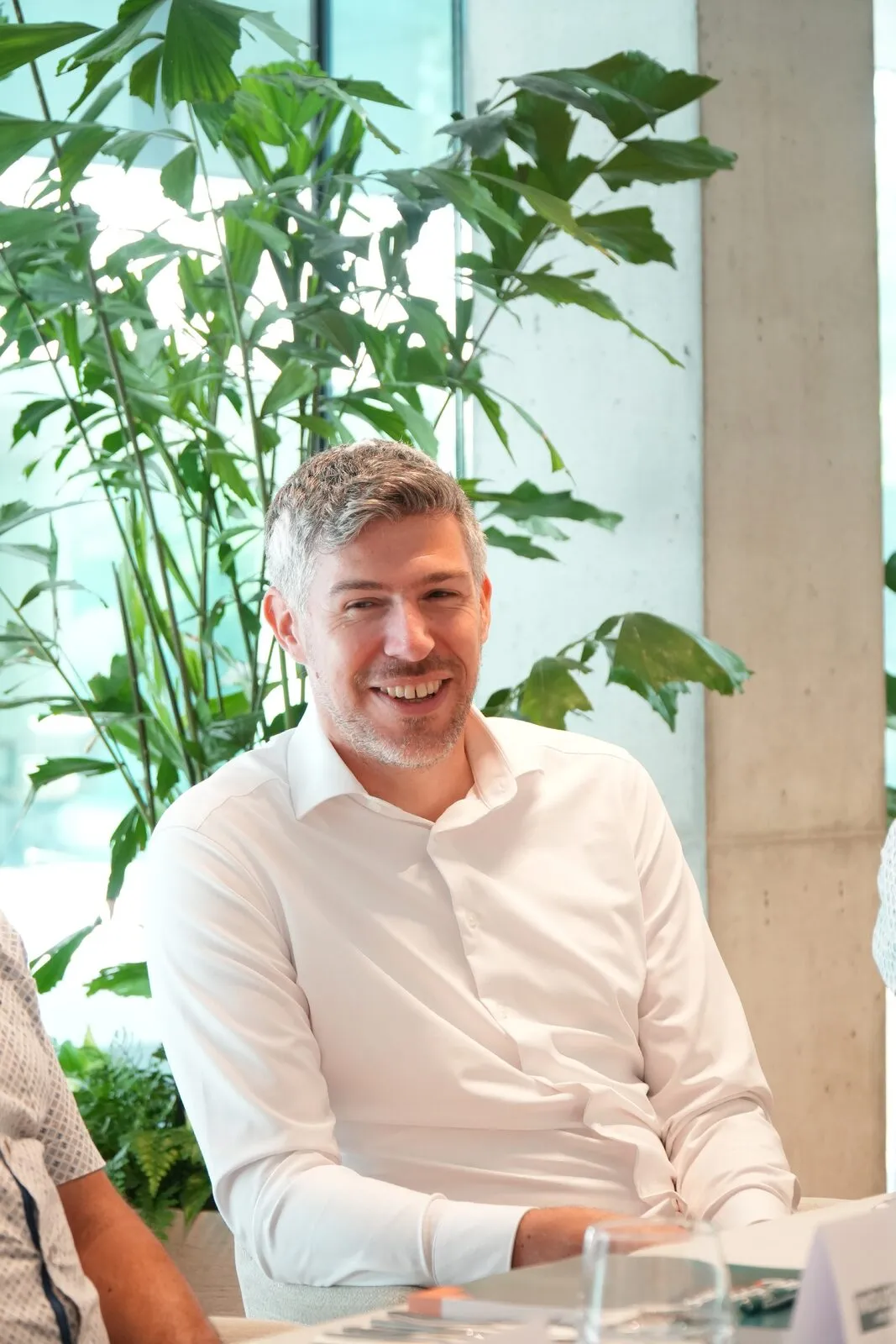
Twenty years on, Beckhoff Automation Belgium has 35 employees. The 36th will join after the summer. With 18 years at the company, Ronny Noynaert is one of its longest-serving employees. “I worked at Sunco, the former lemonade factory in Ninove, where I was responsible for plant engineering. I’d already heard of Beckhoff. When I spotted Patrick at a trade fair in Brussels, I went over to hear what he had to say. His story captivated me, and I was impressed by the technology. Those pioneering days were truly great, even though I had to drive two hours to Hasselt every day. Why stick with it? Because you never feel like just a number in the company. Not in Belgium, and not in Germany. Even though we now have 5,450 employees worldwide, you feel part of one big family. That friendly atmosphere, open-mindedness, transparency and direct relationships make working here so enjoyable.”
Always well supported
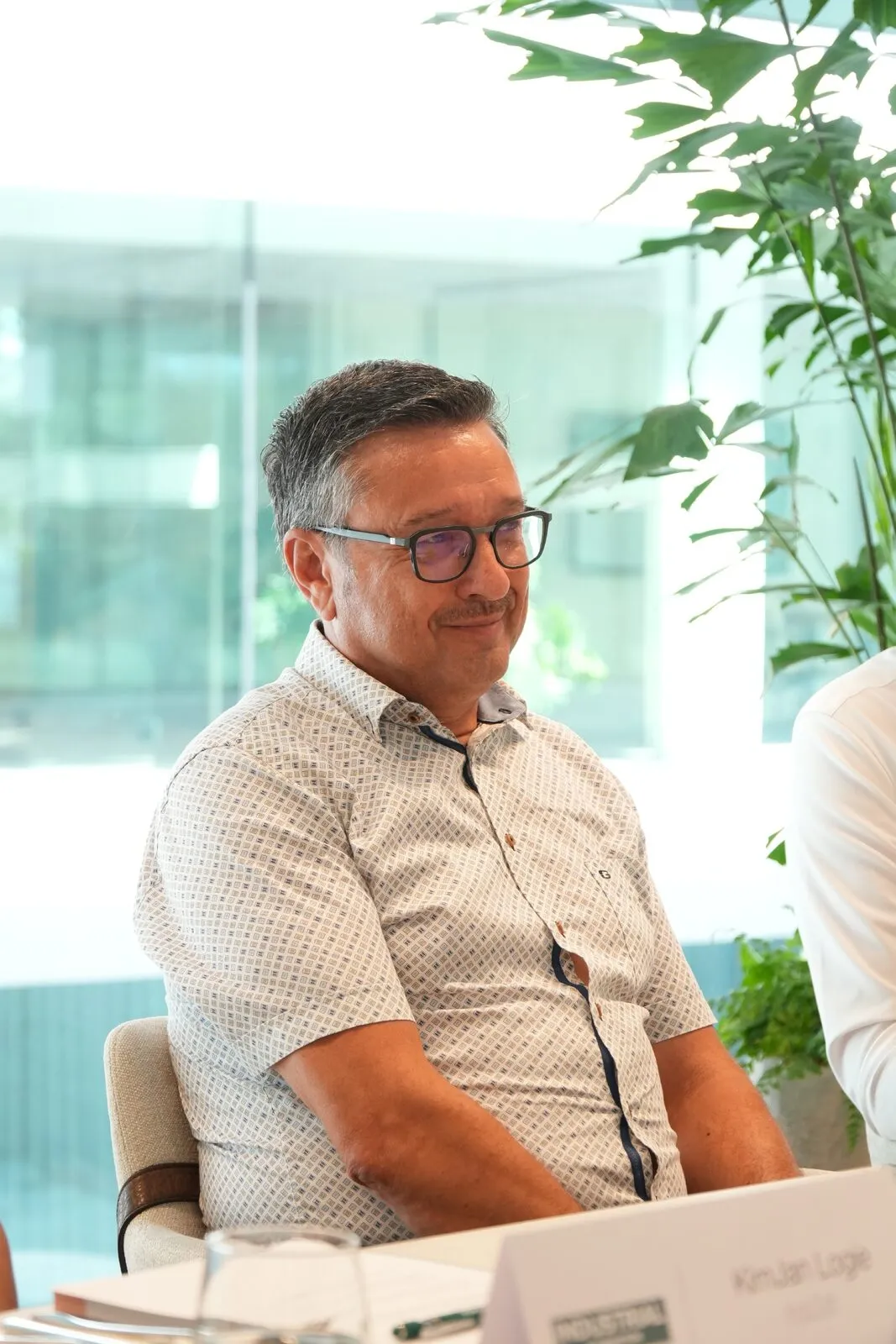
It was this personal contact that first brought Bart Goossens, managing director of ABG (Automation Bart Goossens), into contact with Beckhoff. “I’ve known Patrick for years. We also worked together at GTI Elektro Thijs (which later became the GTI Group and joined what is now Equans). After working abroad, I started my new business as an independent programmer and very quickly chose Beckhoff. Not to do Patrick a favour, but because the programming software is simply a pleasure to use. It’s open, there are no extra licence fees, you download it from the internet, install it and get to work. The support is excellent, too. It has always been their hallmark. You really can count on them for anything. Patrick even pushed my motorbike to get it started when I broke down,” he says with a laugh. “And if I’m wondering today whether the arrival of AI puts my job as a programmer at risk, I can simply go and discuss it over a good coffee in Lummen. We can talk about the challenges these new developments bring and the opportunities they offer me. You can’t have that conversation with just any technology manufacturer.”
Change and continuity
Beckhoff’s technology has, of course, come a long way since the early days. For Bert Cuypers, account manager at Beckhoff, the move from TwinCAT 2 to TwinCAT 3 was one of the biggest technological changes of the past two decades. “Our technology is constantly evolving to incorporate new developments and possibilities. But in reality, it doesn’t change either. Continuity is just as important in providing a stable foundation. The move to TwinCAT 3 and to object-oriented programming, for example, happened largely under the radar. Those who knew TwinCAT 2 well felt right at home in the new programming environment straight away, because the structures and principles were the same. We see the same with EtherCAT. We’re still on version 1.0, the same version as when it was launched in 2003, yet we can meet the requirements of today’s most demanding and complex applications. We take exactly the same approach with hardware. The very first terminals we marketed in 1995 are still available. And for those looking for more options, the new ones are fully interchangeable with the old ones.”
Open and modular
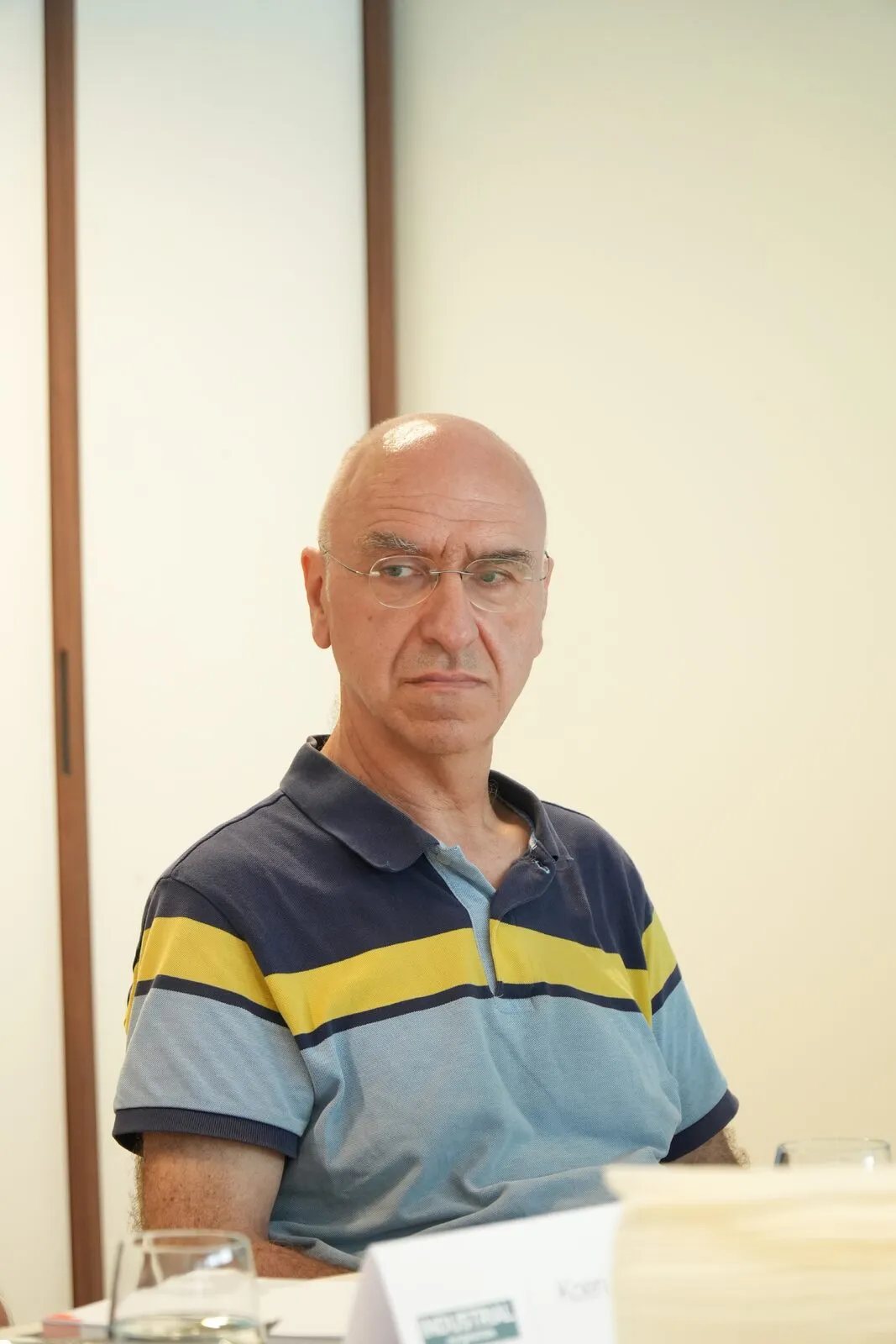
For Pascal Degezelle, co-founder of Optidrive, a company specialising in robotic systems for stone-processing businesses, the modularity and openness of the Beckhoff system are real advantages. “I think Hans Beckhoff is a visionary with a very structured way of thinking. In 1995, nobody was working with modular concepts. But they make it much easier to build, maintain and subsequently expand systems. We once developed a CANopen application for a customer for surface grinding concrete slabs, with a precision of 0.3 millimetres. That might sound trivial, but believe me, when you’re dealing with concrete more than 100 metres long, it’s anything but trivial. There’s no manual for programming that sort of thing, but it’s possible with Beckhoff. And if you run into an obstacle, you can count on specialists in Belgium and Germany to help. He cites the example of a cam machine they completely replaced in 2005 with an ‘orchestra’ of fifteen servo motors. “Together with Georg Seibel, an engineer at Beckhoff, we worked out where every millisecond of delay was coming from and how we could still achieve a cycle time of 500 microseconds. It’s incredible what we were already able to do with Beckhoff twenty years ago.”
IT meets OT
Beckhoff’s automation solutions also have clear advantages in buildings, both then and, even more so, today. Koen Verschuere, managing director of Fixsus: “I used to think there was only one control system, from another brand. I was completely indoctrinated with that idea. Then a customer told me about the great things he was doing with Beckhoff and took me to a trade fair. I nearly fell off my chair when Bert offered to send me a CPU so I could learn how to use it. They also make it easy to get started by making their technicians available. Just pick up the phone and you get the help you need straight away. In the end, Beckhoff’s PC-based philosophy proved to be the right one for me. It makes it very easy to bridge the gap with IT. At a time when IT and OT are becoming increasingly closely linked, that’s essential. For us, it’s simple: we still work with just two providers, Beckhoff and ourselves. Whatever they don’t supply, we develop ourselves. As they guarantee product availability for twenty years, we can automate buildings robustly and at low cost. Customers sometimes ask us whether they should upgrade. No, we’d simply reinstall the same system. The topology out in the field stays the same; the software evolves with the times, including towards AI. We already use it, for example, to translate error messages into plain language. I’m not a seasoned programmer like some of the specialists here or in my team, but AI will open up new horizons for creative people. And with Beckhoff, integrating it is very straightforward.”
Everything in one environment
KimJan Logie of Indusoft has noticed the same trend. “We’re moving increasingly beyond being a software integrator, taking on projects involving robotics and vision technology. We got into this somewhat by chance, following a specific project. It may be a risk, but this is the direction we see industry moving in, because companies are still struggling to find people to carry out repetitive tasks. These are tasks that, for example, have yet to be automated in the food and manufacturing industries because products are difficult to detect or handle. Vision combined with AI can now make real progress in this area. With our 3D printer, we can print components for proof-of-concept work, including test grippers for our robot and cobot. And with Xplanar, we offer highly flexible transport concepts. These are entirely new technologies and hardware, but they’re integrated into Beckhoff’s familiar programming environment. Everything fits together seamlessly: PLC, robot and vision, making it extremely easy to use. We show our customers what this can do for them in our laboratory and demonstration area. It’s an exciting time for us. We’re looking to the future alongside Beckhoff.”
Een zakelijke vraag aan Beckhoff Automation? Get in touch
Companies in this story
Keep following this
Get an email when a new story is published. No account needed.
- SubjectControl & network
- CompanyBeckhoff Automation
- CompanyEQUANS